From Super Nintendo to Project Reality
Nintendo 64 began with a problem created by the success of the Super Nintendo Entertainment System. Nintendo had built its reputation on tightly controlled hardware, polished first-party games and a broad cartridge library, yet the next generation of interactive entertainment was moving toward three-dimensional graphics. Arcade machines, workstations and personal computers were showing that polygons could create spaces with depth, rotating viewpoints and objects that appeared to occupy a shared world. Nintendo had already experimented with the transition through projects such as Star Fox, whose Super FX chip helped the Super NES draw textured polygonal objects. Those experiments proved the concept, but a successor system needed to make three-dimensional play practical across an entire library rather than reserve it for technical demonstrations.
The project emerged from a partnership with Silicon Graphics, a California company whose workstations were used for scientific visualization, computer-aided design and film effects. SGI founder Jim Clark believed that simplified workstation technology could become the basis of a mass-market entertainment machine. Nintendo was interested because SGI offered experience with geometry processing and the MIPS processor family, while Nintendo contributed expertise in dedicated game hardware, efficient memory use and interactive software design. The companies developed a platform first associated with the name Project Reality. The name expressed an ambition to produce convincing real-time worlds, although the finished system would ultimately be defined less by realism than by responsive movement, clean perspective and imaginative level design.
Nintendo presented the platform publicly under the Ultra 64 name before adopting Nintendo 64 for the finished product. The number referred to the system’s 64-bit-oriented MIPS CPU and helped position the machine as a technological jump beyond the 16-bit Super Nintendo. That marketing language was only part of the story. The machine’s importance came from the way its components were organized around real-time 3D graphics, not simply from the width of its registers. Development took years, and Nintendo repeatedly delayed the system while refining its hardware and software. The delay gave Nintendo time to create a powerful launch game, but it also allowed Sony’s PlayStation to establish a substantial lead in both retail presence and publisher relationships before Nintendo 64 reached consumers.
The Reality Architecture Explained
The Nintendo 64 used a MIPS-based 64-bit RISC CPU running at 93.75 MHz and a custom Reality Co-Processor, commonly called the RCP. The RCP contained the Reality Signal Processor and Reality Display Processor, which handled different stages of the graphics process. In ordinary terms, the CPU organized game logic, while the specialized processors helped transform three-dimensional coordinates, calculate how objects should appear from the current viewpoint and draw pixels to the screen. This division of labor allowed the console to perform large numbers of relatively simple mathematical operations quickly enough for interactive play. Developers could build games around freely moving cameras and objects rather than treating 3D as a short animated sequence.
The system used 4 megabytes of Rambus dynamic memory, or RDRAM, shared by the CPU and graphics hardware. Sharing memory made the architecture flexible, because data could be moved between game logic, geometry and display tasks as needed, but it also placed heavy demands on software engineers. Developers had to decide how much memory to devote to textures, animation, level geometry, sound and temporary calculations. The Expansion Pak later added another 4 megabytes, giving compatible games a total of 8 megabytes. That extra memory could support larger areas, higher-resolution display modes, more detailed scenes or features that could not fit comfortably within the original configuration.
Nintendo 64 graphics were advanced for their time but were not automatically realistic. Developers still had to control polygon counts, texture sizes, drawing distance and the number of active characters. The hardware’s texture filtering softened images when small textures were stretched across polygons, which gave many games a smooth appearance. Depth buffering helped the system decide which surfaces were in front of others, while perspective correction reduced the severe texture distortion seen in some early 3D games. These capabilities were especially valuable in titles such as Super Mario 64 and The Legend of Zelda: Ocarina of Time, where the player was constantly changing position and viewpoint. The hardware created possibilities; Nintendo’s designers supplied the rules that made those possibilities readable and enjoyable.
Why Nintendo Chose Cartridges
Nintendo’s decision to use cartridges rather than compact discs shaped almost every aspect of Nintendo 64’s history. Cartridges offered immediate access to data, which reduced or eliminated the loading pauses common on CD-based systems. This mattered for games that frequently streamed level information while the player moved through a world. Cartridges were also durable, difficult for ordinary consumers to copy and familiar to Nintendo’s manufacturing and licensing system. Their solid-state design supported a console that could start quickly and respond consistently, characteristics Nintendo considered important for direct, uncomplicated play.
The disadvantages were equally significant. Compact discs were much cheaper to manufacture and offered substantially more storage. A CD could hold lengthy music tracks, voice acting, pre-rendered video and large collections of textures without imposing the same per-unit cost as a high-capacity ROM cartridge. Publishers could also manufacture discs in large runs and adjust production more easily when demand changed. Nintendo’s cartridge supply chain required publishers to commit to more expensive physical media, which increased financial risk. The difference affected retail prices and made publishers more cautious about supporting the system with experimental or specialized games.
The departure of Square’s Final Fantasy series became the most famous consequence. Square had been one of Nintendo’s most important partners during the NES and Super NES years, but Final Fantasy VII was designed around a large amount of cinematic material, music and visual data. In 1996, Square announced that the game would move to Sony’s PlayStation, where compact discs made its planned structure more practical. The decision was not the only reason for the PlayStation’s success, but it was a powerful public signal that Nintendo’s media strategy had become a liability for some major developers. Nintendo 64 still received important third-party releases, yet its cartridge policy narrowed the range of projects that publishers could produce economically.
Launch Across Three Regions
Nintendo 64 launched in Japan on June 23, 1996. The Japanese launch software included Super Mario 64, Pilotwings 64 and Saikyō Habu Shōgi. Super Mario 64 was the essential demonstration because it made the new control concept immediately visible. Instead of moving along a mostly fixed plane, Mario could walk, run, turn, jump and explore within open three-dimensional spaces. Pilotwings 64 showed a different side of the hardware by presenting broad landscapes and flight-based movement. Saikyō Habu Shōgi, a digital version of the Japanese board game, served a more specialized audience and reflected the region’s distinct software market.
North America followed in late September 1996. Nintendo advertised September 29 as the launch date, although retailers began selling units in some areas on September 26. The system launched with Super Mario 64 and Pilotwings 64 as the principal widely available games. The small launch library was a deliberate trade-off: Nintendo concentrated attention on software that could demonstrate why 3D control was different rather than attempting to provide a large but less focused selection. The strategy worked for the launch experience, because Super Mario 64 was unlike almost anything available on competing consoles, but it also made the waiting periods between later major releases more noticeable.
Europe received Nintendo 64 on March 1, 1997, several months after Japan and North America. The delay reflected production, localization and distribution requirements, while the European market already contained an established PlayStation audience. Regional releases also differed in television standards, packaging and the timing of individual games. Nintendo used a common global brand rather than repeating the earlier Famicom and Super Famicom naming distinction, but the platform was not completely identical across territories. Release schedules, censorship decisions, language versions and accessory availability could vary. European players therefore encountered a console that was technically familiar but commercially entering a more mature and competitive market than the one Nintendo had faced at its Japanese debut.
The Three-Pronged Controller
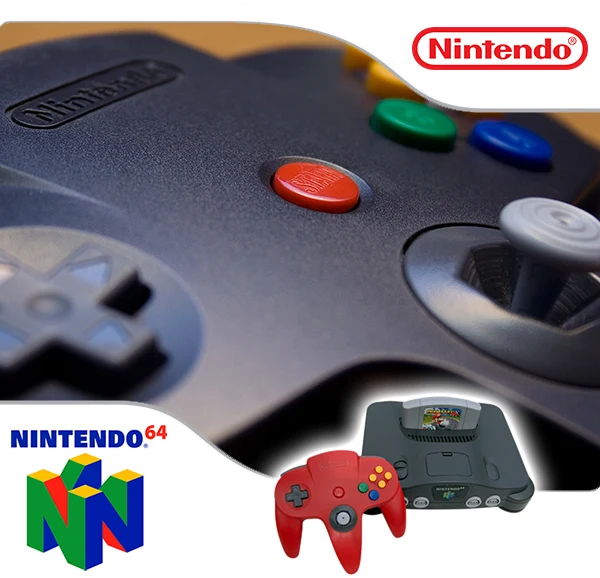
The Nintendo 64 controller was designed around the uncertainty of early 3D game design. Its three handles made it possible to hold the device in different ways rather than forcing every game into one button arrangement. The center handle placed the analog Control Stick beneath the left thumb. The left handle carried the directional pad, while the right handle contained the A, B and C buttons. The Z trigger was placed underneath the center handle, and shoulder buttons completed the layout. Players did not normally grip all three handles at once. They selected a hand position suited to the game, a physical idea that seemed strange at first but allowed Nintendo to support several control traditions on one device.
The analog stick measured degrees of tilt rather than sending only fixed directional commands. That distinction allowed Mario to walk slowly, accelerate into a run, change direction gradually and make fine adjustments near ledges or objects. A traditional digital pad could tell a game that the player wanted to move left or right, but the analog stick supplied a continuous range of movement. This encouraged designers to build around momentum, speed, turning radius and precise positioning. The controller therefore changed not just how players operated 3D games but how developers imagined space. Movement could become expressive, and a character’s relationship to the camera could be designed as part of the game’s core language.
The controller also introduced a modular accessory port. The Controller Pak supplied save storage for games that did not save directly to their cartridges, while the Rumble Pak added vibration feedback. Star Fox 64 helped make the Rumble Pak memorable by tying physical feedback to impacts, explosions and environmental events. The Transfer Pak connected the console to selected Game Boy and Game Boy Color cartridges. Pokémon Stadium could use compatible Pokémon games to bring trained creatures and other data into a television-based battle environment. These accessories extended the system beyond its basic graphics hardware and established a Nintendo pattern in which controllers became platforms for feedback, storage and communication with handheld devices.
Super Mario 64 Rebuilds the Platformer
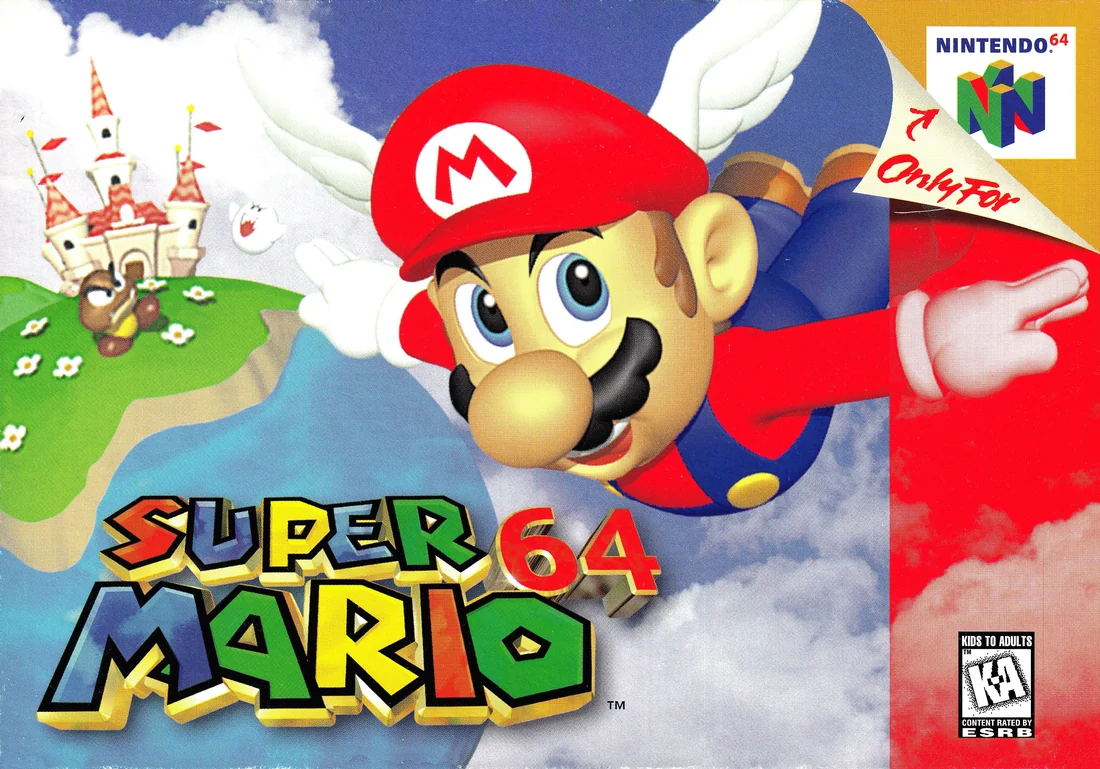
Super Mario 64 was Nintendo’s answer to the question of how a character-based platform game should work in three dimensions. Nintendo EAD replaced the largely linear courses of earlier Mario games with open stages that functioned as small playgrounds. Each stage contained several objectives, usually represented by Power Stars, and players could often pursue them in different orders. The castle served as a hub connecting these areas and gradually opened as the player collected more stars. This structure gave exploration a purpose without requiring every player to follow an identical route from beginning to end.
Mario’s movement system supplied a vocabulary for understanding the new space. Walking, running, jumping, swimming, wall jumping, long jumping, crouching and ground pounding were not merely separate commands; they formed a set of relationships between speed, distance, height and momentum. A player could approach the same obstacle in several ways, and the analog stick made those choices feel continuous rather than binary. The design also taught players how to read depth. Platforms had to be judged by distance, jumps required control in midair and hazards could surround the character from every direction. Super Mario 64 made these demands approachable through bright visual design, forgiving movement and objectives that rewarded experimentation.
The camera was one of the game’s most important inventions and one of its most persistent imperfections. The C buttons allowed players to adjust the viewpoint, while Lakitu was presented as an in-world camera operator who followed Mario. This framing gave players a conceptual model for why the viewpoint moved and why they sometimes needed to correct it. The system could still place walls, obstacles or scenery between Mario and the action, but Nintendo established a workable relationship between movement and viewpoint. Later platformers and action games inherited the need to treat camera behavior as a design problem rather than a technical afterthought. Super Mario 64’s influence came from its complete solution, including its flaws, because it gave the industry a practical model to improve upon.
Rare and the Rise of Living-Room Multiplayer
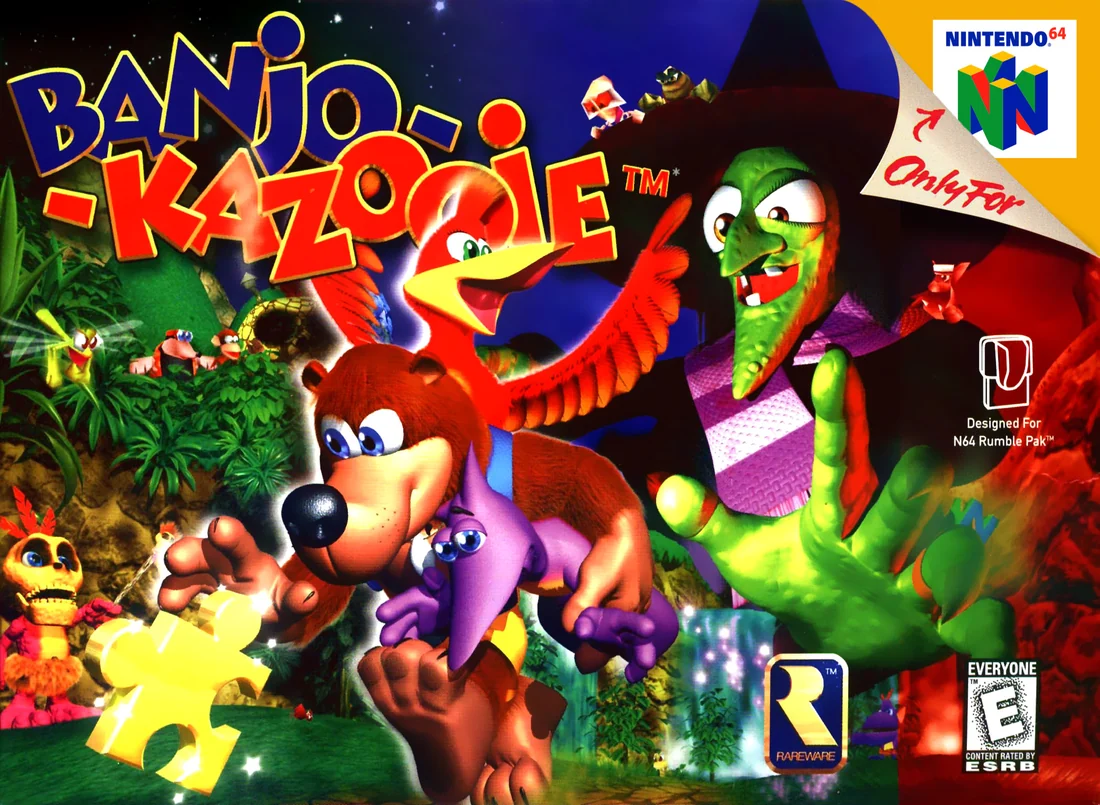
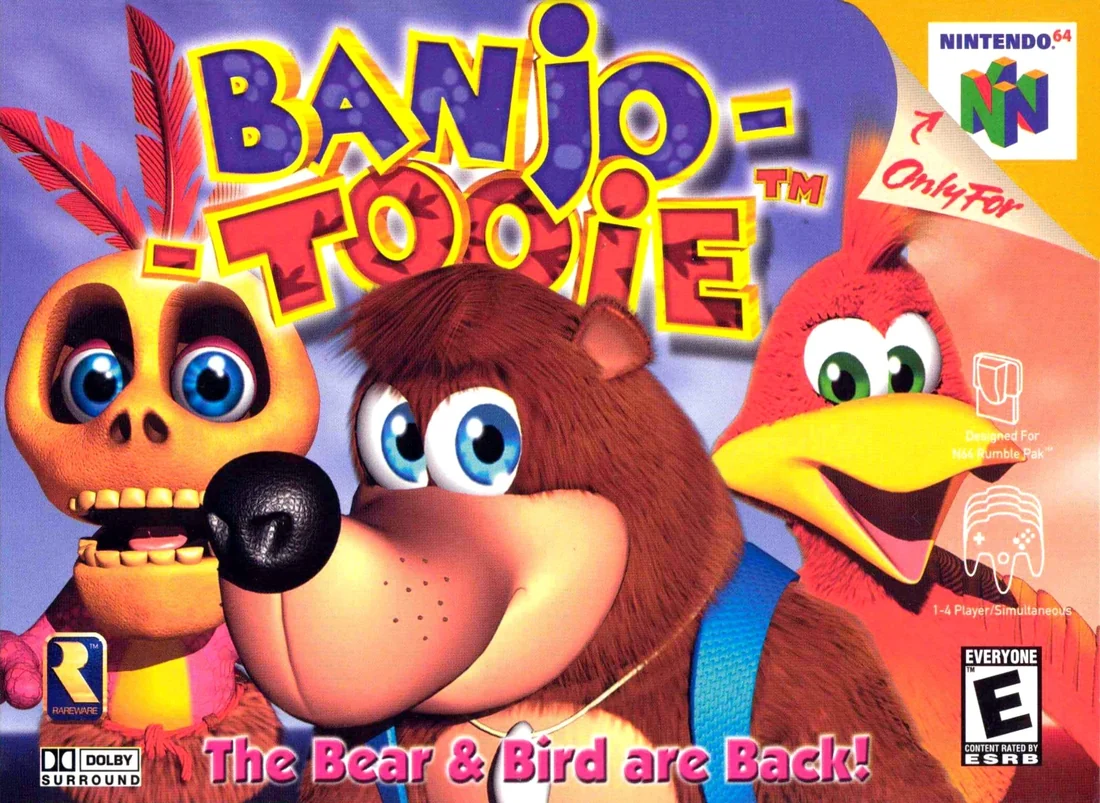
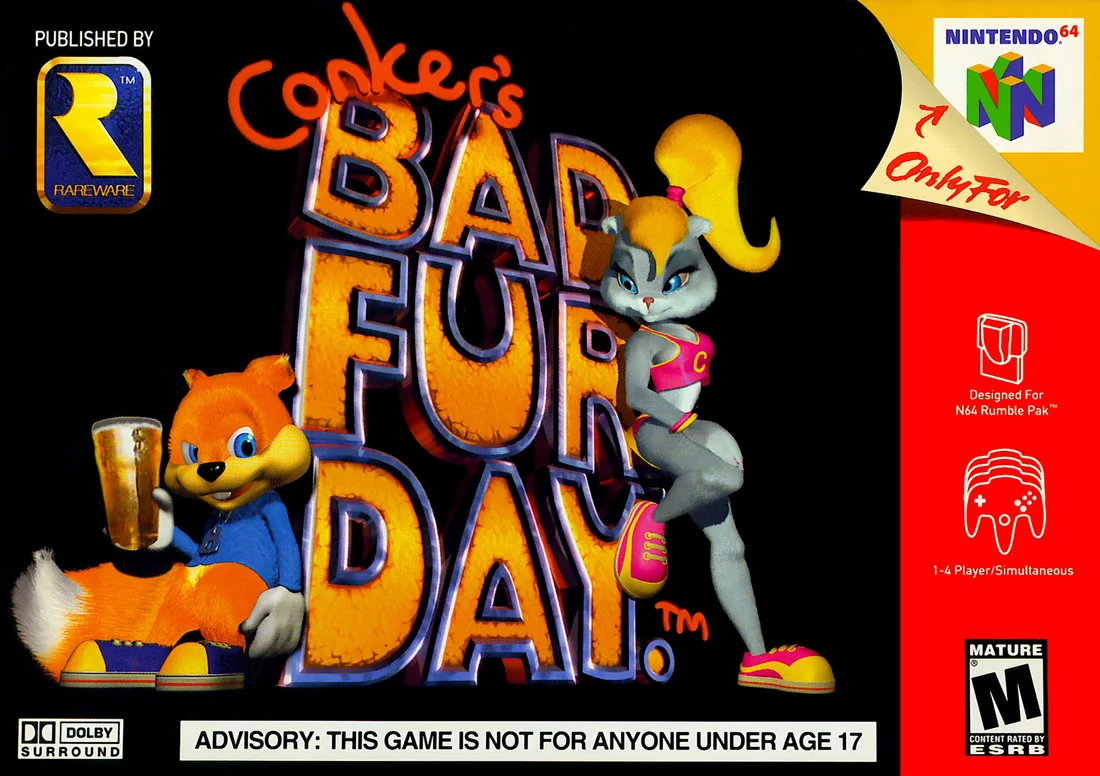
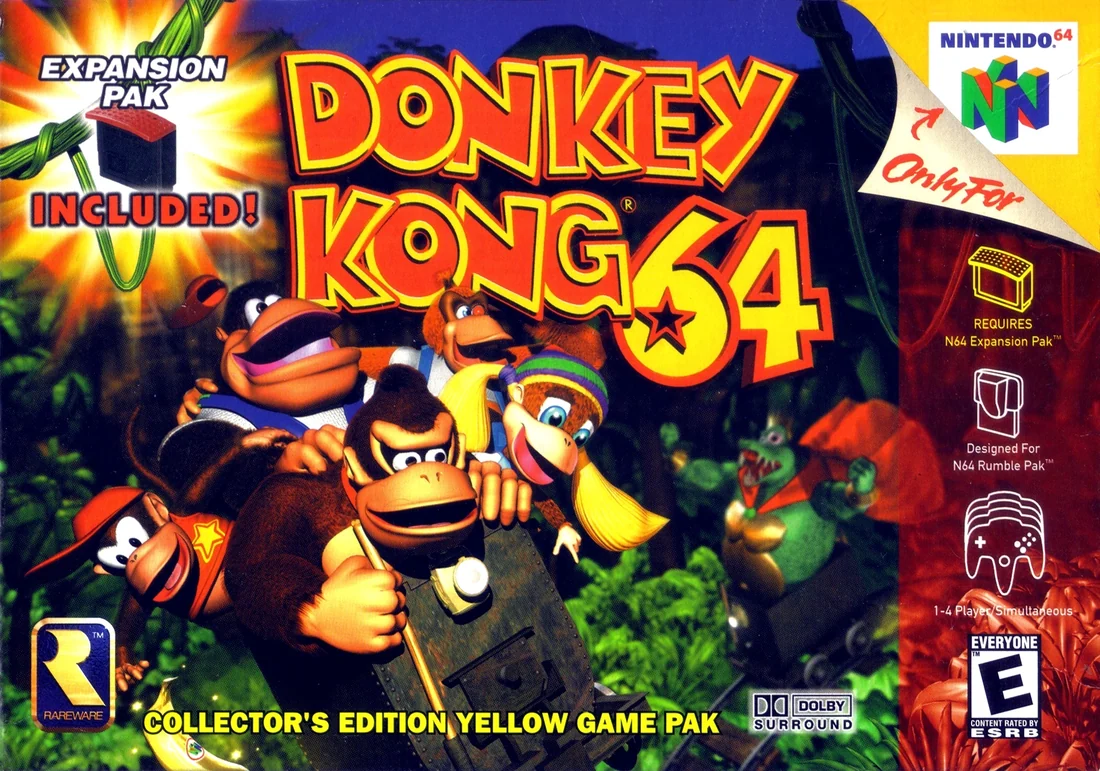
Rare became Nintendo 64’s most important external developer. The British studio had already achieved success with Donkey Kong Country on the Super Nintendo, but the new system allowed it to create larger three-dimensional environments and more technically ambitious projects. Rare’s Nintendo 64 catalogue included Diddy Kong Racing, Banjo-Kazooie, Perfect Dark, Conker’s Bad Fur Day and Donkey Kong 64. The games were not identical in tone or structure. Some emphasized colorful exploration, others racing, shooting or satire. Together they gave Nintendo 64 a wider identity than it would have had if Nintendo’s own mascot franchises had been the only major source of software.
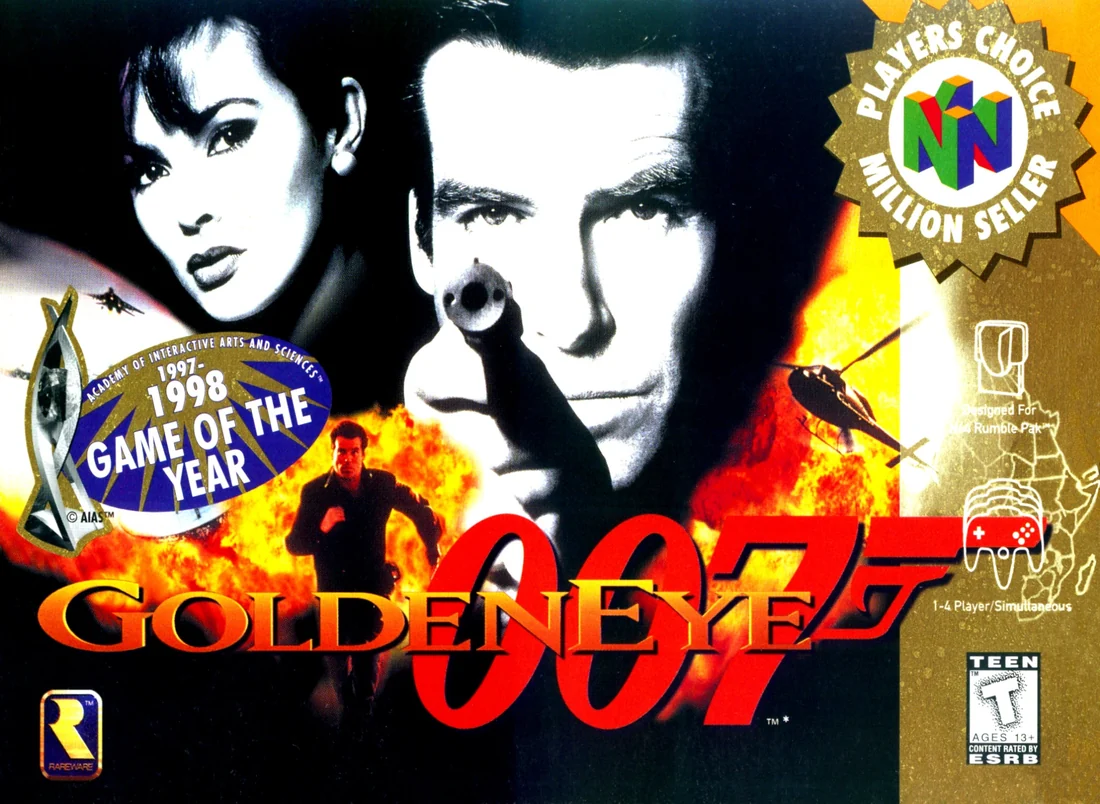
GoldenEye 007, released in 1997, demonstrated that a console first-person shooter could be designed around more than rapid target practice. Rare’s adaptation of the James Bond film included objectives involving alarms, surveillance, timing, security systems and mission-specific actions. A player could sometimes approach a level cautiously rather than simply eliminate every enemy. The game’s controls used the analog stick for movement and the Z trigger for firing, while the surrounding buttons handled weapons and actions. The arrangement was not identical to later dual-stick standards, but it showed that a console could provide sufficiently precise movement for a serious first-person game.
GoldenEye became a social phenomenon because its four-player split-screen mode transformed the Nintendo 64 into a gathering machine. Four players could compete around a single television without additional networking equipment or an online service. The divided screen reduced each player’s visible area and limited the amount of detail the system could display, but those compromises were accepted because the shared room was part of the experience. Mario Kart 64, Mario Party, Super Smash Bros. and later Perfect Dark reinforced the same culture. The four controller ports encouraged households to buy extra controllers and made local multiplayer a defining commercial and social feature rather than a minor option buried in a menu.
Ocarina of Time and Nintendo’s Software Strategy
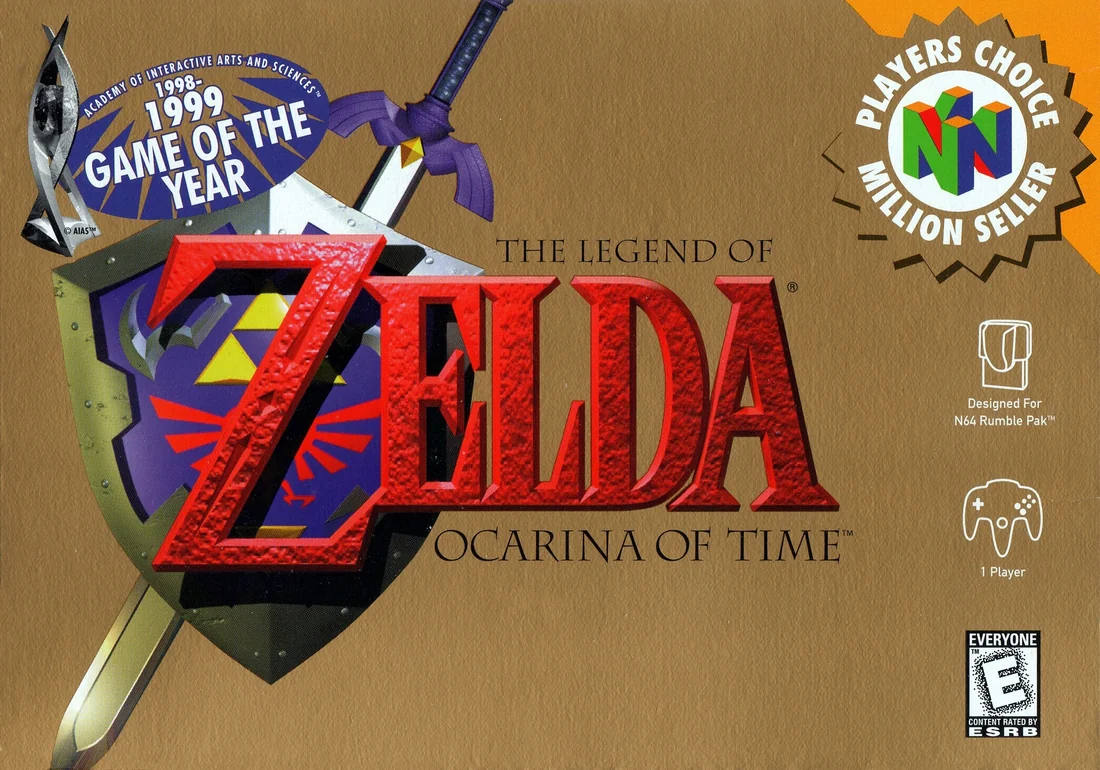
The Legend of Zelda: Ocarina of Time was released in Japan on November 21, 1998, after a long and demanding development process. Nintendo had to convert Zelda’s overhead exploration, puzzle solving, item progression and sword combat into a three-dimensional world. Hyrule Field provided an outdoor space in which Link could travel freely, while dungeons offered more controlled environments for puzzles and encounters. The game’s structure connected exploration, equipment and story progression without depending on the large quantity of filmed video or spoken dialogue that characterized some CD-based competitors. Its sense of scale came from movement through spaces and from the relationships among those spaces.
Z-targeting was the game’s most influential mechanical solution. In a three-dimensional fight, the player had to move, aim, control the camera and keep track of an opponent whose position could change rapidly. Z-targeting selected an enemy and helped center the camera and attacks around that target. The system made swordplay, defensive movement and item use more legible without removing the need for timing. It became a model for later action games, including titles that used very different settings and combat systems. The idea of focusing the camera and character actions on a meaningful object became one of the standard answers to the problem of fighting in 3D.
Ocarina of Time also showed how Nintendo’s first-party software served as a justification for the platform’s hardware choices. The cartridge delivered immediate access to a large adventure and avoided disc-loading pauses, while the developers organized visual, musical and textual assets carefully within the available storage. Nintendo’s strongest games consistently turned hardware constraints into recognizable design characteristics. Star Fox 64 used vibration and branching routes, Mario Kart 64 emphasized accessible competition, Super Smash Bros. built a crossover fighting system around recovery and stage hazards, and Pokémon Stadium connected Game Boy ownership to a console experience. The library was not large compared with PlayStation’s, but its leading games made the system’s strengths unusually visible.
Expansion Pak and the 64DD Experiment
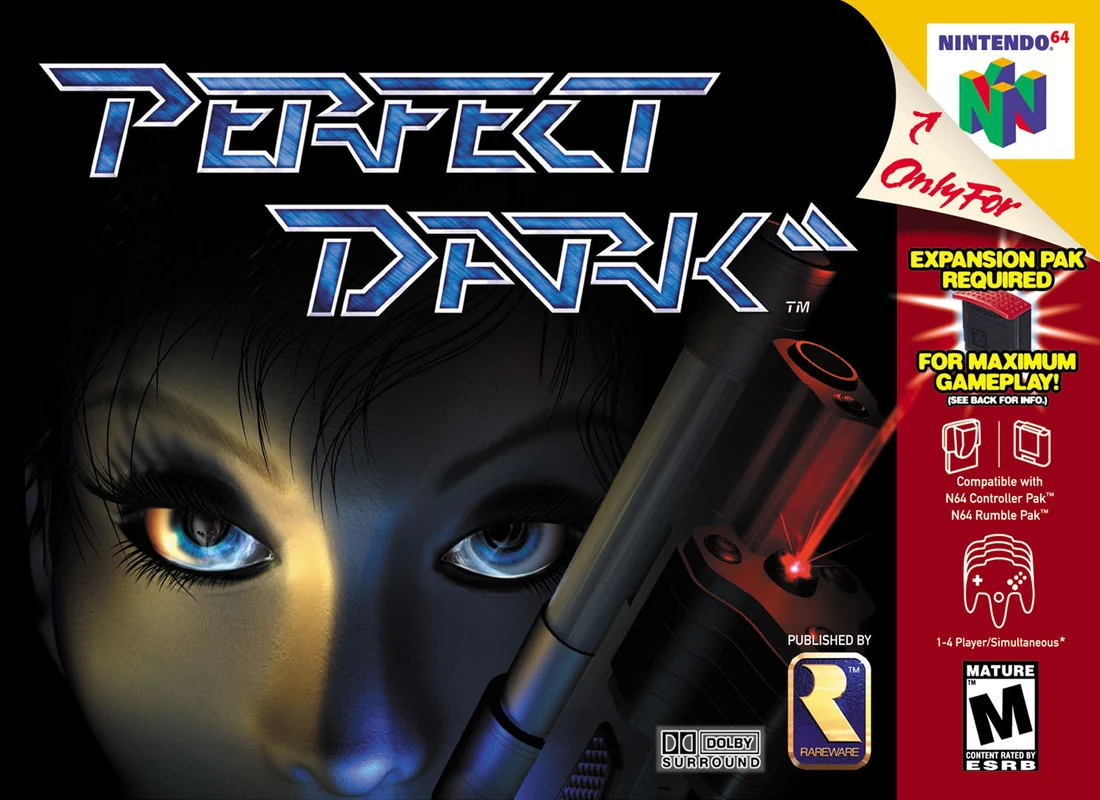
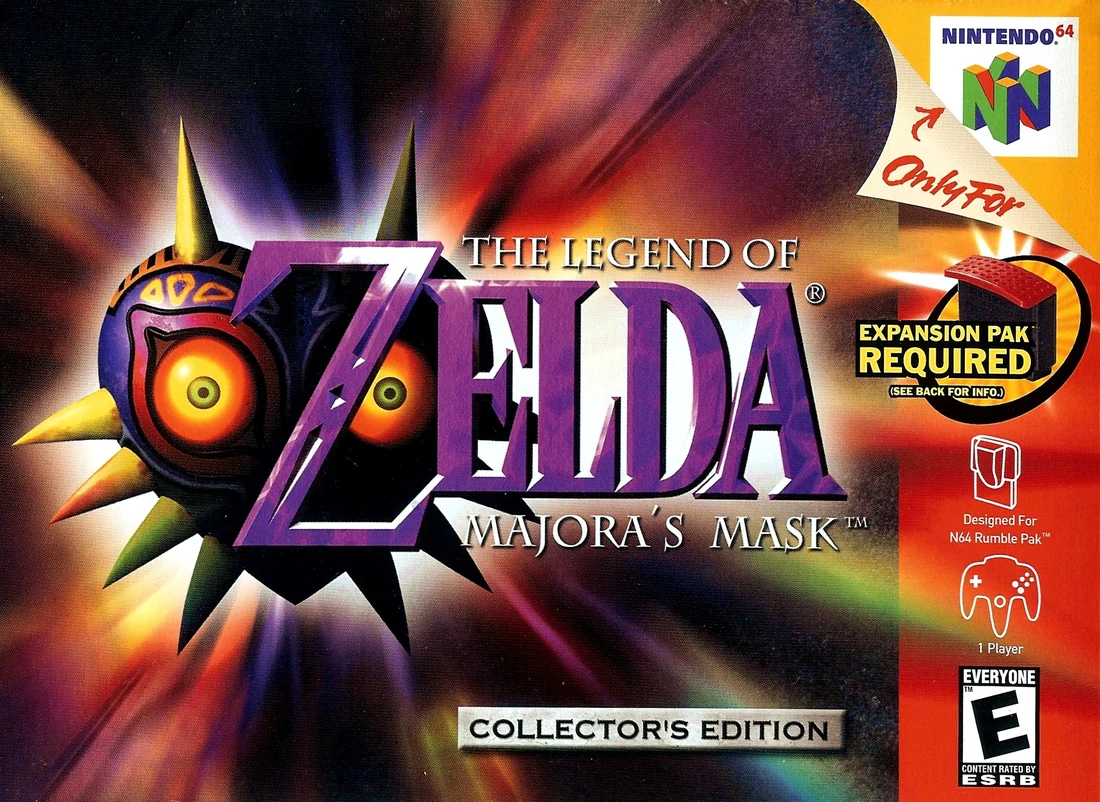
The Expansion Pak replaced the Nintendo 64’s standard Jumper Pak and increased system memory from 4 megabytes to 8 megabytes. Compatible software could use the additional memory for larger environments, higher-resolution modes, more detailed graphics or more demanding game logic. Donkey Kong 64 and The Legend of Zelda: Majora’s Mask required the Expansion Pak, while Perfect Dark offered a restricted experience without it. The accessory showed that Nintendo 64’s architecture could be extended after launch, but it also revealed how quickly developers were encountering the limits of the original memory configuration.
The 64DD was Nintendo’s more ambitious attempt to broaden the system’s storage and networking possibilities. The add-on used rewritable magnetic disks rather than ordinary Game Paks and included a real-time clock. Nintendo promoted it as a way to support expanded games, creative applications, user-generated content and network services. The disks were less expensive to produce than high-capacity ROM cartridges and could be used in ways that ordinary cartridges could not. Planned projects included creative tools and software that would allow players to make, exchange or modify content. In concept, the 64DD anticipated later interest in downloadable content and user-created experiences, although its technology and business model belonged to the late 1990s.
The 64DD finally launched in Japan on December 1, 1999, after repeated delays and changing plans. It was associated with the Randnet DD network service and received only a limited number of releases. Many projects had already been redesigned for cartridges, postponed or canceled by the time the hardware became available. The add-on never became a mainstream international answer to the PlayStation’s optical media. Its historical value lies in showing Nintendo’s uncertainty about how to preserve the benefits of cartridges while responding to the expanding expectations around storage, connectivity and writable media. The Expansion Pak became a useful accessory for selected games; the 64DD remained a short-lived experiment attached to a console nearing the end of its commercial life.
Competition, Sales and Third-Party Support
Nintendo 64 entered a market in which Sony’s PlayStation had already established a different business model. Sony offered compact-disc production, a large publishing network and a software image that reached beyond Nintendo’s traditional family audience. PlayStation’s library covered role-playing games, racing, fighting, sports, horror and experimental projects at a scale Nintendo 64 could not match. Sega Saturn also competed during the early part of the generation, but Sony became Nintendo’s principal rival. The contest was not simply about which console produced the cleaner polygonal image. It was about cost, storage, development tools, release frequency, retail risk and the ability to attract publishers whose games shaped public perception.
Nintendo 64 could be technically impressive and commercially awkward at the same time. Its specialized architecture rewarded developers who understood how to optimize geometry, memory and texture use, while its cartridges imposed high costs and production commitments. Major publishers including Acclaim, Midway, Activision, Electronic Arts, Konami, Capcom and THQ still released important games, but the platform lacked the steady stream of software that had supported Nintendo’s earlier dominance. Role-playing games were particularly scarce in Western markets, and several Japanese companies reduced their presence or moved major projects elsewhere. Nintendo and Rare provided an unusually strong first-party and second-party safety net, but that could not completely replace the breadth of a larger third-party ecosystem.
Nintendo’s official lifetime accounting lists 32.93 million Nintendo 64 hardware units and 224.97 million software units worldwide. These are consolidated lifetime figures, not a claim that every game sold equally well or that hardware sales correspond directly to active users. The totals show a successful global platform, but one that fell well short of the Super Nintendo’s 49.10 million hardware units and Sony’s much larger PlayStation installed base. Nintendo 64 therefore occupied an important middle position: it was too successful to be considered a commercial failure, yet it lost the generation’s broader market leadership. Its sales were concentrated around a smaller group of highly visible games, and that concentration became a strategic lesson for Nintendo’s next hardware design.
The Later Library and Transition to GameCube
Nintendo 64’s later years combined landmark releases with increasingly visible gaps in the schedule. Nintendo and Rare could still produce games that dominated attention, but long development cycles meant that players sometimes waited months for the next major release. PlayStation owners were more likely to find a steady supply of games across many genres and from many publishers. The difference was not that Nintendo 64 lacked variety; it was that its variety depended on a smaller number of developers willing to work within the cartridge format. The result was a platform whose best years were defined by exceptional peaks rather than a consistently broad flow of software.
Several late releases demonstrated how much developers had learned. Perfect Dark expanded Rare’s first-person design with more elaborate missions and multiplayer options. Conker’s Bad Fur Day challenged Nintendo’s family-friendly image through crude humor and satire. Resident Evil 2 showed that a large CD-era game could be compressed and adapted to Nintendo 64, although doing so required extensive technical work. Mario Golf, Mario Tennis, Pokémon Stadium, Mario Party and Pokémon Snap reinforced the console’s social and family appeal. The Legend of Zelda: Majora’s Mask used the Expansion Pak and a repeating three-day cycle to create a more concentrated and unsettling adventure. These games did not solve Nintendo’s publisher problem, but they proved that the platform still had creative range late in its life.
Nintendo released GameCube in Japan on September 14, 2001, followed by North America and Europe later that year. The new console adopted optical discs, a clear change from Nintendo 64’s cartridge strategy. Its proprietary mini-disc format was not the same as the standard CD or DVD used by competitors, but it provided substantially more storage than most Nintendo 64 Game Paks and reduced manufacturing costs. GameCube retained Nintendo’s emphasis on distinctive controllers, carefully engineered first-party software and local multiplayer, while incorporating lessons learned from the earlier generation. Nintendo 64’s commercial life ended as the sixth-generation market took shape, but its influence remained visible in GameCube’s analog controls, camera systems, four-player design and focus on polished launch software.
Preservation and Lasting Influence
Preserving Nintendo 64 software involves more than keeping a console and a collection of cartridges on a shelf. Some cartridges use batteries for saved data, and those batteries can eventually fail. Original Control Sticks wear through use, sometimes developing looseness that changes how characters move. Video standards and aging televisions can also make original output difficult to display cleanly on modern equipment. Nintendo’s own maintenance guidance warns users not to blow into cartridges, touch their connectors or expose the hardware to moisture, advice that reflects the sensitivity of the edge connectors and the long-term importance of careful handling.
The platform also presents archival challenges because its development tools, source code and production documentation were not widely available when the games were released. Contemporary developers worked close to the hardware, relying on specialized compilers, libraries and debugging systems. Modern preservationists, reverse engineers and fan researchers have reconstructed portions of that environment, documented the RCP and analyzed how individual games manage memory, graphics and audio. Cartridge dumping and emulation make it possible to study software without repeatedly wearing out original media, while original hardware remains important for examining timing, display behavior and controller response. Preservation is therefore both a conservation effort and a technical research project.
Nintendo 64’s creative influence is clearer than its sales position. Super Mario 64 established a durable model for 3D platforming, including open objectives, analog movement, collectible progression and hub-based worlds. Ocarina of Time normalized target locking and camera-centered action combat. GoldenEye 007 helped prove that console shooters could support precise movement and serious local competition. Mario Kart 64, Mario Party, Super Smash Bros. and Star Fox 64 made four-player living-room play part of the platform’s identity. The console did not invent every idea associated with modern 3D games, but it assembled many of them into forms that millions of players could understand. Nintendo 64 arrived when three-dimensional graphics were becoming the default language of console games, and its best software taught the audience how to speak that language.