From Nintendo 64 Lessons to Project Dolphin
Nintendo GameCube began as Nintendo’s response to the changing economics of console development. The Nintendo 64 had produced landmark software such as Super Mario 64, The Legend of Zelda: Ocarina of Time, Mario Kart 64, and Super Smash Bros., but its cartridge format increasingly worked against Nintendo. Cartridges loaded quickly, resisted casual copying, and allowed games to save without a separate memory device, yet they cost more to manufacture and held far less data than optical discs. As Sony’s PlayStation normalized CD-based publishing, many third-party publishers found its cheaper media and greater capacity more attractive. Nintendo therefore needed a successor that could retain fast response and strong hardware control without repeating the Nintendo 64’s storage problem.
The new machine was publicly associated with Project Dolphin during development. Nintendo’s goal was not merely to increase polygon counts. Company materials described a desire to make the system easier for creators to use, addressing the programming complexity that had made the Nintendo 64 difficult for some teams. A more conventional processor and a tightly integrated graphics system could help developers spend less time working around the hardware and more time designing levels, characters, and effects. This was especially important as three-dimensional games became larger and more expensive, requiring teams to manage detailed environments, animation, audio, cinematics, and increasingly complicated control systems.
Nintendo’s answer was a balanced architecture rather than a collection of headline specifications. The system combined an IBM PowerPC processor, a custom graphics and memory subsystem, compact optical discs, four built-in controller ports, and a controller designed around particular kinds of play. Nintendo also continued to emphasize first-party development and centralized manufacturing. Those decisions produced a coherent platform with fast responses, comparatively short loading sequences, and a clear focus on games. They also created disadvantages. Nintendo’s proprietary disc format offered less capacity than standard DVDs, while the company’s traditional emphasis on local play and exclusive software left it less prepared for the industry’s growing interest in DVD playback, online services, and broad multiplatform releases.
A Compact Console with a Strong Physical Identity
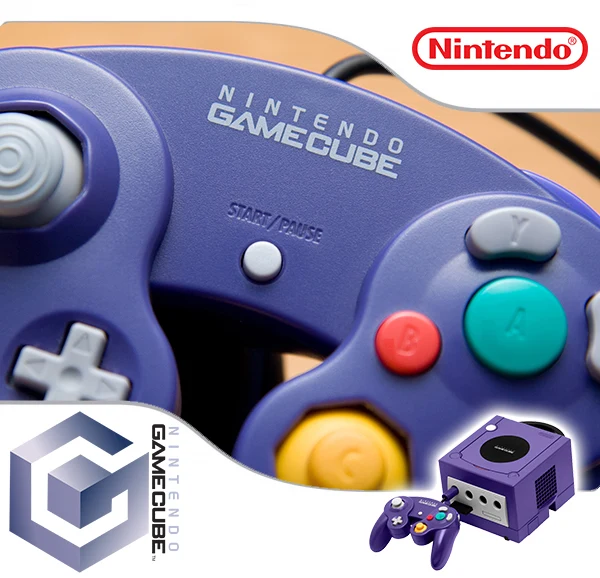
Nintendo revealed the final product as Nintendo GameCube, a name that stressed its compact, approachable form. The machine’s small cube-like case, integrated handle, circular disc lid, and launch-purple color made it immediately recognizable beside the taller PlayStation 2 and the large black Xbox. Nintendo also sold black, indigo, orange, silver, and other regional or special-edition versions. The carrying handle reinforced an important part of the system’s identity: it was designed as a machine that could be moved to a friend’s house for a multiplayer session, not as a permanent entertainment-center component that needed to dominate the living room.
The case was practical as well as distinctive. The console measured roughly 15 by 16 by 11 centimeters and weighed about 2.6 kilograms. Four controller ports were built into the front, while two memory-card slots sat beneath the controller connections. Expansion hardware attached to the underside through serial and high-speed ports. This arrangement allowed Nintendo to add devices such as the Game Boy Player and network adapters without filling the front or sides with visible connectors. The GameCube’s architecture and enclosure were therefore organized around a small number of repeatable activities: insert a disc, attach controllers, save to a memory card, and begin playing.
The machine’s friendly shape reflected Nintendo’s attempt to make the hardware less intimidating than some competing products. It looked playful without being as toy-like as the Nintendo 64, and it did not present itself as a home computer or a general media appliance. That clarity helped the GameCube develop a strong personality, but it also limited its appeal in households that wanted one device for games, music, and movies. Nintendo chose to sell a focused game console while Sony increasingly sold the PlayStation 2 as a DVD player that also played games. The GameCube’s physical identity was therefore both an advantage and a warning: it was easy to understand, but its purpose was narrower than the market’s expanding definition of a console.
Launch Dates and Regional Differences
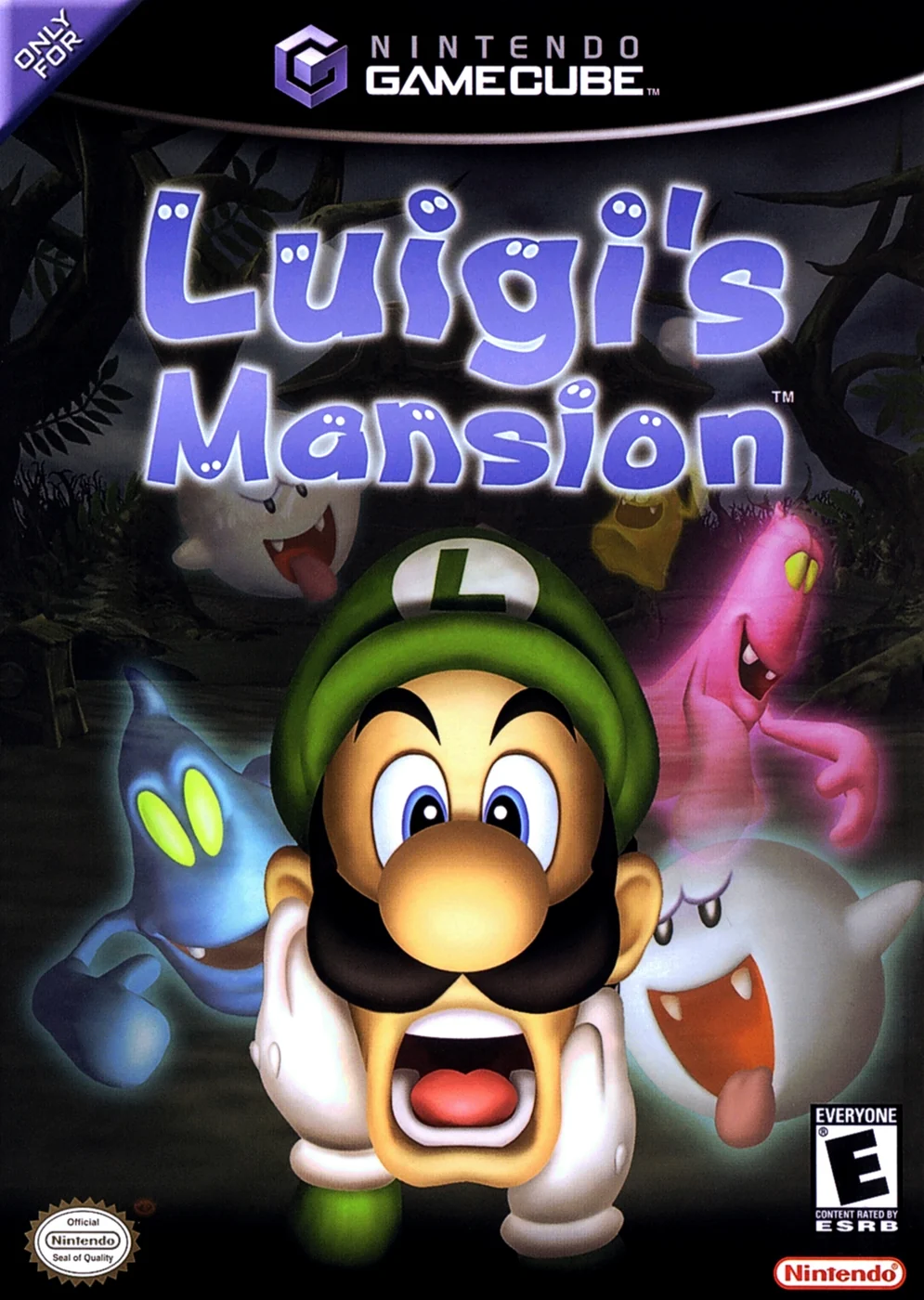
The GameCube launched in Japan on September 14, 2001. Nintendo priced it at 25,000 yen and supported the release with Luigi’s Mansion, Wave Race: Blue Storm, and Super Monkey Ball, while Super Smash Bros. Melee followed later in the month. Choosing Luigi’s Mansion as the principal launch showcase was significant. Rather than introducing another conventional Mario platformer, Nintendo presented Luigi as the lead character in a haunted-house adventure built around exploration, environmental puzzles, and a vacuum-like device used to capture ghosts. The game gave the new hardware a distinctive personality, even though it was smaller in scale than the major Mario adventures that had defined earlier launches.
North America received the system on November 18, 2001, at an introductory price of 199.95 dollars. Nintendo’s launch arrived during a crowded holiday season. Sony’s PlayStation 2 was already established, had a substantial library, and included DVD playback. Microsoft launched Xbox in North America on November 15, 2001, presenting a larger, technically ambitious machine with a built-in hard drive and an online-oriented infrastructure. Nintendo had strong characters and a lower-priced, compact console, but it was entering a market in which Sony already possessed enormous momentum and Microsoft was attracting consumers who valued hardware power, storage, and network capability.
The European launch took place on May 3, 2002, several months after Japan and North America. The timing reflected Nintendo’s regional distribution and localization strategy, but it also meant that European consumers encountered the GameCube after its launch reputation had already formed elsewhere. Regional software schedules varied, and television standards influenced display options, video cables, and game timing. The staggered release pattern showed Nintendo’s continued ability to manufacture and distribute specialized hardware, but it also revealed a weakness compared with the increasingly coordinated global rollouts pursued by major publishers. The GameCube’s launch story was consequently different in each territory: an early Japanese experiment, a heavily contested North American holiday product, and a delayed European entrant.
Gekko, Flipper, and Efficient Three-Dimensional Graphics
The GameCube’s main processor was IBM’s PowerPC-based Gekko, running at 485 megahertz. Clock speed alone does not explain the system’s performance, because Gekko worked as part of a tightly integrated design. Nintendo paired it with Flipper, a custom system LSI developed with technology partners including ATI. Flipper handled graphics operations, audio functions, memory access, and specialized rendering work. The arrangement allowed the console to move frequently used data quickly between the processor, graphics system, and embedded memory. In everyday terms, the GameCube was built to keep important visual operations close to the circuits performing them instead of repeatedly fetching everything from slower, more distant memory.
Flipper included approximately two megabytes of embedded frame-buffer memory and approximately one megabyte of embedded texture memory using fast 1T-SRAM. The totals were small compared with later systems, but their low latency was valuable. The graphics hardware supported effects such as hardware lighting, environment mapping, bump mapping, multitexturing, alpha blending, anti-aliasing, and texture filtering. These tools let developers make water appear reflective, surfaces appear textured, characters appear translucent, and scenes appear smoothly lit without requiring every effect to be constructed entirely through the central processor. Nintendo’s emphasis was efficient access and specialized hardware rather than simply advertising the largest possible memory figure.
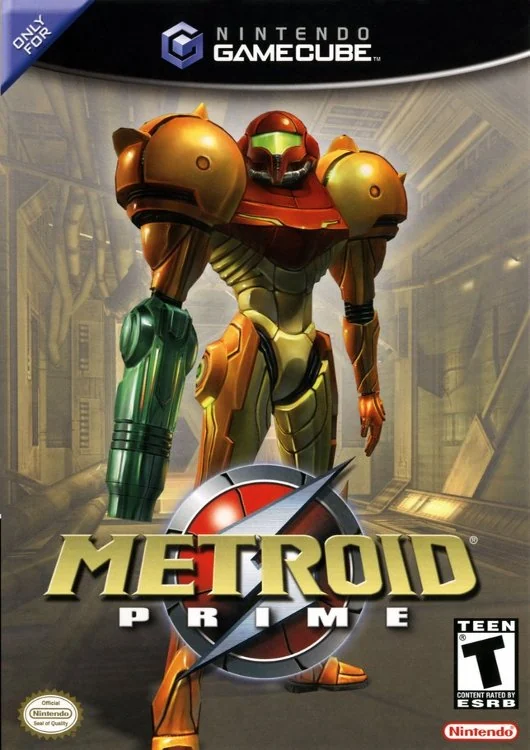
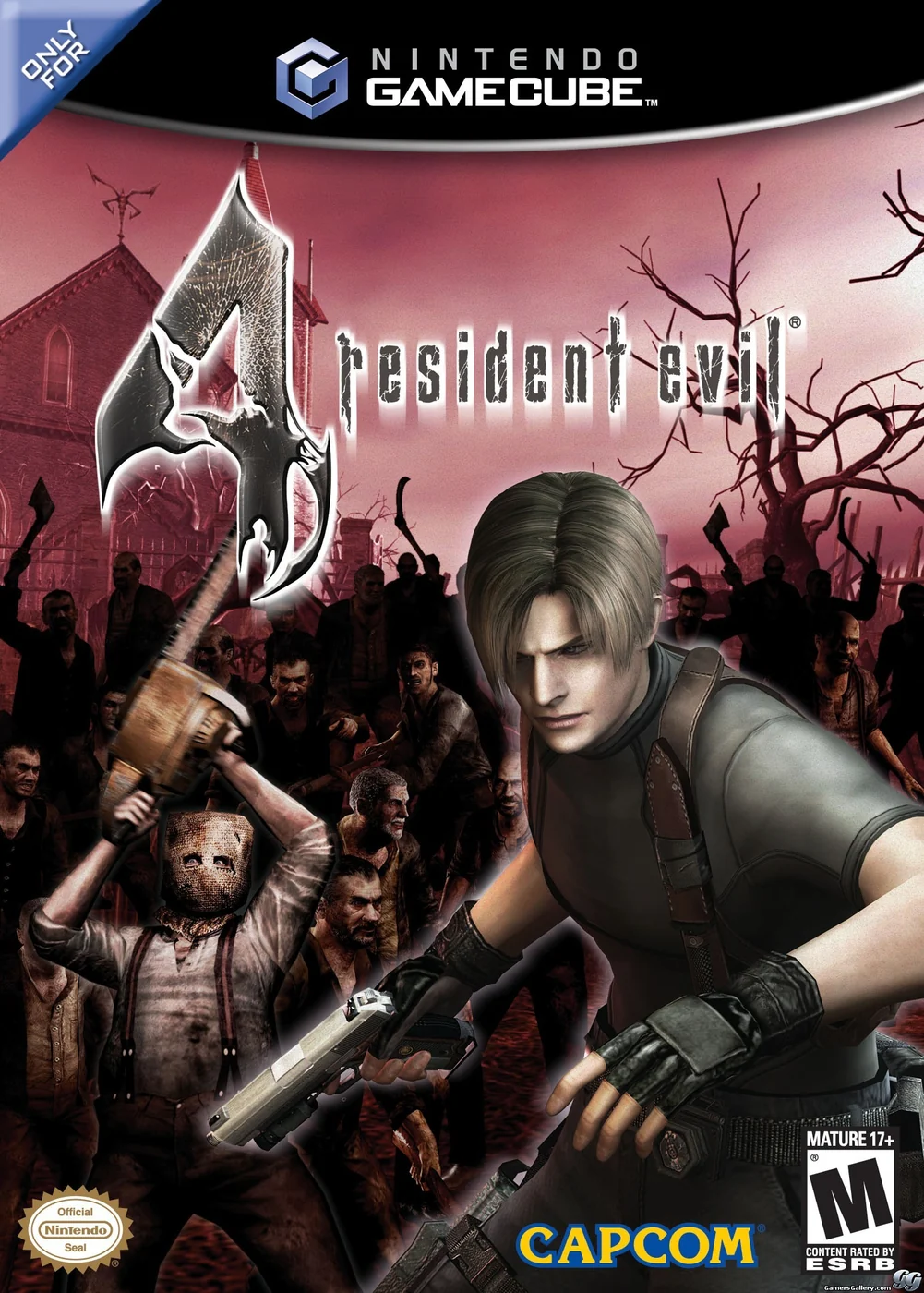
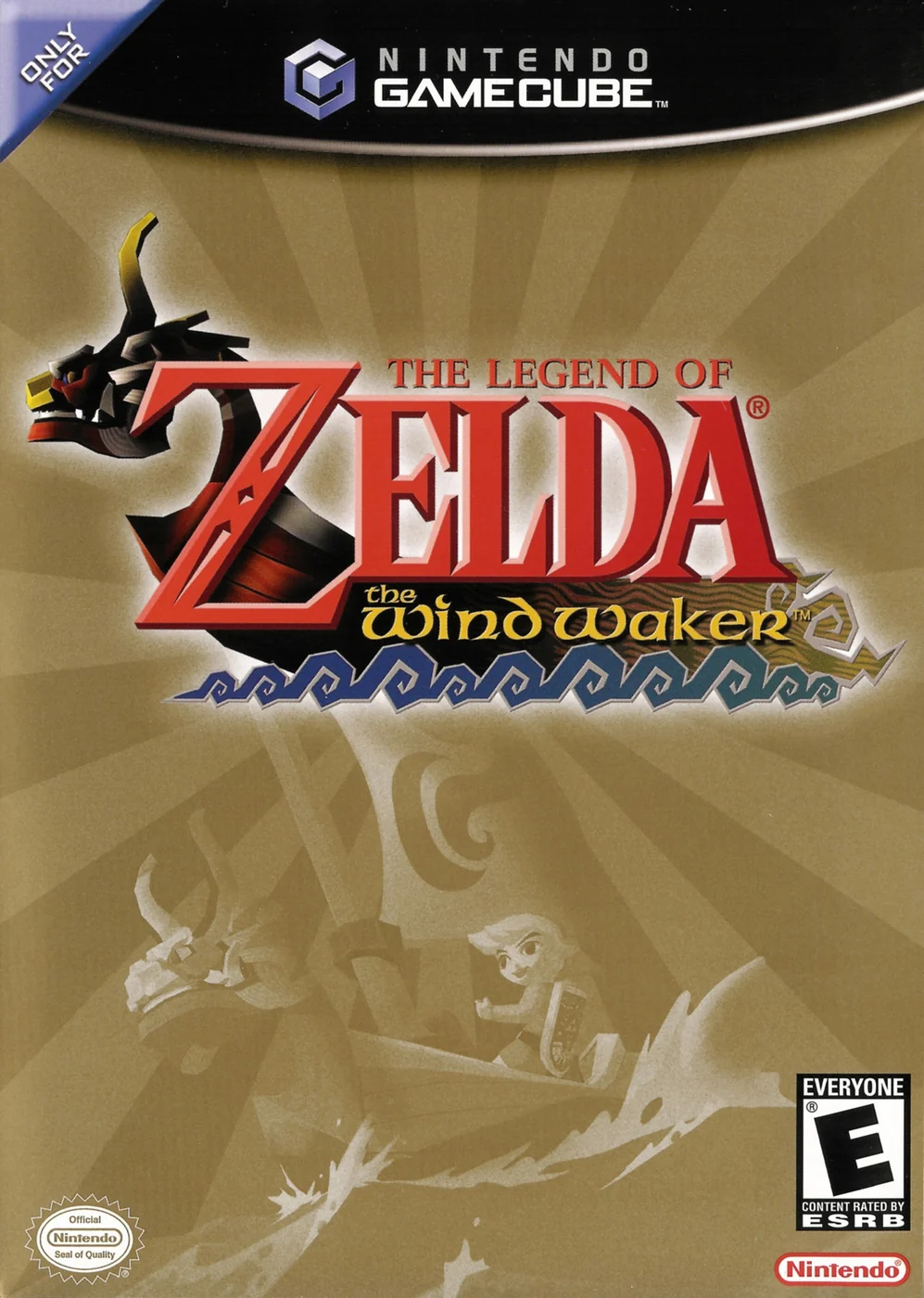
The system’s total memory was commonly described as 40 megabytes across different memory pools, and Nintendo’s official specifications listed peak performance figures rather than guarantees for every game. Developers still had to learn the proprietary tools and carefully manage the machine’s resources, but the platform was generally easier to target than the Nintendo 64. Its technical character became apparent in different ways across the library. Metroid Prime used detailed environments, lighting, scanning effects, and streaming exploration. F-Zero GX delivered fast vehicles and dense courses. The Legend of Zelda: The Wind Waker used expressive animation and broad vistas. Resident Evil 4 created cinematic spaces with dynamic enemies and carefully staged camera work. These examples demonstrated that the GameCube’s strengths came from coordination between its parts, not from any single specification.
MiniDVDs and the Cost of Rejecting Standard DVDs
Nintendo chose an eight-centimeter optical disc for GameCube software. Each proprietary GameCube Disc held approximately 1.5 gigabytes, a major increase over many Nintendo 64 cartridges but less than the roughly 4.7-gigabyte capacity of a single-layer standard DVD. The smaller disc helped Nintendo keep the console compact and maintain control over manufacturing. It also reduced the amount of storage available for high-quality video, voice acting, music, textures, and large numbers of environments. The format was not a technical failure; many games used it effectively. It was instead a strategic compromise that solved the Nintendo 64’s cartridge problem without adopting the full capacity and consumer familiarity of standard DVD media.
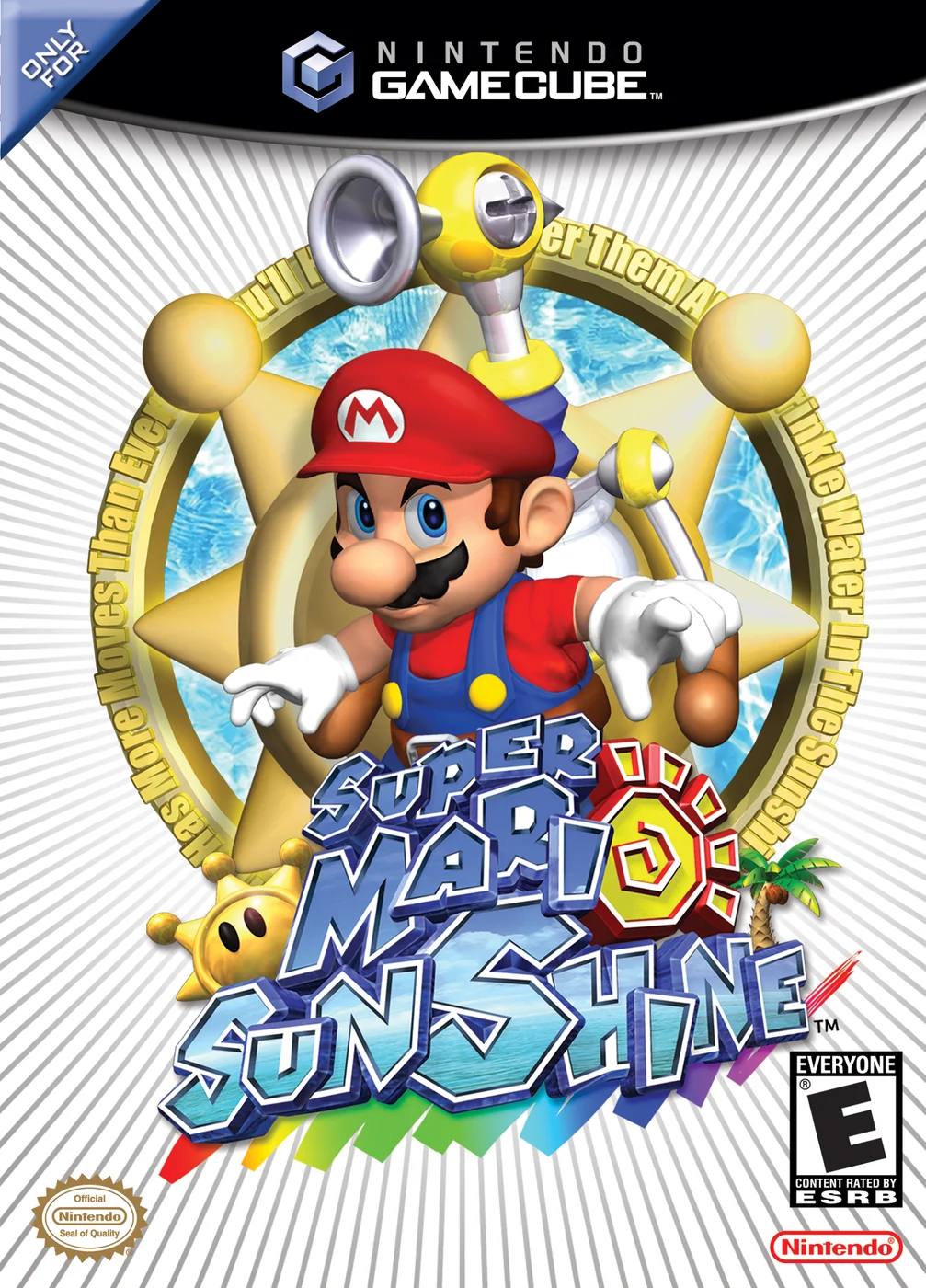
The limited capacity sometimes affected game design and publishing. Resident Evil 4 shipped on two GameCube discs, dividing its campaign across the available storage. Other games compressed video or audio, reduced texture sizes, or used fewer pre-rendered sequences than their PlayStation 2 equivalents. The consequences were not always obvious during play, because skilled developers could design around the limit. Metroid Prime, The Wind Waker, Super Mario Sunshine, and many role-playing games delivered substantial experiences without seeming incomplete. Nevertheless, publishers had to account for a format that was less capacious than the DVD standard increasingly used by competitors.
The absence of DVD movie playback was a larger commercial issue than the disc capacity alone. By 2001, a PlayStation 2 could be presented to a household as both a game console and an affordable DVD player. Nintendo deliberately kept GameCube focused on games rather than turning it into a general-purpose media device. A Japan-only Panasonic Q later combined GameCube functionality with DVD playback in a larger case, but it remained a niche variation rather than a worldwide solution. Nintendo’s decision preserved the GameCube’s identity as a dedicated games machine, yet it removed a persuasive feature that Sony used to justify PlayStation 2 ownership even among people who were not primarily shopping for games.
The Controller as a Design Statement
The GameCube controller became one of Nintendo’s most distinctive hardware designs. It placed a large green A button at the center, surrounded it with smaller yellow, red, and gray buttons, added an offset yellow C-stick, and used two analog triggers with unusually deep travel. The grip was divided into curved wings that guided the hands into a stable position. Nintendo was trying to make the most important action physically obvious while giving secondary commands different sizes, shapes, and textures. This arrangement worked especially well in games organized around one dominant action, such as jumping, attacking, spraying, or confirming an interaction.
The analog triggers were pressure-sensitive, allowing software to distinguish between a light pull and a full depression. Super Mario Sunshine used this distinction for the FLUDD water pack, while driving and shooting games could use gradual trigger movement for acceleration or weapon behavior. The C-stick was commonly assigned to camera control in three-dimensional games, though its compact shape could also support quick directional attacks or menu functions. The layout was not universally convenient. Ports designed around the more symmetrical PlayStation controller sometimes required awkward button mapping, and the small digital pad was less prominent than those on earlier Nintendo controllers.
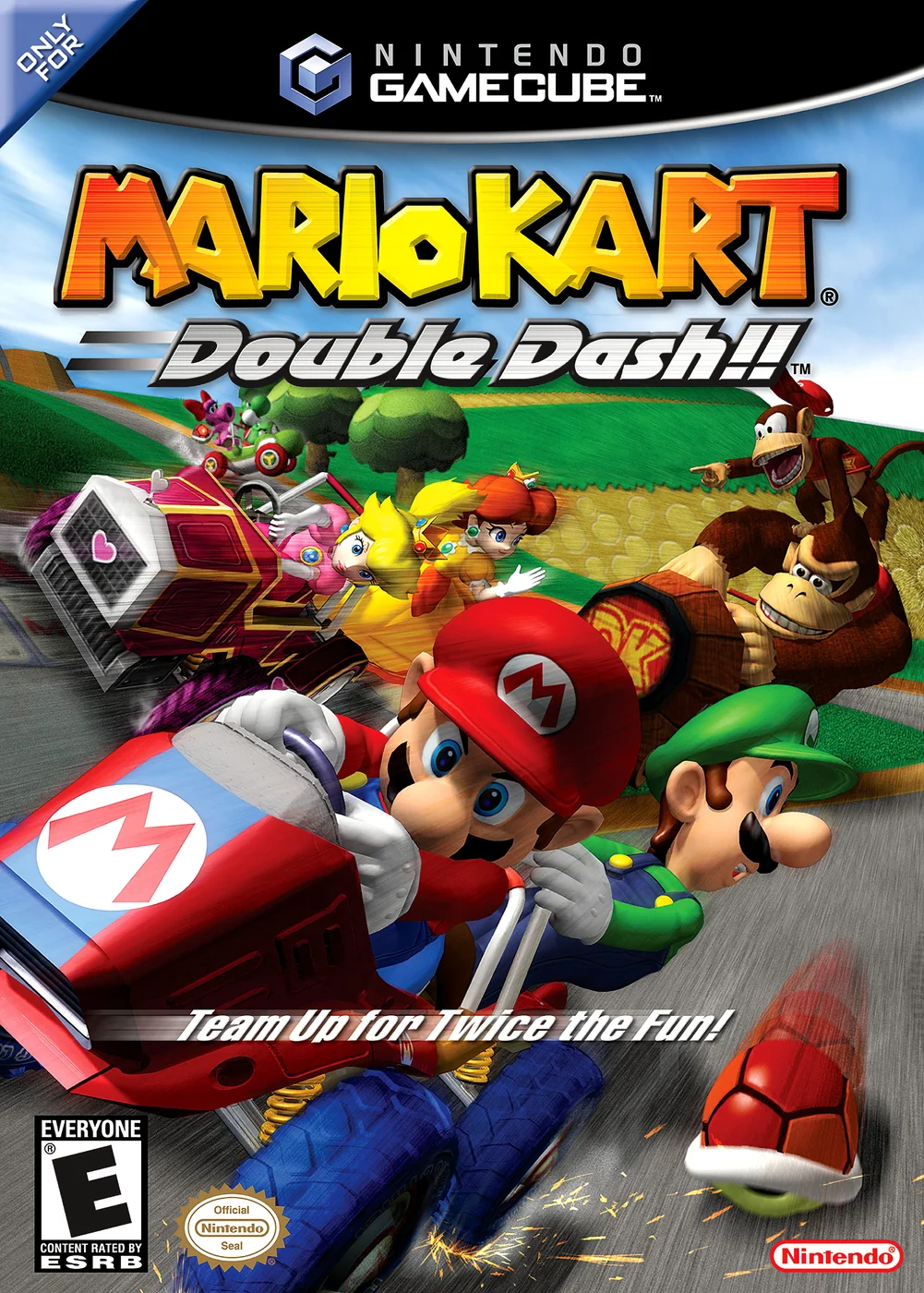
Nintendo also released the WaveBird, a wireless controller that communicated by radio rather than through a cable. It required batteries and omitted rumble, but it made four-player sessions considerably easier to arrange. This mattered because Nintendo treated local multiplayer as a central platform feature rather than an occasional add-on. Mario Kart: Double Dash, Super Smash Bros. Melee, Mario Party, Kirby Air Ride, sports games, and many licensed titles benefited from having four controller ports and a practical wireless option. The controller’s later reputation grew through competitive play, particularly in Super Smash Bros. communities, where players continued to value its stick resistance, trigger shape, and familiar button placement long after the GameCube itself had left retail shelves.
Nintendo’s Software Reinvention
Nintendo used the GameCube to revise several of its established series. Luigi’s Mansion replaced Mario with Luigi and made the haunted-house setting the central character of the adventure. Super Mario Sunshine preserved the free movement of Super Mario 64 but built its levels around the FLUDD water pack, which could spray enemies, clean surfaces, hover briefly, and alter how Mario reached distant platforms. The Legend of Zelda: The Wind Waker adopted cel-shaded characters, exaggerated animation, and an ocean-spanning structure. The visual style initially divided some fans who expected a darker, more realistic Zelda, but its expressive faces, readable combat, and carefully staged world demonstrated that the GameCube did not need to imitate the visual seriousness of rival systems.
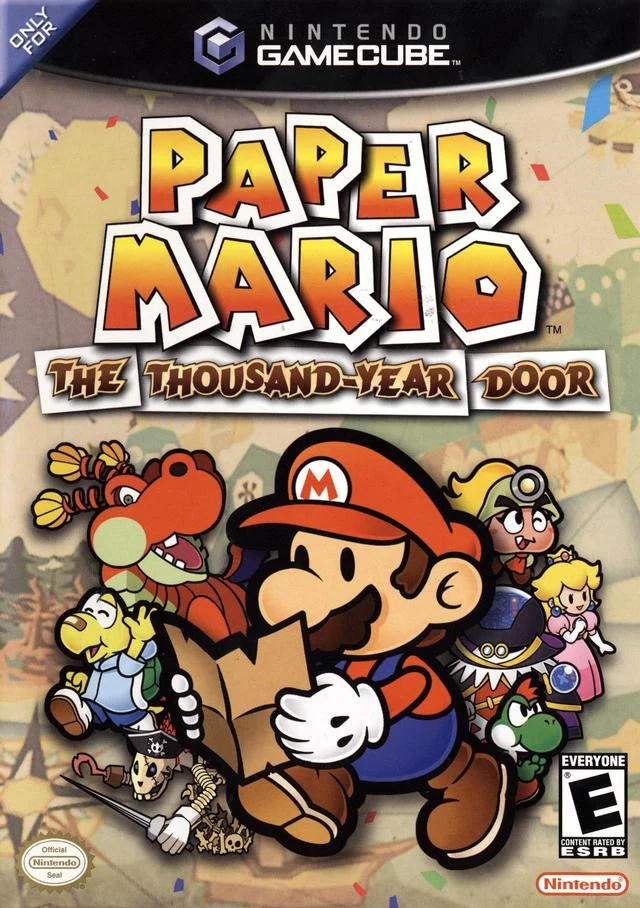
The platform also introduced or strengthened series outside Nintendo’s traditional core. Pikmin turned route planning, resource management, and time pressure into a real-time strategy experience in which players directed small plant-like creatures. Animal Crossing offered a persistent village based on calendars, collecting, conversations, and daily routines rather than conventional completion. Fire Emblem: Path of Radiance brought a major tactical role-playing series to a wider home-console audience in some regions. Pokémon Colosseum and Pokémon XD: Gale of Darkness connected the platform to Game Boy Advance Pokémon games. Nintendo also supported Mario sports titles, Star Fox Adventures, Wario World, and other projects that filled out the library across age groups and genres.
Super Smash Bros. Melee became one of the system’s defining games. Its large roster, unlockable content, speed, local multiplayer, and technical depth made it immediately attractive to casual groups while also supporting highly specialized competitive play. Metroid Prime was another landmark. Retro Studios, working under Nintendo’s supervision, translated Metroid’s exploration, scanning, combat, environmental storytelling, and isolation into a first-person format. The result showed that a series traditionally associated with side-scrolling exploration could move into three dimensions without losing its identity. These games were important not only because they sold or received acclaim, but because they showed Nintendo using its established characters and design traditions as raw material for experimentation.
Third-Party Support and the Search for Exclusives
Nintendo knew that a successful platform needed more than first-party software, so it pursued significant third-party relationships. Capcom’s support became especially visible through a group of Resident Evil projects. The remake of Resident Evil reconstructed the original game with new environments, revised scenes, higher visual detail, and a more oppressive atmosphere. Resident Evil Zero also launched on GameCube, and Resident Evil 4 initially appeared as a GameCube exclusive in January 2005. These releases gave the console a strong mature-action identity and challenged the assumption that Nintendo hardware was suited only to family-oriented software.
The library also included influential contributions from Sega, Namco, Electronic Arts, Ubisoft, Konami, Activision, and smaller publishers. Sonic Adventure 2: Battle, Soulcalibur II, Viewtiful Joe, Eternal Darkness: Sanity’s Requiem, Tales of Symphonia, Skies of Arcadia Legends, Beyond Good & Evil, and Metal Gear Solid: The Twin Snakes expanded the platform’s range. Some were exclusive, some were timed exclusives, and others were ports or adaptations that appeared after release elsewhere. The GameCube could therefore serve fighting-game fans, role-playing audiences, action players, racing enthusiasts, and people interested in unusual or experimental designs.
The underlying problem was not that third parties ignored the console completely. It was that the GameCube’s smaller installed base made major investments more difficult to justify. Publishers increasingly developed for PlayStation 2, Xbox, and PC simultaneously, spreading costs across large markets. The GameCube’s proprietary discs could require additional production planning, while its controller sometimes demanded revised layouts for games designed around more symmetrical hardware. Nintendo’s family-friendly reputation also influenced publisher expectations, although Resident Evil, Eternal Darkness, and other games demonstrated that the platform could support darker material. Third-party support remained substantial, but it rarely became the self-reinforcing cycle of broad releases and growing audiences that Sony had created around PlayStation 2.
Connectivity, Accessories, and the Local Multiplayer Philosophy
Nintendo promoted GameCube connectivity with the Game Boy Advance. A link cable could allow the handheld to act as a controller, a second screen, a map, a radar, or a device for exchanging data and unlocking features. The Legend of Zelda: The Wind Waker could use a connected Game Boy Advance to support Tingle-related functions, while Final Fantasy Crystal Chronicles and The Legend of Zelda: Four Swords Adventures made multiple handhelds part of their multiplayer design. Other games used the connection for smaller bonuses. The concept was ambitious because it gave different players different information, but it also required multiple systems, cables, and compatible software, making the feature expensive and difficult to explain to ordinary consumers.
The Game Boy Player extended Nintendo’s handheld relationship onto the television. Attached to the underside of the GameCube, it accepted Game Boy, Game Boy Color, and Game Boy Advance cartridges and displayed them on a television. Players could use a GameCube controller, a WaveBird, or a connected Game Boy Advance as the control device. The accessory also retained a link port for supported multiplayer arrangements. It transformed the GameCube into a broad display platform for Nintendo’s handheld library and gave the company a way to connect its home and portable businesses without asking consumers to buy an entirely separate television adapter.
Networking was available but never became the center of the system. Nintendo sold modem and broadband adapters, and the GameCube could connect to broadband networks through compatible games. Phantasy Star Online Episode I and II provided the best-known online experience, while other titles supported local-area networking or specialized multiplayer features. Nintendo did not create an integrated online service with a universal account structure, voice chat, and standardized matchmaking comparable to Xbox Live. The contrast was important. GameCube technically participated in the move toward online play, but its strongest and most reliable social identity remained people sitting together around one television with several controllers.
Commercial Pressure, Hardware Revisions, and Sales
The GameCube’s competitive position deteriorated as the sixth-generation market developed. PlayStation 2 benefited from its early lead, DVD playback, enormous software catalogue, and relationships with publishers around the world. Xbox offered a hard drive, built-in broadband networking, powerful first-party software, and the Halo series. Nintendo’s system was compact, relatively inexpensive, and technically capable, but its advantages were less obvious to consumers seeking a multipurpose entertainment device or the widest possible third-party library. Nintendo responded with price reductions, bundles, color variations, and a steady stream of first-party games rather than a major mid-generation redesign.
Most hardware changes were incremental. Nintendo produced different regional models, adjusted video-output arrangements, and reduced or removed certain features from later units as manufacturing priorities changed. Early GameCube models included a digital video port intended for compatible high-quality cables, while later revisions omitted it. Nintendo also released special bundles and colors tied to major games. The Panasonic Q was the most dramatic variation, combining GameCube hardware with DVD playback in a larger Japanese-market design. It illustrated that Nintendo understood the attraction of DVD capability, but its limited release meant that the standard GameCube remained a dedicated game console without movie playback.
Nintendo’s official lifetime figures identify 21.74 million GameCube hardware units and 208.58 million pieces of GameCube software sold worldwide. These are Nintendo’s consolidated unit totals for the dedicated GameCube platform and its software, not estimates that combine related products or later reissues. The result was respectable compared with many systems, but far below the PlayStation 2 and below Nintendo’s own Nintendo 64. The commercial lesson was consequential. Nintendo could still make excellent hardware and software, yet the traditional contest over processor performance, storage, and established enthusiast audiences no longer guaranteed success. The company needed to reach people who were not already committed to the conventional console market.
The Wii Transition and the End of GameCube Development
Nintendo began moving toward its next strategy while GameCube was still receiving software. The Nintendo DS expanded the company’s idea of gaming through two screens, touch input, and a broader audience. The next home console, first known as Revolution and later released as Wii, pursued motion-based interaction and a lower barrier to entry instead of competing primarily through conventional specifications. Wii retained substantial compatibility with GameCube. Original models could run many GameCube discs, accept GameCube controllers, and use GameCube memory cards. This made the transition less abrupt for existing owners and allowed Nintendo to carry successful technical foundations into a new product concept.
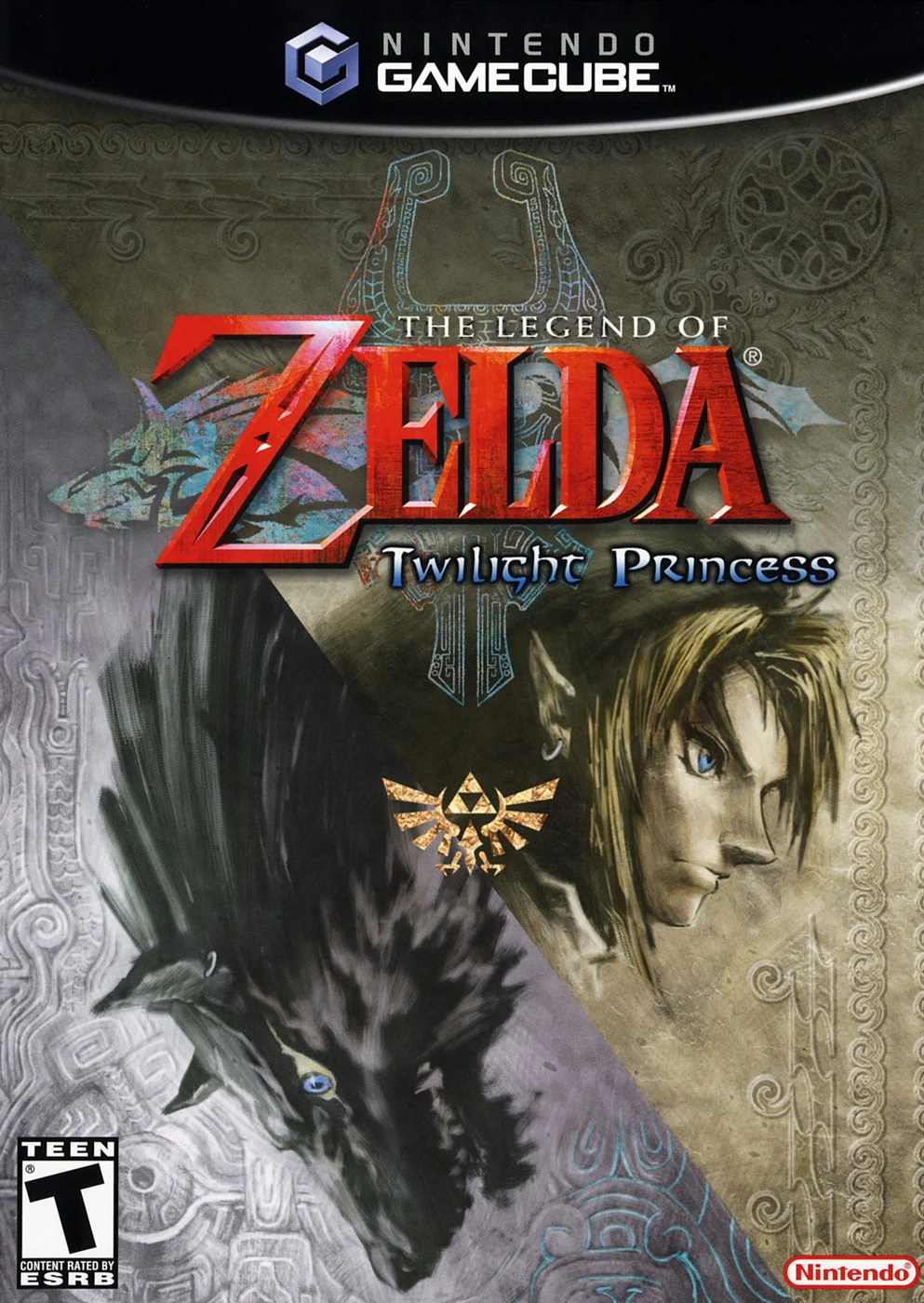
Several projects reveal how the generations overlapped. The Legend of Zelda: Twilight Princess began as a GameCube project and launched on both platforms, with the Wii version adapting the controls and mirroring the game world. Super Paper Mario also moved from a GameCube plan to a Wii release. Internal teams, technologies, and design practices developed during the GameCube era continued into Wii production. The older system was therefore not simply abandoned; its hardware and software experience became part of Nintendo’s preparation for a broader audience. GameCube’s conventional control model supplied the foundation from which Wii’s motion-focused design could depart.
Nintendo gradually ended GameCube marketing and shifted development resources toward Wii and Nintendo DS. Some late releases appeared after the platform had clearly ceased to be the company’s main priority, and the system’s final years were shaped by the knowledge that its successor was already changing the market. The end of GameCube support was not caused by a lack of memorable games. It reflected a strategic decision that Nintendo had to solve a different business problem. Rather than build another machine aimed chiefly at people comparing console hardware and exclusive software, Nintendo wanted a system that could attract families, older players, and people who had stopped buying dedicated game consoles.
Preservation, Competitive Culture, and Lasting Influence
The GameCube’s later reputation has often been stronger than its original commercial position. Its library is remembered for unusual combinations: bright presentation with demanding mechanics, recognizable characters with serious competitive depth, and established franchises willing to take creative risks. Super Smash Bros. Melee became a long-running competitive discipline rather than a short-lived party game. Metroid Prime became a model for translating exploration-heavy design into a first-person perspective. The Wind Waker’s cel-shaded presentation, once criticized by some fans as insufficiently realistic, later came to represent a confident artistic direction that remained expressive and technically effective.
Preservation has become especially important because GameCube software was not uniformly reissued during the platform’s early afterlife. Original discs, memory cards, controllers, optical drives, component cables, Game Boy Players, and connectivity accessories all document different parts of the system’s history. Enthusiasts have catalogued hardware revisions, repaired aging drives, preserved save data, digitized manuals, and studied development materials. Emulation has made some games easier to examine and preserve, although legal access, copyright, software ownership, and the handling of proprietary files remain complicated. The GameCube matters to preservationists because it captures a transitional period in which physical media, local multiplayer, handheld connectivity, and emerging network features coexisted.
The system’s influence can be seen in Nintendo’s later priorities. The company continued to value comfortable controllers, strong local multiplayer, hardware-software integration, and unusual interfaces rather than treating raw power as the only measure of progress. Wii inherited GameCube compatibility and parts of its technical foundation before moving toward motion control. Later Nintendo products repeatedly revisited GameCube-era ideas, including handheld-home interaction, selective remasters, four-player accessibility, and controllers designed around a strong central action button. GameCube was not Nintendo’s biggest commercial success, but it became a concentrated expression of the company’s strengths and limitations. It corrected the Nintendo 64’s storage problem, delivered sophisticated three-dimensional games, supported an exceptional catalogue, and demonstrated why Nintendo eventually chose to compete by changing the audience rather than simply continuing the traditional console race.