The 1936 World Wide Gum baseball set occupies an unusual and highly collectible place in prewar card history. Produced in Canada by a gum company with ties to the American Goudey tradition, it had previously issued versions of Goudey-style cards. In 1936, however, World Wide Gum used a more distinct visual identity of its own. The checklist’s many profile portraits, with a smaller number of action images mixed in, give the set a particularly recognizable period look.
Its appeal is not based on design alone. The checklist includes several enormous names from 1930s baseball: Lou Gehrig, Hank Greenberg, Dizzy Dean, Joe Cronin and Joe DiMaggio. That combination makes the set a compact collecting challenge with cards tied to major careers, a major rookie-card designation and an enormous range between lower-grade examples and the best-preserved survivors.
The reported high sales below show the five leaders from the set. They should be read as specific recorded transactions rather than universal price guides. Vintage-card values can turn on details that a player name and a card number cannot capture: the numerical grade, the grading company, whether a card is signed, and whether comparable copies have actually changed hands publicly.
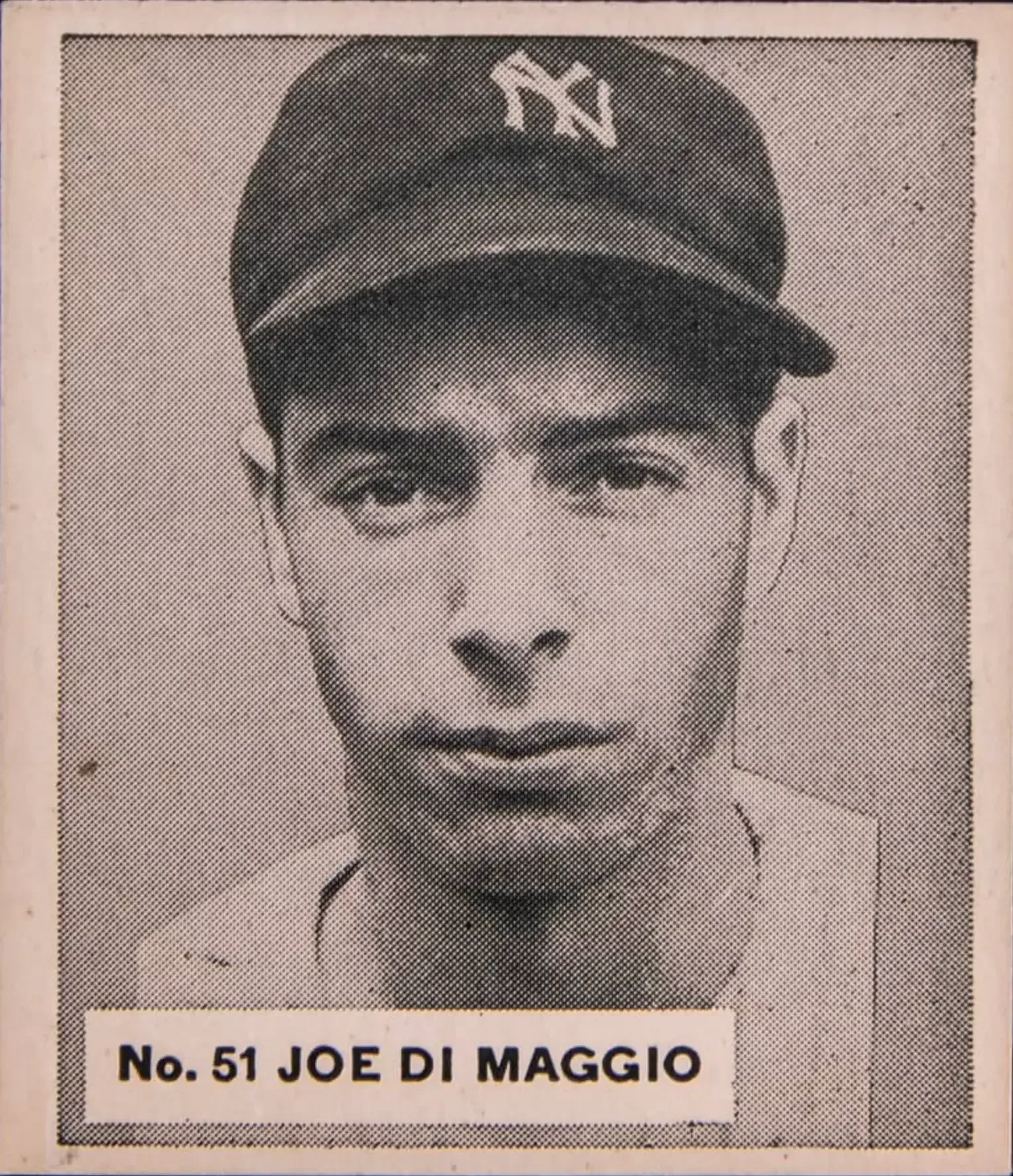
1. #51 Joe DiMaggio
Highest reported sale: $203,326 for an autographed PSA 3, March 2022.
For more context, explore Hisense’s 55-Inch CanvasTV Puts a 144Hz Gaming Screen Behind a Teak Art Frame.
Joe DiMaggio’s #51 is the headline card of 1936 World Wide Gum. Collectors generally regard it as his first true rookie card, despite earlier minor-league cards issued in a Zenith Pacific League set. The distinction matters. A rookie card is usually a player’s first card associated with his major-league career, and that designation can bring a powerful demand advantage even when other earlier cards exist.
The largest reported transaction was an autographed PSA 3 that sold for $203,326 in March 2022. That figure cannot be treated as a straight comparison with unsigned copies because the autograph adds a separate premium. A non-autographed PSA 6.5 sold for $148,840 in February 2025, making it the highest-graded sale reported for this card. A PSA 7 is listed in the population report, but no sale for that copy is reported here.
That gap illustrates an important collecting reality: the best known grade is not automatically the price benchmark. A population report, often shortened to “pop report,” records how many cards a grading company has evaluated at each grade. It tells collectors that a PSA 7 exists, but not necessarily what it would sell for today—or whether its owner is willing to sell at all. A completed sale provides a real market data point, though the circumstances of that individual card still matter.
Related coverage includes Top 3 Most Valuable Cards in the 1936 World Wide Gum Set.
For DiMaggio collectors, the set’s attraction is especially direct. The card depicts him in his debut season and sits at the meeting point of rookie-card demand, Yankees history and a well-known vintage issue. Those factors help explain why it stands above every other card in this particular five-card ranking.
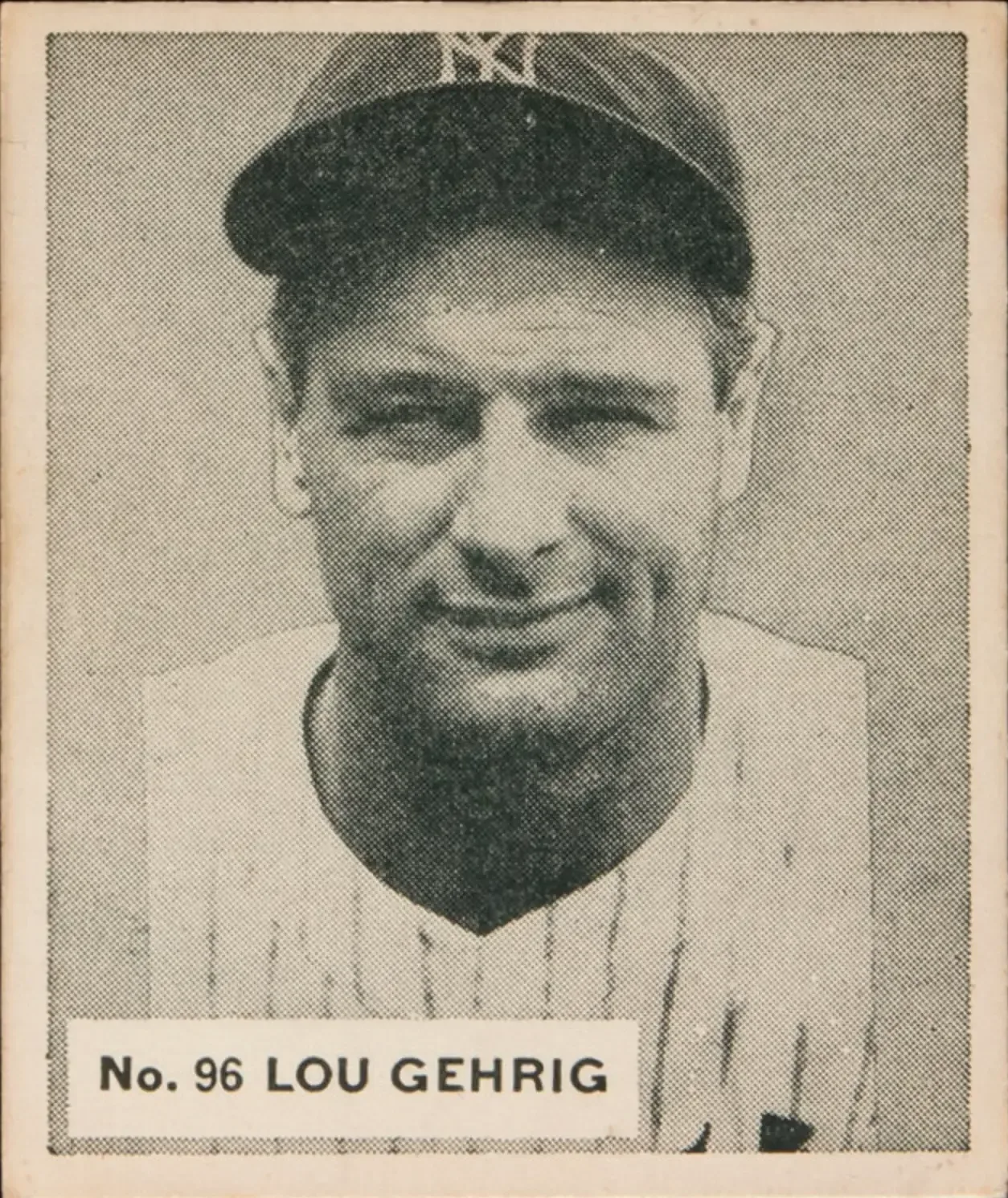
2. #96 Lou Gehrig
Highest reported sale: $164,400 for an SGC 8, February 2024.
Lou Gehrig’s #96 represents the set’s other six-figure heavyweight. Gehrig was at the height of a legendary career when World Wide Gum released the set. He had won the Triple Crown in 1934, and he was already one of the defining stars on baseball cards during the era. His Goudey issues from 1933 and 1934 are among the period’s enduring touchstones, including the 1934 card series associated with the “Lou Gehrig Says...” feature.
An SGC 8 sold for $164,400 in February 2024, the highest reported sale for the card. The highest PSA grade noted for the issue is PSA 7. At first glance, it may seem strange that a card in an SGC holder is the top sale while PSA has a separately recorded high grade, but grading-company labels and numerical grades are not interchangeable across every card and every transaction.
SGC and PSA are third-party graders: firms that examine a card’s authenticity and condition before sealing it in a labeled holder. Their scales are used as market shorthand, but collectors still evaluate the item itself. Centering, corners, surface, print quality and eye appeal can all influence bidder interest. The $164,400 sale is thus a documented result for one SGC 8, not a promise that every Gehrig #96 will command the same sum.
Even so, the sale demonstrates the depth of demand behind a vintage Gehrig card. DiMaggio may have the set’s key rookie-card position, but Gehrig’s place in the hobby and the comparatively extraordinary condition of this sold copy put #96 very close behind.
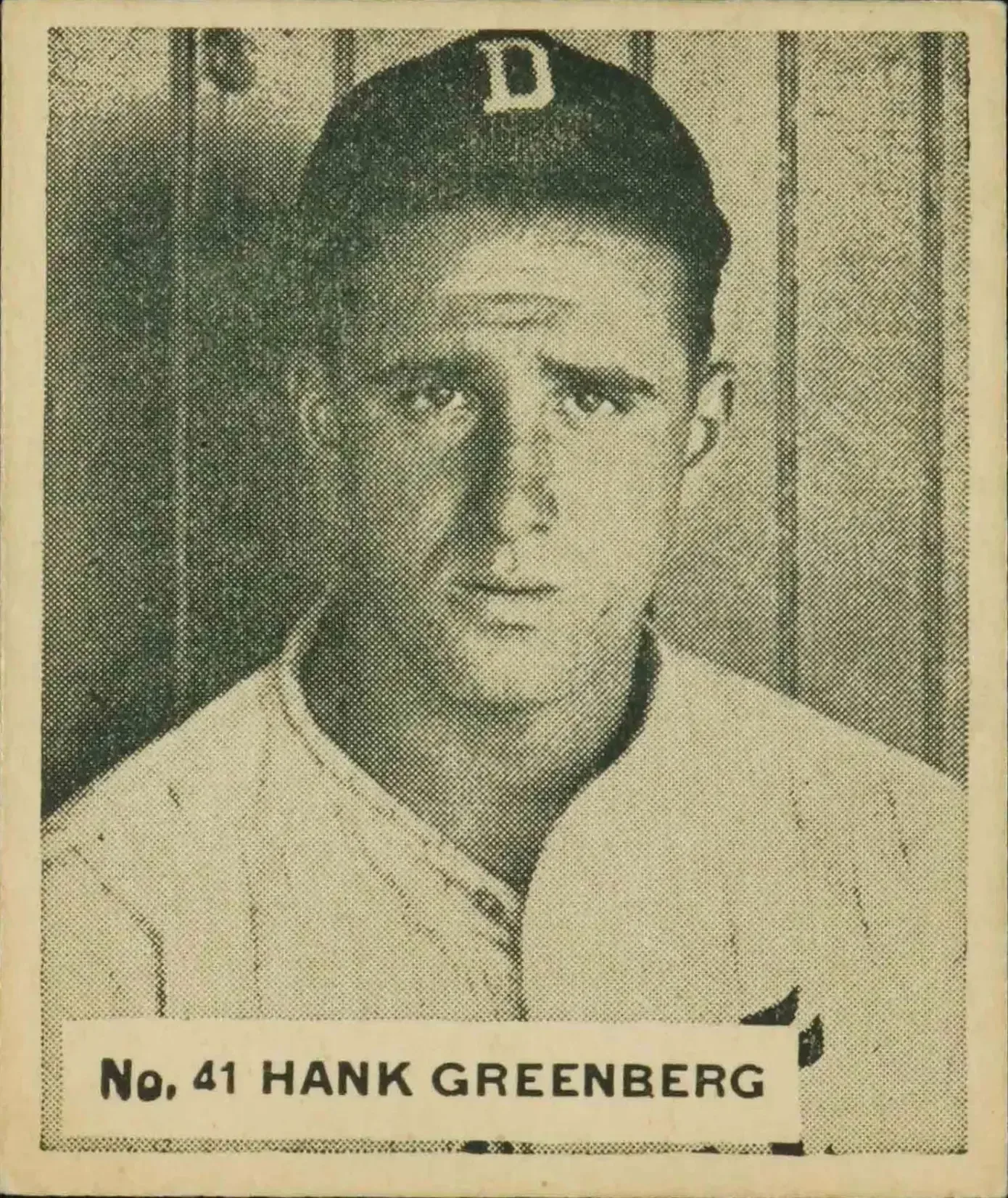
3. #41 Hank Greenberg
Highest reported sale: $6,000 for a PSA 5, September 2025.
There is a steep drop from the Gehrig and DiMaggio cards to Hank Greenberg’s #41, but Greenberg remains a major card within the release. He entered 1936 as the reigning American League Most Valuable Player after winning the award in 1935. He had also won the first of his two career World Series championships and would lead the league three times in both home runs and runs batted in.
A PSA 5 sold for $6,000 in September 2025, the highest reported sale for the card. The PSA population report includes one PSA 5.5 and one PSA 6, but neither has a reported sale in the supplied transaction record. Their presence is useful evidence that higher-graded copies exist; it is not evidence of a higher realized price.
This is precisely why collectors should separate three questions that are often blurred together: What is the highest grade known? What is the latest public sale? And what is a particular available card worth? The answer to each can differ. A card can be the finest known but have no recent auction result. A lower-graded card can set the most meaningful public benchmark because it is the best copy to have actually sold. And the value of a specific card still depends on its presentation and buyer interest at the moment it reaches market.
Greenberg’s card is a strong example of player significance and scarcity data needing to work together. His career credentials make him an obvious central figure in a 1936 baseball checklist, while the reported sales and graded population provide a more grounded view of how that importance has translated into recorded transactions.
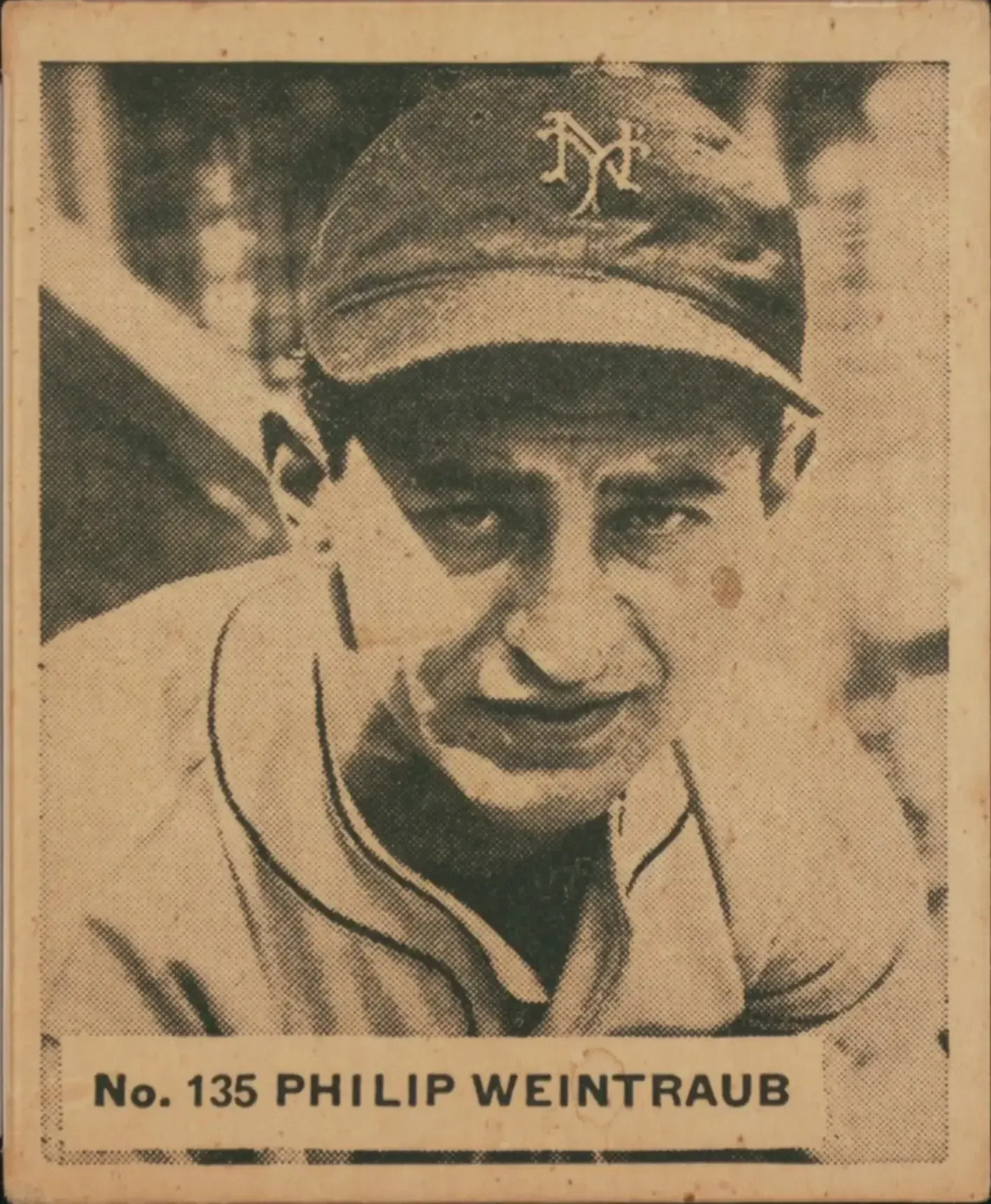
4. #135 Philip Weintraub
Highest reported sale: $3,400 for a PSA 3.
Philip Weintraub is the ranking’s most surprising name. His #135 has a higher reported sale than every player in the set outside the three cards above and Dizzy Dean, even though he spent 1936 in the minor leagues. A PSA 3 sold for $3,400, the highest reported sale cited for the card.
Weintraub’s major-league career began in 1926 and ran intermittently through 1945. He appeared with the New York Giants, Cincinnati and Philadelphia, retiring with the Giants, the club with which he had made his big-league debut. His lifetime batting average was .295.
The grading data makes this result more interesting rather than less. The noted PSA population is nine copies, with examples graded as high as PSA 6. Yet no sales are reported for the PSA 5 or PSA 6 copies. Meanwhile, a PSA 4 last sold in 2010 for $255. That does not create a simple, reliable condition ladder from $255 to $3,400; the sales are far apart in time, and public records do not capture every private deal or unsold offering.
Instead, the result is a useful warning against treating an old sale as a permanent price tag. Market data is strongest when there are multiple recent comparable sales at similar grades. Where the record is thin, a single transaction can establish a remarkable high-water mark, but it also leaves more uncertainty around repeatable value. Weintraub’s #135 is valuable in this ranking because the reported PSA 3 sale happened—not because every copy, or every higher-graded copy, has established the same market level.
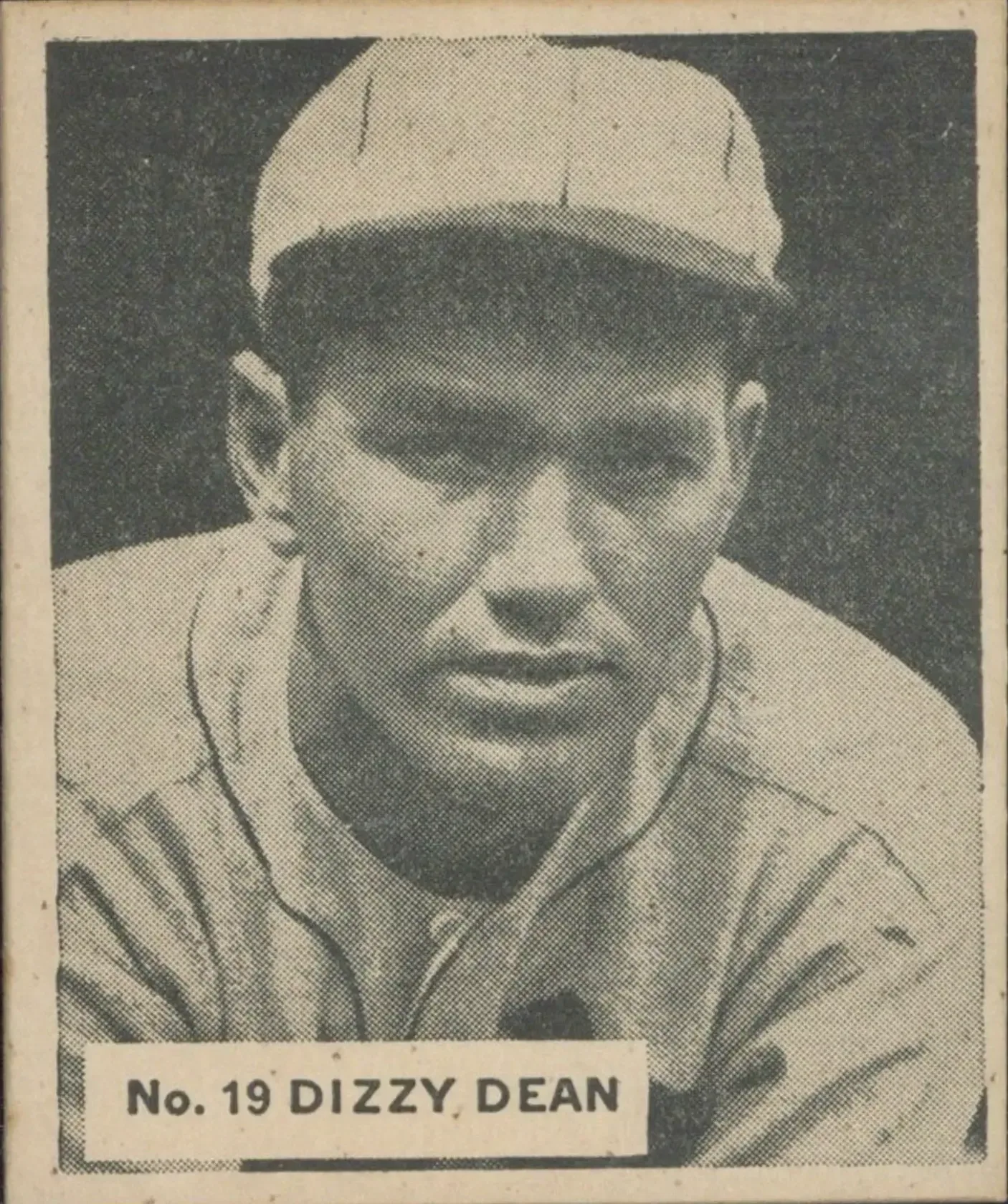
5. #19 Dizzy Dean
Highest reported sale: $2,250 for a BVG/BGS 3.5, December 25, 2025.
Dizzy Dean’s #19 rounds out the top five with a reported $2,250 sale for a BVG/BGS 3.5 on December 25, 2025. Issued during the peak of his career, the card represents one of the sport’s most confident and recognizable pitchers of the time.
Dean led the National League in strikeouts for four consecutive years. He was the 1934 National League MVP, a four-time All-Star and the centerpiece of the Cardinals pitching staff known as the Gashouse Gang. That 1934 season also ended with a Cardinals World Series championship. He was later traded to the Cubs in 1938.
The holder designation is worth decoding. BVG refers to Beckett Vintage Grading, while BGS refers to Beckett Grading Services. As with PSA and SGC, the label helps establish the card’s authenticated grade, but a numerical grade should be understood in the context of its grader and the individual card. The 3.5 result documents the condition assigned to the sold Dean, not a fixed value for every #19.
What the five-card list says about the set
The hierarchy is clear. DiMaggio and Gehrig dominate because their cards combine historic stature with exceptional reported sales in high-grade examples, while DiMaggio additionally has the hobby’s true-rookie-card designation. Greenberg then leads a substantial middle tier, with Weintraub and Dean following on the basis of their strongest reported transactions.
But the set is more than a five-card chase. Its checklist captures a cross-section of 1930s baseball, while its portrait-led design differentiates it from World Wide Gum’s earlier Goudey-derived approach. The occasional action image, including Red Ruffing pitching, gives the release added visual variety. Ruffing’s baseball résumé contains its own unusual note: he was one of four Yankees pitchers to hit a grand slam, doing so with a walk-off grand slam against Boston in April 1933.
For anyone evaluating examples from this set, the practical approach is to start with the card number and player, then identify the grading company, grade and whether the card has an autograph. After that, distinguish between an asking price, an old sale and a reported completed transaction. Finally, look for whether higher-graded copies have truly sold rather than merely appearing in a pop report. Those basics help prevent a rare high grade, a signature or an unusually strong one-off result from being mistaken for a universal comp.
Vintage issues reward that careful reading. In 1936 World Wide Gum, the named stars are the obvious draw, but the market record shows why a card’s story is never only about the player on its front. Condition, certification, available population and the specifics of the sale all become part of the object’s history—one reason this Canadian prewar set continues to hold collectors’ attention.