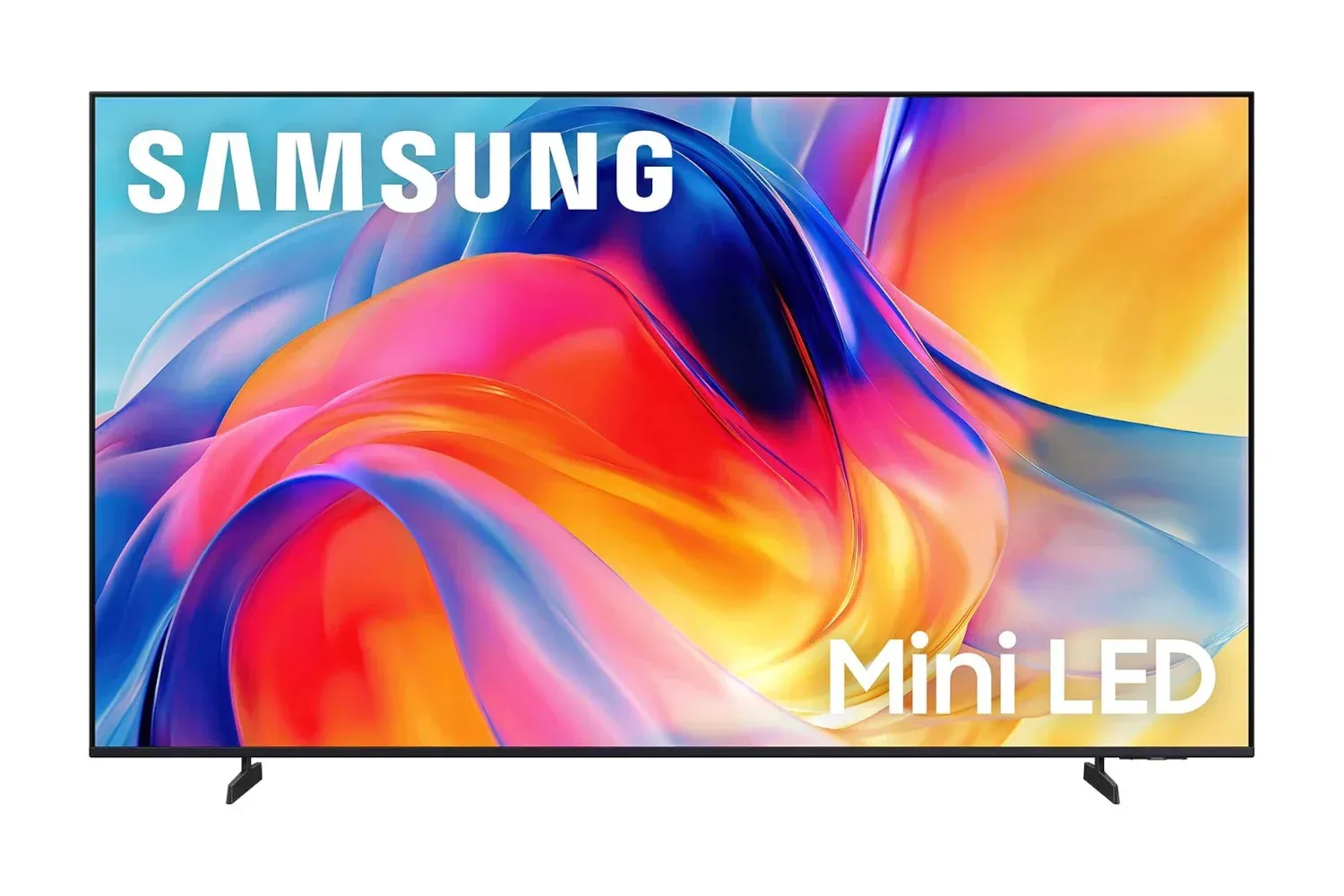
A television that can disappear into a room’s decor is hardly a new idea, but Hisense’s 55-inch Hi-QLED S7 CanvasTV makes a more pointed case for players who do not want a conventional black rectangle dominating the wall between sessions. Its pitch is simple: when games, films, and streams are off, the display can show artwork or personal photos; when it is time to play, it is a 4K TV with a 144Hz refresh rate and two HDMI ports that support 4K at that maximum refresh rate.
The 55-inch model was listed at $700, reduced from $1,500. That is an $800 difference, or roughly 53% off the stated price. As with any retailer promotion, prospective buyers should confirm the live listing, final price, and stock before treating that figure as current.
A gaming TV designed not to look like a gaming TV
The S7 CanvasTV belongs to the kind of display category built around dual use. It is intended to serve as a television when active and a decorative screen when idle. That matters for a living room, bedroom, or shared space where visual impact is part of the purchasing decision, rather than an afterthought once the TV is switched off.
Hisense includes two elements that are central to that approach: a Teak Frame that attaches to the sides of the set and an UltraSlim Wall Mount meant to position the TV flat against the wall. In other words, the framed-wall-art look described for this model does not depend on separately buying those pieces. The supplied frame is part of the product package, not a decorative ambition left for the buyer to finish.
The screen’s Hi-Matte coating is the other key part of the design. A matte finish is intended to reduce reflections from windows, lamps, and other room lighting. For artwork, Hisense says the treatment provides a softer, canvas-like texture rather than the more overtly glossy appearance associated with many TVs. For regular viewing and games, the practical objective is clearer visibility in bright rooms by cutting down glare.
That is a useful distinction. The coating is not merely an art-mode flourish: reflections can be distracting during play, particularly in a room with strong daylight or lights positioned opposite the screen. At the same time, a matte treatment is a design and viewing preference, not a universal shorthand for picture quality. Buyers interested in the S7 should be considering the whole balance of features—room lighting, intended wall placement, gaming connections, and the value of Art Mode—rather than treating one display treatment as a blanket verdict.
What the 144Hz specification means for games
The headline gaming number here is 144Hz. Refresh rate refers to how often a screen can update its image in one second. A 144Hz panel can refresh up to 144 times per second when it receives a compatible signal, which gives it greater headroom for rapidly moving action than a 60Hz display.
Hisense says two of the CanvasTV’s four HDMI inputs can carry 4K at 144Hz. The port detail is important. A buyer using several devices should not assume every HDMI connection on the TV offers the same top-end signal support. The supplied information establishes that two do, while the other two are not identified as supporting 4K/144Hz.
Related coverage includes Hisense's 55-Inch CanvasTV Deal Brings a 144Hz Gaming Display Into Art Mode Territory.
In plain terms, 4K describes image resolution, while 144Hz describes update frequency. They are separate specifications. A display can have a sharp 4K image without refreshing at 144Hz, and a high-refresh display does not itself guarantee that every game or connected device will output at that rate. The CanvasTV’s stated capability gives compatible hardware an appropriate connection path; the result also depends on the source device, its settings, the game, and the HDMI port selected.
The TV also includes Game Mode with lower input lag. Input lag is the delay between an input—such as pressing a controller button—and the corresponding action appearing onscreen. Lower latency can make controls feel more immediate, particularly in games where timing and fast camera movement matter. It is not the same thing as refresh rate, though the two can complement one another: refresh rate concerns how frequently the screen updates, while input lag concerns response delay.
That makes the S7 CanvasTV’s appeal unusually specific. It is not positioned solely as an art screen that happens to run games, nor solely as a high-refresh gaming display with an optional screensaver. Its feature list aims to join those priorities. For households where the same wall has to work as a gallery-like focal point and a gaming setup, the combination could remove a familiar compromise.
Console players assessing broader display choices may also want to keep an eye on the shifting platform landscape; Nintendo’s expanding Switch 2 plans are one reminder that the games and devices a household expects to use can change faster than a wall-mounted TV.
Art Mode is more than a standby image
CanvasTV includes 120 artwork pieces preloaded at no added charge, and owners can also load their own photographs. That provides an immediate selection without requiring users to begin by building their own art library. Personal images offer a second route for people who want the set to function as a rotating photo display rather than only an art frame.
A motion sensor can trigger Art Mode when someone enters the room, then turn the screen off when the room is empty to reduce power use. The feature is part of the product’s effort to make the display feel less like a device waiting in standby and more like an object that participates in the room while someone is present.
There is a practical trade-off worth recognizing. The art function only has value if the TV is placed somewhere where occupants will see it while it is not in active use. A dedicated gaming room with little foot traffic may get less benefit from the motion-based presentation than a living area. Conversely, the feature could be meaningful in a communal space where a blank powered-off panel would otherwise be prominent for much of the day.
Picture features beyond the refresh rate
Hisense lists Hi-QLED color, Dolby Vision, and Filmmaker Mode among the S7 CanvasTV’s picture features. Hi-QLED is presented as the set’s color technology, intended to produce vivid and accurate color. Dolby Vision is described as enhancing brightness and contrast detail in very bright and very dark portions of an image. For viewers moving between games and films, those traits speak to the TV’s all-purpose role rather than only its Art Mode credentials.
Filmmaker Mode has a more focused purpose: it is intended to present films without additional processing that changes the filmmaker’s intended image. That will matter most to viewers who prefer a less altered film presentation. It does not turn a television into a one-setting device for every type of content; instead, it supplies an option aligned with the source material for movie viewing.
The TV uses Google TV, which brings streaming services including Netflix, Prime Video, YouTube, and HBO Max into its interface. Google TV also offers recommendations based on viewing habits and supports voice commands for finding programs. This is not a gaming performance specification, but it reinforces the central idea of the CanvasTV: it is meant to be a main-room screen that handles different forms of entertainment rather than a display reserved for a single console or PC.
Who the S7 CanvasTV makes sense for
The strongest case is for someone who wants a 55-inch 4K television capable of high-refresh gaming but considers wall aesthetics a genuine requirement. The bundled teak frame and slim mount address the physical setup, while the matte display, included artwork, photo support, and motion-triggered Art Mode handle what the screen does when no one is watching or playing.
It is also a notable option for bright spaces where reflections are an everyday nuisance. The Hi-Matte layer is specifically intended to minimize glare from sunlight and room lights, so its value should be easiest to understand before any game boots: look at the room, the windows, the lamps, and the likely wall location.
For performance-minded buyers, the checklist is more concrete. There are four HDMI inputs in total, but only two are identified as 4K/144Hz-capable. Game Mode is designed to reduce input lag. Those are the details to plan around when deciding which connected devices should occupy the higher-specification ports.
The deal price is substantial relative to the stated $1,500 reference price, but the more lasting question is whether the product’s unusual mix fits the room. Plenty of TVs can play games; the CanvasTV’s distinguishing promise is allowing a high-refresh 4K screen to look like framed art in the hours between them.
Shop the products
Check current price, model and availability at the retailer.