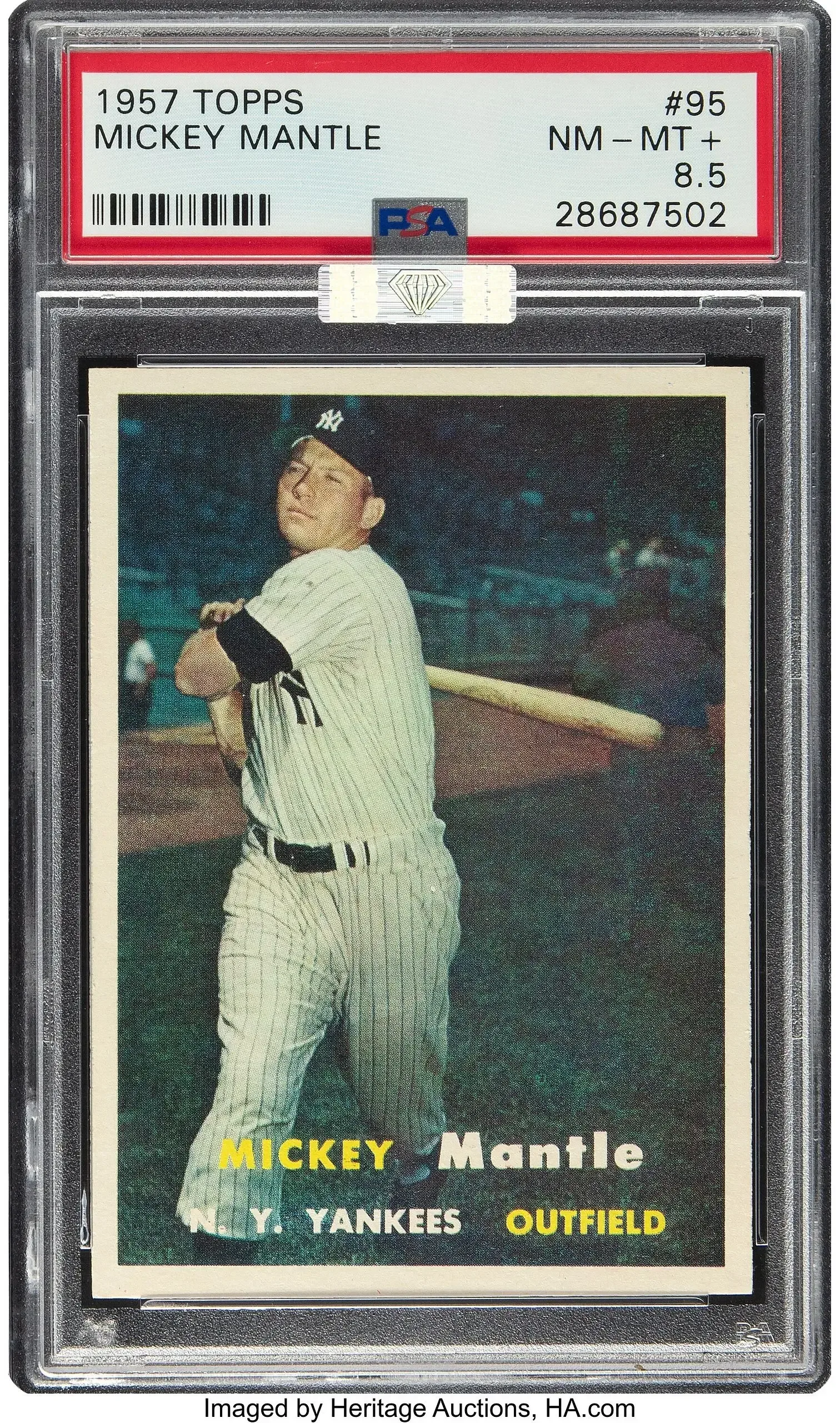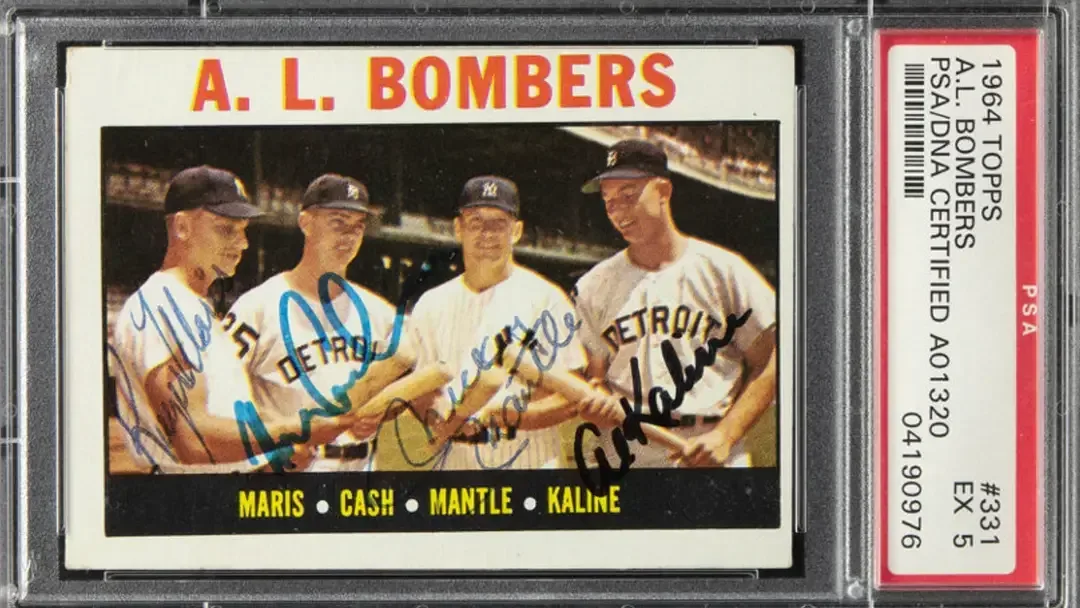
Baseball cards of the 1960s sit at a fascinating hinge point in the hobby. They were made primarily for children, long before third-party grading became a normal part of collecting, yet the decade also shows an increasingly organized collector market taking shape. Complete sets were becoming harder to assemble, card designs changed sharply from year to year, and packs could contain far more than the standard player card.
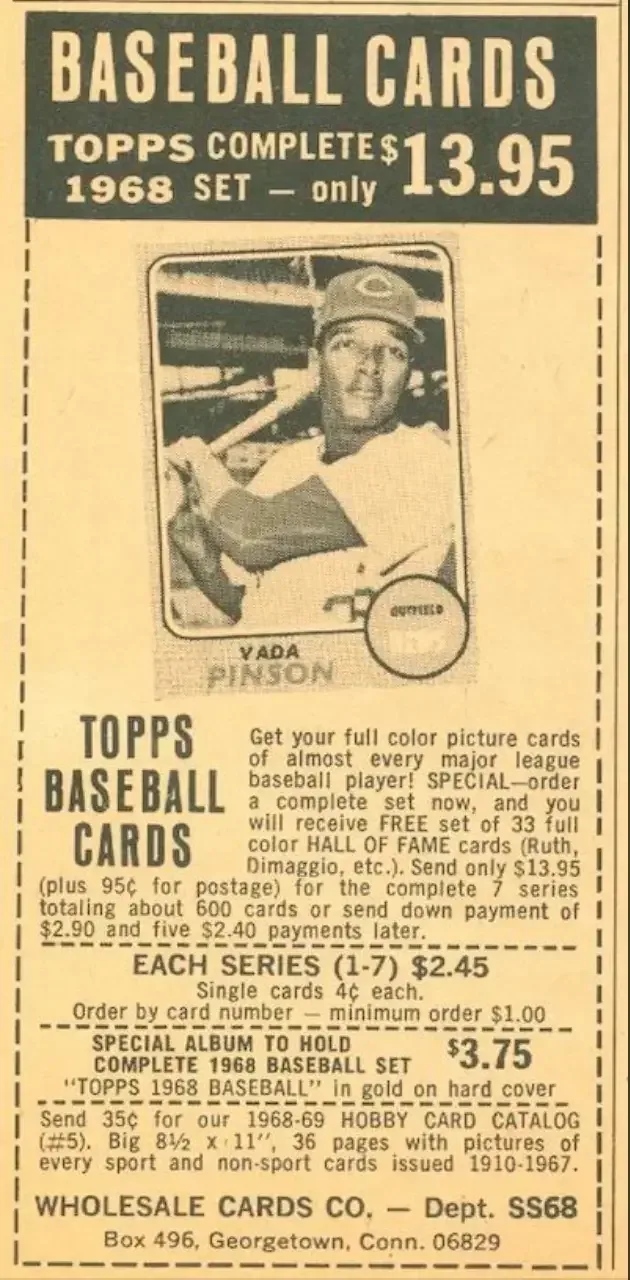
That mix is why the decade remains so compelling. A collector can approach these sets through star power, visual design, team history, rookie cards, inserts, oddball variations, or the simple challenge of completing a large checklist. The financial distance between then and now is striking, too. In 1966, mail-order dealer Bruce Yeko listed 1952 Topps high numbers—including Mickey Mantle and Jackie Robinson—for 90 cents apiece, a price that was considered steep for a single card. By 1968, an advertisement offered a full 1968 Topps set for $13.95, singles for four cents, and installment payments. Today, even low-grade examples of some 1952 Topps stars sell for tens of thousands of dollars.
Those figures do not make every 1960s card an investment piece, and they should not be treated as a price guide. They do illustrate how dramatically the hobby’s relationship with condition and scarcity has changed. In a vintage set, surviving centering, corners, printing, and surface condition can matter enormously. A card’s population—the number of copies recorded at a particular grade by a grading company—also helps explain why a top-condition sale can be so much higher than the price of a more typical copy.
For a wider look at the era’s set-building legacy, see this discussion of the six defining 1960s sets. Here is the case for the six Topps releases that most vividly represent an ambitious, fast-changing decade in baseball cards.
For more context, explore No Man’s Sky Is Landing on iPhone and iPad With the Full Game, Minus Multiplayer.
6. 1961 Topps: a simple look attached to an unforgettable season
The 1961 Topps design is comparatively restrained, but the set’s historical pull is immense. Mickey Mantle and Roger Maris spent that season pursuing Babe Ruth’s single-season home-run record, with Maris ultimately reaching 61. Their cards are therefore artifacts of one of baseball’s defining storylines, further linked to a 1961 Yankees club that finished 109–53.
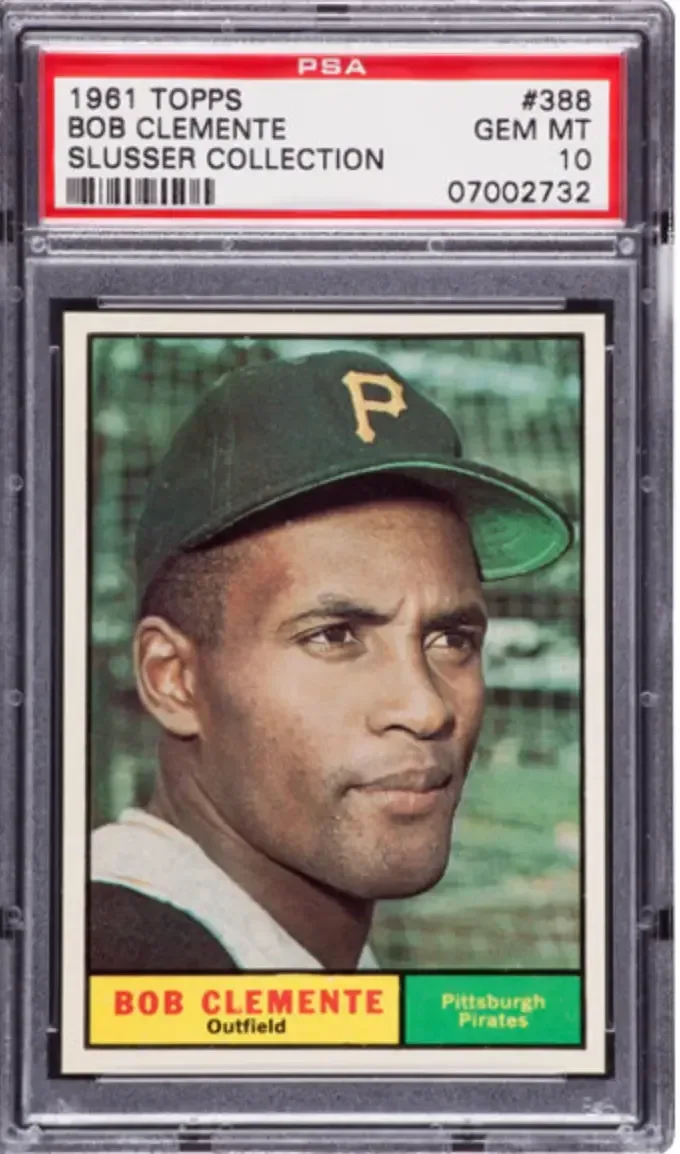
The major attraction is not limited to those two Yankees. The set includes Juan Marichal’s rookie card, while Roberto Clemente is the holder of the highest reported sale for a standard 1961 Topps card: a PSA 10 copy sold for $131,450 in 2016. A reported PSA 6 value list placed Mantle #300 at $1,380, Marichal #417 at $350, and Maris #120 at $290. Those numbers provide useful snapshots of relative demand, not fixed values.
1961 also matters as a step forward in the construction of a Topps checklist. Its League Leaders cards, numbered 41 through 50, were the company’s first league-leader cards. That may sound routine now, but it helped establish the idea that a set could document the season through themed subsets, not only individual player portraits. A subset is a smaller, themed run embedded within the larger numbered release; it gives a collection additional structure and goals.
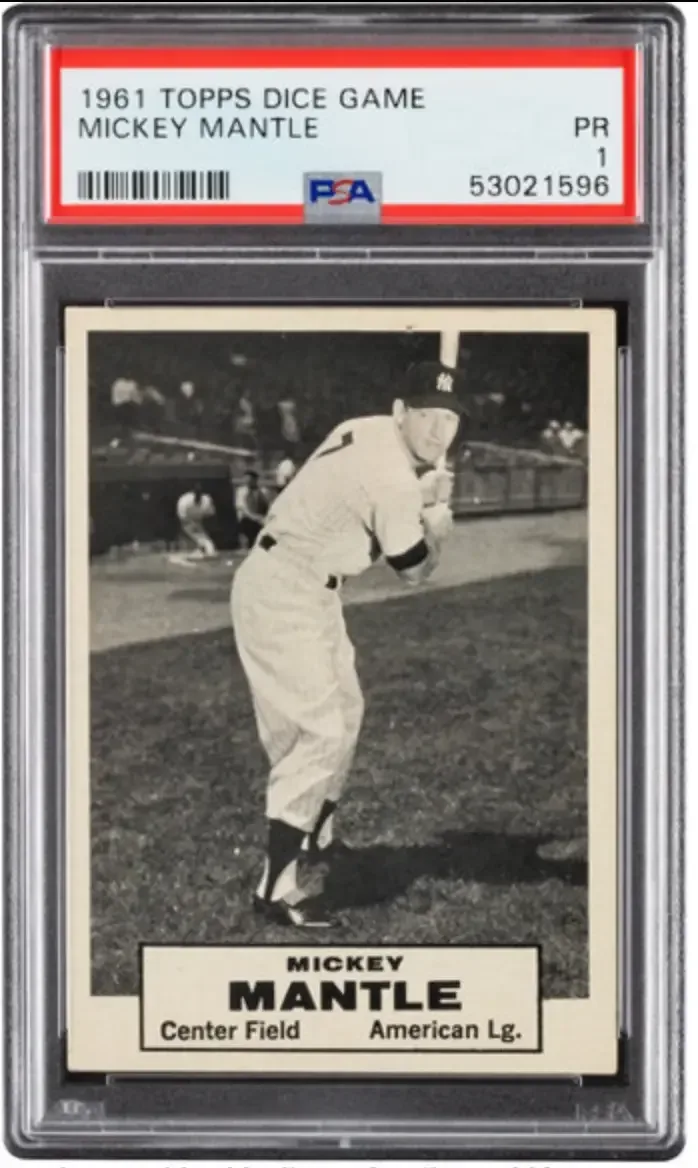
Then there is the strange 1961 Topps Dice Game, an unreleased 18-card test set intended to simulate baseball through dice rolls. It is a reminder that cards were not merely archival player images: manufacturers were testing play-oriented formats, too. The set is exceptionally scarce, with only a handful of examples known for certain players. A PSA 1 Mantle Dice Game card sold for $396,000 in 2022, and the card’s PSA population was listed as three; PSA also lists the set as no longer grading.
5. 1969 Topps: a closing chapter with a loaded checklist
As the decade’s final Topps issue, 1969 naturally carries an end-of-era quality. Its Mickey Mantle card is his final Topps card, making #500 a major landmark for Mantle collectors. It is also home to the famous short-printed “Last Name in White” variation. A short print is a card issued in smaller quantity than standard cards in the same release, a production difference that can make it especially difficult to find. Reported PSA 6 figures show the effect here: $4,300 for the white-name Mantle and $1,029 for the yellow-name version.
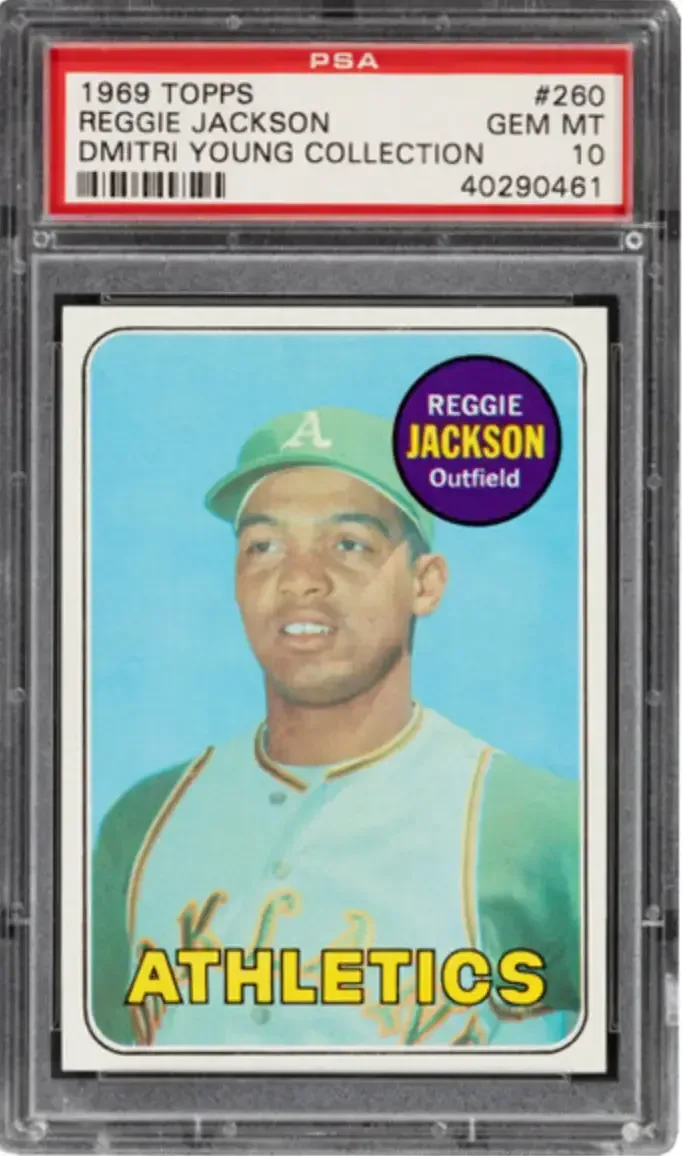
Reggie Jackson’s rookie card, #260, is the set’s headline newcomer, with Rollie Fingers also appearing as a rookie. The Jackson rookie reaches rarified territory in exceptional condition: the sole reported PSA 10 example sold for $1,005,600 in 2021. At more accessible grades, the cited PSA 6 figure was $950. The set also holds the first standalone Topps cards for Nolan Ryan and Johnny Bench after their rookie appearances, making their second-year cards significant checkpoints for player collectors.
Packs expanded the experience beyond the main checklist. The 33-card Deckle Edge insert set used black-and-white, die-cut cards and included Willie Mays, Roberto Clemente, and Bob Gibson. Deckle Edge refers to the irregular, torn-paper-like border treatment. The same packs included decals resembling miniature, 1.5-inch base-card stickers. These additions matter because original packs could send collectors down several different collecting paths at once: build the base set, chase the inserts, save decals, or hunt a variation.
4. 1965 Topps: the pennant design that never left collectors’ minds
Few 1960s designs are as instantly recognizable as 1965 Topps. Its colorful team-name pennant gives every card a bold visual signature without burying the photograph. That balance between uniformity and team identity helps explain why the set remains a design favorite.
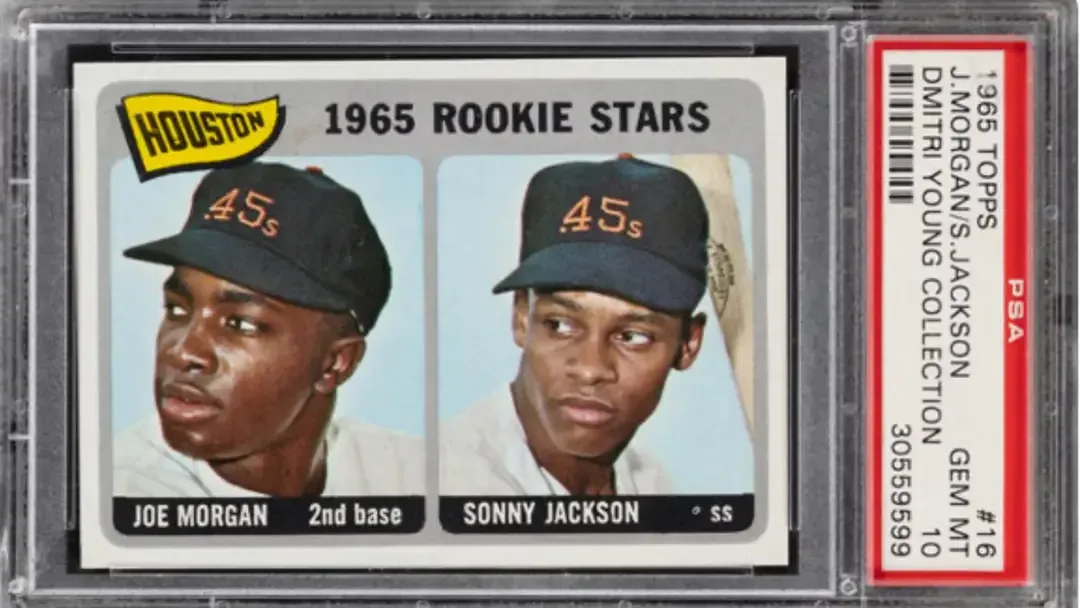
The rookie class gives the visuals real substance. Steve Carlton and Joe Morgan headline the issue, with Morgan sharing card #16 with Sonny Jackson. A PSA 10 Morgan rookie sold for $144,000 in 2021. Reported PSA 6 figures put Mickey Mantle #350 at $2,250, Carlton #477 at $365, and the Morgan rookie at $222. The gap between a top-graded auction result and a mid-grade reference is a practical lesson for collectors: the card and the condition designation are inseparable parts of the market conversation.
1965 Topps also made the pack feel more like a miniature activity kit. Two distinct 72-card insert sets appeared within packs. Embossed Inserts used player portraits in embossed gold foil, while Topps Transfers were player decals meant to be ironed onto clothing. An insert is an additional card or card-like item included alongside the core set. It may have its own checklist, format, and preservation issues—especially true of an item designed to be used on clothing rather than stored in a box.
3. 1960 Topps: landscape cards, gold cups, and a new decade’s confidence
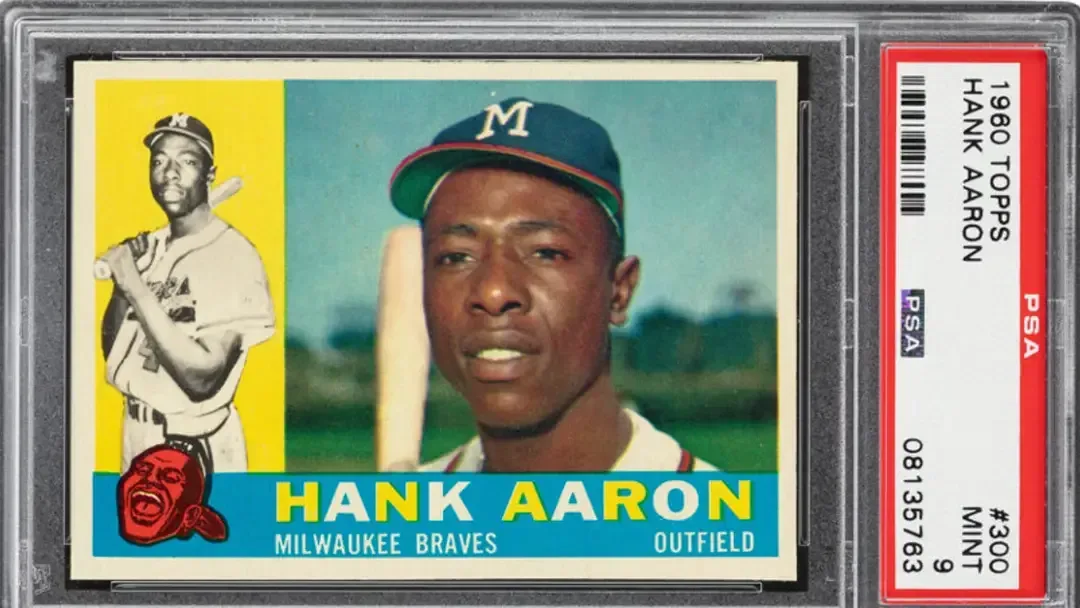
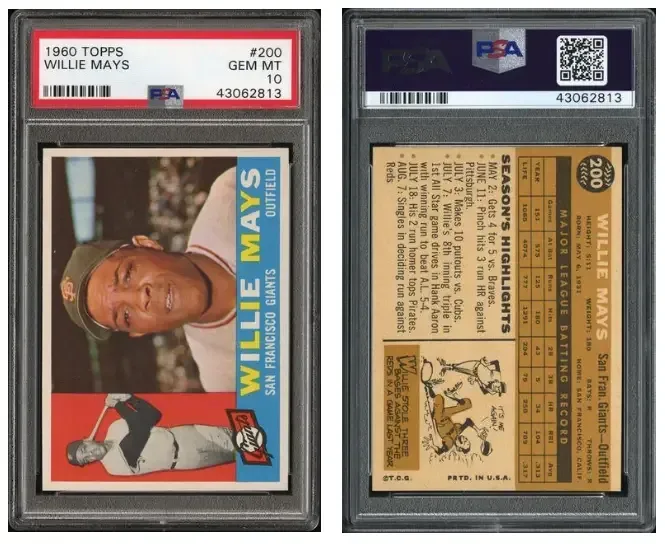
The 1960 release is a serious contender for the decade’s best-looking set. Rather than relying on the typical vertical layout, it uses a distinctive horizontal format across the set, creating room for multiple player images. Its card backs, complete with player cartoons, are a major part of the appeal rather than an afterthought. For collectors who value a complete design object—the front, back, photography, typography, and statistics—1960 Topps has unusual cohesion.
The checklist supplies lasting star power. Carl Yastrzemski and Willie McCovey have rookie cards in the set, while Mantle and Hank Aaron remain major targets. The highest reported sale for the issue is a PSA 9 Aaron #300, which brought $103,318 in 2024. Only nine copies were reported at that grade, with none higher. Reported PSA 6 references list Mantle #350 at $2,138, Yastrzemski #148 at $650, and Aaron at $629.
This set is also foundational in Topps visual language. It was the first release to put All-Star Rookie Trophies—the familiar gold-cup logo—directly on card fronts. Topps had named an All-Rookie Team before, but 1960 made the designation part of the card’s physical presentation. It also introduced the first World Series subset in baseball-card history, commemorating the Los Angeles Dodgers’ 1959 World Series win over the Chicago White Sox. Together, those decisions made the set feel more like a record of baseball events and honors, not simply a yearbook of players.
2. 1963 Topps: a famous rookie shared with three other players
1963 Topps combines a memorable design, star-driven multi-player cards, and one of vintage baseball’s defining rookies. Pete Rose’s #537 rookie is shared with Pedro Gonzalez, Ken McMullen, and Al Weis, yet Rose is its central draw. That is an important vintage-card reality: a rookie card does not always mean an individual card. Shared rookie cards can be historically essential while still reflecting the collaborative, checklist-minded format of their time.
Willie Stargell also has his rookie card in the set. A reported PSA 6 list places Rose #537 at $3,800, Stargell #553 at $600, Mickey Mantle #200 at $2,300, and Willie Mays #300 at $450. At the high end, an SGC 10 Rose rookie sold for $264,000 in 2021, with a reported population of two at that grade.
Multi-player cards enrich the set far beyond the rookies. “Buc Blasters” includes Roberto Clemente and three Pirates teammates. “Pride of the N.L.” pairs Stan Musial with Willie Mays; “Bombers’ Best” brings together Mantle, Tom Tresh, and Bobby Richardson; and “Power Plus” features Hank Aaron and Ernie Banks. Such cards are especially interesting because they frame baseball through teammates, pairings, and shared reputation rather than only individual achievement.
The year’s 46-card Peel-Off sticker set is another useful preservation lesson. The oval player portraits were intended for notebooks, so many were used as intended. Unpeeled copies retaining their original backing are consequently much harder to find. For collectors, that distinction reinforces a simple rule: original function often shapes modern scarcity.
1. 1968 Topps: the decade’s signature rookie-card combination
1968 Topps earns the top position because it combines a highly recognizable period design with an extraordinary rookie-card pairing. Nolan Ryan shares #177 with Jerry Koosman, and Johnny Bench shares #247 with Ron Tompkins. Ryan and Bench went on to become two of the game’s greatest figures at their positions, turning their rookie cards into icons in their own right.
Ryan’s card is the set’s summit. The only reported PSA 10 copy sold for $600,000 in 2020, while a reported PSA 6 figure was $3,800. The cited PSA 6 reference for Bench’s rookie was $565, and Mickey Mantle #280 was listed at $713. As with the other sets, these figures are best read as dated market reference points, not promises of what any specific card will sell for.
Its depth is what keeps 1968 from being only a Ryan-and-Bench set. The checklist also includes Mantle, Clemente, Aaron, Mays, and many other era-defining stars. Meanwhile, the release offered a dense mix of variations and inserts. Some cards were part of Milton Bradley’s Win-A-Card game, Topps issued an exceptionally rare Venezuelan version, and the 33-card Topps Game insert set presented players on cards designed to resemble and function as playing cards.
That variety captures what made 1960s baseball cards special. These were objects to trade, play with, stick onto notebooks, iron onto clothing, and organize into sets. Decades later, collectors may prize pristine examples, but the odd formats, shared rookies, themed subsets, and evidence of use are inseparable from the story. The six sets above are not merely expensive vintage issues; they show a hobby learning how many forms a baseball card could take.
Other 1960s releases worth knowing
- 1967 Venezuelan Topps Retirado
- 1962 Topps
- 1963 Fleer
- 1967 Topps
- 1964 Topps
- 1966 Topps