Pokémon occupied every slot among the five biggest reported trading-card sales of the week, but the card at the top was not one of the franchise’s usual headline acts. A 2008 Pokémon Diamond & Pearl Great Encounters Holo Cresselia #2 graded PSA 10 sold for $960,000 on October 4, setting the pace for five sales that together reached $2,964,000.
That total matters less as a verdict on every Pokémon card than as a sharply focused snapshot of the hobby’s top tier. These were not merely cards tied to familiar characters. They were specific printings in elite third-party grades, with results spread across 2001 to 2019. The week’s list also included Mew, Detective Pikachu, Rayquaza and Lugia, illustrating that premium demand can extend across eras, languages, promotional releases and character choices.
The crucial qualifier is condition. A card’s set name and character are only part of its identity in a high-value transaction. The grade on the label, the card number, the release type and, in Rayquaza’s case, the Japanese edition all define exactly what changed hands. Treating a six-figure sale as a blanket price for every copy with the same artwork would be a serious mistake.
The five sales at a glance
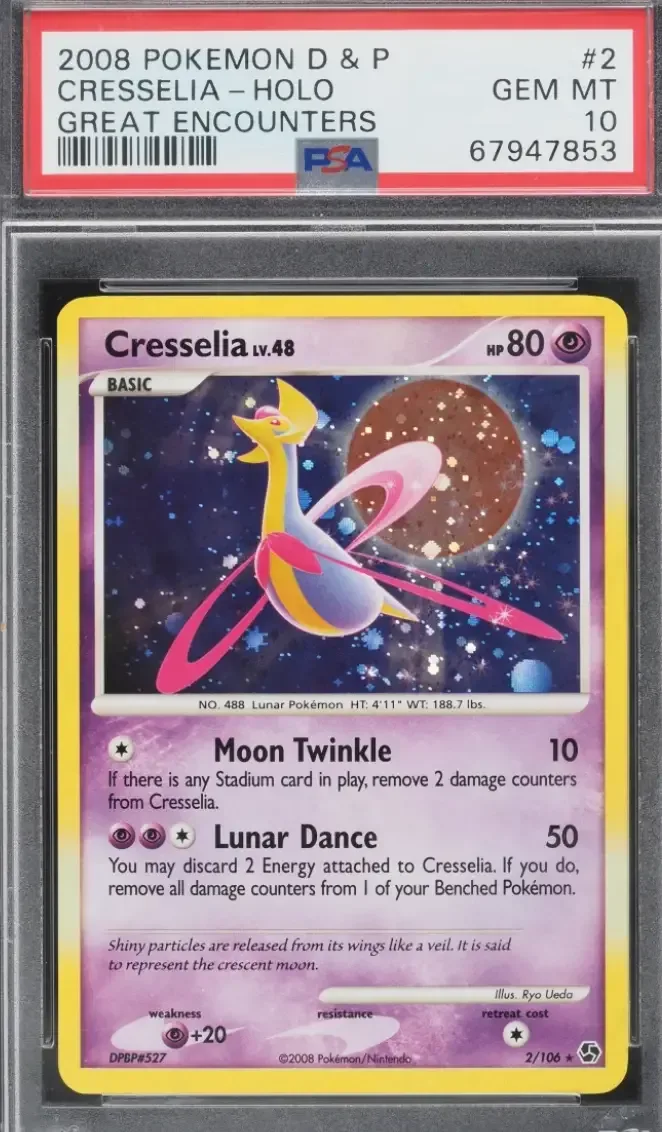
- 2008 Pokémon Diamond & Pearl Great Encounters Holo Cresselia #2, PSA 10: $960,000, October 4
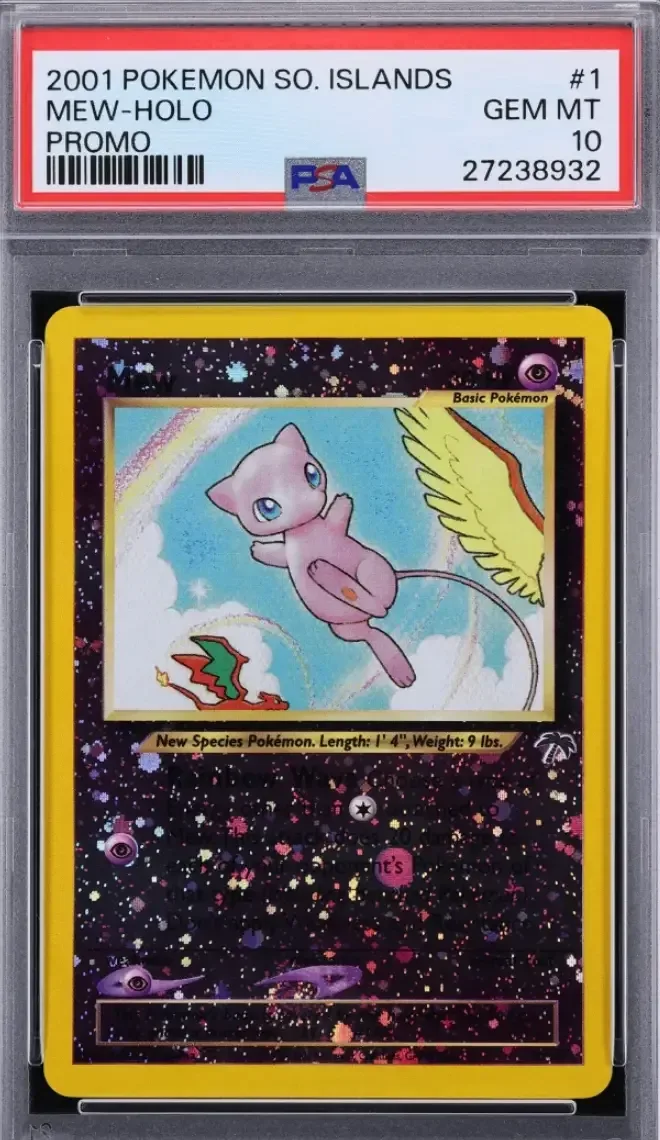
- 2001 Pokémon Southern Islands Promo Holo Mew #1, PSA 10: $840,000, October 4
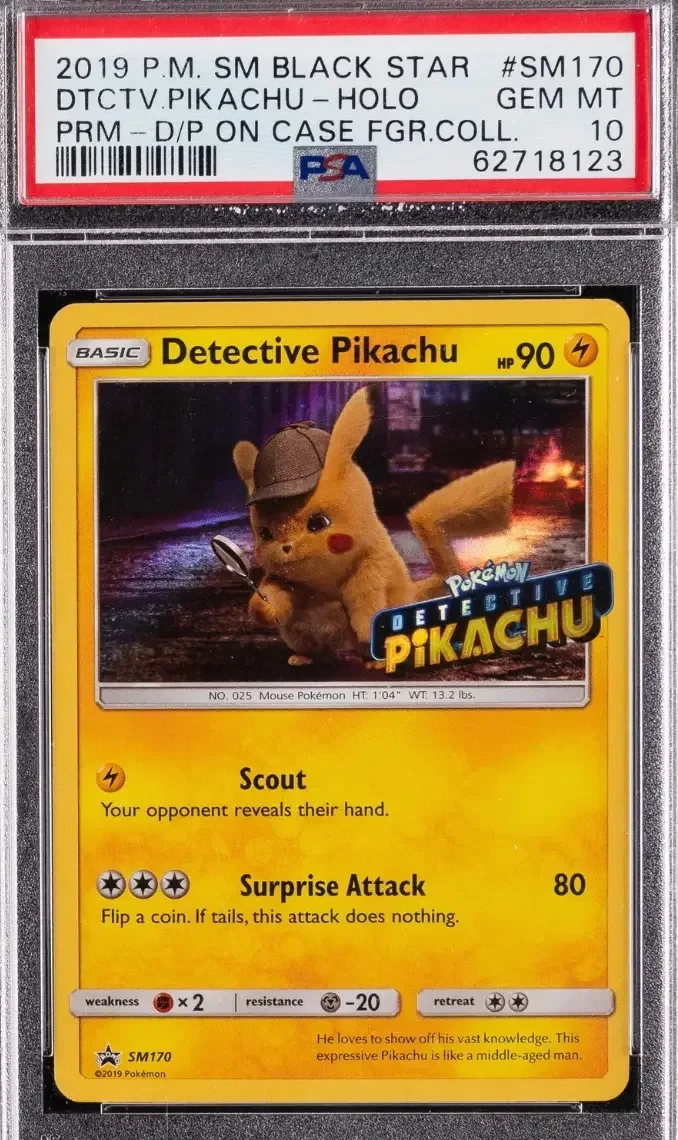
- 2019 Pokémon Sun & Moon Black Star Promo Detective Pikachu Holo #SM170, PSA 10: $420,000, October 9
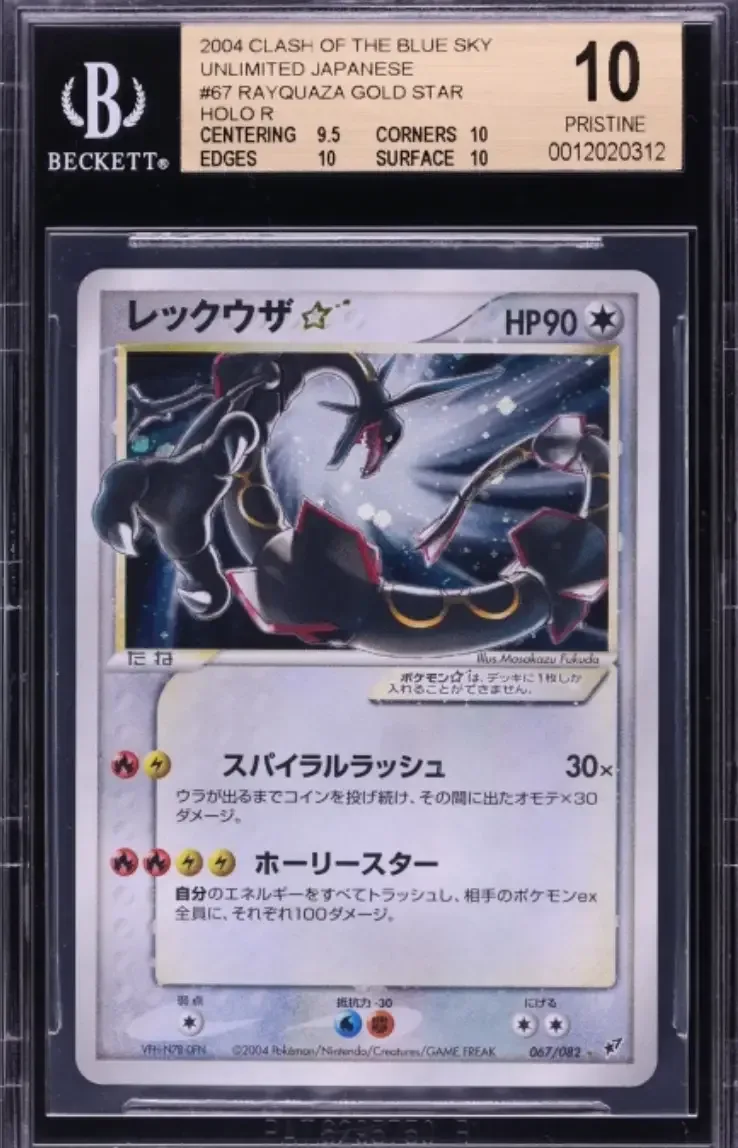
- 2004 Pokémon Japanese Clash of the Blue Sky Holo Rayquaza Gold Star #67, BGS 10 Pristine: $384,000, October 4
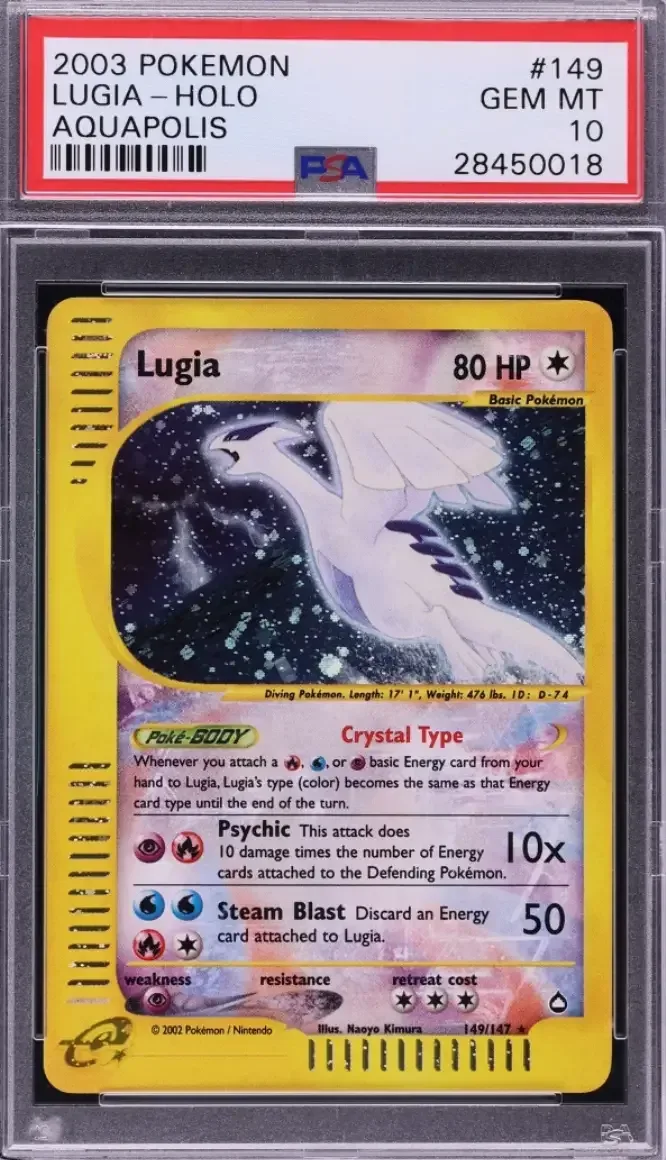
- 2003 Pokémon Aquapolis Holo Crystal Lugia #149, PSA 10: $360,000, October 4
The top two results alone accounted for $1.8 million, or a little more than 60% of the five-sale total. Yet the lower end of this extremely narrow leaderboard still began at $360,000. That is the week’s clearest pattern: the market activity was not concentrated in one singular blockbuster card. Five separate Pokémon cards cleared a very high threshold.
For more context, explore Victoria Monét Calls ‘Frequency of Love’ a Vulnerable Diary of Choice, Growth and Connection.
1. Cresselia turns Great Encounters into the headline
Cresselia’s $960,000 result is notable precisely because it disrupts an easy shorthand for high-end Pokémon collecting. Pikachu, Charizard and Mew have broad recognition far beyond the card hobby. Cresselia does not carry that same mainstream profile, but this particular Great Encounters holo, in PSA 10 condition, nonetheless finished first.
Great Encounters belongs to the Diamond & Pearl period. In this week’s set of sales, it was newer than the 2001, 2003 and 2004 cards below it, while still predating the 2019 Detective Pikachu promo. That range is important: age alone did not establish the order. The result instead underscores how an elite-grade example of a specific card can command extraordinary attention even when the featured Pokémon is not among the hobby’s most instantly recognizable mascots.
A PSA 10 is the grading company’s top numerical grade. In collector shorthand, it is commonly described as gem mint. The label should not be confused with a general claim that any ungraded Cresselia #2 resembles this sale item in condition or value. At this level, the grade is fundamental to what collectors are buying, rather than a minor footnote after the character and set.
Related coverage includes Cresselia PSA 10 Tops a $2.964 Million Week in Pokémon Card Sales.
2. Southern Islands Mew lands at $840,000
The runner-up was a 2001 Southern Islands Promo Holo Mew #1 PSA 10, sold for $840,000. It finished only $120,000 behind Cresselia, making the top of the leaderboard more competitive than a simple focus on the winner might suggest.
Southern Islands is associated with colorful art and a distinctive presentation, and Mew has long had a strong following. In combination, those qualities give this sale a different identity from the Cresselia result. Cresselia represents a Diamond & Pearl-era holo becoming the week’s leader; Mew represents an early promotional release featuring one of Pokémon’s most popular characters.
The word promo identifies a card connected to a promotional release rather than being presented as a standard entry in a conventional expansion set. That does not automatically make every promo rare, valuable or desirable. It does mean collectors should identify the release category correctly when comparing cards. “Mew holo” is not enough information for a meaningful comparison; Southern Islands Promo, #1 and PSA 10 are all material details.
3. Detective Pikachu shows the range of premium results
At No. 3, a 2019 Pokémon Sun & Moon Black Star Promo Detective Pikachu Holo #SM170 PSA 10 sold for $420,000 on October 9. It is the newest card in the top five by a substantial margin, and it is tied to Detective Pikachu rather than a traditional expansion release.
That makes the result a useful corrective to the assumption that high-end sales must always revolve around the earliest Pokémon products. The week’s five cards span 18 years of releases, from the 2001 Mew to this 2019 promo. The Detective Pikachu card did not match the top two prices, but it still exceeded both the Rayquaza and Lugia results in the same weekly ranking.
The distinction also matters for cataloging. The card’s SM170 identifier places it within the Sun & Moon Black Star Promo designation. Collectors researching comparable sales should preserve that detail rather than searching only for “Detective Pikachu holo.” Promotional cards can have different distribution contexts and identifiers from cards found in standard expansion checklists.
4. A Pristine Rayquaza Gold Star reaches $384,000
The fourth-largest sale was a 2004 Japanese Clash of the Blue Sky Holo Rayquaza Gold Star #67 graded BGS 10 Pristine, which brought $384,000 on October 4. Rayquaza Gold Star cards are among the most sought-after mid-2000s Pokémon releases, and this example combined a major character, a Gold Star design, a Japanese release and a top-level Beckett grade.
BGS refers to Beckett’s grading service. The reported label is 10 Pristine, which is Beckett’s terminology for this grade. It should not be casually equated with a PSA 10 as though the two labels were interchangeable product descriptions. Both signal an extremely high-condition card, but they are issued by different grading companies and appear on different grading scales and labels. In a market where the encapsulated card and its certification are central to the collectible, precision is part of understanding the sale.
Gold Star identifies a celebrated category of Pokémon cards from the mid-2000s. Here, the category works alongside Rayquaza’s established popularity, not in place of it. The sale is also a reminder that the language edition is not incidental: this was the Japanese Clash of the Blue Sky version, not an unspecified Rayquaza card.
5. Crystal Lugia closes the list at $360,000
Fifth place went to a 2003 Aquapolis Holo Crystal Lugia #149 PSA 10, sold for $360,000 on October 4. In most collecting conversations, $360,000 would be an overwhelming headline by itself. Within this particular week, it was the floor of the top five.
Aquapolis is associated with the Nintendo e-Reader era and its distinctive visual style. Crystal Lugia remains a prominent card from the set, while the PSA 10 grade again provides the condition context behind the price. Its position at No. 5 should not be read as diminished collector interest; rather, it reflects an unusually expensive group of transactions.
Lugia’s appearance also adds another kind of variety to the list. The five sales do not repeat a single character or release formula: an Aquapolis Crystal card, a Japanese Gold Star, a modern-era promo, a Southern Islands promo and a Diamond & Pearl holo all appear. The common thread is Pokémon and elite grading, not one exact product type.
What this week does—and does not—say about the market
The reported total of $2.964 million was below the prior week’s $10.5 million, which had been driven by a multimillion-dollar Pikachu transaction. That comparison is useful if kept in proportion. One five-card weekly total cannot establish a long-term price trend, and a single exceptional sale can heavily influence any short timeframe. This week is better read as evidence of depth within the very highest end of Pokémon cards than as a universal measure of the entire hobby.
There was no Charizard in the top five. Cresselia and Mew alone produced $1.8 million in sales. Pikachu appeared, but through a Detective Pikachu promo rather than the Art Academy card that led the previous ranking. Those details suggest that attention at the top is capable of moving beyond a very small group of default blue-chip names—provided the individual card and its graded condition are compelling enough to buyers.
For collectors, the practical lesson is not to chase every card associated with the characters named here. It is to document an item accurately before drawing conclusions from headline prices. A careful comparison starts with:
- the exact set or promotional line;
- the card number and language edition;
- the grading company and the precise grade;
- whether the card is holo or another specified variant; and
- the actual sale date and venue, rather than an asking price.
Those distinctions are especially important when a familiar character appears in many releases. Mew, Lugia, Pikachu and Rayquaza have numerous cards, and Cresselia’s result shows that even a less universally recognized character can have a specific issue that behaves very differently from its broader character category.
This was, ultimately, a week of five highly specific Pokémon cards rather than five generic Pokémon names. Cresselia’s leading result gives the ranking its surprise, but the larger picture comes from the breadth beneath it: cards released from 2001 through 2019, including standard-set holos, a Gold Star and multiple promos, all reached at least $360,000 in top-grade examples.