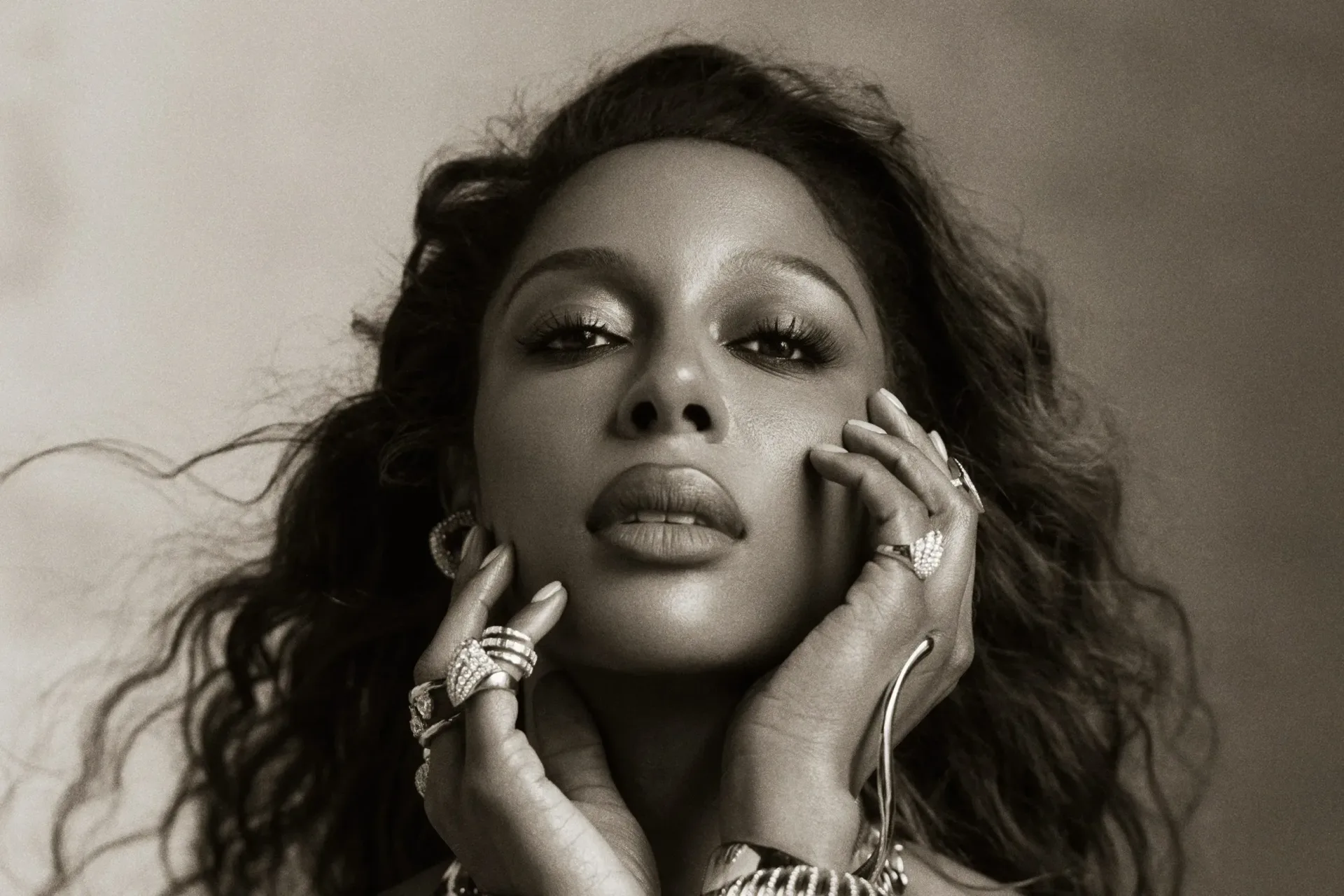
Victoria Monét is describing Frequency of Love less as a finished statement than a record of active self-understanding. The singer says the 22-song album, released October 2 via Lovett Music/RCA Records, was shaped by dating, motherhood and personal growth—and that its writing changed a central belief she held about affection. She no longer feels she has to earn love.
That idea gives the project’s title a useful frame. A “frequency” can suggest a signal, a wavelength or a point of connection. In Monét’s account, love is not presented as a prize handed out after the right performance. It is something that is affected by choices: how a person interprets events, what they decide to feel, and what they choose to project outward.
“So I like to look at the album as a diary entry that I can even read back to myself,” Monét said of the record.
The diary comparison matters because it identifies the songs as a place for reflection rather than a claim of permanent resolution. Diaries preserve feelings in motion. A person can return to an entry and recognize how they have changed, where they were hurt, or what they still need to understand. Monét has said she celebrates vulnerability in that process. For an album centered on love, that suggests an interest not only in romance’s polished moments, but also in uncertainty, attachment, disappointment and self-worth.
A record built around vulnerability rather than performance
Monét’s comments draw a clear distinction between reacting to circumstances and exercising agency. Agency, in this context, does not mean pretending difficult experiences never happen or suggesting emotions are easily switched off. It means recognizing a degree of authorship over one’s response: the ability to make decisions about what to nurture, how to interpret attraction, and what kind of energy to carry forward.
“It all is adjustable by what decision you make and what you decide to feel and project,” Monét said. “I’m learning to embody it and really understand that it is a choice of mine versus a reaction to what is happening to me.”
That phrasing makes Frequency of Love sound inward-looking without making it solitary. The record is full of collaborators, but Monét’s description keeps the focus on the personal work underneath its guest list. The songs are not simply a collection of features; they are positioned as pieces of a larger emotional document.
Its title also leaves room for a tension common to personal songwriting. Love can be intimate and communal at the same time. A listener may recognize their own experience in a song about another person’s specific relationship, family life or growing sense of self. The more precisely an artist can name a feeling, the more room there can be for others to find themselves in it. Monét’s willingness to call the album vulnerable is therefore more than promotional shorthand. It points to an approach where honesty is part of the work’s purpose.
Related coverage includes Victoria Monét Frames ‘Frequency of Love’ as a Vulnerable Personal Diary.
The collaborators on ‘Frequency of Love’
The 22-track album brings Monét together with several R&B peers, alongside a particularly personal appearance from her daughter. Leon Thomas and Hazel Monét appear on “You Mean the World to Me.” SZA joins Monét on “See You in My Dreams,” and Bruno Mars appears on “That’s Why I Love You.”
Elsewhere, Lucky Daye contributes to “Maybe,” Bryson Tiller is on “Single,” and Chlöe appears on “Lose Myself.” Other tracks named from the record include “You Hurt Me Too,” “Come Back to You” and “For You.”
- Leon Thomas and Hazel Monét: “You Mean the World to Me”
- SZA: “See You in My Dreams”
- Bruno Mars: “That’s Why I Love You”
- Lucky Daye: “Maybe”
- Bryson Tiller: “Single”
- Chlöe: “Lose Myself”
Hazel Monét’s presence is especially notable in light of Monét’s description of motherhood as one of the experiences informing the album. It makes the project’s family dimension explicit rather than merely thematic. At the same time, the track title “You Mean the World to Me” points toward affection in a broad sense: not only the shifting dynamics of dating, but the bonds that shape a person’s values and view of care.
The featured artists add multiple voices to a record that Monét still frames as her diary. That is a useful way to understand collaborations on an album this personal. Guests can broaden a project’s musical conversation, while the album’s conceptual throughline remains with the artist assembling it. Here, the stated throughline is love examined through openness, choice and growth.
Bruno Mars and SZA are also part of the wider pop and R&B landscape around the release. Mars recently matched the 31-week Hot R&B/Hip-Hop Songs record held by Kendrick Lamar and SZA, a milestone covered in our look at that chart tie. Their appearances on Monét’s track list place established collaborators beside the record’s deeply personal premise, without changing the fact that Monét is presenting the album as her own reflection.
From writing hooks to telling her own story
Monét’s current confidence in her own voice connects to an earlier stage of her career: writing and singing hooks for other artists. A hook is the part of a song designed to stay with the listener—often a repeated melodic phrase, chorus or vocal motif. It is a specialized role that can make an enormous creative contribution while sometimes leaving the writer or singer less visible than the recording artist.
Monét has recalled becoming known in studios as someone artists would call when they needed hooks. She described making herself useful by writing and recording vocals that performers wanted to retain. The work established her capabilities and, importantly, helped lead toward a more self-directed creative path.
Nas was one of the artists whose support figured in that transition. He retained Monét’s vocals on Life Is Good and later brought her on The Arsenio Hall Show to perform with him. Monét has credited that support, as well as encouragement from other artists, with helping her trust her voice.
There is a meaningful contrast between that early role and the structure of Frequency of Love. Her past work required being useful within another artist’s session and contributing a memorable piece to someone else’s recording. Her new album places a range of guests inside a project organized around her own stories and changing perspective. Neither role diminishes the other; the connection shows a progression from being called for a specific skill to building a full-length work with room for her own interior life.
The link to Nas also gives this chapter of Monét’s career a direct connection to hip-hop. But the most important practical implication is artistic ownership. Being trusted to contribute a hook can create opportunity; learning to trust one’s own voice can turn that opportunity into a broader body of work. Monét’s account of Frequency of Love makes that growth sound emotional as well as professional.
What the album’s framing tells listeners
Listeners approaching Frequency of Love have a straightforward guide from Monét herself: hear it as a diary. That does not require treating every lyric as literal documentation of a single event. Instead, it suggests listening for emotional movement across the project—the questions raised by love, the difference between seeking validation and accepting care, and the ways family and relationships influence a person’s self-image.
Monét’s language about attraction is equally important. She says the writing exposed a new understanding of both love and how she sees attraction. That places attraction beyond the narrow idea of an immediate spark. Within her explanation, it is connected to what one decides to feel and project. In other words, attraction may be influenced by internal outlook as much as by an external situation.
This is analysis of Monét’s stated themes, not a claim that the album gives a simple formula for relationships. Her own wording acknowledges learning: she is working to embody the realization, rather than declaring the work finished. That uncertainty is part of what makes the diary metaphor apt. Growth is recorded while it is still occurring.
For fans, the project’s large track count and extensive guest roster create many potential entry points, from a family-centered collaboration with Hazel Monét to appearances by Leon Thomas, SZA, Bruno Mars, Lucky Daye, Bryson Tiller and Chlöe. But Monét’s comments give those songs a shared center. The album is about making space for vulnerability and looking back at it with enough compassion to learn from it.
Tour dates and the community-garden option
Monét’s next scheduled step is the Frequency of Love Tour, which opens October 27 at Red Hat Amphitheater in Raleigh. The run is scheduled to end December 17 at Bill Graham Civic Auditorium in San Francisco.
At checkout, fans can add $1 in support of her foundation’s community gardens for children. The option connects the tour to a concrete community-oriented initiative, though attendees should look closely at ticketing details when deciding whether to participate. The supplied information identifies the $1 add-on and its beneficiary, but does not specify additional program details.
Between the album and its tour, Monét is presenting a connected creative period: an expansive record shaped by dating, motherhood and growth, followed by live dates that include an optional contribution to gardens for children. The musical details may vary song by song, but the core idea remains consistent. Frequency of Love is a space where she can document vulnerability, revisit it, and recognize love as something she no longer believes must be earned.