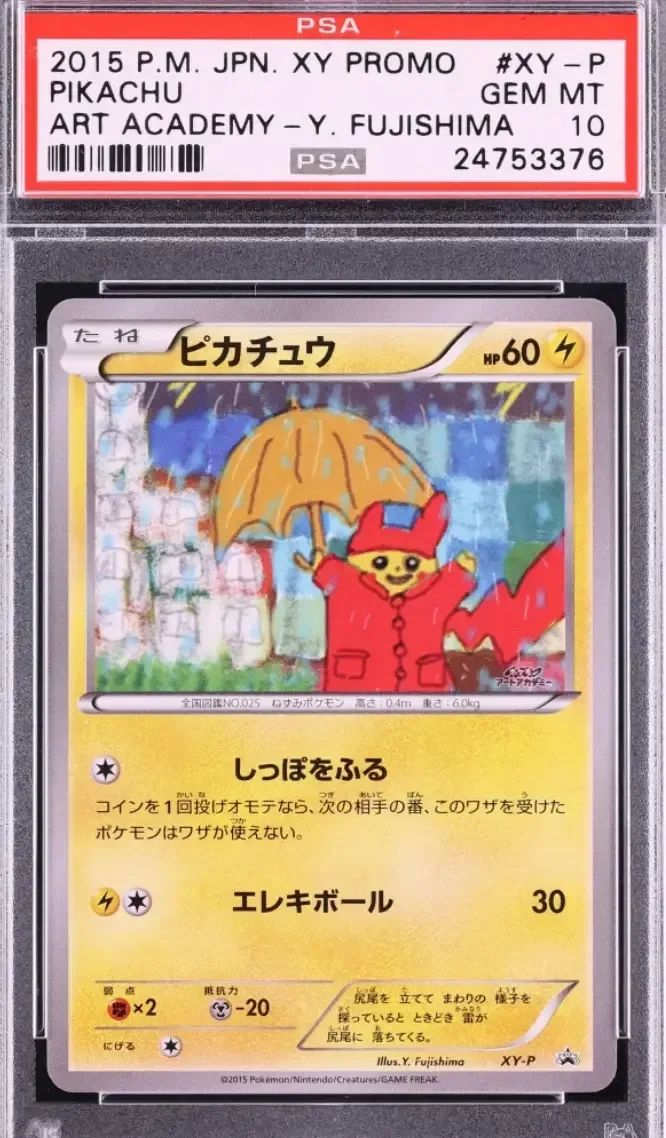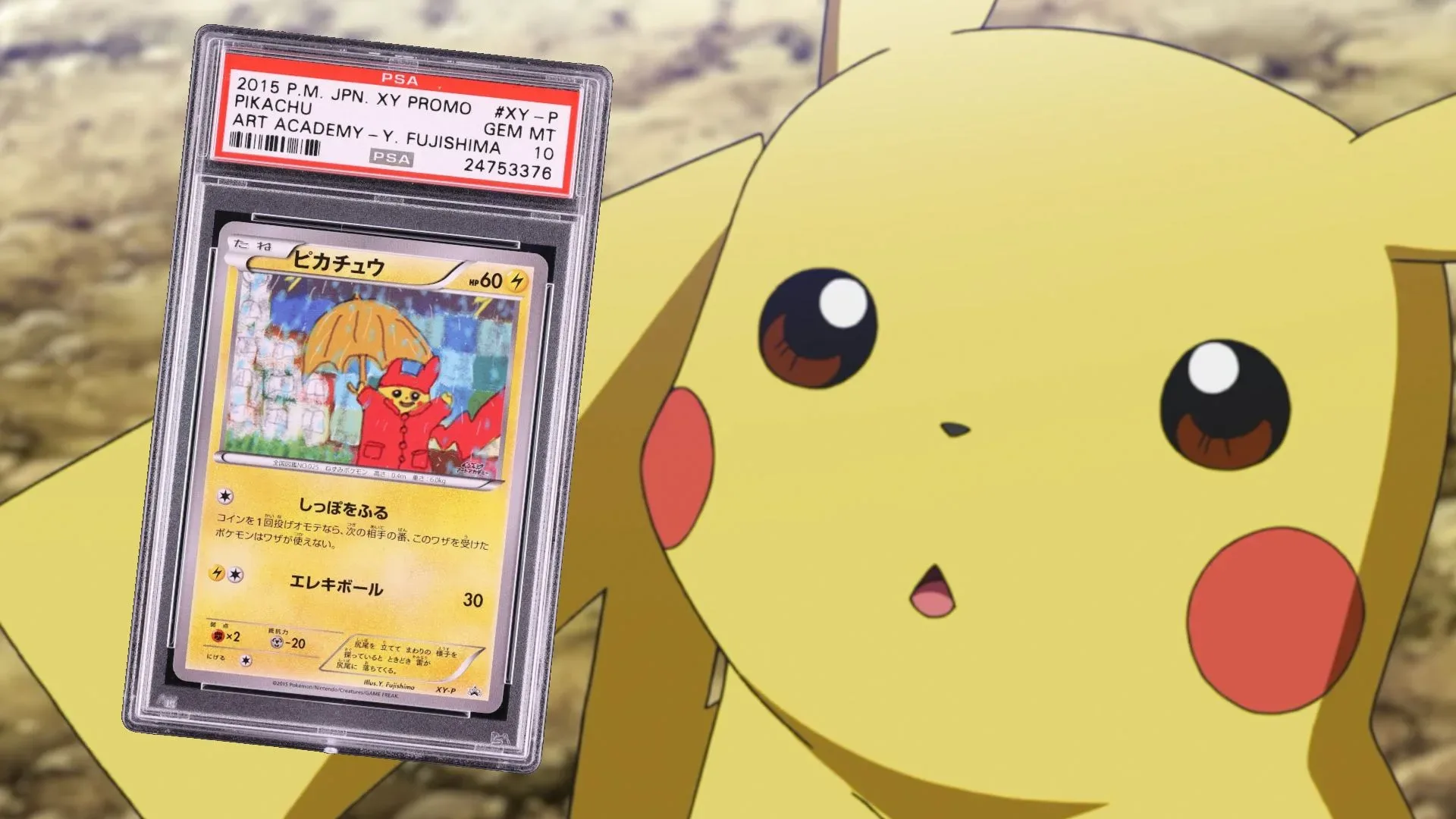
One Pikachu in a red raincoat has just made the kind of splash normally reserved for a fully evolved financial earthquake. A 2015 Pokémon Japanese XY Promo Art Academy Y. Fujishima Pikachu #XY-P, graded PSA 10, reportedly sold for $8.4 million on September 27.
That enormous result headed a top-five trading-card-sales list made up entirely of Pokémon cards. The five reported sales totaled $10,534,650, meaning the Art Academy Pikachu alone represented roughly four-fifths of the week’s combined value. It is an extreme example of how a single, exceptionally scarce promotional card can sit in a completely different tier from cards that would otherwise be the week’s headliners.
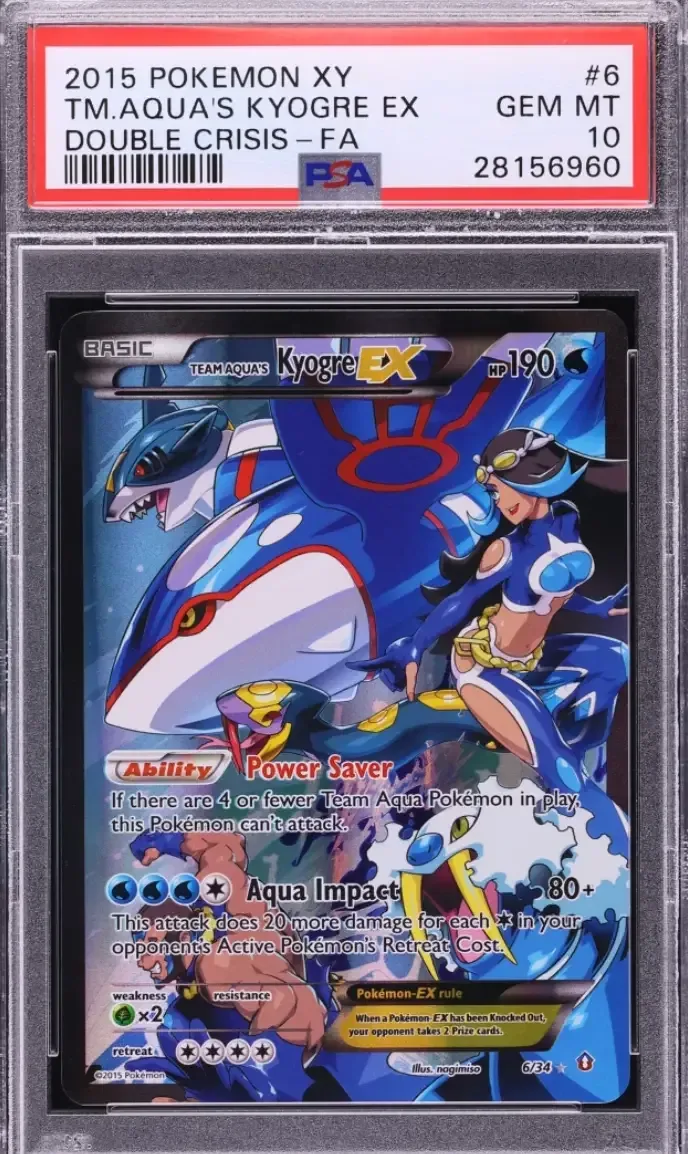
The remaining four cards were hardly small potatoes in a Poké Ball. A 2002 Legendary Collection Reverse Holo Pikachu sold for $780,000; a Japanese Rayquaza Gold Star brought $562,650; Neo Revelation Misdreavus reached $408,000; and Team Aqua’s Kyogre EX closed the list at $384,000. Taken individually, each is a major sale. Taken alongside an $8.4 million Art Academy prize card, they become supporting characters in Pikachu’s extremely expensive umbrella adventure.
The reported top five Pokémon card sales
- 2015 Pokémon Japanese XY Promo Art Academy Y. Fujishima Pikachu #XY-P, PSA 10: $8,400,000
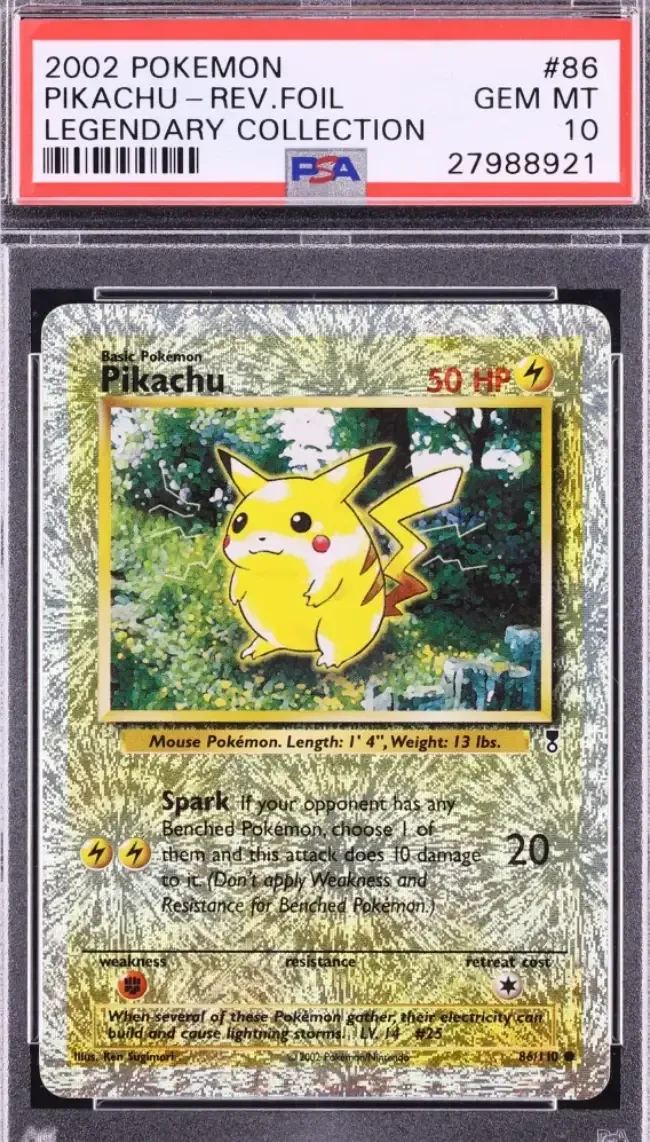
- 2002 Pokémon Legendary Collection Reverse Holo Pikachu #86, PSA 10: $780,000
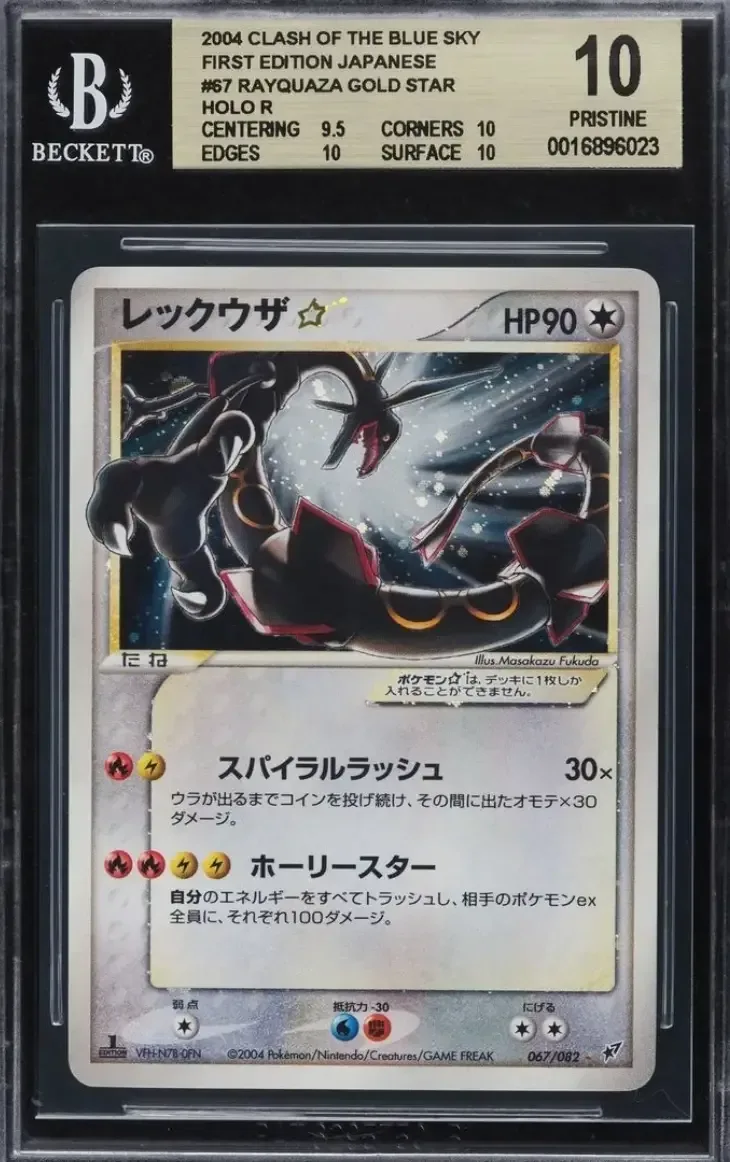
- 2004 Pokémon Japanese Clash of the Blue Sky Rayquaza Gold Star 1st Edition, BGS 10: $562,650
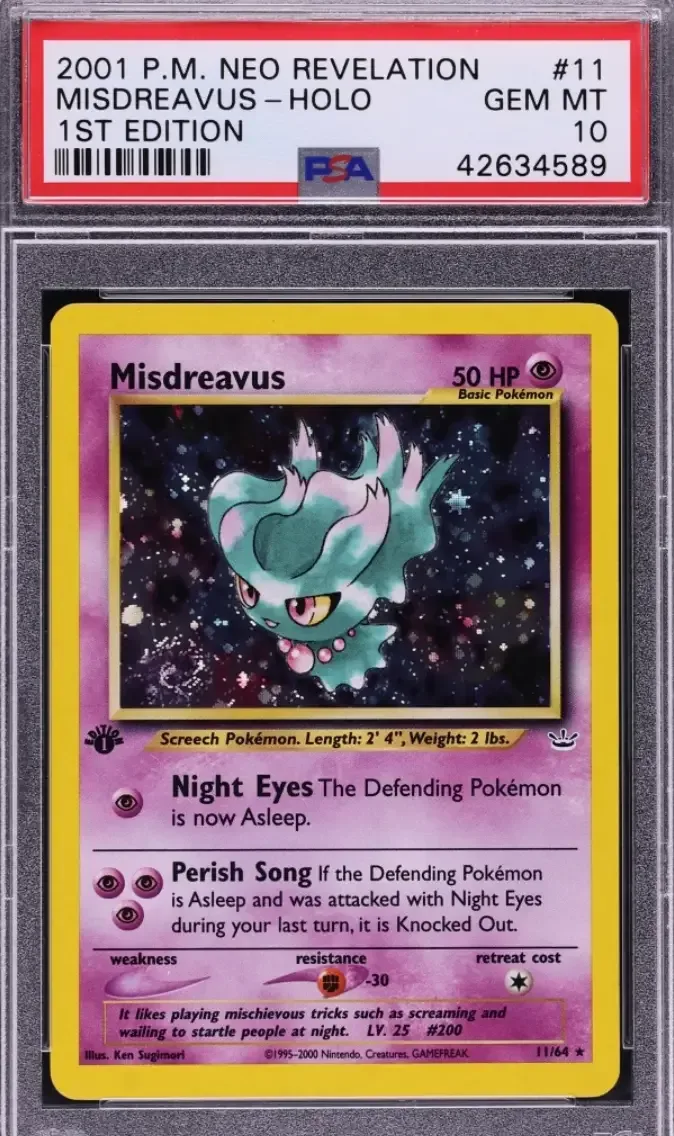
- 2001 Pokémon Neo Revelation 1st Edition Holo Misdreavus #11, PSA 10: $408,000
- 2015 Pokémon XY Double Crisis Full Art Team Aqua’s Kyogre EX #6, PSA 10: $384,000
The results span cards dated from 2001 through 2015. That range matters because it prevents this from being a simple story about one old set, one current release, or even one mascot. The list includes a Neo-era holo, an early-2000s reverse holo, a Japanese Gold Star, a compact XY-era release and an unusual contest promo. What unites them is not one printing style or release window, but a collision of character appeal, scarcity, documented condition and collector demand.
Why the Art Academy Pikachu is in its own price bracket
The sale leader was not a conventional pack-pulled card. Its artwork came from the Japanese Pokémon Art Academy competition, which had participants create illustrations using Pokémon Art Academy on Nintendo 3DS. Y. Fujishima won the Dress-Up Pikachu category with art showing Pikachu in a red raincoat and holding an umbrella.
That contest origin is central to understanding the card’s appeal. The winning illustrations were turned into prize cards rather than inserted into booster packs. Each winner received 100 copies carrying that winner’s art. In practical collecting terms, that gives the Fujishima card a very different scarcity story from a normal set card: it was connected to one individual winning entry and issued as a tightly limited reward.
The result also illustrates why “Pikachu card” is far too broad a label for high-end collecting. Pikachu is Pokémon’s most recognizable character, certainly, but the $8.4 million card has several layers beyond the character itself: bespoke fan-created art, a contest win, prize-card distribution, Japanese promotional status and a PSA 10 grade. The raincoat is charming; the provenance is doing some very serious heavy lifting.
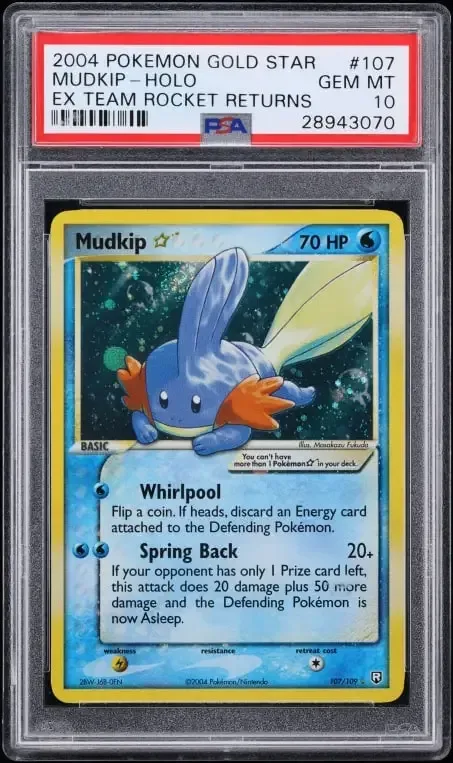
There is a notable recent comparison within the same Art Academy lineage. A Mudkip card illustrated by Daisuke Ochiai, produced through that same competition, led the previous week’s sales at $3.72 million. The Fujishima Pikachu’s reported $8.4 million result is more than double that figure. It does not establish a universal price for every Art Academy card, but it demonstrates that these contest promos can command extraordinary attention at the top end of the market.
Related coverage includes Top 3 TCG Card Sales of the Week: $8.4 Million Art Academy Pikachu Headlines Huge Pokémon Market.
What PSA 10 and BGS 10 tell collectors
Four cards in this group were identified as PSA 10s, while the Rayquaza was identified as a BGS 10. Those are grades assigned by different third-party grading companies. In a sales listing, the grade is a concise way to communicate a card’s assessed condition and its encapsulated, authenticated presentation.
For cards that are already scarce, top grades can be especially consequential. The Kyogre, Misdreavus, Legendary Collection Pikachu and Art Academy Pikachu were all reported as PSA 10 examples, while the Rayquaza was a BGS 10. That does not make all 10s interchangeable: the card, language, release, distribution method and exact grader all remain part of the collecting context. But the repeated presence of top-grade examples shows how strongly condition remains tied to headline-level prices.
A $780,000 reverse holo still finishes second
The runner-up was a PSA 10 2002 Pokémon Legendary Collection Reverse Holo Pikachu #86 at $780,000. Legendary Collection is known for its distinctive reverse-holo treatment, and the card combines that recognizable visual identity with Pikachu. In another weekly rundown, a sale approaching $800,000 could easily dominate the conversation. Here, it was the closest challenger to a once-in-a-hobby-level contest promo.
“Reverse holo” is a card-description term that distinguishes the foil treatment from other versions in a release. In this case, it is not merely a technical line on a label; it is part of why the Legendary Collection card has a distinct visual identity among early-2000s Pokémon releases. Pairing that presentation with Pikachu creates one of the larger possible targets within the set.
The second-place finish also puts the spread of this week’s market in perspective. The gap between the two Pikachu cards was $7.62 million. The Art Academy card did not just edge out the field; it eclipsed it. Even so, the $780,000 result shows that collectors were also paying heavily for a familiar set card in elite condition, rather than concentrating every dollar solely on one-off contest material.
Rayquaza Gold Star keeps the middle of the board airborne
Third place belonged to a BGS 10 2004 Pokémon Japanese Clash of the Blue Sky Rayquaza Gold Star 1st Edition, which reportedly sold for $562,650 on October 2. Gold Star cards have become frequent fixtures in major Pokémon-sale discussions, and Rayquaza’s presence adds a character with substantial high-end appeal of its own.
The Japanese release matters here. Pokémon collecting is not a market where an English-language counterpart can automatically stand in for a Japanese card, or vice versa. Language, set identity and edition are all specific pieces of a card’s identity. This sale was for the Japanese Clash of the Blue Sky version, identified as first edition and graded BGS 10.
At more than half a million dollars, it was also a useful reminder that this leaderboard was not entirely a Pikachu monopoly. Pikachu occupied first and second, but Rayquaza held third place, while Kyogre and Misdreavus supplied very different character and set choices below it. That variety makes the five-card total more revealing than a single blockbuster result alone.
Misdreavus and Kyogre show the market’s depth
A PSA 10 2001 Neo Revelation 1st Edition Holo Misdreavus #11 reached $408,000 for fourth place. Misdreavus is not the character most casual observers would predict for a six-figure vintage Pokémon sale. Yet the result demonstrates that elite-condition cards from older releases can be prized well beyond the most obvious names.
The terms on the listing tell the compact story: Neo Revelation identifies the set, 1st Edition identifies the printing designation, Holo identifies the foil version, and PSA 10 identifies the grade. Each descriptor narrows exactly what changed hands. For buyers and observers, that specificity is essential; treating it as simply “a Misdreavus card” strips away the factors that distinguish it from other appearances of the Pokémon.
Fifth-place Team Aqua’s Kyogre EX provides a similar lesson from a much later release. The 2015 Pokémon XY Double Crisis Full Art Team Aqua’s Kyogre EX #6, also a PSA 10, sold for $384,000. Double Crisis was a relatively small 2015 release, and this result shows that modern-era cards can join vintage and mid-2000s standouts when the issue is difficult to find in top condition.
“Full Art” identifies the card’s style within the product line, while Team Aqua’s Kyogre EX specifies this particular character-and-card version. Those distinctions matter because high-end pricing attaches to exact cards, not broad categories. The difference between a set, a treatment, an edition, a language and a grade can be the difference between a recognizable collectible and a headline-making one.
What the $10.53 million total actually says
The five reported sales added up to $10,534,650, surpassing $10 million for the second time in three weeks. The combined figure was below the $11.3 million recorded by the top five two weeks earlier, but it still signals a remarkable concentration of value in Pokémon’s uppermost collecting tier.
There is one important way to read the number carefully: the Art Academy Pikachu heavily shapes the total. Subtract its $8.4 million sale, and the other four cards still combine for $2,134,650. That is a massive amount of money for four cards, but it also shows why weekly totals should be considered alongside the individual results rather than treated as a flat measure of demand across every segment.
The bigger picture is a high-end market with multiple paths to attention. A contest-only Japanese promo can soar because of provenance and tiny distribution. A reverse-holo Pikachu can command a huge price through iconic character appeal, a distinctive treatment and top condition. A Gold Star Rayquaza can clear half a million through a coveted card type, Japanese-set identity and an elite grade. And Misdreavus and Kyogre show that serious bids can reach well beyond the most predictable mascot cards.
For collectors, the practical takeaway is not that every old holographic card has secretly become a down payment on a spaceship. It is that exact identification matters. Check the set, card number, language, edition, foil or art treatment, distribution method and grade before comparing any card to a headline sale. The $8.4 million Art Academy Pikachu is an exceptional object with an exceptionally specific story—not a price guide for every Pikachu with a yellow border.
Collectors following that wider overlap of cards, characters and comics can also browse our look at Superman: The Stranger #2.