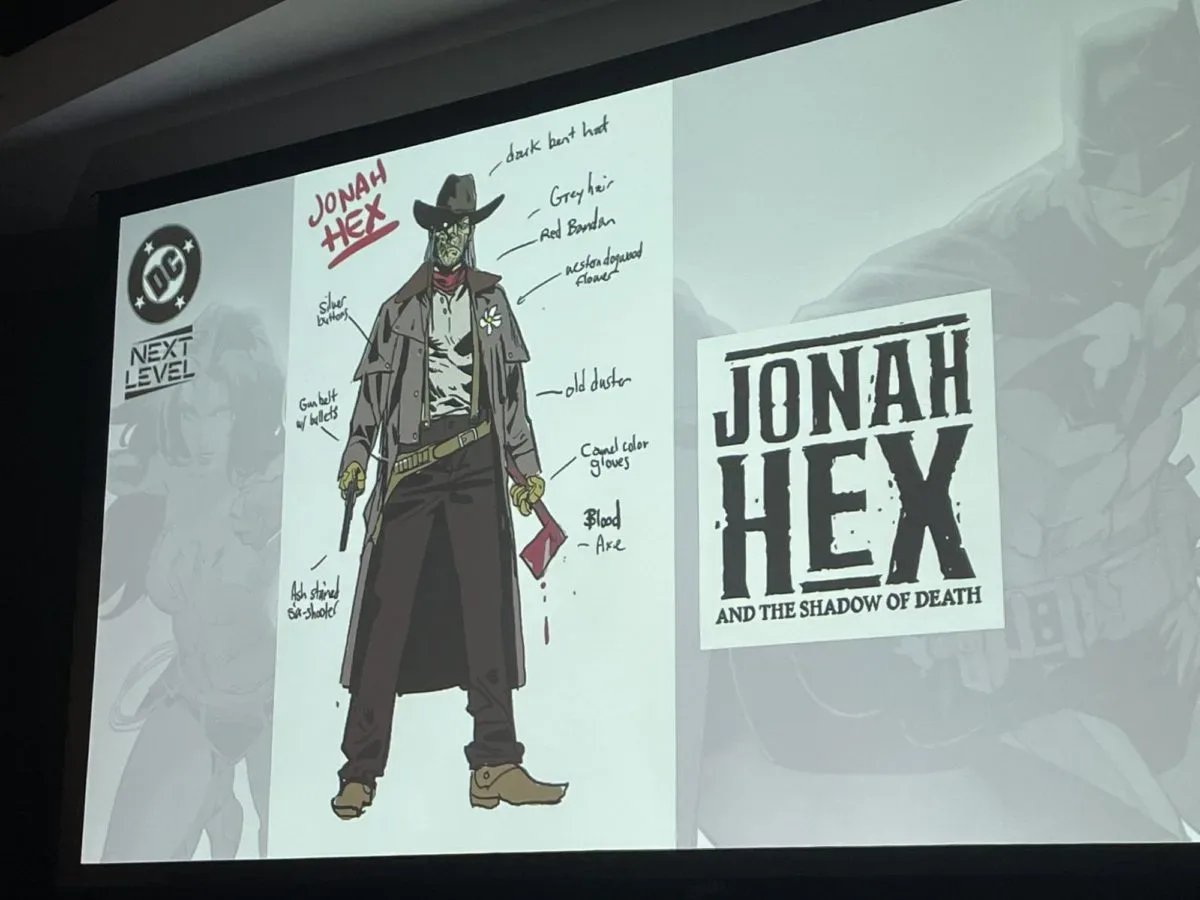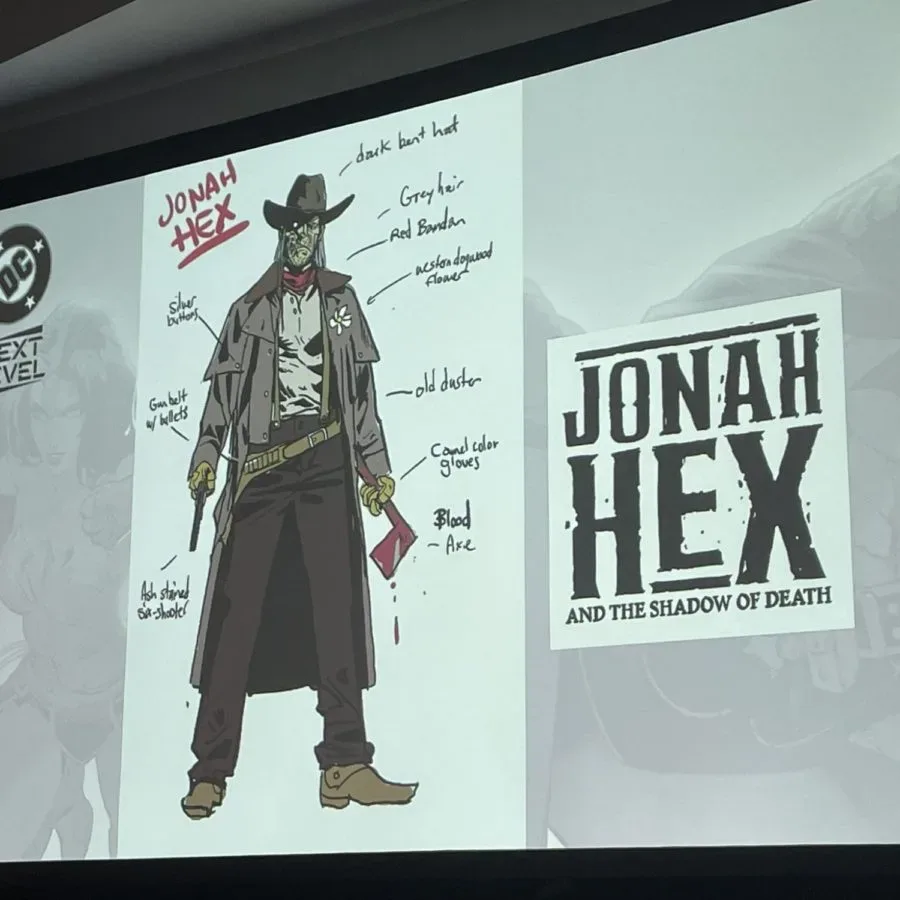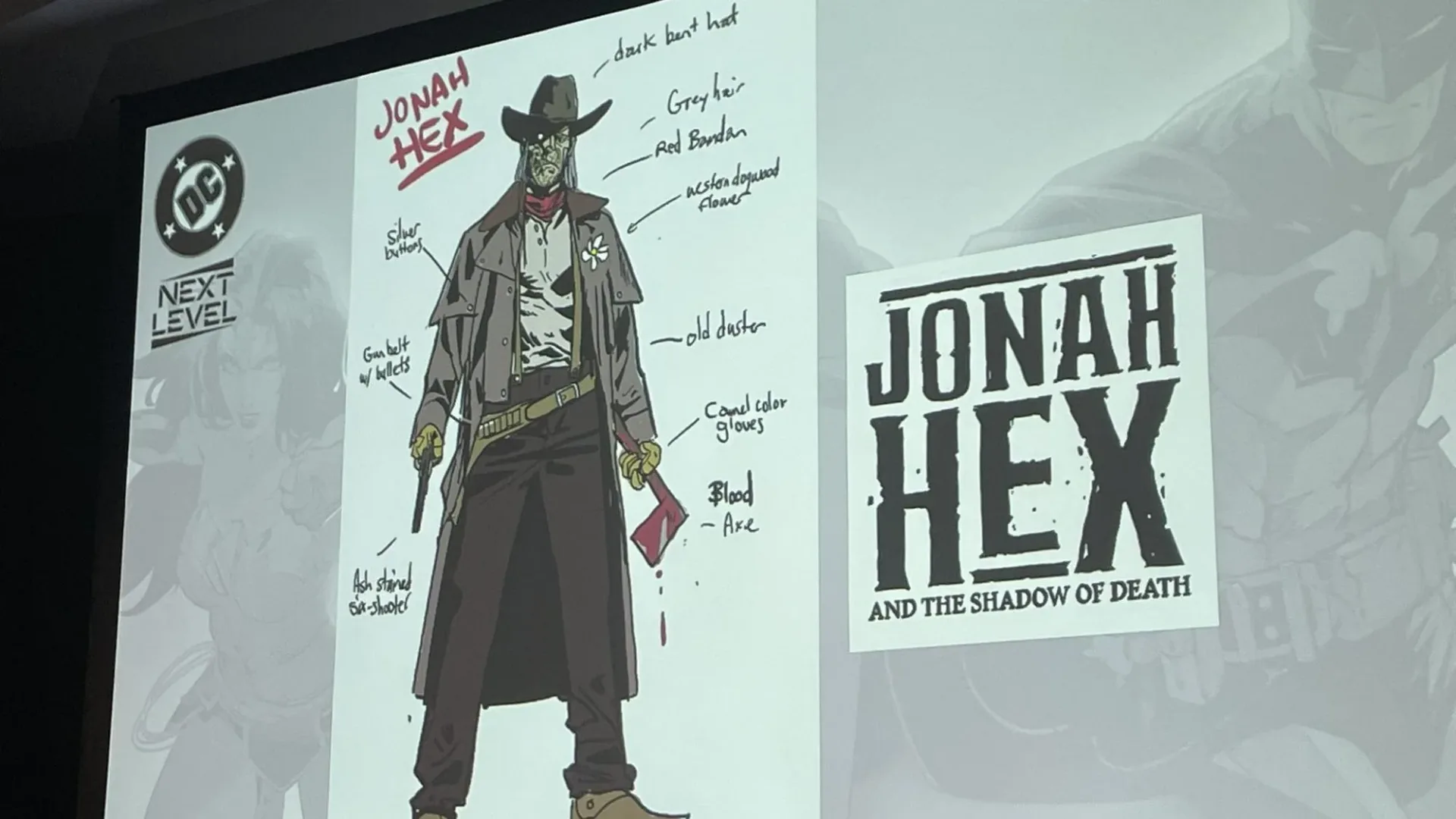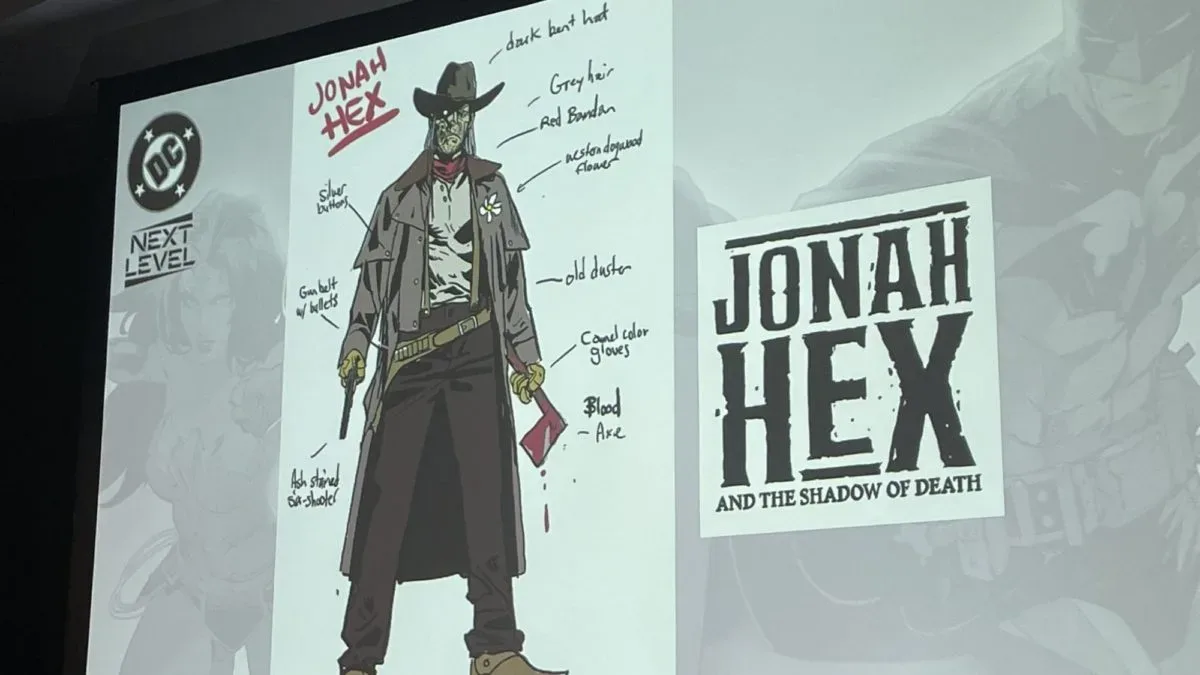
Jonah Hex is returning to DC in Jonah Hex and the Shadow of Death, a six-issue limited series written and drawn by Michael Walsh. The book was part of the publisher’s Next Level presence at New York Comic Con, where the focus was on a version of Hex far removed from the untouchable legend implied by the bounty hunter’s reputation.
The premise places Hex at the fading edge of the Wild West. He is described as broken and worn down, living in a shack outside the nearly empty town of Ashecott, spending time at its saloon and waiting for the world around him to disappear. That deliberate starting point matters: this is not simply a traditional outlaw hunt with a famous gunslinger arriving at full force. The series begins with a man whose era appears to be ending, then introduces a threat that does not fit the rules of that era at all.
Something ancient and otherworldly has come to Ashecott. It is more dangerous than an outlaw, and it is connected to entities that are pursuing a girl with unexplained abilities. Hex’s investigation offers more than a new target. It gives the character an opportunity for redemption, making the series’ conflict personal as well as supernatural.
A horror-western built around an older Hex
The book’s central genre is the horror-western: a blend that uses the physical and moral isolation of frontier storytelling while adding monsters, occult forces, or other supernatural dangers. In this case, the western setup is clear in the town, saloon, stable hand, preacher, and gunslinger. The horror element arrives through beings from beyond the world Ashecott’s residents understand, a sinister religious presence, and a child caught in the middle of events.
Walsh has characterized the intended mixture as Hellboy meeting Unforgiven. That comparison establishes a useful expectation without suggesting the series is part of either property. One side points to an encounter with monstrous and occult forces; the other evokes a hard, damaged Western figure facing violence and consequence. The essential shift is straightforward: rather than hunting people, Hex is hunting monsters.
It is also a fitting framework for a character described here as physically and emotionally diminished. A conventional gunfight asks whether the fastest shooter can win. A supernatural threat asks whether even a legendary shooter has the tools, knowledge, or will to survive. The story’s horror premise can therefore put Hex under pressure without needing to diminish what makes him formidable. The danger is not that he forgot how to draw; it is that his skills may not be enough against what has entered Ashecott.
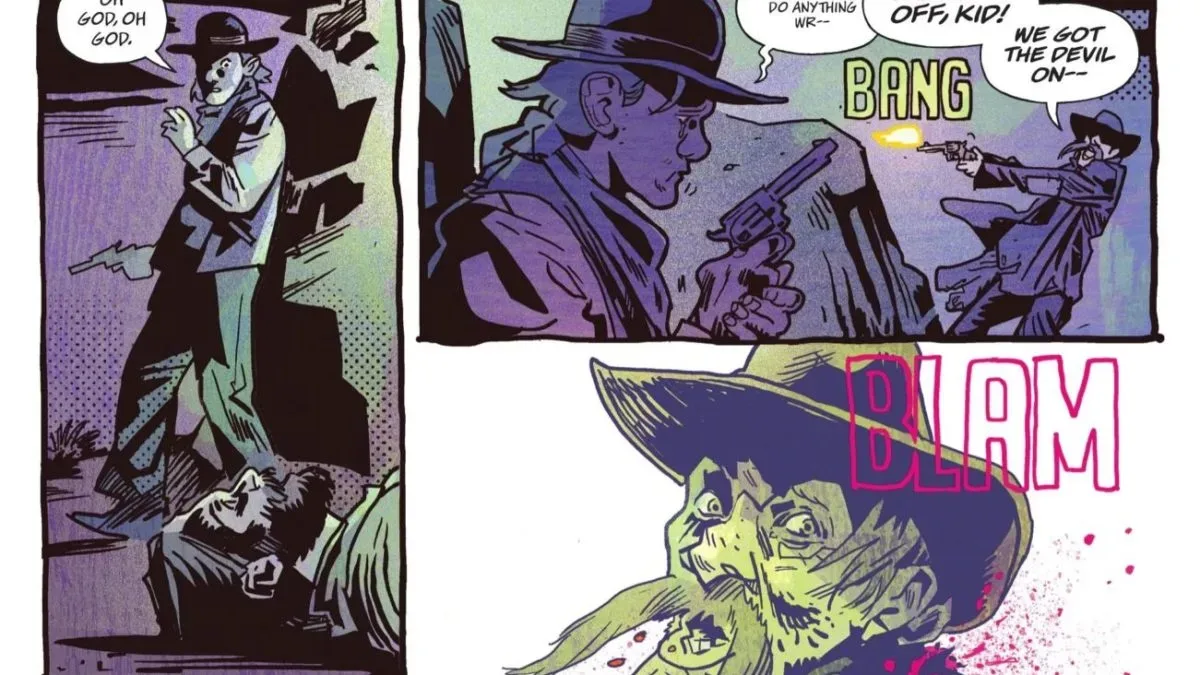
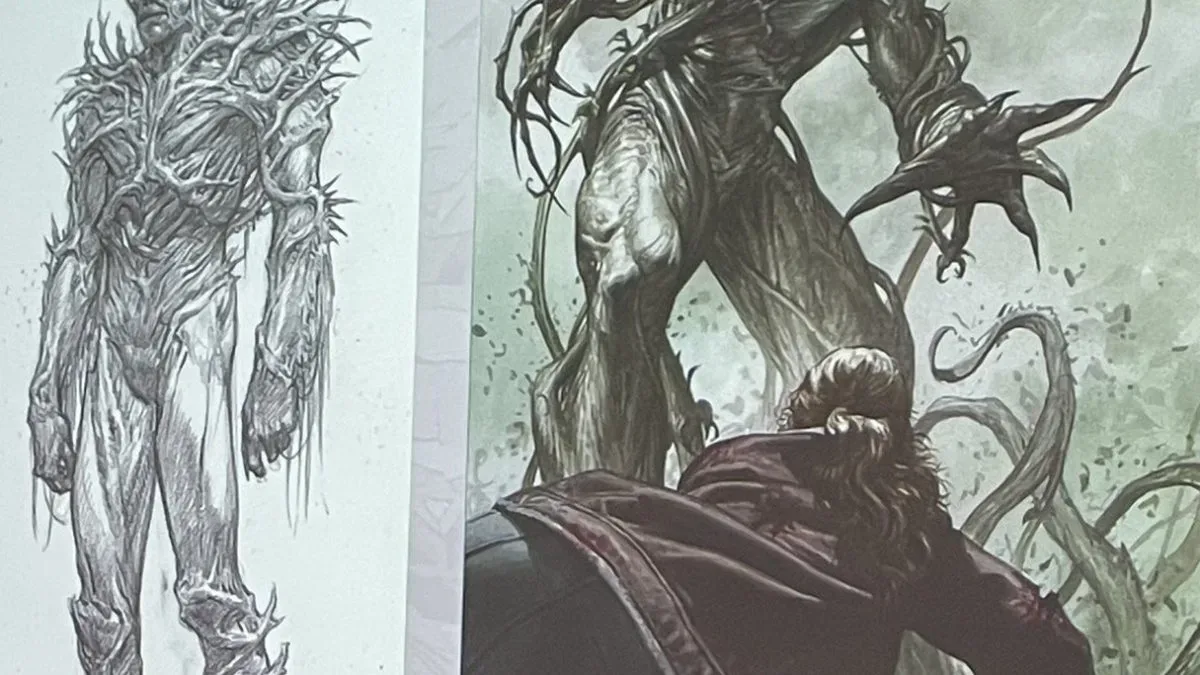
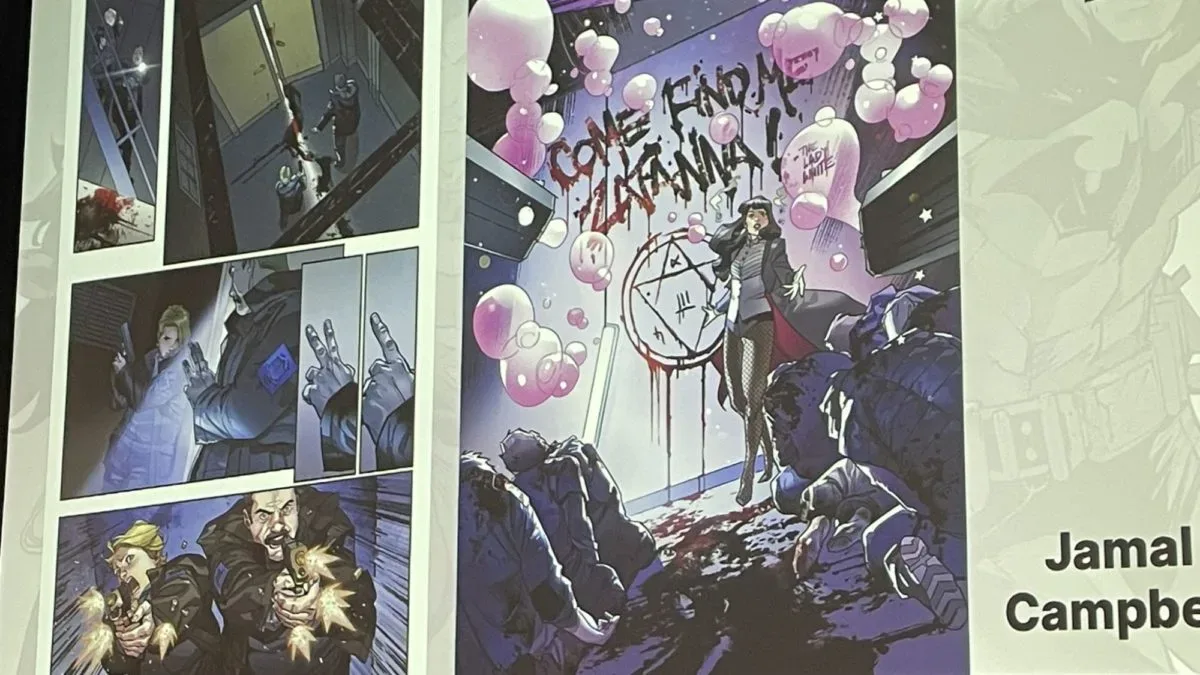
Walsh handling both writing and art is another defining part of the project. A writer-artist controls the transition from script to page, including what the reader sees, what is concealed, the timing of a reveal, and how much space a quiet moment receives before violence breaks it. For a tale leaning on isolation and dread, those choices are especially important. The supplied details emphasize the book’s eerie visual identity, including character designs shown at the convention, while the plot material points to an environment designed to feel abandoned, enclosed, and increasingly hostile.
What Ashecott adds to the story
Ashecott is more than a backdrop. The town is nearly abandoned, which gives the danger fewer places to hide in plain sight and fewer people capable of answering it. A small setting also makes each new arrival consequential. The mysterious preacher who rides into town becomes a focal point precisely because he has no established local story. His followers are growing, but neither his origins nor his connection to the missing girl are known.
The second issue introduces Charlie, a young stable hand who knows of Hex’s gunslinging past and admires him. The solicitation says those tales are known by few and believed by fewer still. That creates an immediate contrast between Hex’s legend and his present condition. Charlie sees the once-mighty bounty hunter; the opening setup presents a man at a low point. Bringing those perspectives together could make the book’s redemption theme more concrete, because it puts an aging hero beside someone who still believes in the version of him that the world has largely forgotten.
The missing girl is identified as Annie in the details for issue #3. By then, Hex has survived a brush with death and learned more about the power held by the beings taking over Ashecott. He rides out to rescue Annie, setting up a confrontation said to be unlike anything he has faced before. The issue’s teaser also refers to songs carrying power through time, suggesting that music or ritual may be important to the larger supernatural mythology. That is a thread to watch, though the available material does not explain exactly how it works or what these beings ultimately want.
The six-issue structure and what is confirmed
Jonah Hex and the Shadow of Death is a limited series, meaning it has a predetermined endpoint rather than an open-ended ongoing schedule. The complete story is planned for six issues. Its first installment had already reached shelves during New York Comic Con, following an earlier reveal at San Diego Comic-Con under the DC Next Level initiative.
Only a portion of the road ahead has been outlined publicly in the material available here:
- Issue #2 is scheduled for November 4, 2026, at $3.99. It brings Charlie, the mysterious preacher, the preacher’s expanding group of followers, and the disappearance of the young girl into sharper focus. Hex is set to become part of their unfolding story and, potentially, write a final chapter of his own legend.
- Issue #3 is scheduled for December 2, 2026, at $3.99. After a near-fatal encounter leaves Hex’s understanding of the situation in disarray, he heads out to save Annie while facing the full scale of the dark force moving through Ashecott.
Those descriptions give the early arc a clear escalation. First comes the arrival of an unidentified power and a disappearance. Then Hex is pulled toward the preacher’s circle and the missing girl’s fate. By the third issue, the threat has moved beyond suspicion: Hex knows the invaders possess extraordinary power and is pursuing a direct rescue. The remaining issues have not been detailed here, so the ultimate nature of the mythology, the preacher’s role, and the fate of Ashecott remain open questions.
Why the return is notable
The series is DC’s first Jonah Hex title in more than a decade, making this more than an issue-one launch for readers who follow the character. It is a return after a long gap, but one that avoids treating the passage of time as something to ignore. Instead, the concept centers it. Hex is older, exhausted, and seemingly left behind by the closing frontier. The supernatural story arrives as both an external threat and a possible final opportunity to decide what his life means.
That approach can make the limited-series format particularly useful. A six-issue run has enough room for a layered mystery and an escalating monster hunt, while retaining a finite shape that suits a tale framed around a “final chapter” to a legend. The phrase should not be read as confirmation of any permanent outcome for the character; it is part of the setup for issue #2. Still, it signals that the stakes are intended to feel weighty rather than episodic.
For readers interested in how comics can use genre fusion, the book’s appeal is in the tension between familiar parts. Western iconography usually implies practical dangers: guns, horses, deserted settlements, grudges, and the harsh consequences of violence. Horror changes the equation by making the threat harder to identify and possibly impossible to defeat through ordinary means. Hex remains the human constant at the center of both modes, but the series asks him to apply an old code and old skills to something that should not exist.
That same collision is what separates the project from a straightforward revival. The book does not present a cleanly mythic gunslinger riding into a healthy frontier. It starts with an isolated Hex in a dying town and asks whether a deeply damaged man can protect people from a force older than the place they call home. For more DC comic-book context, readers can also see details on Batman: Shadow of the Bat’s new ongoing series.
With Walsh responsible for both the script and art, and with the first three installments establishing a path from eerie arrival to open supernatural conflict, Jonah Hex and the Shadow of Death is positioning Hex’s return around atmosphere, mystery, and a hard-won chance at redemption. The unanswered questions are the point for now: who is the preacher, what are the entities in Ashecott, why do they want Annie, and whether the greatest gunslinger can survive a fight that no frontier legend prepared him for.