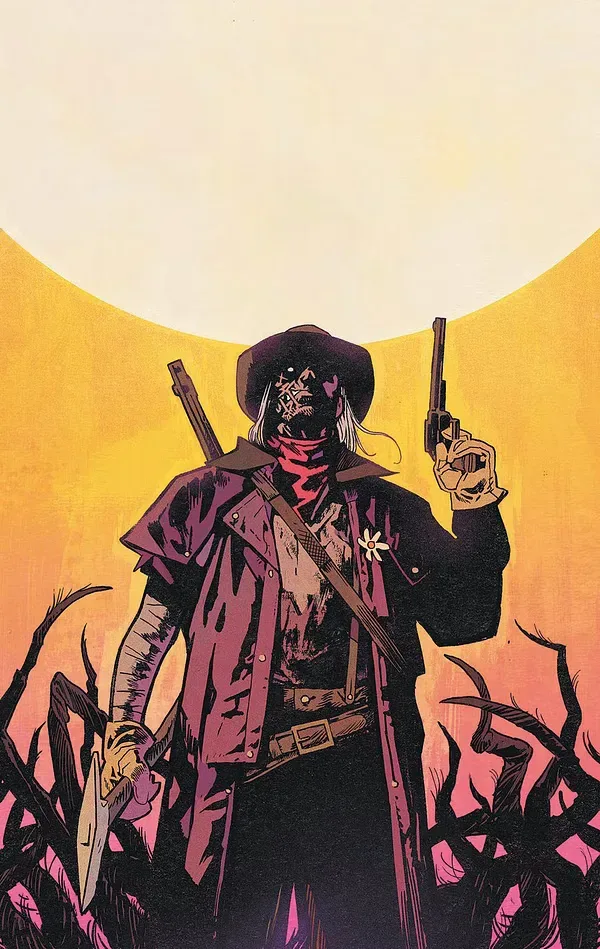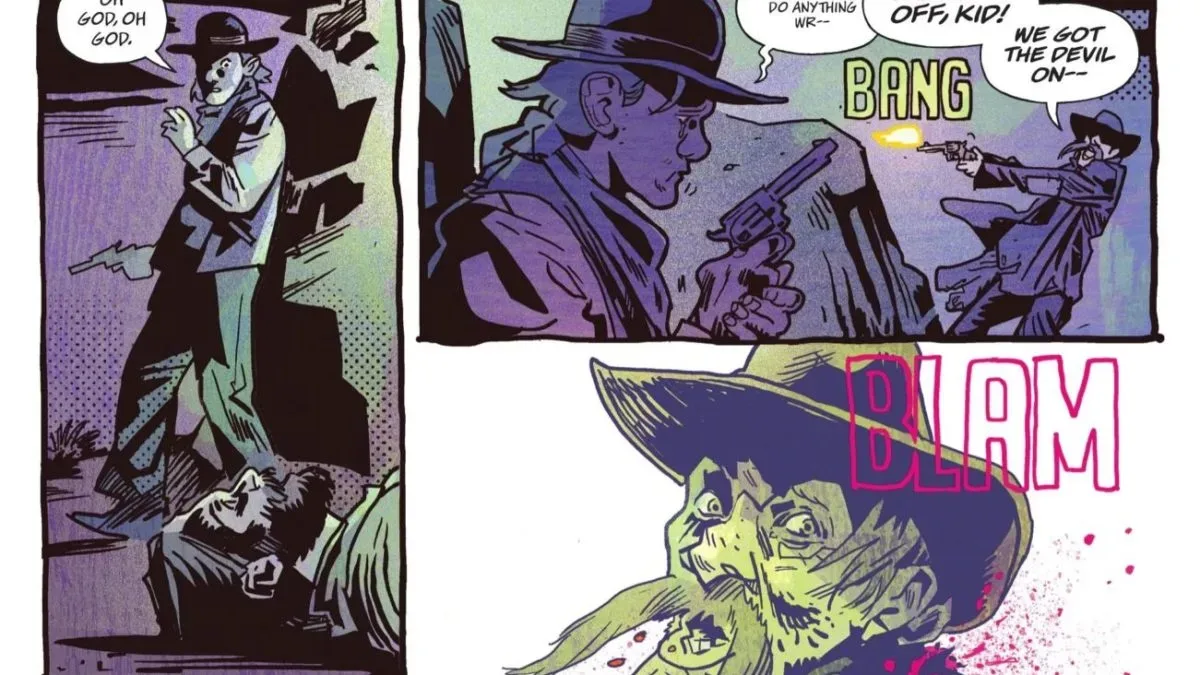
Jonah Hex is headed back into the dark—and this time the danger is not merely another outlaw with a quicker draw. Jonah Hex and the Shadow of Death #1, a new six-issue DC Next Level miniseries written and drawn by Michael Walsh, is scheduled to arrive on October 7, 2026. Its setup places the scarred bounty hunter in Ashecott, a small town confronted by an evil presence that is both supernatural and deeply entwined with Hex’s own history of violence, pain and guilt.
The first issue is a 32-page release priced at $3.99 in the US. A card-stock variant is listed at $4.99. Walsh is handling both writing and interior art, a notable creative arrangement for a character piece with a tightly defined tonal premise: a Western veteran who appears to have left his worst days behind discovers that the past may still demand an answer.
A horror story built around an old Western survivor
The announced story begins at what is described as the end of the Wild West. Jonah Hex has settled into the quiet life of a broken-down bounty hunter, with the implication that his personal saga of bloodshed and regret is over. That apparent peace does not last. Ashecott is menaced by an entity or entities older than the town itself, arising from beyond the world understood by the people it intends to infect.
That language establishes an important distinction. This is not simply a conventional frontier mystery in which Hex tracks down a criminal gang. The stated threat is explicitly otherworldly. It is also after a child with unexplained abilities, giving the plot a human point of danger alongside the broader supernatural menace. Hex’s decision to intervene appears to be motivated not just by immediate protection, but by a possible opportunity for redemption.
In narrative terms, redemption is more than a character deciding to do the right thing once. It is the attempt to confront, repair or morally answer for a past that cannot be erased. For Jonah Hex, whose history is framed here through guilt as well as violence, that makes the conflict potentially internal as well as external. The evil in Ashecott may provide the immediate antagonist, while Hex’s belief that he has failed people before supplies the emotional pressure behind his involvement.
Why the supernatural angle fits Jonah Hex
Jonah Hex was created by John Albano and Tony DeZuniga, first appearing in All-Star Western #10 in 1972. He is widely defined by a scarred appearance, cynicism, life as a bounty hunter and a harsh but meaningful personal code. The character’s reputation is rough, but he has been presented as someone willing to protect or avenge innocent people.
Those traits give a horror-tinged story a clear foundation. A supernatural monster is an unusual opponent for a gunslinger, but Hex is not being positioned as an ordinary resident suddenly recruited to fight a phenomenon he cannot comprehend. He is already a figure shaped by brutality and loss. The new miniseries can therefore make the alien nature of the threat feel destabilizing without stripping away the central appeal of the character: a hard-edged survivor making a moral choice when walking away would be easier.
The premise also does not present the occult material as unprecedented in every Jonah Hex adaptation. The 2010 film starring Josh Brolin incorporated supernatural events. That does not reveal how Walsh’s story will use its own horror elements, but it shows that the character has previously been taken beyond a strictly realistic Western framework.
For readers accustomed to horror that functions through haunted spaces, ominous communities and vulnerable figures targeted by incomprehensible forces, Ashecott is positioned to be the essential setting rather than a mere stop on a bounty hunt. The town is where a concealed evil has arrived, where its victims may be unable to understand its origins, and where the child it seeks must be protected. That setup gives the series room to derive tension from place, uncertainty and the consequences of an encroaching threat—not only from shootouts.
What “1 of 6” means for prospective readers
The designation 1 of 6 confirms a limited series, also commonly called a miniseries. Unlike an ongoing comic with no announced endpoint, a limited series is planned to tell its story across a fixed number of issues. Here, six installments are intended to carry the Ashecott conflict from its opening disturbance to its eventual resolution.
That does not tell readers exactly how the plot will unfold or whether every question will be answered in the debut. It does, however, signal that issue #1 is the entry point for a self-contained arc rather than a random midpoint in an open-ended run. The first chapter’s job is likely to establish Hex’s present condition, introduce the threat surrounding Ashecott and define why the child is central to the danger. The larger questions—what the entities are, why they have come, and what redemption means for Hex—are the material the remaining issues can develop.
With Walsh drawing as well as scripting the book, the project also has an unusually direct connection between storytelling and visual interpretation. In comics, the writer determines the sequence of events, dialogue and dramatic focus; the artist turns those choices into page composition, character acting, environments and visual pacing. When one creator fulfills both roles, it can create a particularly unified approach, though the announcement does not disclose the specific visual techniques, color work or lettering choices across the completed series.
The lettered preview matters
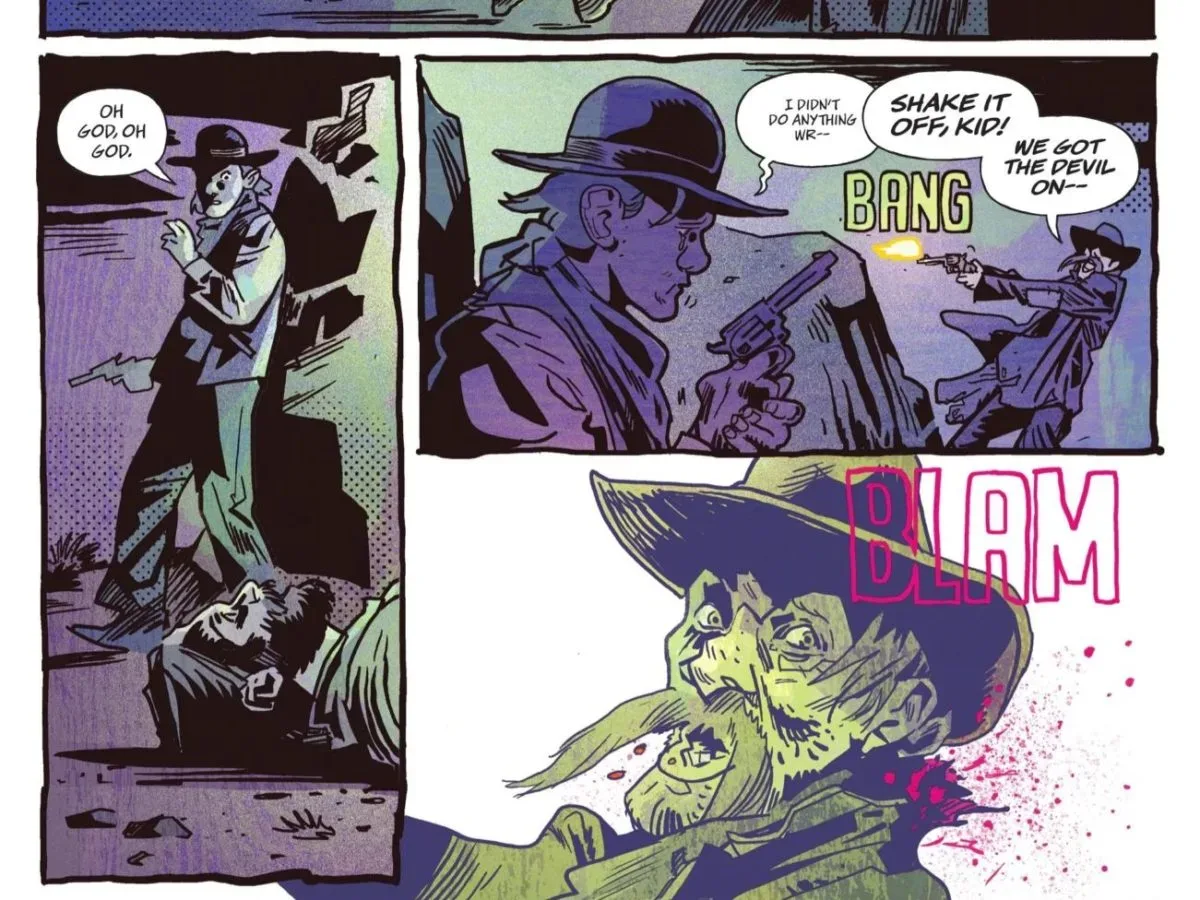
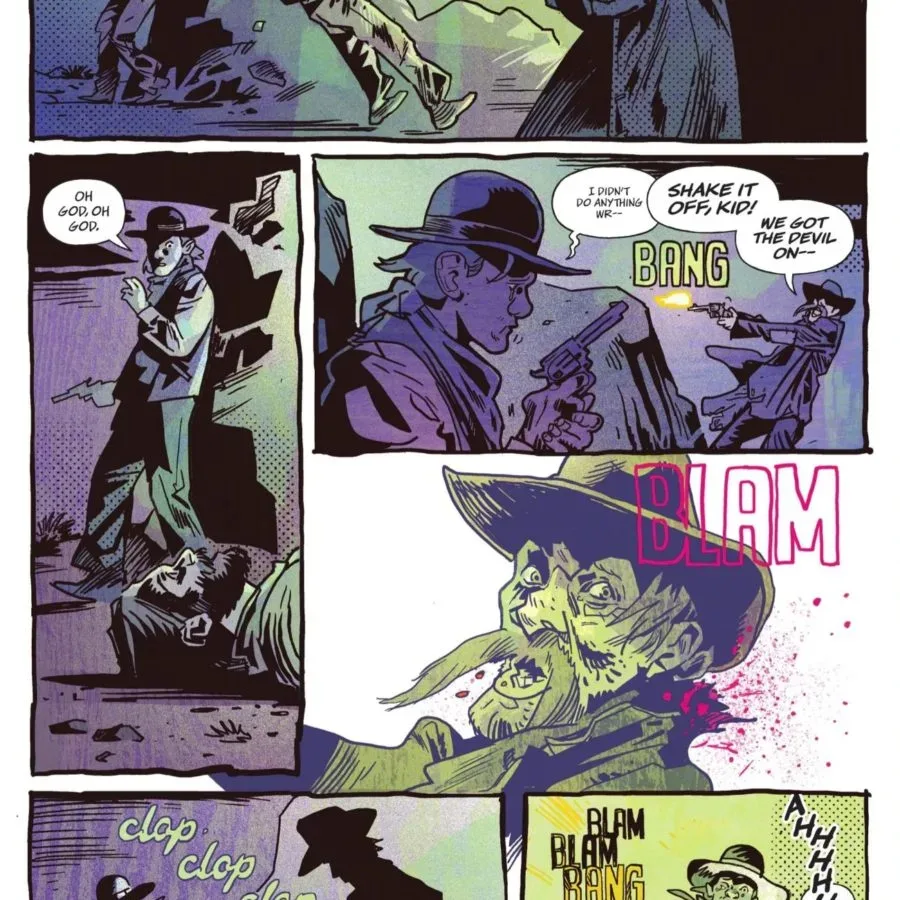
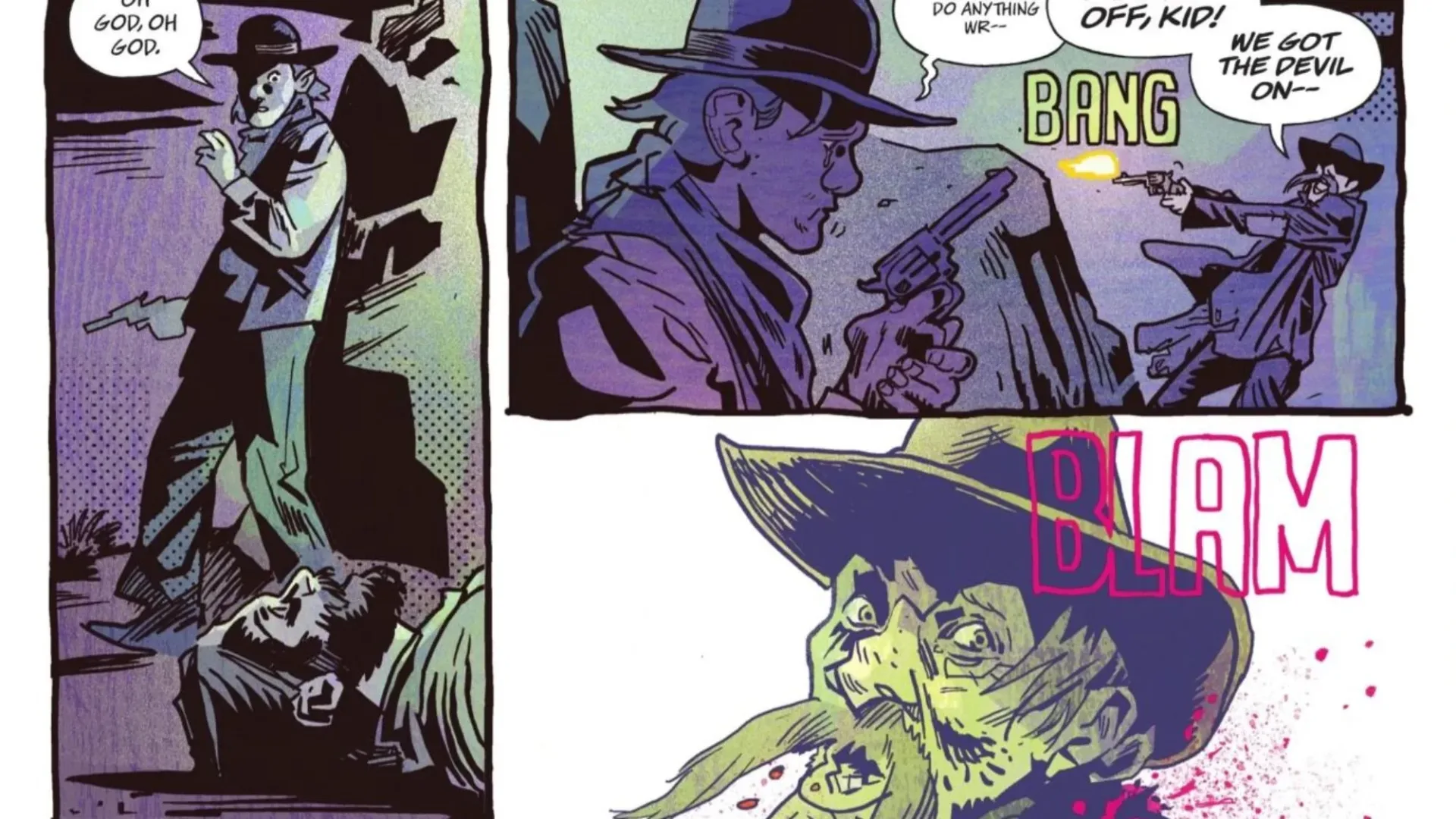
The newly presented preview is described as lettered, following an earlier look at unlettered pages. That distinction matters because lettering is not decorative cleanup. It is the part of comics production that places dialogue, captions, sound effects and other text on the finished artwork. Lettering determines how readers receive information, how a page is navigated and where pauses land during a scene.
Unlettered pages can showcase draftsmanship, panel design and atmosphere, but they cannot fully convey the rhythm of a finished comic scene. A lettered preview offers a closer impression of how the story’s visual beats and spoken information will work together. It is still only a preview, not the complete issue, so it should not be treated as a definitive account of the full plot. What it does reinforce is the announced direction: an older, battle-worn Hex is facing a threat that cannot be neatly categorized as another frontier criminal.
What is confirmed—and what is still unknown
- Confirmed: Michael Walsh writes and draws Jonah Hex and the Shadow of Death.
- Confirmed: It is a six-issue DC Next Level series, beginning with issue #1.
- Confirmed: The debut is listed for October 7, 2026.
- Confirmed: Hex is living in or near the small town of Ashecott when a supernatural evil arrives.
- Confirmed: The threat is pursuing a child with mysterious abilities, and Hex sees an opening to seek redemption.
- Confirmed: The regular US price is listed as $3.99 for 32 pages; a card-stock variant is listed at $4.99.
- Not detailed: The identity and exact nature of the entities, the child’s abilities, and the complete supporting cast.
- Not detailed: How the six-issue story will resolve Hex’s personal reckoning or the fate of Ashecott.
That balance of confirmed information and withheld mystery is appropriate for a debut issue built around horror. The solicitation defines the stakes without providing an explanation for the evil. Readers know it predates the town, threatens its residents and wants the child. They do not yet know its rules, its limits or whether gunfire alone will have any meaning against it.
A Western with horror mechanics, not just horror decoration
The most promising part of the setup is its effort to connect the supernatural crisis to Jonah Hex’s defining burden. A horror element can be superficial if it merely changes an enemy’s appearance. Here, the announced conflict is tied to guilt and a chance at redemption. That suggests the story’s central question is not only whether Hex can stop something evil, but whether a man who believes his story ended in failure can choose a different ending while protecting someone else.
The title, The Shadow of Death, also frames the series in terms broader than a single villain. A “shadow” can suggest looming danger, an inescapable past or a force that grows as it approaches. The book has not disclosed what that phrase means within the plot, so readers should not assume it identifies a particular named creature or character. But as a thematic signal, it aligns closely with a Western protagonist whose reputation, scars and history already make him a figure followed by the consequences of violence.
Horror-focused comic readers may also recognize why the premise leans into a small town and a child with unusual powers. Those ingredients naturally create unequal stakes: adults may be outmatched by a force they do not understand, and the person the evil wants may be unable to defend themselves. Hex’s role as protector is consequently more significant than it would be in a standard bounty job. He is not simply collecting a target; he is placing himself between a vulnerable person and a threat whose origin lies beyond familiar experience.
For a broader look at how horror properties can be positioned across games and remakes, Joking Joystick has also covered Resident Evil’s planned crossover direction. Walsh’s Jonah Hex project is a comic rather than a game, but it similarly uses the uncertainty of an expanding threat to make an established genre figure feel newly vulnerable.
Release details
Jonah Hex and the Shadow of Death #1 arrives October 7, 2026, as the opening chapter of a six-issue series. Michael Walsh is credited as both writer and artist. The standard 32-page issue is listed at $3.99 in the US, while the card-stock variant carries a listed $4.99 price. Its opening premise sends Jonah Hex into Ashecott to confront an ancient, otherworldly presence and protect a child it is trying to claim—while testing whether one of DC’s most infamous bounty hunters can finally find a measure of redemption.
Shop the products
Check current price, model and availability at the retailer.