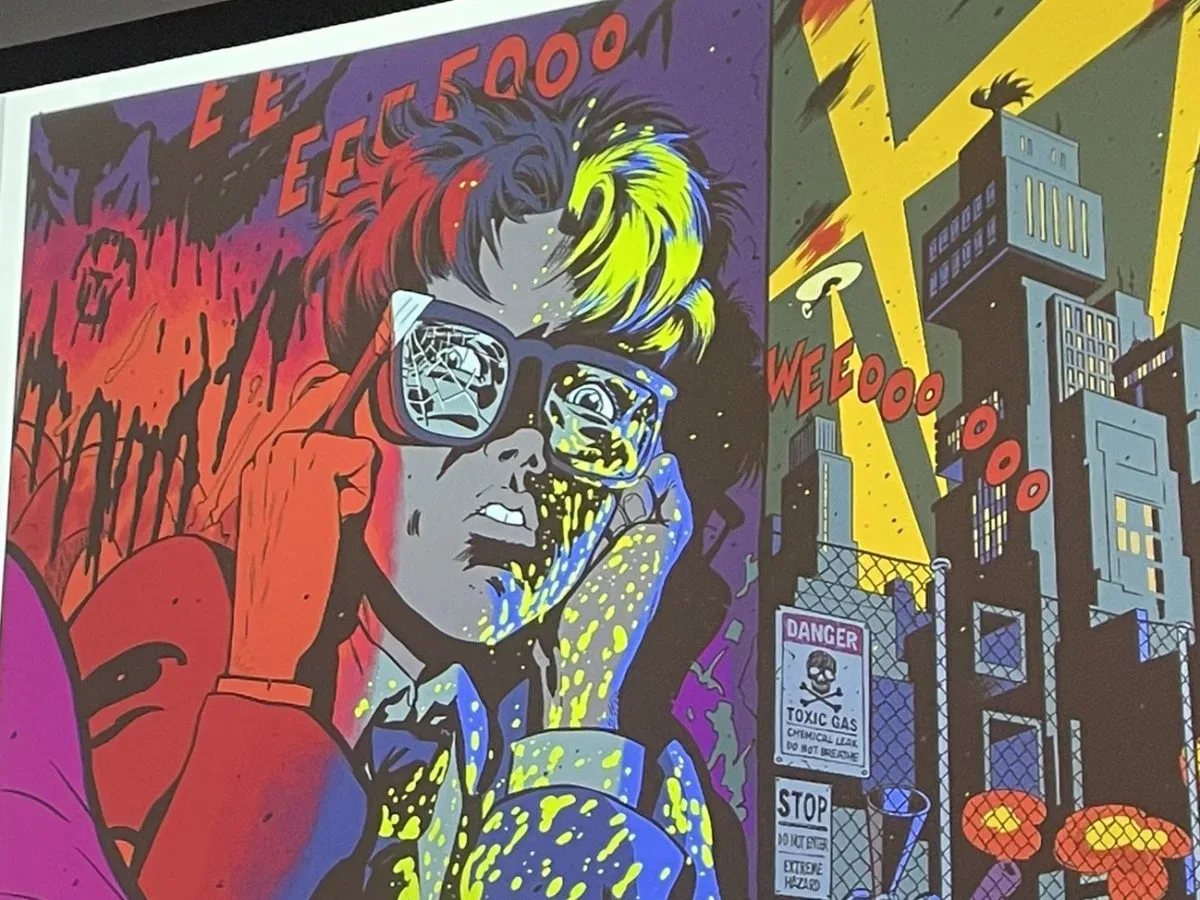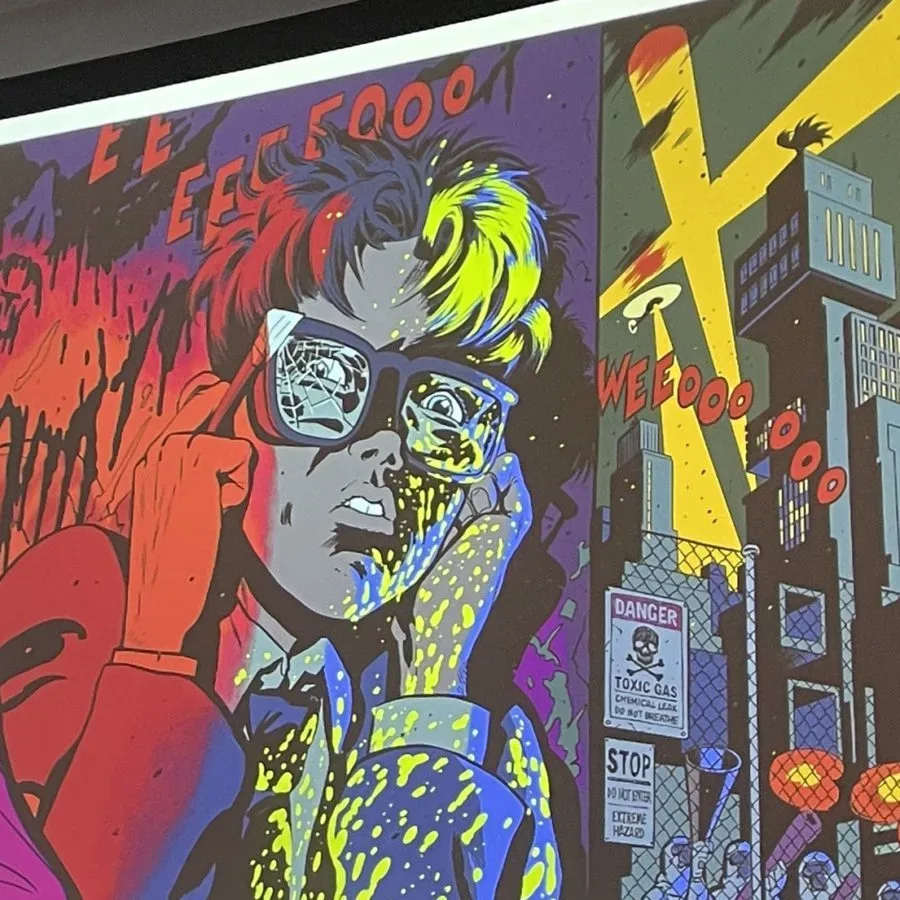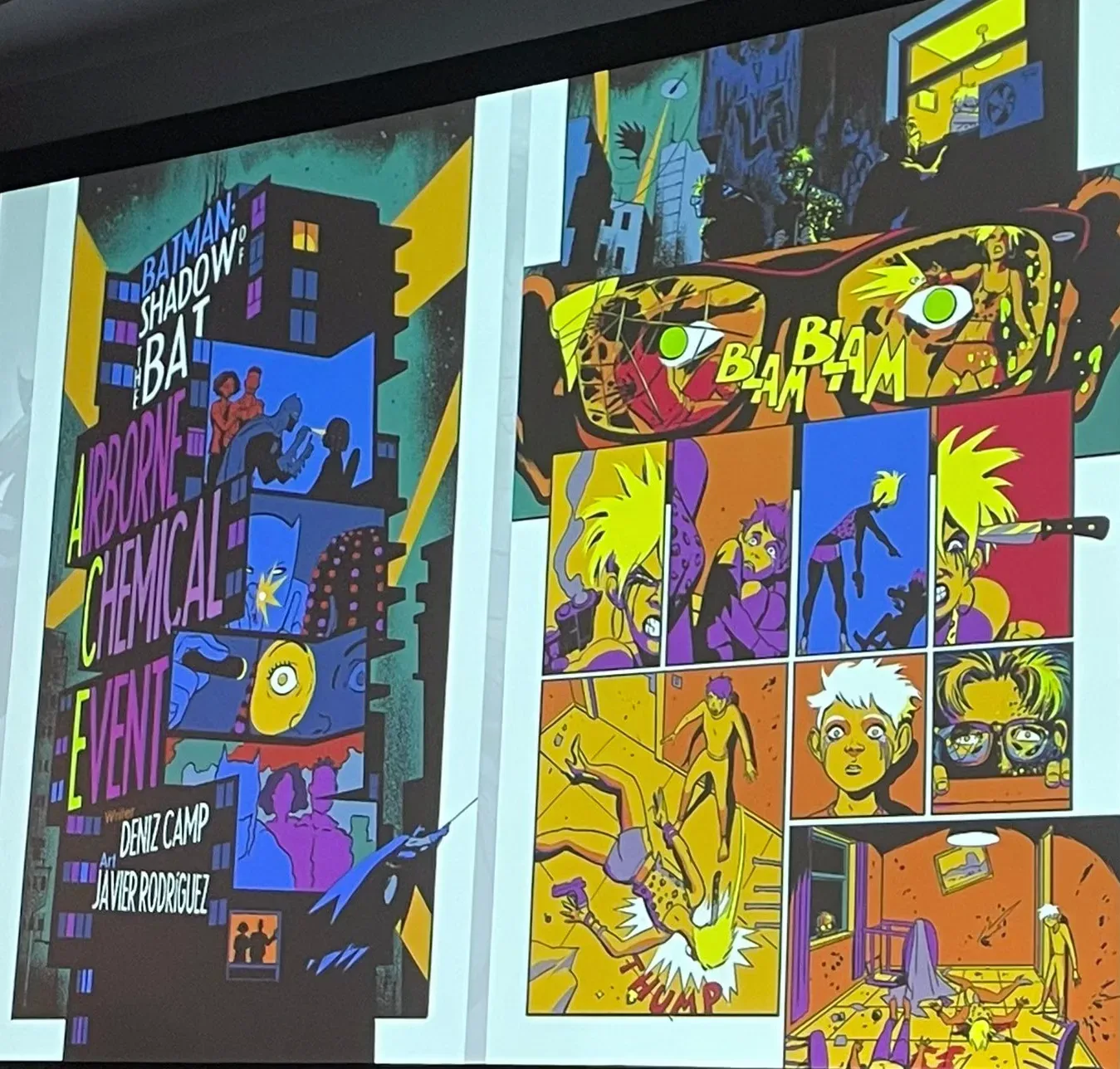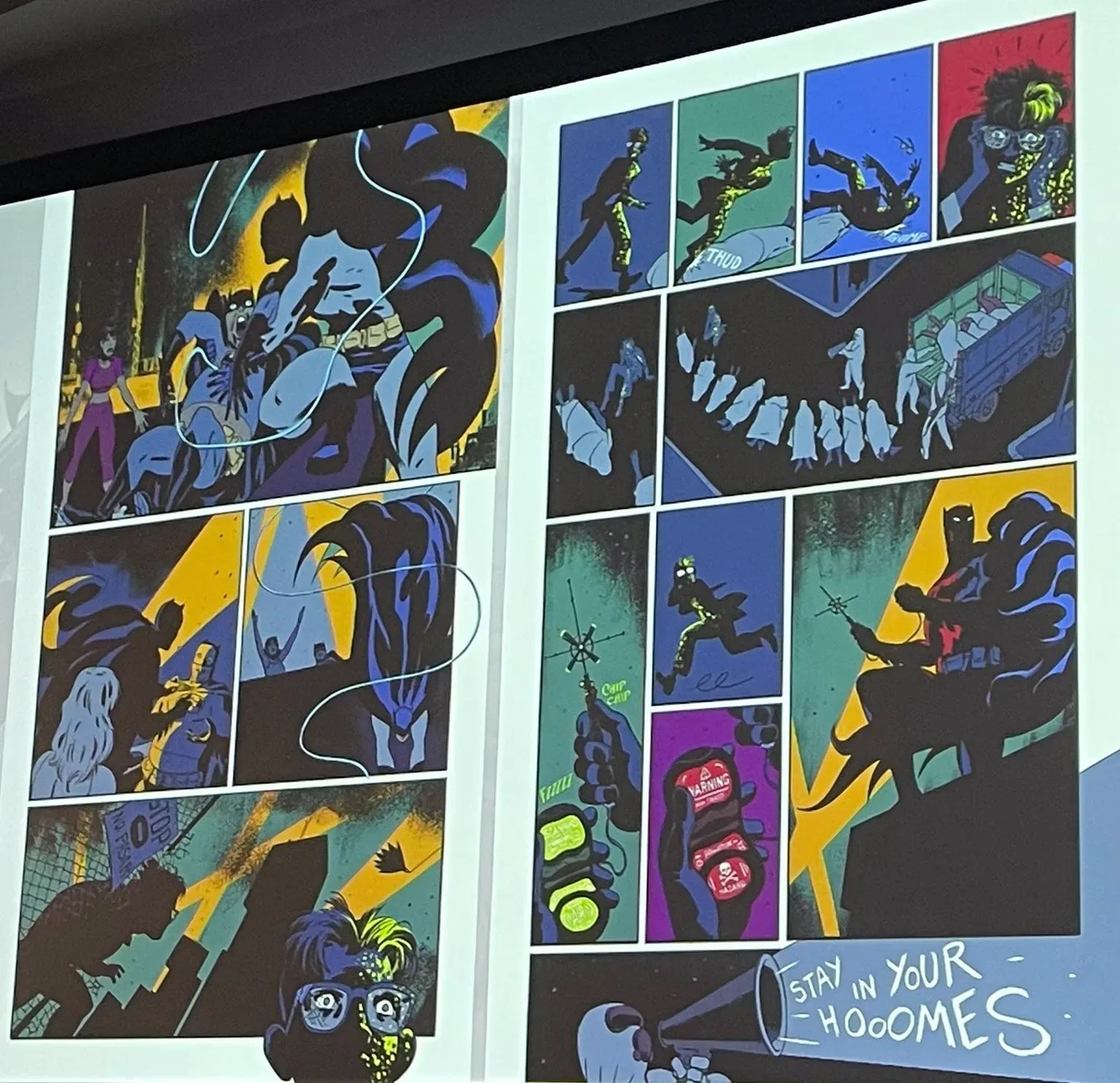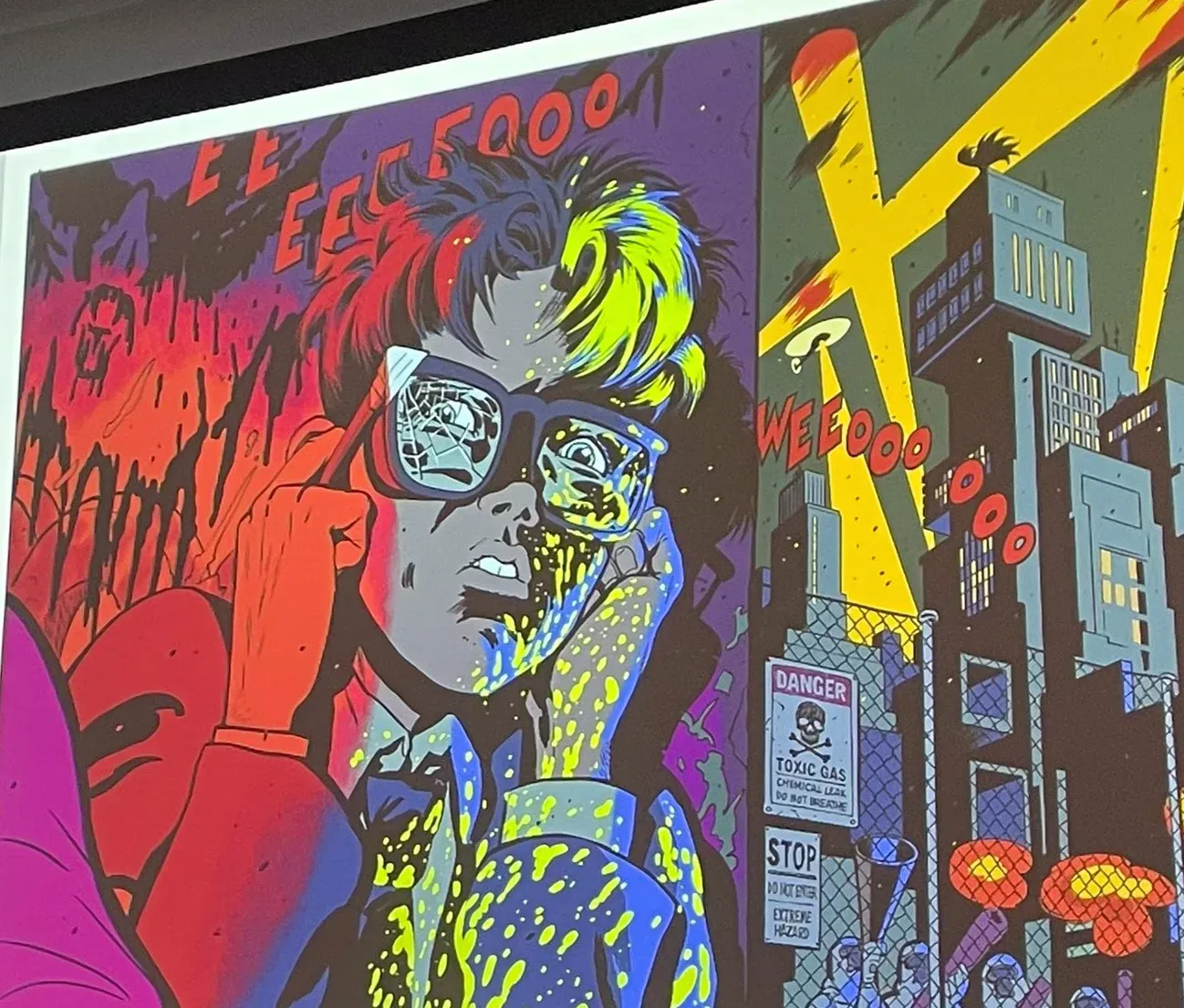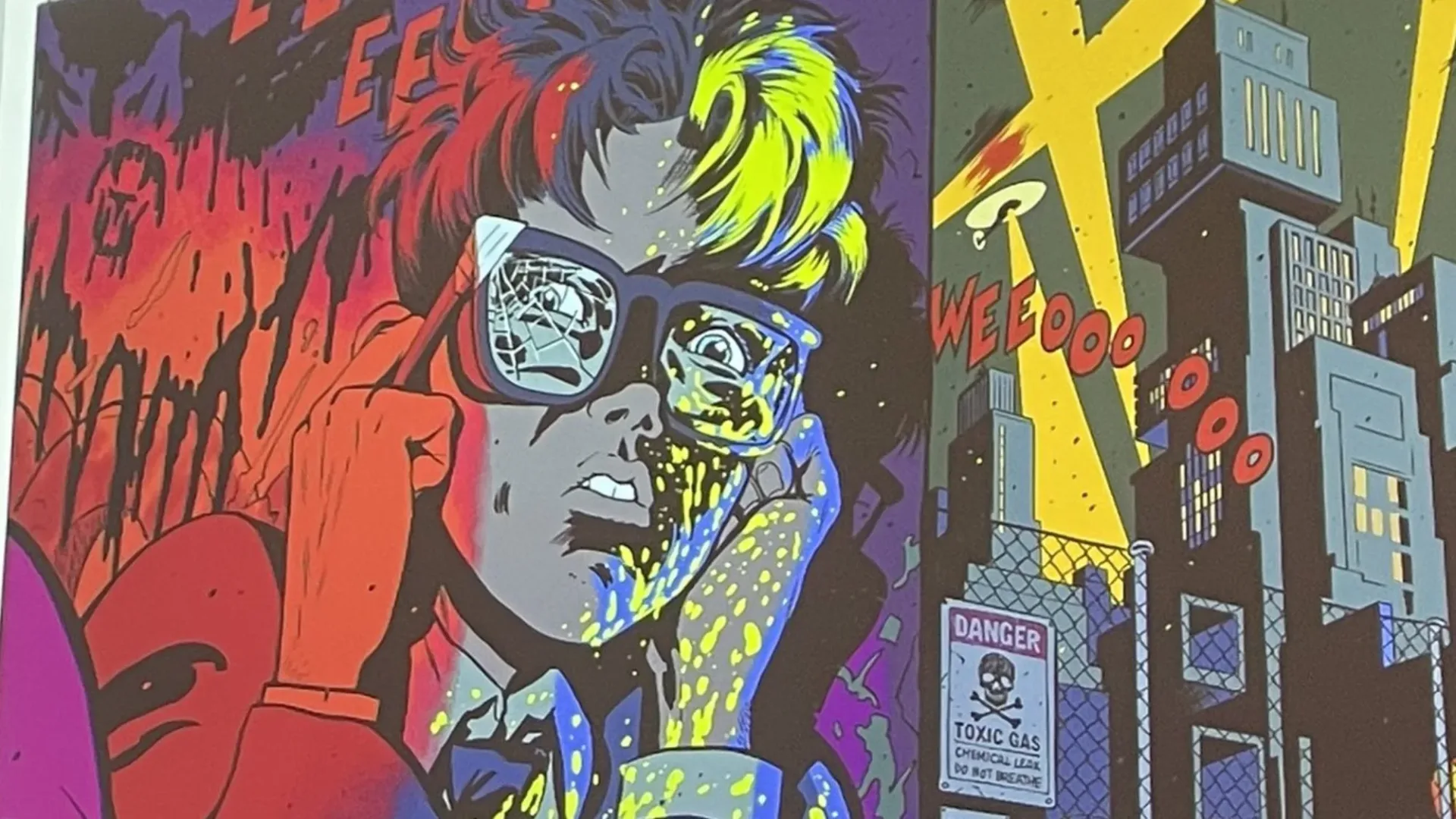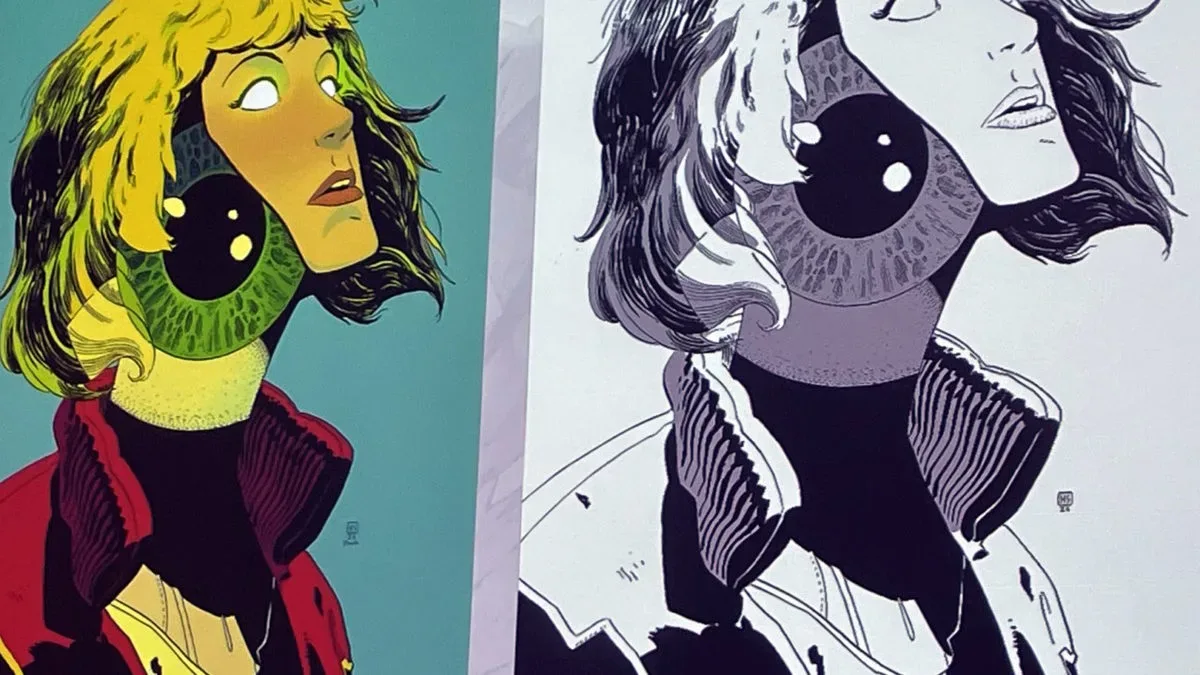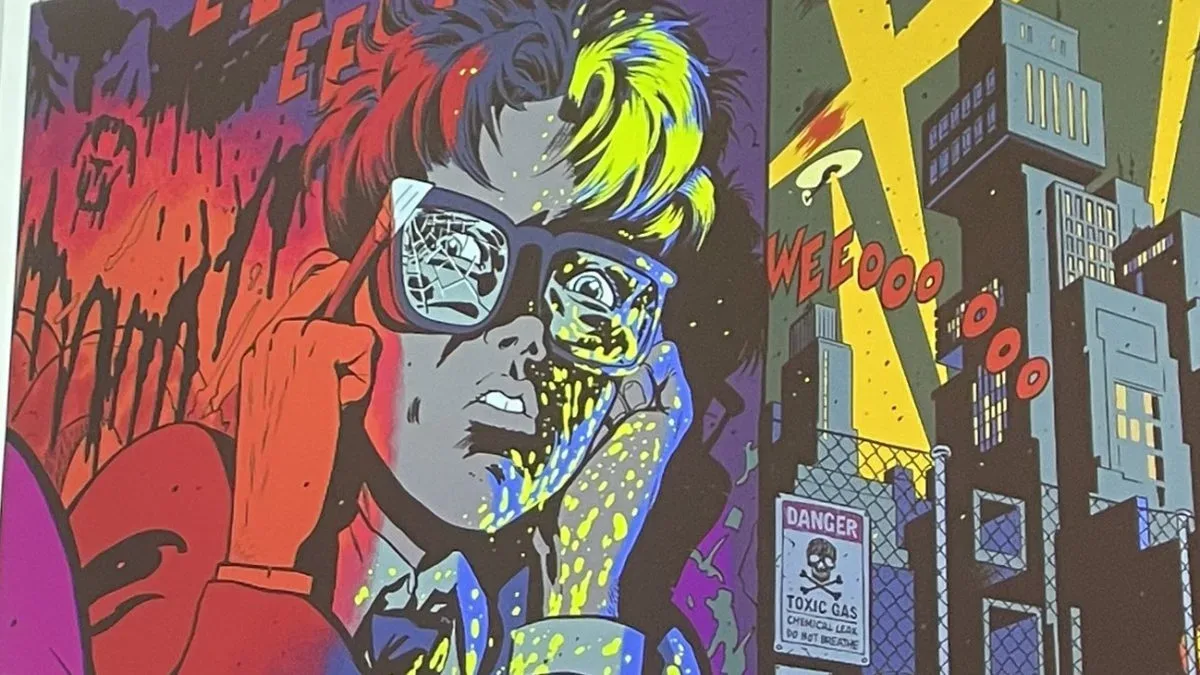
Batman: Shadow of the Bat is being positioned as a new ongoing Batman series about a city that cannot catch its breath. At New York Comic Con, writer Deniz Camp and artist Javier Rodríguez expanded on the project’s central premise: an Ace Chemicals disaster pushes a Gotham neighborhood into quarantine and martial law, while Batman confronts the human consequences of an ongoing crisis rather than a threat that can simply be punched into submission.
Camp described the book’s setting as one of constant disasters and framed Batman’s journey around a difficult question: how can Bruce Wayne remain human while facing evil and trying to help people who are afraid? Rodríguez, meanwhile, said the artwork will explore Batman’s relationship with shadow, using one of the character’s defining visual ideas as an active storytelling device. The series is also set to introduce a new supporting cast and concepts intended to widen Batman’s corner of DC’s main continuity.
A disaster at the center of Gotham
The known inciting incident begins at an abandoned Ace Chemicals factory, identified as the facility connected to the Joker’s origin. An explosion releases highly potent neuropharmacological agents across a Gotham neighborhood. Neuropharmacological refers to substances that affect the nervous system and brain function, making the hazard more alarming than ordinary industrial debris within the comic’s premise.
Authorities fear that exposure could produce a wave of Joker-like threats. Their response is a harsh quarantine enforced with martial law. A quarantine limits movement in an effort to contain a perceived danger; martial law places extraordinary authority in military hands. Together, those terms suggest that the story’s conflict will not be limited to chemical fallout or a single supervillain. Gotham’s institutions, residents and rules of daily life are all part of the pressure bearing down on the city.
Batman enters the sealed-off area to confront whatever has emerged there. Yet the convention presentation emphasized that the explosion is a beginning, not the whole pitch. The ongoing series is interested in the people and dangers that exist in the Bat’s shadow after the emergency begins, as well as the repeated strain of living through one catastrophe after another.
Humanity, not just horror
The phrase “constant disasters” gives Shadow of the Bat a potentially distinct angle among Gotham books. Superhero comics frequently begin with a spectacular incident, then race toward identifying the culprit and restoring the status quo. Camp’s stated interest is broader: what does aid look like while the fear, instability and evil are still present?
That focus matters for Batman in particular. Bruce Wayne is often defined by preparation, detection and control. A quarantine zone affected by a dangerous chemical event presents problems that may resist all three. There are people who need protection, public systems that can turn punitive under stress, and threats whose identity or scale may not be immediately clear. The core dramatic tension, based on what the team has outlined, is whether Batman can preserve his connection to ordinary people while operating in a place where fear encourages dehumanizing choices.
This is not a promise that the series will abandon action or mystery. Batman is entering Gotham’s crisis zone because there are new threats to face. But the team’s comments indicate that the emotional and social stakes are meant to be as important as the mechanism of the disaster. The book appears designed to ask what the symbol of Batman means to people caught inside a citywide emergency—not merely what Batman can defeat.
Rodríguez’s shadows as storytelling language
Rodríguez’s comments point toward an especially visual use of Batman’s iconography. Batman has always been associated with darkness, concealment and sudden appearances, but “shadow” can function in several ways on a comics page. It can hide information from readers, isolate a figure in a panel, turn a familiar space into an uncertain one, or make a hero feel like a protective presence—or an unsettling silhouette.
In a story about a quarantined neighborhood, that flexibility could be useful. Shadows can reflect incomplete knowledge, fear of what is beyond a barricade, or the distance between Batman and the people he wants to help. They can also make the Caped Crusader’s entrance feel mythic without requiring the story to forget the vulnerable people on the ground. Rodríguez has said the series will use the visual potential of Batman’s identity to strengthen the narrative, rather than treating darkness as a purely decorative default.
The title therefore reads as more than a familiar Batman label. It describes the literal visual territory of the character, but it also fits a premise about people living under the consequences of disaster, containment and uncertainty. The new supporting characters will be important to whether that idea lands. Camp and Rodríguez have specifically highlighted them as a major element of the book’s expansion of Gotham.
An ongoing that sits alongside Batman and Detective Comics
Batman: Shadow of the Bat will take place in main DC continuity and is intended to complement the existing Batman and Detective Comics titles. That distinction is useful for readers sorting through the many Gotham-related projects: this is not being described as an isolated alternate-universe exercise. Its premise, characters and setting are meant to occupy the shared DC world.
At the same time, Camp said the creative team is approaching the book with the energy they brought to creator-owned work. He connected its themes of humanity amid crisis to those explored in Absolute Martian Manhunter. In practical terms, that suggests an attempt to give a continuity-bound Batman series a strong authorial identity: a specific premise, a defined visual approach and a cast built for this story rather than simply a tour through familiar Gotham fixtures.
For a wider view of how DC’s superhero line continues to add characters and reshape team dynamics, see the latest Legion of Super-Heroes developments.
What has and has not been confirmed
The project was discussed with new interior artwork at the convention, but no firm release date was provided. Its official status remains “coming soon.” That means readers should be cautious about treating estimates or speculation as scheduling information. No issue number, release month, pricing or complete supporting-cast details were established in the material available here.
What is clear is the creative foundation: Camp writing, Rodríguez on art, an Ace Chemicals explosion, a harshly quarantined Gotham neighborhood, concerns over Joker-like dangers, and Batman attempting to hold onto his humanity in a city caught in recurring disaster. The series is also an ongoing rather than a one-shot or finite miniseries, which leaves room for the supporting cast and the altered neighborhood to develop beyond the initial crisis.
Why the premise has room to stand apart
Gotham is no stranger to city-scale danger, and Ace Chemicals carries immediate significance because of its connection to the Joker. But the announced setup puts its attention on aftermath: exposure, containment, official force, rumors of transformation and communities attempting to survive the conditions around them. That creates space for detective work and superhero conflict while also keeping the story’s stated concern with humanity in view.
It may also give the title a grounded dramatic engine. Instead of treating Gotham as a generic backdrop for the next costumed battle, the series is building around a particular neighborhood and the people affected by decisions made above them. Whether Batman is perceived as a rescuer, an intruder or another frightening figure in the dark could matter as much as his investigation into the chemical event.
There is still much to learn before Batman: Shadow of the Bat arrives, especially the identities of its new characters and the exact form of its threats. For now, Camp and Rodríguez have established a clear creative ambition: a Batman comic in which darkness is both visual style and moral terrain, and where saving Gotham means confronting the human cost of trying to contain disaster.