Microsoft is preparing to make its next case for AI-first Windows hardware on October 7 in San Francisco, with CEO Satya Nadella, Windows and Devices leader Pavan Davuluri, and NVIDIA CEO Jensen Huang listed among the guests. The stated focus is local AI and its role in the next phase of the PC. In practical terms, the event looks set to revolve around two connected questions: what NVIDIA’s RTX Spark hardware enables, and how far Microsoft wants AI agents to act inside Windows.
One expected headline is the Surface Laptop Ultra, a 15-inch premium notebook announced in June as an early RTX Spark system. The other is a wider push around agentic AI: software intended to handle multistep tasks with relatively little step-by-step direction. Both ideas arrive with substantial caveats. Microsoft’s previous Copilot+ PC drive has had a mixed reception, while AI features that touch personal activity and files have intensified privacy concerns. A powerful laptop and a slick demo will therefore not be enough on their own.
The Surface Laptop Ultra needs answers beyond its spec sheet
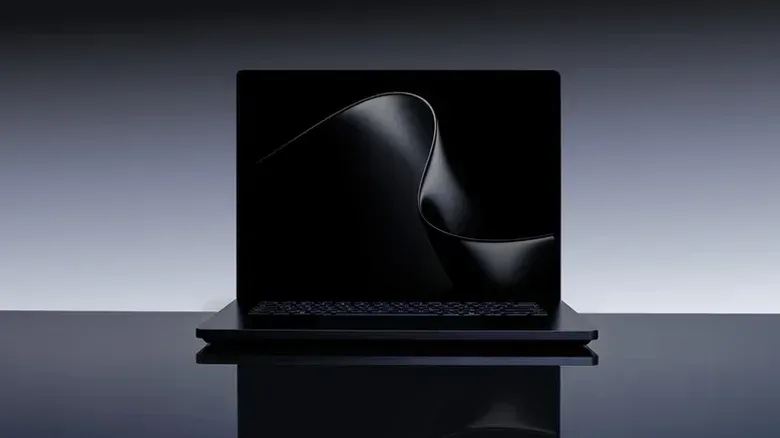
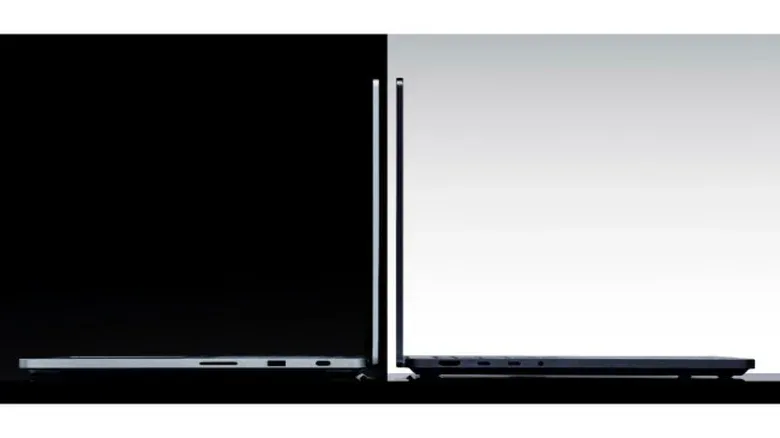
The Surface Laptop Ultra is positioned as a high-end Windows laptop built around NVIDIA’s RTX Spark, an Arm-powered platform intended to run very large AI models locally. The known hardware description is ambitious: a 15-inch mini-LED display rated for as much as 2,000 nits of peak brightness, a large trackpad and a broad selection of ports. It is also framed as a rival to Apple’s MacBook Pro line.
Its most consequential details remain unannounced: a release date and a price. Those omissions make October 7 the natural place for Microsoft to clarify who the machine is actually for. The scale of the underlying components suggests this may not be a conventional premium notebook priced merely for people who want a handsome screen and fast everyday performance.
RTX Spark is described with 6,144 Blackwell GPU cores, 20 Arm CPU cores and up to 128GB of unified memory, while drawing up to 80 watts of power. Unified memory means the processor and graphics hardware can access a shared memory pool rather than relying on completely separate system and graphics memory. That can be especially important when working with a large AI model, since model weights and the data used during inference must fit somewhere accessible to the computing hardware.
The important word there is local. Running an AI model locally means the processing happens on the PC rather than exclusively on remote servers. The potential appeal is straightforward: less dependence on a live cloud connection, a path to faster responses for some work, and more direct control over data. But local computing is not automatically private, inexpensive or easy. A program can still connect to online services, and the hardware required to run particularly large models can be expensive.
Comparable AI-focused systems indicate the kind of market the Surface Laptop Ultra may enter. AMD’s flagship Ryzen AI Halo desktop hardware launched at $3,999, while NVIDIA’s Linux-based DGX Spark systems sell for $4,999, up from a $4,000 launch price. Neither figure establishes the future Surface Laptop Ultra price, but both show why a machine designed to house extensive memory and AI compute may be aimed at specialists rather than broad PC audiences.
That makes the event’s messaging important. Microsoft will need to distinguish a laptop that is merely capable of running large models from one that provides a clear benefit to creators, developers and other demanding users. The language around “world makers” gives the product a grand creative identity, but buyers will still need specifics: which workloads matter, what can operate locally, what software supports the hardware, and how much they must pay for the privilege.
Related coverage includes Microsoft’s October 7 Event Sets Up Surface Laptop Ultra and Agentic AI Push.
Why the hardware discussion matters to PC players
For PC enthusiasts, powerful AI hardware is not automatically a gaming feature. The specifications supplied for RTX Spark emphasize local AI models, not game performance, particular titles or gaming-specific capabilities. It would be premature to treat the Surface Laptop Ultra as a gaming laptop simply because it carries substantial GPU resources.
Still, the broader Windows direction matters to people who play and create on PCs. Operating-system features, drivers, background processes and the ways software gets access to local files all shape the PC experience. The long-term question is whether AI functionality becomes a useful optional tool within Windows or a layer users must work around. That distinction is likely more meaningful than an event-stage claim that the PC has entered a new era.
The same skepticism applies to AI-infused game material more generally. A visually impressive automated clip does not prove that an underlying experience is playable, stable or thoughtfully designed. That gap is worth keeping in view as AI claims spread through technology and gaming alike; AI game mashup clips can look convincing without being playable games.
Agentic AI is the larger Windows question
The more delicate portion of Microsoft’s presentation may be its promised agentic AI news. An AI agent is not just a chatbot that returns an answer to a prompt. The basic concept is a tool that can plan or perform parts of a task with minimal ongoing input. Depending on its permissions and design, it could assemble documents, adjust settings, coordinate separate tools or carry out actions on a user’s behalf.
That sounds convenient when the task is tedious, repetitive or clearly bounded. A person might reasonably welcome help with building a document or navigating an operating-system setting. Microsoft has already experimented with more limited versions of these ideas, including Office Agent for document work and an agent for settings on Copilot+ PCs. Its Project Solara demonstrations went further conceptually, showing an agent platform across a smart display and a smart key badge.
But a real Windows agent carries much higher stakes than a narrow assistant. A tool that can meaningfully act for a user may need access to files, browsing activity, accounts, applications or settings. Every additional permission potentially increases the consequences of an error, a confusing interface choice or a security flaw. The challenge is not just making an agent appear capable in a controlled demonstration. It is making its boundaries understandable and dependable in the messy reality of a personal computer.
This is especially relevant because Microsoft has already faced a cool response to intrusive Copilot+ ideas in Windows 11, including Recall. Some Copilot+ features were subsequently removed. That recent history gives the company little room to be vague about data handling, controls and consent if it presents a more capable Windows agent.
Useful automation needs visible guardrails
There is a meaningful difference between an assistant that suggests a next step and an agent that completes it. The latter could save time, but it also deserves clear user controls. The most useful details to watch for on October 7 are not just polished task-completion demonstrations. They are the practical safeguards that determine whether users can trust the feature.
- Permission scope: What data, apps and system functions can the agent access?
- Approval points: Which actions require confirmation before they happen?
- Local versus online processing: Which tasks run on the PC, and which send information to remote services?
- Visibility: Can users easily see what the agent did, why it did it and which information it used?
- Opt-in and removal: Is the capability optional, and can people disable it cleanly?
Those questions are not anti-automation. They are what separate a helpful tool from a system that asks for too much trust. The more an agent can do, the less acceptable it is for the user to be unsure where its reach begins and ends.
Microsoft’s revamped Copilot app reportedly makes room for automated agentic workflows, which suggests the October event could tie the company’s hardware pitch directly to software designed to orchestrate tasks across local and online models. A comparable ambition is seen in tools that allocate work among multiple AI models. Bringing that model into Windows would be a significant shift from a single prompt-and-response assistant toward a system that coordinates activity.
Yet that shift also explains why the company’s language around local AI deserves close attention. Local processing can make an AI PC feel more self-contained, but “local” should not become a catch-all reassurance. Buyers will need a plain account of what stays on the machine, when the cloud is used, and what information an agent can inspect or change. Those are product questions, not merely technical footnotes.
A pivotal event for the Copilot+ PC pitch
Microsoft’s October 7 gathering is not simply a Surface refresh. It is a chance to redefine the argument for AI PCs after a bumpy first two years of Copilot+ hardware. RTX Spark gives Microsoft a striking platform story: high-end AI compute, up to 128GB of unified memory, Arm processing and a device built to run substantial models on the machine itself. The Surface Laptop Ultra could be the clearest physical expression of that strategy.
But premium specifications do not answer the broader adoption question. If the device is priced in specialist territory, Microsoft will need to identify the work that justifies its cost. If the agentic AI push seeks deeper Windows access, the company will need to make privacy and security controls as concrete as the hardware specifications. And if local AI is meant to become a defining PC capability, Microsoft must explain why ordinary users should care beyond the novelty of delegation.
The event’s most credible outcome would be a grounded one: firm details on the Surface Laptop Ultra’s availability and cost, clear demonstrations of local AI work that cannot be reduced to buzzwords, and specific protections for agentic features. The industry may be eager to call the next phase of computing “agentic,” but Windows users will decide its value based on something much simpler: whether it makes their PCs more useful without making them less private or less controllable.