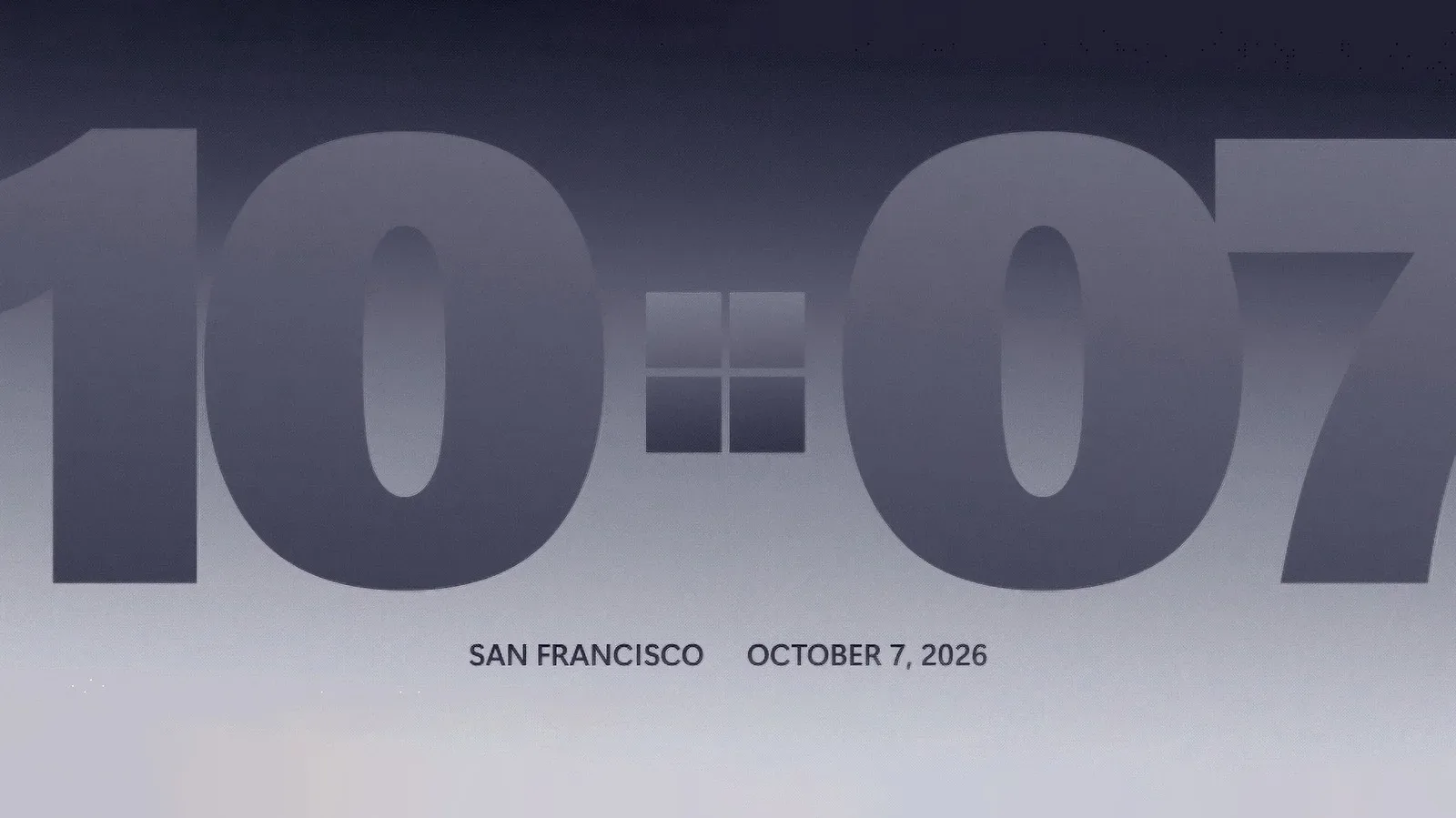
Microsoft’s next Windows and Surface presentation is scheduled for today in San Francisco, beginning at 10AM PT / 1PM ET. The company plans to broadcast the event live through its YouTube channel, and the presentation is expected to last roughly an hour.
The central subject is unusually clear before the broadcast begins: AI. Microsoft has framed the presentation around a discussion of how local AI could shape the PC’s next chapter. That makes this less of a broad Windows roadmap event and more of a focused attempt to explain what AI-centric hardware and Windows 11 changes are meant to do together.
There is also a major hardware reason to watch. Microsoft CEO Satya Nadella, Windows and Devices head Pavan Davuluri, and NVIDIA CEO Jensen Huang are listed as featured speakers. With NVIDIA involved, attention is likely to land on the Surface Laptop Ultra, a system associated with NVIDIA’s RTX Spark superchip. A price remains unknown going into the event.
How to watch the Windows and Surface event
The live presentation starts at 10AM Pacific Time and 1PM Eastern Time. Microsoft is streaming it on its official YouTube channel, with an expected runtime of approximately one hour.
For viewers deciding whether to tune in live, the likely value is not simply seeing a new laptop. It is hearing Microsoft articulate how it believes AI should work on a PC, what “local” processing means in that pitch, and whether the company can connect those technical claims to ordinary tasks people recognize as useful.
That question matters because Windows has already been through a visible adjustment in how prominently Copilot appears in the operating system. Negative reactions contributed to a scaling back of Copilot’s presence. An event built around AI therefore has to do more than repeat that it exists; it needs to make the case for why the technology belongs in the experience and where users retain control.
The Surface Laptop Ultra is the hardware to watch
This is Microsoft’s first laptop-focused event in two years, putting the Surface Laptop Ultra at the center of expectations. The presence of Huang alongside Nadella and Davuluri strengthens the expectation that Microsoft will have more to say about the device and its NVIDIA-powered approach.
The defining component is RTX Spark, which NVIDIA says can deliver 1 petaflop of AI computing power. A petaflop is a measure of computing performance: one quadrillion floating-point operations per second. In practical terms, the number is intended to communicate that the chip is aimed at intensive AI workloads rather than presenting the laptop as a routine incremental update.
Performance figures, however, are only one layer of the story. The crucial follow-up is what workloads Microsoft and NVIDIA attach to that claimed capacity, how those tasks work inside Windows 11, and whether they are meaningful outside demonstrations. The supplied details establish the AI-performance claim, but not a final feature list, battery expectations, configuration options, or pricing. Those remain matters for the event itself.
The Surface Laptop Ultra is positioned as a potential AI-capable MacBook competitor, but that comparison will ultimately depend on more than raw processing capability. Consumer interest will depend on what the system costs, what the AI functions actually accomplish, and whether buyers see enough personal value in a machine designed around this kind of computing. Before Microsoft gives a price, the commercial argument is incomplete.
What “local AI” means in this presentation
Local AI generally refers to AI work taking place on the device itself rather than relying entirely on remote computing systems. In the context of this event, it is Microsoft’s chosen lens for discussing the future PC, and the RTX Spark hardware is being presented as a foundation for that direction.
The distinction is important because it shifts the conversation from an app or assistant living somewhere online to a computer that has more AI capability built into its own hardware. That is the conceptual pairing Microsoft appears ready to sell: Windows 11 as the software environment, and a high-performance NVIDIA component as the machine-level muscle behind AI tasks.
Still, local processing is not automatically a consumer benefit just because it happens locally. The benefit must be demonstrated in the form of a task that is faster, more convenient, or more dependable for the person using the PC. The event’s usefulness will hinge on whether Microsoft can turn a hardware-performance message into concrete, comprehensible reasons to care.
Agentic AI is the other key term
Microsoft’s current AI direction also emphasizes agentic AI. In the description surrounding the event, that means AI designed to operate with minimal input from the user. Rather than needing every action specified step by step, an agentic system is meant to take on a greater degree of initiative.
That idea is easy to describe, but it carries practical questions. A system requiring less input must also make its behavior clear enough that users understand what it is doing and why. For a Windows audience, the appeal could be less time spent steering repetitive work. The concern is whether more autonomous behavior feels helpful rather than intrusive or unpredictable.
This is especially relevant after the pullback in Copilot’s OS presence. An AI feature can be technically ambitious and still face resistance if people feel it is too prominent, insufficiently useful, or placed in the way of familiar workflows. Microsoft’s challenge is therefore not merely to introduce agentic AI as a phrase. It is to show where it helps, how much direction it needs, and how it fits alongside the user’s own decisions.
Broader industry interest in AI agents has also centered on software that keeps working beyond a single prompt or interaction. For a related example from business communications software, see Cisco’s plans for AI agents that continue work after a call. Microsoft’s presentation is expected to place a similar general interest in AI autonomy within the much more personal setting of the Windows PC.
Why Windows 12 is not expected
Anyone waiting for Windows 12 should keep expectations low. Microsoft has said that a new operating system will not arrive in 2026. With that on the record, a major Windows 12 unveiling at an event centered on a Windows 11-ready laptop would be an awkward fit, particularly if the new OS would still be months away.
Instead, the apparent emphasis is on continuing to develop Windows 11. Areas already in view include visual refinements, Start menu fixes, File Explorer improvements, and large-scale AI integration. That is a notably different proposition from replacing the operating system with a new numbered release.
For existing Windows users, that distinction is useful. The nearer-term story is likely to be a series of adjustments to the platform they already know, combined with a stronger AI layer, rather than a wholesale migration to Windows 12. For prospective Surface Laptop Ultra buyers, it also suggests Microsoft will want to show why the new hardware is relevant to Windows 11 now—not merely promise it will matter when another operating system eventually appears.
What to look for during the hour
- Surface Laptop Ultra details: Watch for a clearer explanation of the RTX Spark-powered system, including the information still absent before the event, especially price.
- Specific local-AI uses: The important demonstrations will be the ones that show a recognizable benefit, not simply a high-level capability claim.
- How agentic AI behaves: Microsoft’s language points to AI that needs minimal user input. Viewers should look for explanations of its role and boundaries.
- Windows 11 improvements: Expect the operating system’s ongoing changes—visual updates, Start menu work, File Explorer improvements, and AI integration—to be more relevant than any Windows 12 reveal.
- The NVIDIA partnership: Huang’s participation makes it worth paying attention to how Microsoft links NVIDIA’s 1-petaflop claim to actual PC software and everyday use.
The bigger test is clarity, not just capability
This event has the ingredients for a sizable AI hardware pitch: Microsoft’s PC platform, a new Surface laptop expected to be a centerpiece, NVIDIA’s RTX Spark, and a performance claim expressed at petaflop scale. But the presentation arrives at a moment when AI integration has not been greeted with universal enthusiasm. The backdrop of Copilot scaling back in the OS means the company has reason to be precise about usefulness rather than rely on novelty alone.
Microsoft does not need a new Windows version to make the event consequential. A convincing Surface Laptop Ultra reveal, a clear account of what local AI enables, and credible Windows 11 examples could define a significant next stage for its hardware and software strategy. Until the stream begins, though, the cost of the laptop and the exact form of its AI experience are unresolved.
For now, the schedule is straightforward: the Windows and Surface broadcast begins today at 10AM PT / 1PM ET and should run for about an hour. The answers worth waiting for are equally straightforward: what Microsoft is selling, what its AI can do on the PC, and what buyers will be asked to pay for that ambition.