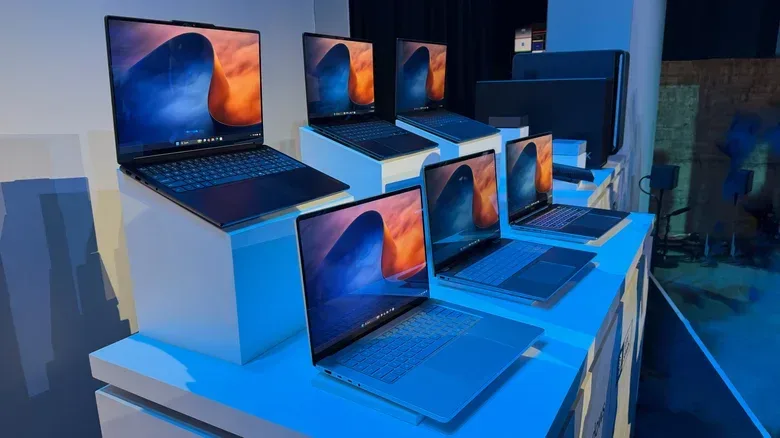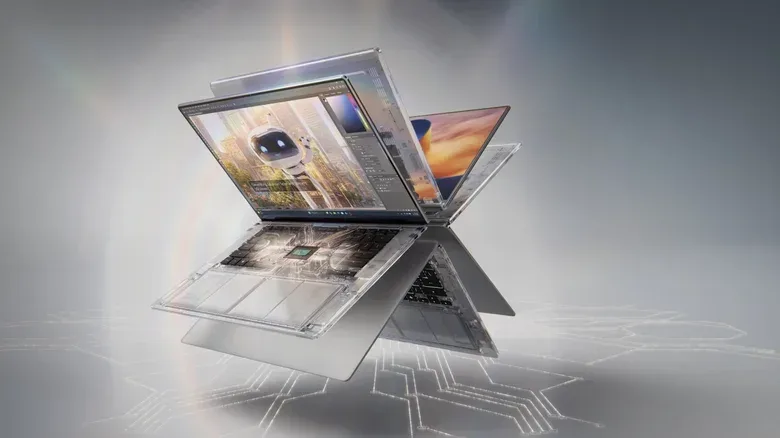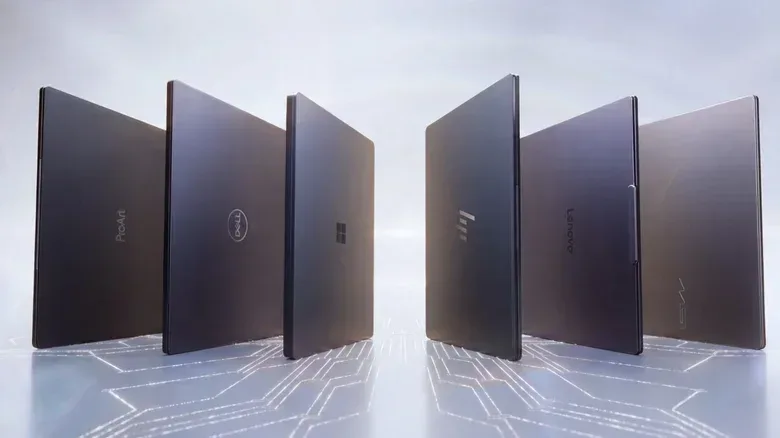
NVIDIA’s RTX Spark platform is a major attempt to change what a high-end Windows laptop can be. Rather than pairing a conventional Intel or AMD processor with a separate NVIDIA graphics chip, RTX Spark puts an Arm-based NVIDIA Grace CPU, Blackwell-class graphics and a large shared memory pool into one system-on-a-chip, or SoC.
That design has an obvious target: the kind of efficient, tightly integrated hardware approach that has become familiar in Apple Silicon Macs. For Windows users, RTX Spark promises something that has been much harder to find at the top end of the market: a thin machine intended to deliver substantial graphics, creative and local AI performance without treating battery operation as a compromised mode.
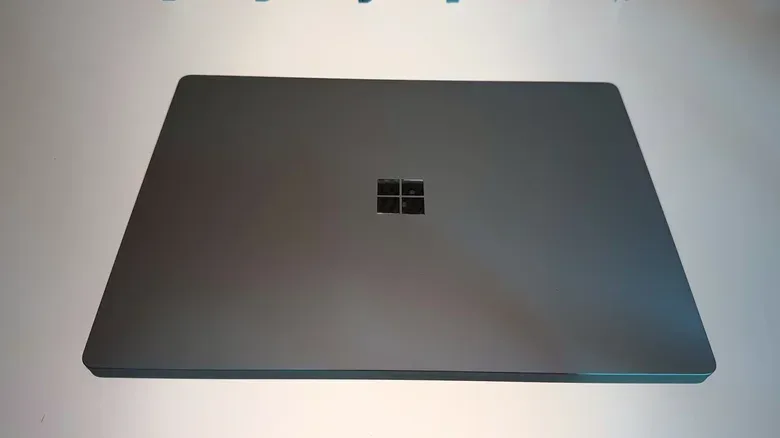
There is an important qualification, though. RTX Spark is not being positioned as an inexpensive all-purpose laptop platform, nor as the simplest recommendation for a player who wants maximal game compatibility. Systems begin at $2,600 for an 18-core configuration, rise to $3,700 for a 20-core version, and a Surface Laptop Ultra equipped with 128GB of memory is listed at $5,900. Those figures put the first wave squarely in workstation territory.
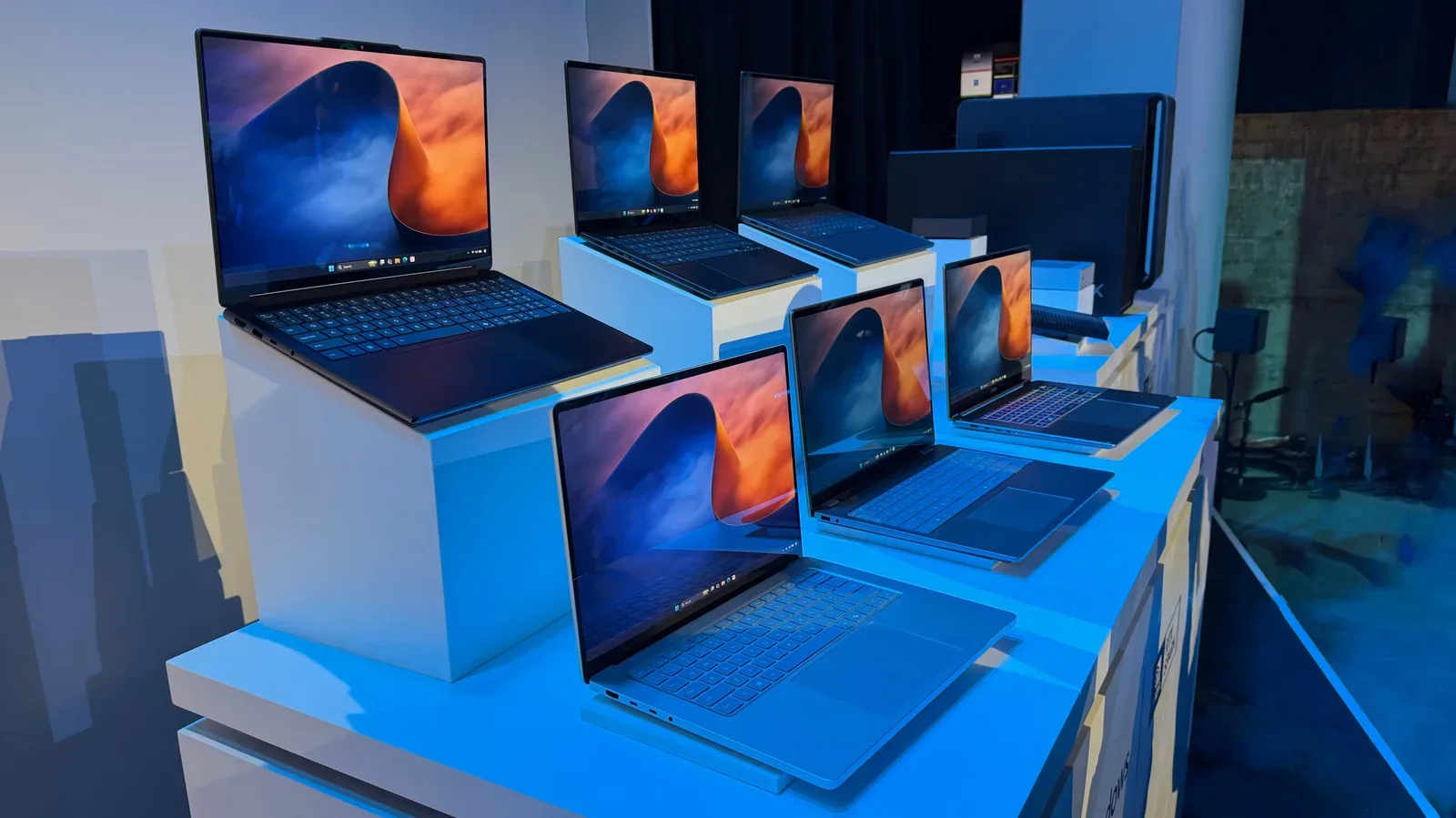
Still, the wider impact may matter beyond the initial audience of AI developers and researchers. Windows PC makers have spent years balancing performance laptops that can become power-hungry and efficient ultrabooks that give up graphics capability. RTX Spark is NVIDIA’s bid to make that trade-off less severe. If the claimed efficiency, software support and performance translate beyond controlled demonstrations, it could make the Arm Windows market considerably more compelling for creators and some gamers.
What RTX Spark actually puts on one chip
An SoC combines several major computing components into a single package. In RTX Spark’s case, that means the CPU, GPU and unified memory work as parts of the same fundamental platform instead of being separated into a main processor, discrete graphics card and distinct pools of system and video memory.
The full RTX Spark configuration includes up to 20 NVIDIA Grace Arm CPU cores, split evenly between 10 performance cores and 10 efficiency cores. The graphics portion is a Blackwell GPU with up to 6,144 CUDA cores. A reduced configuration has 18 CPU cores and 5,120 GPU cores.
CUDA cores are NVIDIA’s parallel-processing units, used in graphics workloads as well as many compute and AI tasks. The platform also includes fifth-generation tensor cores for AI-oriented calculation, fourth-generation ray-tracing cores for accelerating lighting effects in supported games, and NVIDIA’s Blackwell video engine. The latter supports AV1 UHQ and 4:2:2 encoding and decoding, capabilities that are particularly relevant to video workflows.
Memory is arguably RTX Spark’s most distinctive selling point. It can be configured with up to 128GB of unified LPDDR5x memory running at 9,400 Mbps. Unified memory means the CPU and GPU use the same memory pool. This is different from a typical gaming laptop, where the CPU uses system RAM and a dedicated GPU has separate VRAM.
Related coverage includes NVIDIA RTX Spark Brings High-End Arm Windows PCs Into Focus.
For a large local AI model, the amount of accessible memory can determine whether the model fits on a machine at all. For creative applications, it can also reduce the friction of moving data between processor and graphics memory. The design does not automatically make every workload faster, but it gives developers and software makers a large, high-bandwidth shared resource to work with.
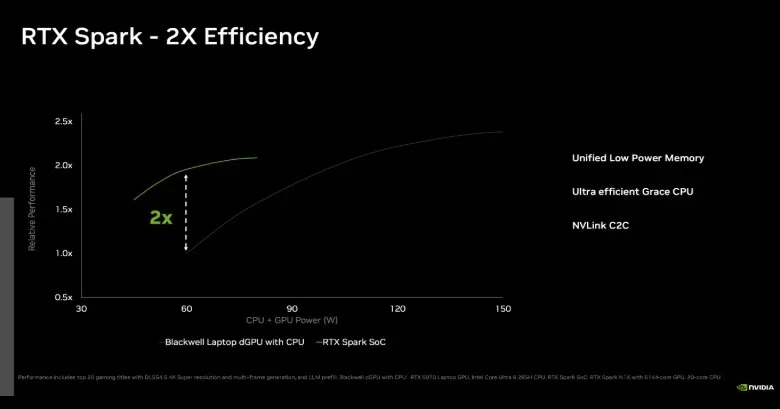
NVIDIA says RTX Spark can be twice as efficient as a laptop using an Intel Core Ultra 9 285H alongside a GeForce RTX 5070 discrete GPU when gaming at 60 watts. That is a vendor claim rather than a complete comparison across every game and laptop design, and it is important not to translate it into a blanket statement that Spark will beat every RTX 5070 laptop. NVIDIA itself has framed RTX Spark performance as similar to RTX 5070 laptops, while discrete-GPU machines may consume much more power to reach higher performance levels.
Efficiency is the platform’s most consequential promise
Raw performance is only part of a laptop story. A fast machine that slows sharply away from the charger can be awkward for editing, coding, rendering or gaming on the move. NVIDIA says RTX Spark PCs can maintain their performance on battery in a way that conventional high-power designs often cannot.
That claim is central to the appeal. A person who works almost exclusively at a desk with a power outlet may not see enough practical benefit to justify Spark’s cost or Arm compatibility constraints. A person who needs a mobile workstation, by contrast, may value sustained performance away from wall power as much as the peak benchmark number.
The platform is also expected in a few small desktop systems, but its efficiency argument is strongest in portable PCs. It is part of a broader push toward hardware that tries to bring desktop-class tasks closer to the place where they are actually performed, rather than assuming demanding workloads always need a large chassis, an outlet and a remote cloud service.
That broader shift also overlaps with interest in compact personal display setups. People considering a travel-oriented PC setup may also be watching hardware such as the Xreal One Pro+ AR glasses, where portability, display quality and comfort are part of the same bigger question: how much capable computing can be carried without carrying a full desk.
Local AI is the headline, but it is not the only use case
RTX Spark arrives amid an industry-wide push for on-device AI. Running a model locally means the work happens on the user’s own hardware instead of being sent to a remote service. For developers and researchers, this can mean less dependence on consumption-based cloud AI tokens and more direct control over experimentation.
NVIDIA specifically points to the ability to run large models locally, including the 125-billion-parameter Qwen3.8-Flash-Next. Parameters are values learned by an AI model during training; in broad terms, larger parameter counts generally demand more memory to run. That is why 128GB of unified memory is a defining capability rather than simply an extravagant specification.
Windows 11 is also gaining support for on-device AI tools, including Perplexity, and simpler setup paths for agents such as OpenClaw and GitHub Copilot. An AI agent is software designed to carry out multistep tasks toward a goal, rather than merely returning a single response to a prompt. Whether such tools become essential PC features remains uncertain, but RTX Spark has clearly been built around the possibility that local models and agents become a normal part of advanced Windows workflows.
For buyers not doing AI development, the practical value of the memory capacity will vary. Enormous RAM specifications do not magically improve routine browsing, office work or lightweight games. The platform’s price makes most sense where its memory, GPU acceleration and battery-focused design can all be used rather than treated as a very expensive safety blanket.
Gaming potential comes with an Arm compatibility asterisk
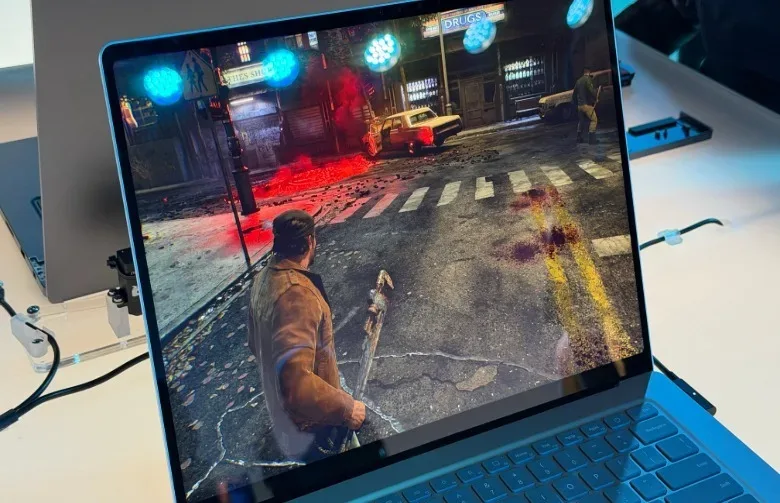
On paper, Spark has serious gaming credentials. Its Blackwell GPU supports the feature set associated with NVIDIA RTX 50-series graphics, including DLSS 5. NVIDIA is identifying 1440p as the intended gaming resolution for RTX Spark systems.
DLSS, or Deep Learning Super Sampling, is NVIDIA’s suite of AI-assisted rendering technologies. It can render a game internally at a lower resolution and reconstruct an output image, helping performance in supported titles. DLSS Frame Generation can also create additional frames between rendered frames. NVIDIA says a new DLSS Frame Generation performance mode can take Cyberpunk 2077 to 280 frames per second with 6x frame generation, compared with 213 fps without that performance mode. The trade-offs required for that increase were not specified, so the number should not be viewed as a complete image-quality verdict.
Ray tracing is also present through dedicated fourth-generation RT cores. It is a rendering method used to model how light behaves, and it can create more convincing reflections, shadows and lighting when games support it. It is computationally demanding, which is why specialized hardware and upscaling tools are meaningful parts of the RTX Spark pitch.
The complication is architecture. RTX Spark uses Arm CPU cores, while much of the existing Windows game library was written for x86 processors. Software that is not native to Arm can run through Microsoft’s Prism emulator, which translates x86 software for the Arm environment. Emulation can make software available that otherwise would not run, but it can introduce performance, stability or compatibility questions that native x86 machines avoid.
NVIDIA says Control Resonant, Gears of War: E-Day, NBA 2K27 and World of Warcraft: Forever will be supported at launch through Prism where necessary. It is also working with major anti-cheat providers. Anti-cheat software has been a particularly consequential obstacle for Arm Windows gaming, since multiplayer games can rely on low-level components that do not always behave cleanly through emulation.
That makes RTX Spark a platform to approach carefully for game-first buyers. The advertised launch titles are encouraging, but a few compatible games are not the same thing as universal library support. Before buying, players should verify their specific games, launchers, mods and multiplayer anti-cheat requirements. Competitive multiplayer fans, especially, should treat compatibility confirmation as mandatory rather than an optional bit of research.
Who should wait for wider testing
- Players whose main priority is broad day-one compatibility across a large existing Windows library.
- People who depend on particular multiplayer games and their anti-cheat systems.
- Buyers who stay plugged in most of the time and could obtain more peak performance from a conventional discrete-GPU system.
- Anyone whose needs are limited to mainstream productivity and does not need vast shared memory or local AI capacity.
An Intel or AMD system with a dedicated GPU remains the more straightforward choice for gaming as a primary purpose. That does not make RTX Spark weak; it means its design priorities are different, and the Arm transition is still a real practical consideration.
Creators may get a clearer path than players
Content creation is potentially a more natural fit. NVIDIA highlights hardware acceleration in Blender, and Adobe is re-architecting Photoshop and Premiere for NVIDIA’s platform. Hardware acceleration shifts suitable tasks to specialized processing hardware rather than leaving them entirely to the general-purpose CPU. In creative applications, that can be relevant to effects, rendering, playback and encoding tasks, depending on the software and project.
Adobe’s work is especially notable because Photoshop and Premiere are major tools in image and video production. Purpose-built optimization can matter greatly on a new architecture; the strongest hardware design is still constrained by the applications available to exploit it. This work therefore signals a meaningful software commitment to Arm-based Windows systems, not merely a checklist claim that an app can launch under emulation.
Video creators should still distinguish between the presence of a capable media engine and a guarantee of a faster workflow. Project formats, plug-ins, effects, source media and application versions all influence results. RTX Spark’s 4:2:2 and AV1 support gives the platform useful technical foundations, but independent testing across real production workloads will be needed to establish how it compares with established x86 workstations.
A costly first step that could pressure the entire PC market
RTX Spark’s launch pricing makes its immediate audience narrow, but a platform can matter before it becomes a mass-market product. It gives Windows PC makers a high-end Arm option built around integrated graphics power and unusual memory capacity, while Qualcomm’s recent chips have focused on lower- and mid-range systems.
Apple’s vertically integrated chips demonstrated why CPU, GPU and unified memory on one efficient platform can be attractive across compact desktops and notebooks. RTX Spark is not a carbon copy of that approach; NVIDIA’s Blackwell graphics focus, local AI positioning and Windows software transition create a distinct proposition. But the competitive pressure is clear.
AMD is pursuing a related idea with Ryzen AI Max 400 chips, which can use large pools of unified memory while retaining native x86 software support. Intel, meanwhile, continues to compete with Core Ultra Series 3. The practical result for buyers could be more experimentation around efficiency, graphics integration, memory configurations and locally run AI tools.
For now, RTX Spark looks less like a universal replacement for the conventional gaming laptop and more like a premium opening move. It has the ingredients to be excellent for a particular kind of Windows user: someone who needs lots of local memory, wants Blackwell GPU capabilities, values battery performance and can verify that their key software works on Arm. For everyone else, its biggest contribution may be forcing the rest of the PC market to make the next generation of laptops more interesting.