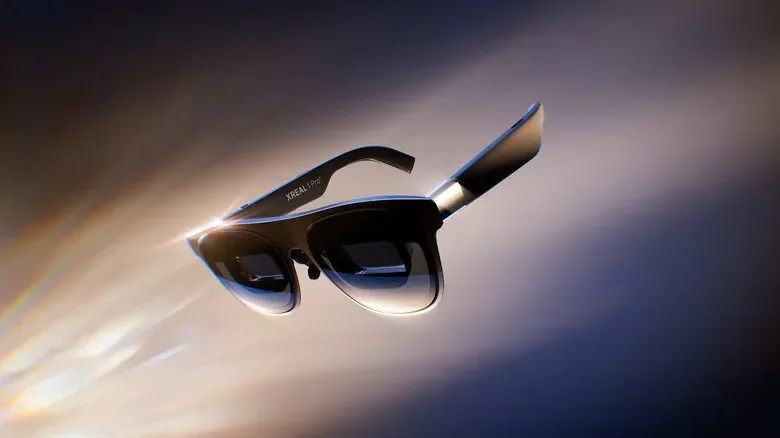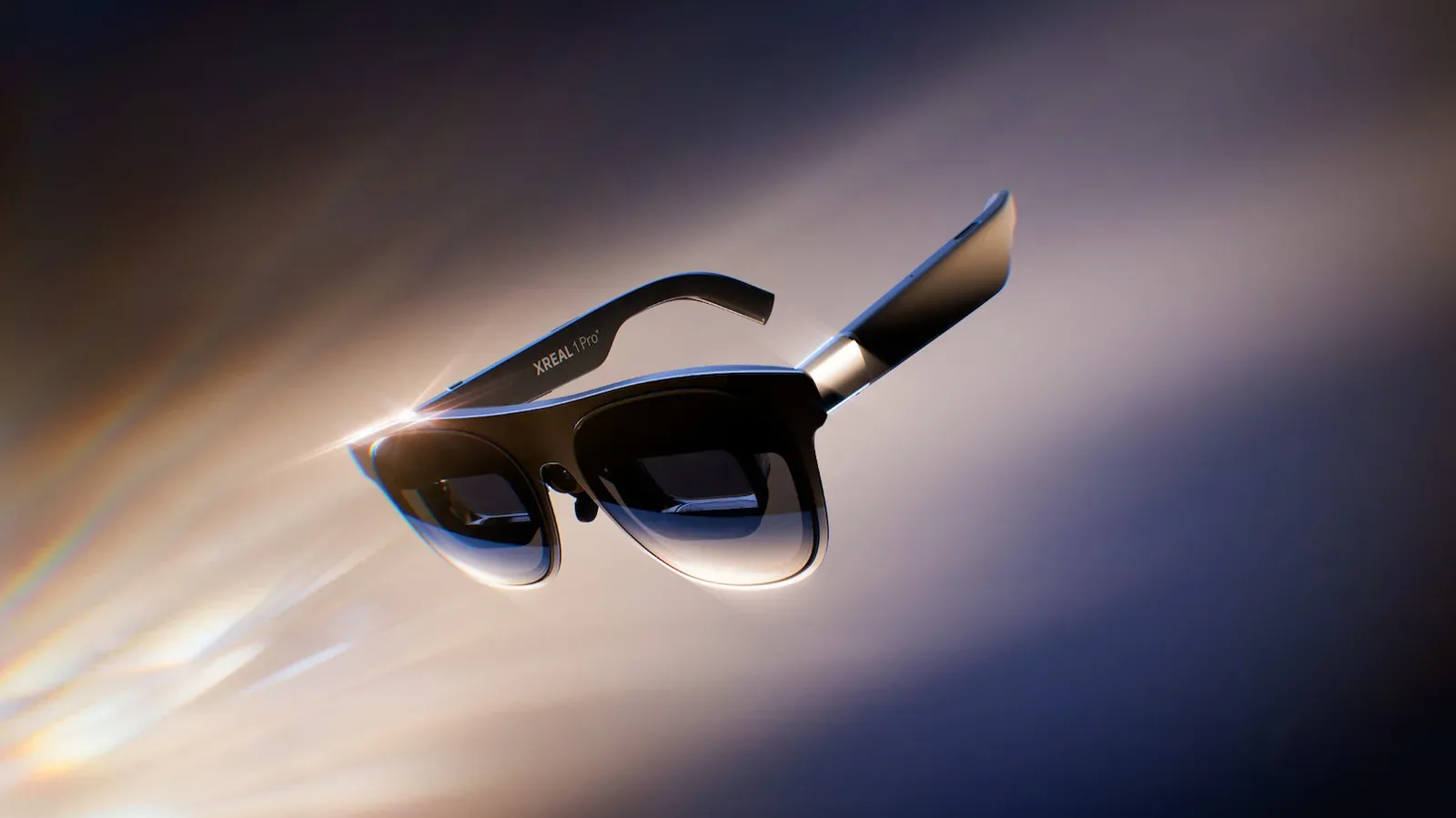
Xreal has released the One Pro+, a modest but potentially meaningful update to its One Pro augmented-reality glasses. The new model retains the core hardware proposition of its predecessor, including Xreal’s X1 spatial computing chip and a 57-degree field of view, while focusing its changes on display brightness, depth-conversion processing and fit.
The headline specification is peak brightness: the One Pro+ is rated for 1,200 nits, up from 700 nits on the standard One Pro. Xreal also says the glasses include AI HDR upscaling and that their 2D-to-3D conversion algorithm now operates at 60Hz rather than 30Hz. A redesigned nose pad is intended to improve stability and long-session comfort without reducing the stated field of view.
The One Pro+ costs $600, matching the previous One Pro’s price. It is available now.
A refresh built around the parts users notice over time
On paper, the One Pro+ is not a wholesale replacement of the One Pro concept. The X1 chip remains, as does the 57-degree field of view. That makes the update less about expanding the device’s basic capabilities and more about refining the experience of using a wearable display for longer stretches.
That distinction matters for AR glasses. A specification sheet can make a headset or glasses product sound like an all-purpose computing device, but physical comfort and screen visibility often determine whether it becomes part of someone’s routine. A wearable display that is compelling for a short video or a quick mirrored screen is not automatically comfortable enough for several hours of work, viewing or play.
Xreal’s revised nose pad is therefore not an incidental accessory change. The company says the new design improves stability while preserving field of view. In practical terms, stability concerns whether the glasses remain consistently positioned as the wearer moves, while maintaining field of view means the fit adjustment should not compromise the amount of visible screen space. The claim will matter most to people considering the glasses for extended use rather than occasional novelty.
What 1,200 nits means here
A nit is a measurement of brightness. Higher peak brightness can help an image remain more visible when ambient light competes with the display. The One Pro+ moves from the standard One Pro’s 700-nit figure to 1,200 nits, a substantial numerical jump.
Brightness alone does not describe every part of image quality, and a peak-brightness number should not be mistaken for a complete account of how every scene will look. Still, visibility is an especially direct concern for glasses used outside of a fully darkened environment. The higher rating is a clear quality-of-life change for Xreal’s screen-mirroring and video-viewing use cases.
The company also includes AI HDR upscaling, described as technology intended to improve visuals. HDR, short for high dynamic range, generally concerns the range between dark and bright portions of an image. “Upscaling” refers to processing intended to enhance material beyond its original presentation. Xreal has not detailed the precise results users should expect across different kinds of content, so it is best understood as an image-processing addition rather than a promise that all video or games will gain the same visual improvement.
Faster 2D-to-3D conversion is the other major change
Xreal says it has increased its 2D-to-3D conversion algorithm from 30Hz to 60Hz. This feature is meant to add perceived depth to conventional two-dimensional material. Rather than requiring content to be created from the outset as stereoscopic 3D, conversion processing attempts to generate a sense of dimensionality from a standard 2D image.
The move from 30Hz to 60Hz is notable because hertz, abbreviated Hz, describes how often something updates each second. At 60Hz, the conversion process is updating at 60 times per second, compared with 30 times per second previously. In a display-related context, a higher update rate can be relevant to how fluid motion appears. It does not, by itself, establish the quality of the depth effect; that will depend on the conversion system and the material being viewed. But it identifies a specific technical upgrade over the standard One Pro.
The feature places the One Pro+ in the broader push to make flat content feel more spatial. For gaming audiences, that proposition is easy to understand: many games and videos are still presented in 2D, while wearable displays create an opportunity to change how that familiar content is viewed without requiring an entirely separate version of it.
That does not mean the glasses turn every game into a native AR title. Screen mirroring and 2D-to-3D conversion are different propositions from software designed specifically around augmented reality. The supplied details position the One Pro+ as a personal display and spatial-viewing device, not as a camera-equipped platform for mapping and reacting to the world around the wearer.
Same core display approach, no built-in camera
The One Pro+ continues with a 57-degree field of view. Field of view describes the portion of a wearer’s vision occupied by the display. It is a useful number for comparing the apparent breadth of the virtual image, but it is not the only factor in comfort or immersion. Fit, display placement and image clarity also shape the experience.
The X1 spatial computing chip also carries over. The supplied details do not specify new chip performance or new functions for the One Pro+, reinforcing that this is a targeted refresh rather than a new hardware generation. The unchanged chip and field of view help explain why the price remains at $600.
One feature the One Pro+ does not have is a camera. That separates it from glasses designs that include outward-facing cameras as part of their feature set. For some buyers, that is a limitation: a camera can enable functions tied to visual capture or computer vision. For others, its absence can be a practical social advantage, since camera-free glasses avoid the immediate concern that a wearable device may be recording nearby people.
It also establishes a clearer expectation about what this product is for. The One Pro+ is centered on viewing and mirroring content rather than recording the surrounding world. Xreal identifies productivity through screen mirroring and watching content as key uses, and the brightness and comfort upgrades align closely with those uses.
What the update means for gaming and productivity users
The One Pro+ may be most interesting to buyers who already understand the appeal of a private, wearable screen but were waiting for refinement in everyday pain points. Greater brightness is relevant when the room is not ideal for viewing. A revised nose pad addresses the physical burden of extended sessions. Faster 2D-to-3D conversion addresses a feature that can make standard content feel more dimensional.
For gaming, the available information supports thinking of the glasses as another way to view compatible mirrored content, rather than a replacement for a dedicated console, PC or conventional display. The strongest reasons to consider the Plus model over the standard One Pro are the stated screen and fit improvements, not a newly described gaming-exclusive capability.
For work, the comfort adjustment may be the most consequential change. The difference between using glasses for 20 minutes and relying on them through a long task can come down to pressure, slippage and how consistently the display remains in place. Xreal’s promise is that the redesigned pad improves stability without sacrificing the 57-degree view; prospective buyers should view that as a manufacturer claim about a highly personal aspect of wearability.
The broader timing is also useful for readers following display alternatives around major game releases and media events. Conventional screens remain the straightforward default, but wearable displays offer a more personal viewing arrangement for people keeping an eye on large releases such as Grand Theft Auto VI.
The buying decision: One Pro+ versus the existing One Pro
At the same $600 price as last year’s One Pro, the One Pro+ makes its case through a better stated brightness rating, enhanced image processing, a 60Hz 2D-to-3D conversion rate and a redesigned nose pad. Buyers who place a high value on those changes have a straightforward reason to choose the newer pair.
Conversely, anyone looking for a fundamentally different field of view, a new processing chip or a built-in camera will not find those changes here. Xreal has retained the One Pro’s X1 chip, 57-degree field of view and camera-free design.
That makes the name “Pro+” apt: this is a plus-version upgrade intended to improve the established formula rather than redefine it. The most important advance may not be the most attention-grabbing one. A brighter display is easy to summarize, but a fit adjustment that makes the glasses more viable over two or three hours could be the upgrade users feel most often.