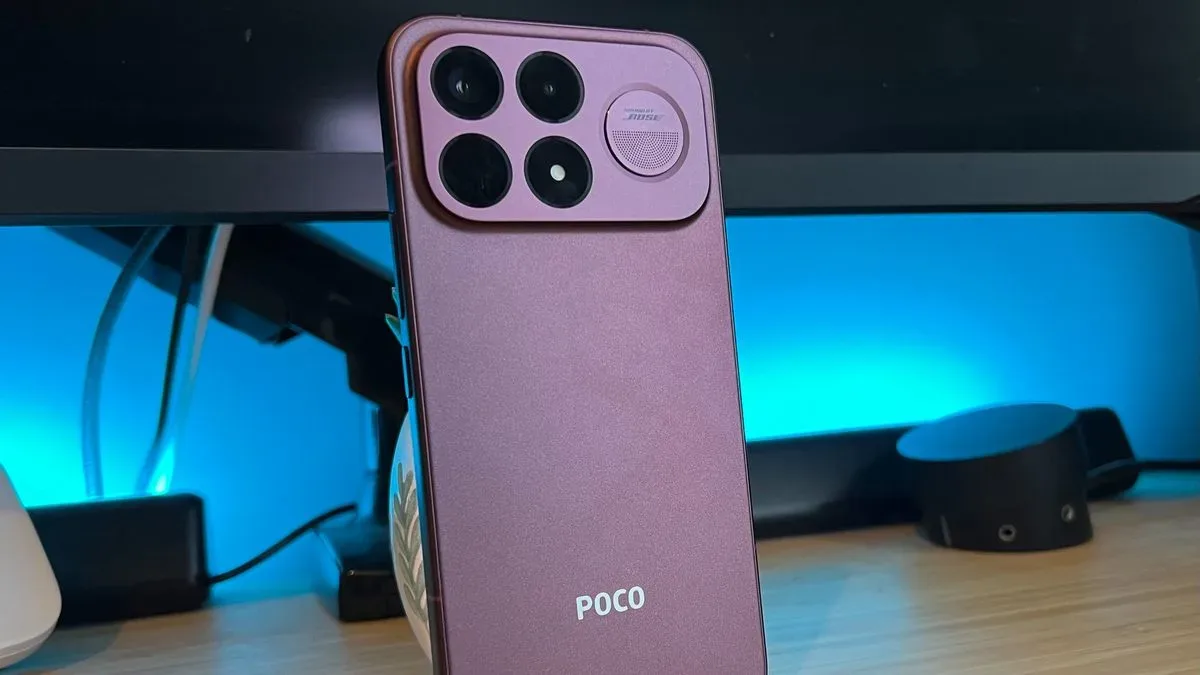
Poco’s F9 Ultra is making a straightforward pitch to mobile players: deliver the performance, screen size and battery capacity associated with top-end Android handsets, but do not charge flagship-brand money for every configuration. Starting at $799 with 12GB of RAM and 256GB of storage, the phone is positioned below the Samsung Galaxy S26 Ultra while using the same Snapdragon 8 Elite Gen 5 processor.
That does not make the F9 Ultra a small-budget device. Its top 16GB/1TB configuration reaches $1,199. Still, the pricing ladder—$799 for 12GB/256GB, $949 for 16GB/512GB, and $1,199 for 16GB/1TB—means Poco is competing on value within an increasingly expensive premium-phone tier. It also avoids the overt, industrial-looking gaming-phone aesthetic that may put off players who want one device for games, media, photos and daily communication.
The key trade-off is familiar: Poco has concentrated its spending on the components that determine the everyday experience—chipset, display, speakers and unusually large battery—rather than matching every premium material or refinement of mainstream flagships. For players deciding whether a dedicated gaming phone is necessary, that balance is the story.
A flagship processor with memory to match
The F9 Ultra is built around Qualcomm’s Snapdragon 8 Elite Gen 5, the same processor found in the Galaxy S26 Ultra and RedMagic 11 Pro. A chipset is the phone’s central processing platform: it handles general operating-system tasks, graphics workloads, connectivity and the demanding calculations games require. Having this particular chip gives Poco a meaningful foundation for high-end Android play rather than simply a large screen wrapped around midrange silicon.
This is not the overclocked Snapdragon 8 Elite Gen 5 Leading Version used in the more expensive RedMagic 11S Pro. Overclocking refers to running hardware at higher-than-standard speeds, potentially improving peak performance but often increasing power draw and heat. The standard Gen 5 chip in the Poco is nevertheless described as being among the quickest hardware in recent flagship phones.
Memory and storage options are sensibly paired. The entry model carries 12GB of RAM and 256GB of storage, while 512GB and 1TB versions receive 16GB of RAM. RAM is short-term working memory: more of it can help a phone keep apps and game assets ready while multitasking, although it does not automatically raise a game’s frame rate. Storage capacity matters more tangibly to anyone maintaining several large games, videos and screenshots at once.
A reported Geekbench 7 result of 2,055 in single-core performance and 8,865 in multi-core performance gives one reference point for general computational speed. Those figures should not be treated as a universal game-performance score. Synthetic benchmarks measure controlled workloads, while game performance is also shaped by the title’s engine, graphical settings, thermal behavior and developer support. In this case, the more useful practical claim is that demanding games including Genshin Impact, Call of Duty Mobile and MTG Arena can run at higher settings without an apparent need to give up smooth frame rates.
The 185Hz screen: impressive headroom, limited game support
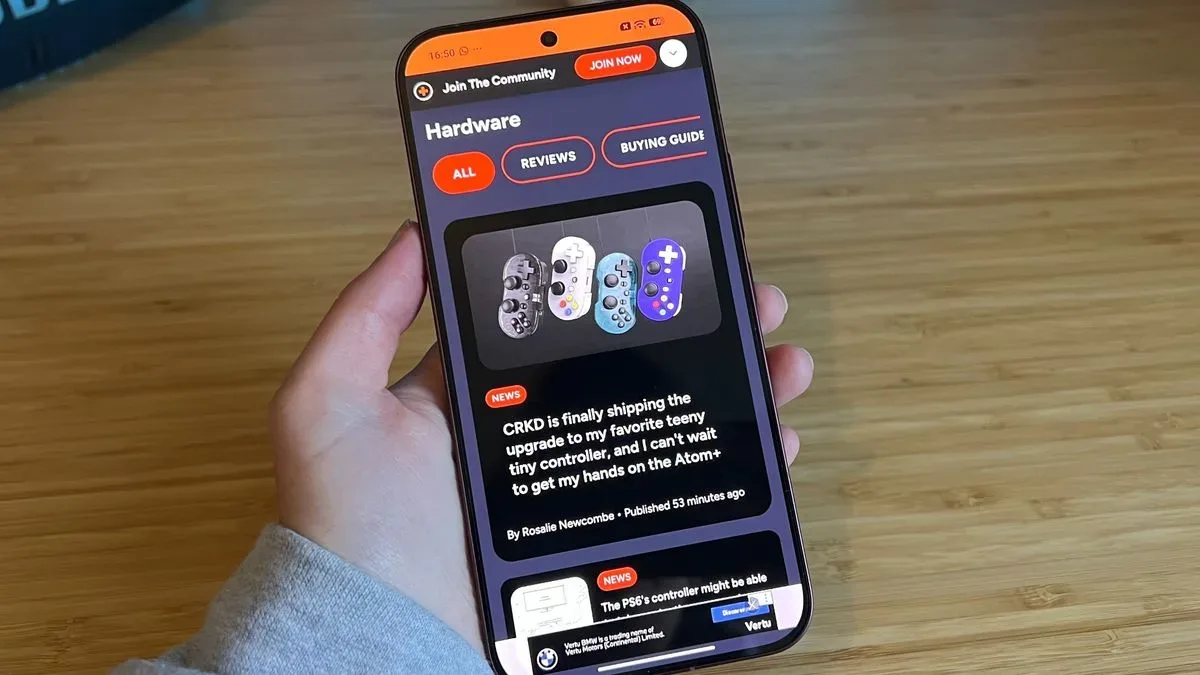
The device’s 6.9-inch AMOLED screen has a 1,200 x 2,608 resolution, 416 pixels per inch, Dolby Vision and HDR10+ support, plus a maximum 185Hz refresh rate. AMOLED is a display technology in which pixels emit their own light, allowing deep blacks and strong contrast. A 185Hz refresh rate means the panel can update its image up to 185 times each second when content supports it. In theory, a higher refresh rate can make motion and touch interaction look and feel more fluid.
Related coverage includes Poco F9 Ultra Review: A Flagship-Grade Mobile Gaming Phone Without the Flagship Price.
The important caveat is that a display’s ceiling is not the same as a game’s frame-rate support. Only around 20 titles are said to support refresh rates at this level. Most mobile games will not extract the full 185Hz benefit, so buyers should not choose the F9 Ultra solely in the expectation that every game will run at 185 frames per second.
There is still a practical upside to the extra display headroom. When a demanding title has high graphical settings available, fast panel hardware and flagship-level processing can provide more room to sustain smooth performance rather than forcing an immediate compromise between image quality and responsiveness. The broader media credentials are substantial too: the screen is reported to produce vivid but natural color by default, with tuning controls available for people who prefer another look.
Poco advertises a 10,000-nit peak-brightness figure for the panel, but that headline does not represent full-screen brightness in ordinary use. High-brightness-mode measurements across the full display are instead described at roughly 2,000 to 2,500 nits. That is still extremely bright. The distinction matters because peak-brightness claims can apply to a small portion of a screen under particular conditions, whereas full-screen brightness better reflects outdoor browsing, video and games.
Audio is unusually central to the F9 Ultra’s appeal. It uses a 2.1 speaker arrangement: two stereo speakers plus a rear-mounted Bose subwoofer. The “.1” is the dedicated low-frequency channel, intended to add bass to music, films and game effects. A phone speaker system cannot replace a full external audio setup, but the reported result is a richer, bassier sound than the usual thin handset presentation. That could make games played without earbuds more enjoyable, particularly for players who want clear effects and a more cinematic sense of impact.
Players looking for more mobile game news can also follow Honor of Kings’ Flowborn Assassin and Roamer update, another reminder that games themselves—not only phone specifications—determine where high-end mobile hardware can be put to use.
Battery capacity is the F9 Ultra’s clearest practical advantage
The 8,050mAh battery is one of the F9 Ultra’s strongest specifications. It is significantly larger on paper than the 5,000mAh battery listed for the Galaxy S26 Ultra and the 7,500mAh capacity of RedMagic’s 11-series devices. Milliamp-hours, or mAh, express battery capacity; they are useful for comparison, but they are not a direct prediction of endurance. Screen brightness, network conditions, refresh-rate behavior, game workload and software efficiency all change how long a charge lasts.
Reported use suggests the capacity translates well outside a spec sheet. With lighter gaming, streaming, calls, messaging and web browsing, charging was not required until the third day. In a fresh-battery test, an hour of Genshin Impact used 6% of charge at 50% brightness and 10% at full brightness. One hour of YouTube at 50% brightness consumed 3%.
Those figures should be treated as examples rather than promises. A graphics-heavy game played at full brightness will naturally drain a battery faster than video, and battery behavior changes as devices age. But they point to a significant benefit for people who play during commutes, travel or long shifts: the F9 Ultra is designed to avoid the frequent charge anxiety that can undermine a powerful gaming phone.
It also supports 100W wired charging. The provided information establishes the charging speed rating but not a measured time to fill the battery, so prospective buyers should avoid assuming a particular minute-by-minute result. The more defensible takeaway is that Poco pairs large capacity with high-wattage wired charging rather than accepting a slow recovery time as the price of endurance.
Premium styling, but not identical flagship materials
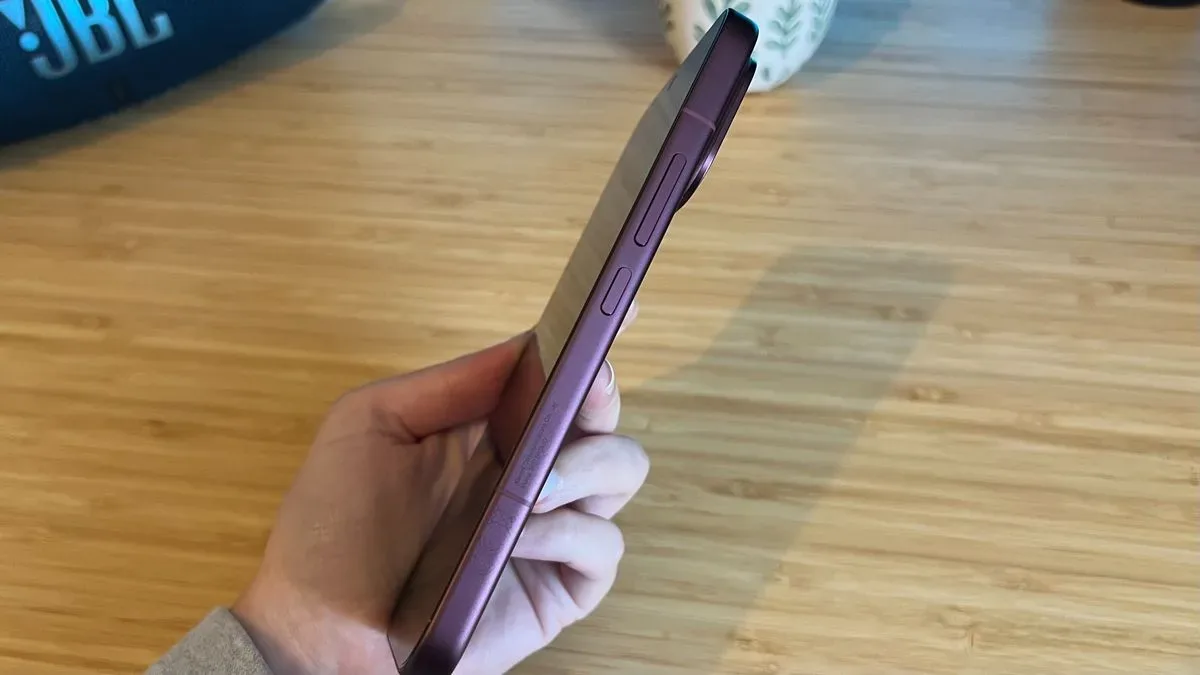
The F9 Ultra has a flatter-sided, rounded-corner design with a soft-touch rear and an aluminum frame. It is available in a bold grape color and has a prominent camera area. This is notably different from the sharp angles and dedicated-gamer styling common to some rivals. For someone who uses their phone in work, school or social settings as much as they game, an understated look can be as valuable as an extra performance mode.
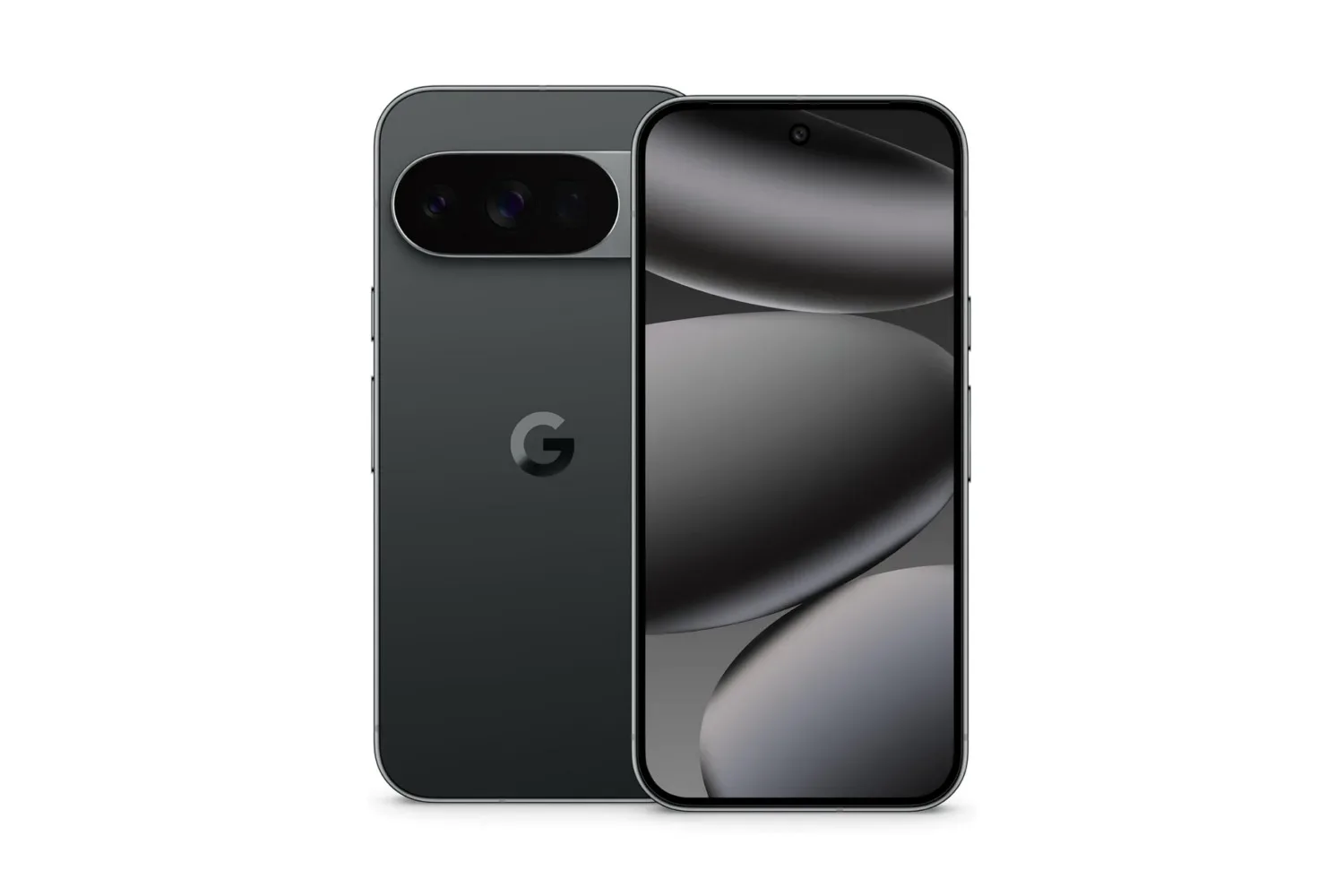
However, Poco is not duplicating flagship construction material for material. The phone uses Corning Gorilla Glass 7i rather than the Gorilla Glass Armor 2 used by the Galaxy S26 Ultra. The latter includes anti-glare benefits that the Poco’s glass lacks. The rear is a glass-fiber polymer rather than the Armor 2 or Ceramic Shield-backed approach used on more expensive phones.
That does not necessarily mean the F9 Ultra feels cheap. The reported impression is that it remains sturdy and substantial. It is also IP68 rated, indicating resistance to dust and water under the rating’s specified conditions. But shoppers looking for the very highest anti-reflective glass and luxury materials should recognize where the lower price is being protected.
Size is the other physical consideration. At 163.5 x 77.9 x 8.7mm and 235g, this is a large, heavy handset. It is heavier than the 214g Galaxy S26 Ultra, although slightly lighter than the 239g iPhone 18 Pro Max. The weight was not said to be a major issue in landscape play, which is the normal orientation for many mobile games, but one-handed vertical use could be difficult for people with smaller hands. This is not a minor ergonomic footnote: menus, messaging, web use and everyday camera shooting all happen in portrait orientation.
A more complete camera package than a conventional gaming phone
Gaming-centric phones often concede camera quality to afford cooling systems, extravagant styling or performance features. Poco has instead equipped the F9 Ultra with a 200MP main wide camera, 50MP ultrawide, 50MP telephoto and a 32MP front camera. Megapixel counts alone do not establish image quality; sensor size, lens quality, image processing and lighting remain decisive. Still, the hardware mix signals that Poco intends the F9 Ultra to function as a conventional premium phone, not merely a handheld gaming machine with a SIM tray.
The main camera is reported to produce crisp, confidently colored daylight images in its standard 50MP mode. A dedicated 200MP option may be useful for deliberate shots involving still subjects, but it is not considered worthwhile for routine shooting because of the added time and less compelling everyday result. Low-light detail is a weaker area, where smearing and reduced color and sharpness become more apparent, even if highlights remain well controlled.
That is a reasonable camera compromise for this category. It is not presented as an all-conditions photography leader, but it is materially more versatile than cheaper dedicated gaming devices. Anyone prioritizing night photography should still investigate detailed camera comparisons; anyone who simply wants their gaming phone to take capable daylight travel, family and social photos has a stronger option here than usual.
Software support and the purchase case
The F9 Ultra runs Android 16 with HyperOS 3 on top, and four future major operating-system updates are promised. HyperOS includes pre-installed extras and multiple setup menus, so it may feel busy at first. In reported use, though, navigation stayed smooth without crashes, hitches or menu slowdowns. Its Hyper Island feature provides a compact persistent view for activities such as timers, music playback and recording, resembling the general idea of a dynamic status area.
The purchase case is therefore less about any one benchmark or marketing number than the combination. The F9 Ultra brings flagship-class processing, substantial RAM options, a rare 185Hz AMOLED panel, a distinctive 2.1 speaker setup and huge battery capacity to a price bracket beginning at $799. It further strengthens the proposition with IP68 resistance and a camera setup that is useful beyond daylight snapshots of a gaming desk.
Its limitations are just as clear. The very high refresh rate is only lightly supported by games, the body is hefty, its screen protection and rear materials do not equal the most expensive flagships, and the software includes more initial clutter than some buyers will prefer. The 200MP camera headline should also not distract from less consistent low-light results.
For mobile players who want serious Android performance without carrying a conspicuously gaming-focused handset, those compromises look deliberate rather than fatal. The Poco F9 Ultra’s standout achievement is not pretending that it is identical to a mainstream Ultra phone. It is allocating enough of the premium budget to the gaming and media experiences that matter most, while retaining the cameras, styling and endurance needed for it to serve as a daily device.