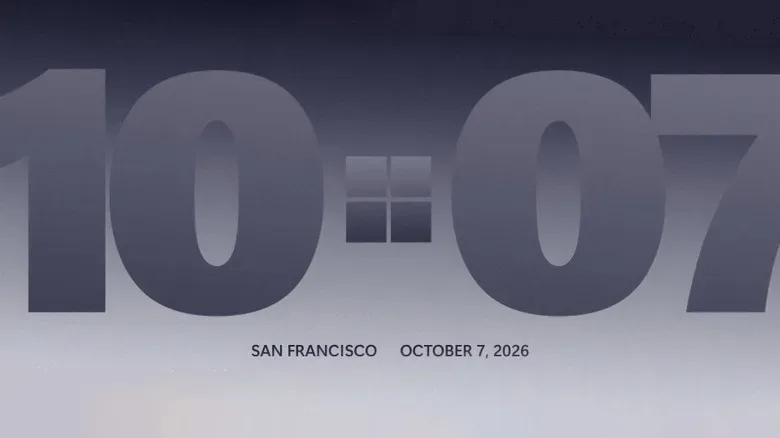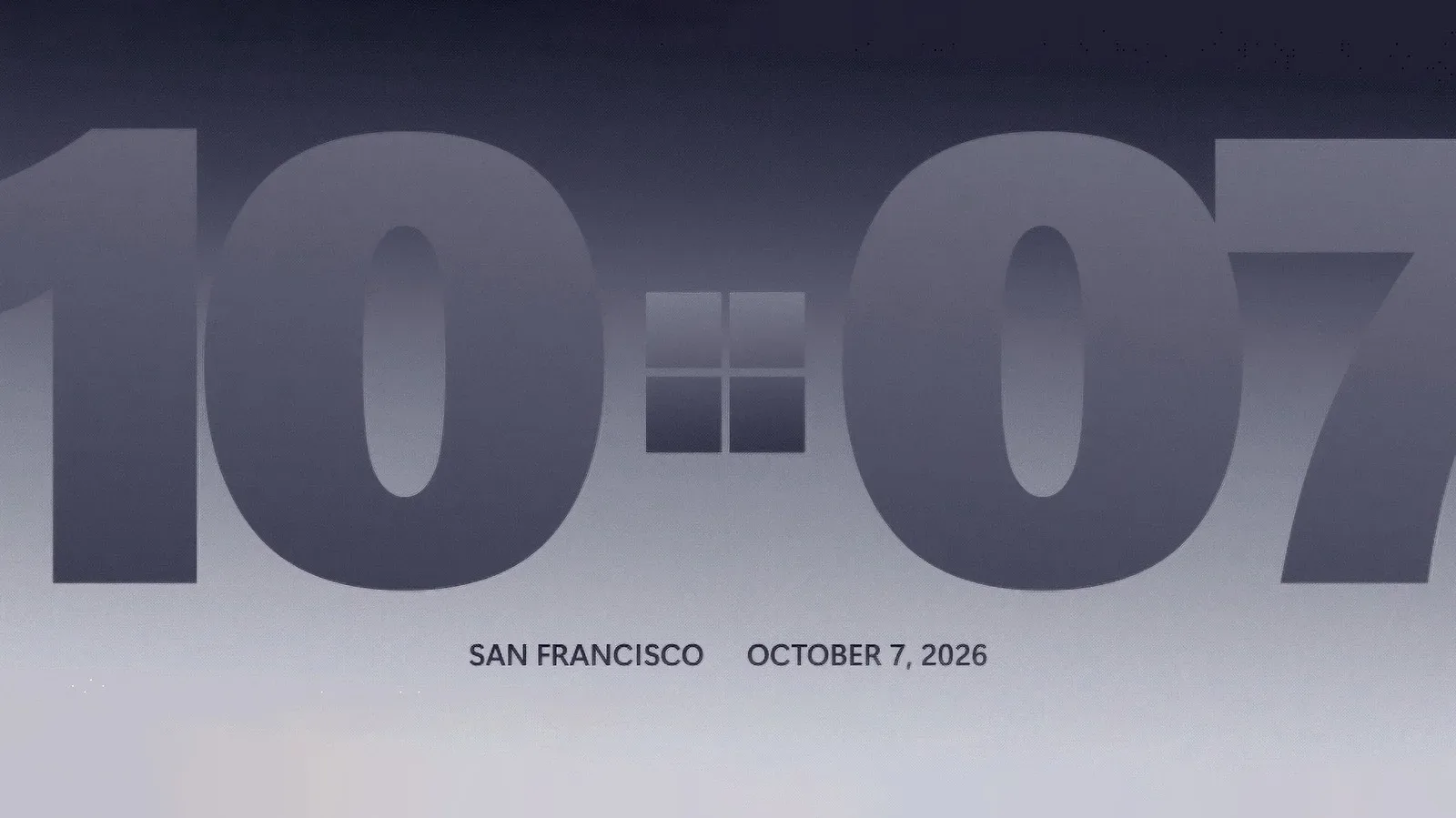
Microsoft plans to hold an event in San Francisco on October 7 centered on how local AI could shape the next stage of personal computing. The company has positioned the gathering around Windows, Surface, NVIDIA RTX Spark and the wider PC ecosystem, putting a particularly bright spotlight on the hardware needed to run more AI work on the computer itself.
Microsoft CEO Satya Nadella, NVIDIA CEO Jensen Huang and Microsoft Executive Vice President of Windows + Devices Pavan Davuluri are expected to appear. That lineup makes the event more consequential than a standard Surface hardware refresh: it joins Microsoft’s Windows strategy, NVIDIA’s new Windows-oriented silicon platform and Microsoft’s own device ambitions in one place.
What is not yet known remains important. Microsoft announced the Surface Laptop Ultra in June 2026 but did not provide availability details. NVIDIA RTX Spark systems have also been introduced by other laptop makers, while pricing has not been established. October 7 could clarify those unresolved basics, although the event’s stated focus alone does not guarantee a release date, retail price or full specification sheet.
Why “local AI” is the key phrase
Local AI means an AI model performs its work on the PC rather than sending every task to remote data-center servers. In practical terms, a capable local machine could process supported AI requests with its own processor, graphics hardware and memory.
That is different from cloud AI, where a device primarily acts as a front end: it sends a prompt or file to an online service, then receives the result back. Both approaches can coexist. The point of Microsoft and NVIDIA’s local-AI emphasis is that more ordinary computing work may be handled close to the user, on the device they are already using.
The distinction matters because the hardware requirements change. A system intended to run AI models locally needs enough compute capability for those models, not merely enough horsepower for browsing, office work or video playback. It also changes the conversation from a new app or chatbot to the underlying PC architecture that makes those workloads possible.
For gamers and other PC buyers, the important caution is that “AI PC” is a broad label, not a complete description of what a machine can do. The useful questions are more specific: which AI workloads are supported, whether they run locally or online, what Windows features use them, and what the device costs. Microsoft’s event may answer some of those questions, but none should be presumed ahead of time.
RTX Spark and the Surface Laptop Ultra
NVIDIA announced RTX Spark, its first system-on-a-chip for Windows, only a few months before Microsoft’s October event. A system-on-a-chip, commonly shortened to SoC, combines major computing components into a single integrated platform. The approach is central to the emerging class of machines designed around local AI tasks.
The Surface Laptop Ultra appears to be Microsoft’s clearest RTX Spark-related product waiting for fuller details. Microsoft revealed the laptop in June, but availability was left open. Its appearance within an event explicitly covering Surface and RTX Spark makes further discussion plausible, particularly since the product is framed around exactly the local-AI workflow Microsoft and NVIDIA are promoting.
Still, plausible is not confirmed. The event description covers a broad “PC ecosystem,” which leaves room for Windows platform updates, partner devices and wider strategy alongside any Surface news. Readers looking for a buying decision should treat October 7 as a date to watch rather than evidence that a particular configuration, launch window or price has been finalized.
An ecosystem event, not just a laptop event
The wording around the event matters because it reaches beyond one Microsoft computer. Windows is the software foundation; RTX Spark is a new hardware platform; Surface is Microsoft’s own device line; and the PC ecosystem includes the manufacturers and developers that turn a platform into actual products and useful software.
Other laptop manufacturers have already introduced RTX Spark devices. That means the story is not limited to whether Microsoft brings one Surface Laptop Ultra to market. It is also about how consistently Windows PCs using this platform are positioned, how their capabilities are explained and whether customers can compare them on something more concrete than a general promise of AI readiness.
Price is the largest blank space. There is no stated cost for RTX Spark laptops, including Microsoft’s announced Surface model. That absence is especially meaningful for a new hardware category, because potential buyers cannot yet weigh local-AI capability against the familiar priorities of budget, portability and the software they actually use.
The same principle applies to timing. A product announcement establishes intent, but availability determines when the product becomes a real option. Microsoft’s June Surface Laptop Ultra reveal showed the company’s direction; an October update could potentially turn that direction into actionable product information.
AI agents are the longer-term ambition
Microsoft and NVIDIA have described a shared vision in which AI agents take on an increasing share of routine computer work. In this context, an agent is not simply a text box that answers a question. The term refers to AI intended to assist with tasks and workflows on a user’s behalf.
That aspiration is why processing location has become a hardware issue. If routine assistance is meant to become a more integral part of using a PC, then the ability to run suitable models locally becomes part of the platform discussion. Microsoft has also publicly shown Project Solara devices as part of its future-facing hardware work, while powerful local-AI PCs offer another route toward that broader goal.
There is a substantial difference, however, between an overarching vision and the day-to-day reality of a shipping computer. A successful local-AI PC proposition will need clear supported uses, straightforward setup and a reason for buyers to value its on-device capability. The current information establishes the strategic focus, but it does not yet spell out every application or experience that RTX Spark systems will deliver.
That uncertainty is worth preserving amid the excitement around new silicon. Hardware can enable a category, but practical software determines how visible that capability becomes. The Windows side of the October presentation may therefore be as important as the Surface hardware discussion. Buyers need to understand not only what is inside a laptop, but also what Windows and compatible applications can meaningfully do with it.
What to watch for on October 7
The clearest items to watch are the details Microsoft has not announced: Surface Laptop Ultra availability, pricing and fuller information about how RTX Spark will be used across Windows and Surface. Any broader product news from PC partners would also help show whether this is the start of a single premium device or a more substantial shift across multiple manufacturers.
- Surface Laptop Ultra timing: Whether Microsoft provides a release window or confirms when buyers can order the system.
- Pricing: The missing figure for Microsoft’s laptop and the wider RTX Spark laptop category.
- Windows integration: Concrete explanations of which local-AI functions Windows is designed to support.
- Partner hardware: More clarity on the RTX Spark computers being developed by other laptop makers.
- Workflow details: A clearer account of how local models and AI agents are expected to fit into normal PC use.
For anyone comparing PC technologies, the basics still apply: platform labels and port names do not by themselves establish performance. As with the distinction explored in USB-C versus USB-A flash drives, the visible category can be less informative than the underlying specifications and supported capabilities. RTX Spark and local AI are the headline here; the useful details will be the actual hardware, software support, availability and price.
Microsoft’s October 7 event is therefore positioned as a test of how much substance can be put behind the local-AI PC idea. With Nadella, Huang and Davuluri all expected to participate, it should provide a high-level view of how Microsoft and NVIDIA see Windows PCs evolving. Whether it also supplies the practical information prospective Surface buyers need is the question that remains open.