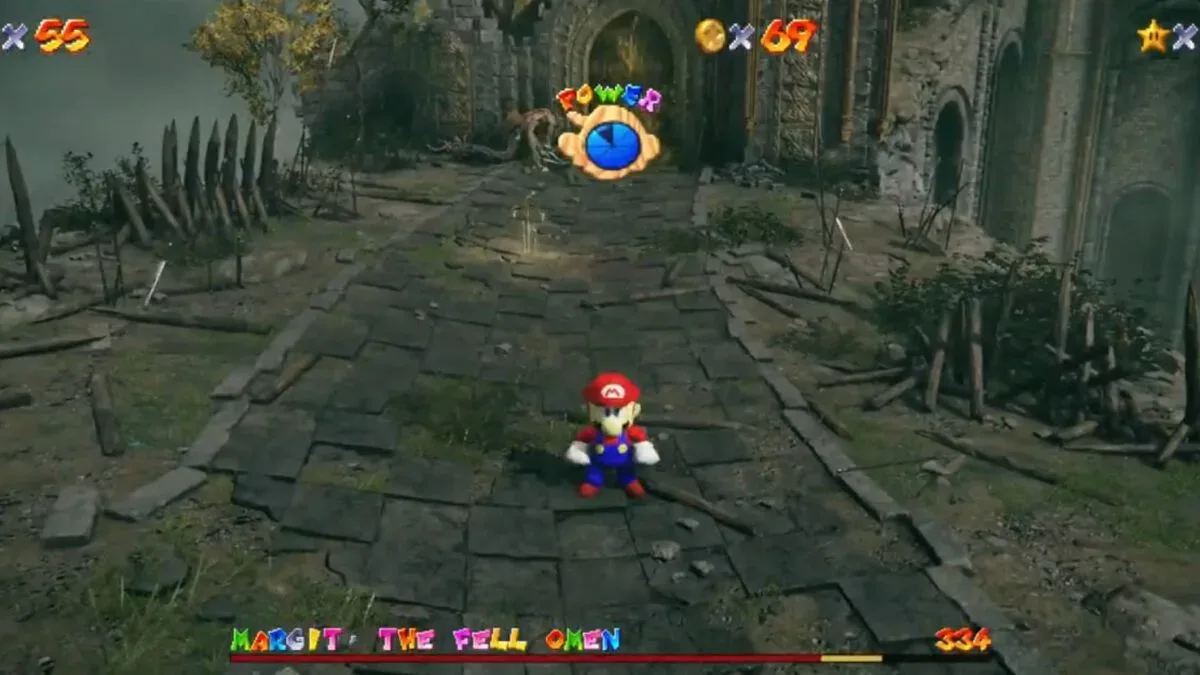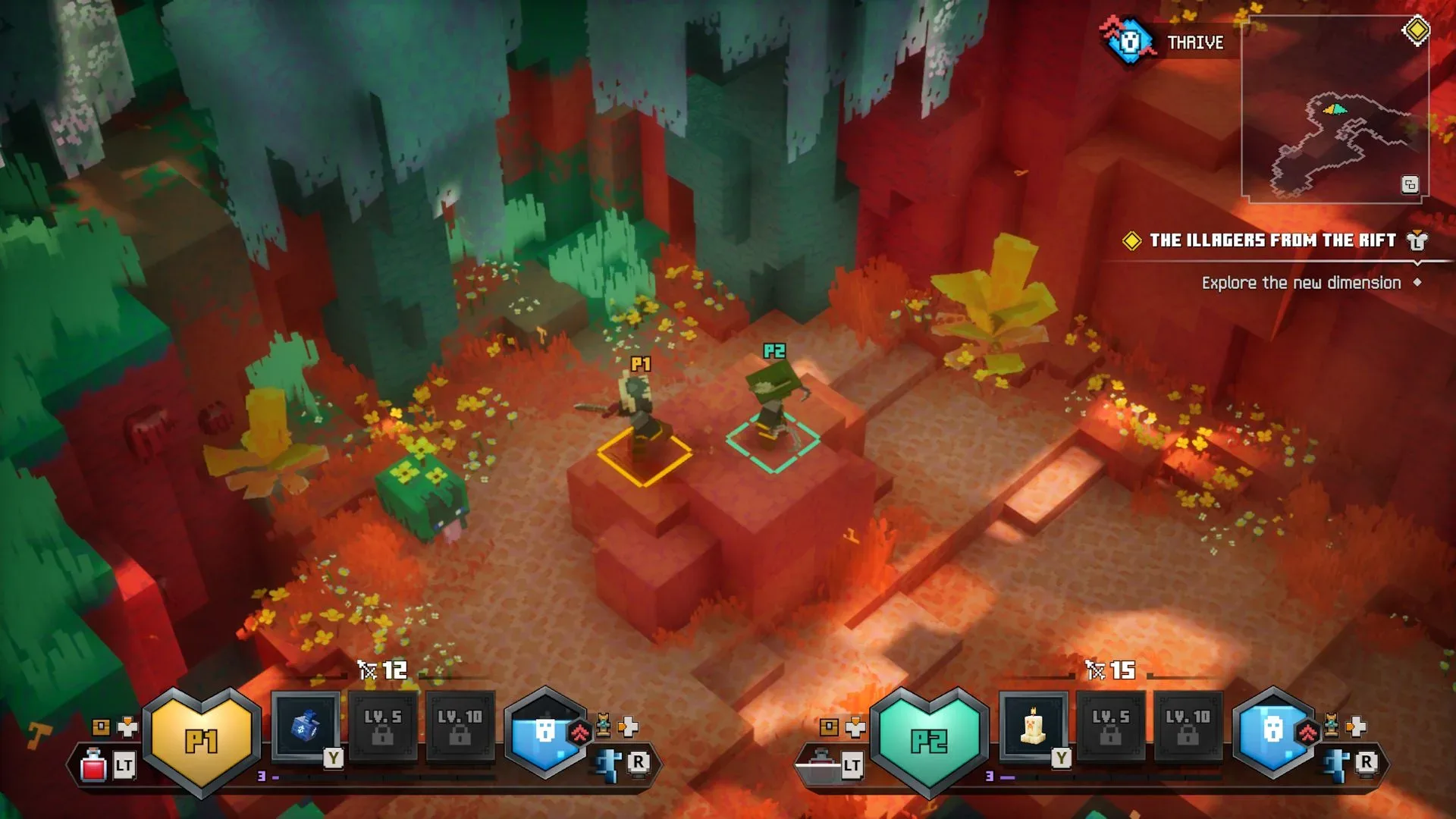
A few seconds of video can make almost any game crossover look irresistible. Minecraft tools in Skyrim. Mario taking on Elden Ring. Escape from Tarkov-style guns brought into Bethesda’s fantasy RPG. Skateboarding mechanics dropped into Modern Warfare 2, then apparently layered into Minecraft as well.
That is the sales pitch of a sudden wave of AI-generated or AI-assisted game mashup mods circulating on X: familiar games, forcibly combined, with each clip built around an immediately legible “wait, you can do what?” moment. The footage has earned substantial engagement, but availability and basic playability remain uncertain for many of the projects. Several appear to exist only as short social-media clips, not publicly downloadable releases.
That distinction matters. A mod can be visually startling without being a game anyone would want to play for more than the length of the post that advertised it. The deeper issue exposed by this trend is not simply that early AI-coded mods can be buggy. It is that recognizable assets and surface-level mechanics do not automatically form a coherent ruleset, progression loop, or worthwhile play experience.
The viral hook is the crossover, not the design
Each mashup is easy to understand at a glance because it relies on the audience’s existing knowledge. A Minecraft sword belongs in a block-building survival game; an Elden Ring boss belongs in a punishing action RPG. Put them in the same frame and the novelty does most of the promotional work. The same is true of skateboarding amid military-shooter imagery, or an oversized archive of Nintendo DS-era games apparently blended into a single project.
One especially sprawling Nintendo-themed concept reportedly draws together elements associated with Nintendogs, Cooking Mama, Animal Crossing: New Leaf, Reel Fishing 3, Story of Seasons, and Kingdom Hearts. The premise is instantly bizarre enough to attract attention: care for a dog, play cooking minigames, and work at The Roost from Animal Crossing: New Leaf, all in one digital collage.
But a collage is not necessarily a game. The question begins after the clip ends: What can the player do repeatedly? How do they acquire tools, learn systems, face consequences, make choices, and progress? Do the transplanted mechanics support the host game’s goals, or are they merely visible at the same time?
These questions are fundamental to modding rather than elitist demands for polish. Plenty of traditional mods begin as rough experiments, and a glitchy prototype can still contain a genuinely strong idea. A new weapon can deepen combat. An alternate quest can give exploration a purpose. A survival system can change the decisions players make across an entire playthrough. The AI mashup trend is drawing skepticism because the showcased pairings frequently stop before that design work starts.
A Skyrim and Minecraft example shows the gap
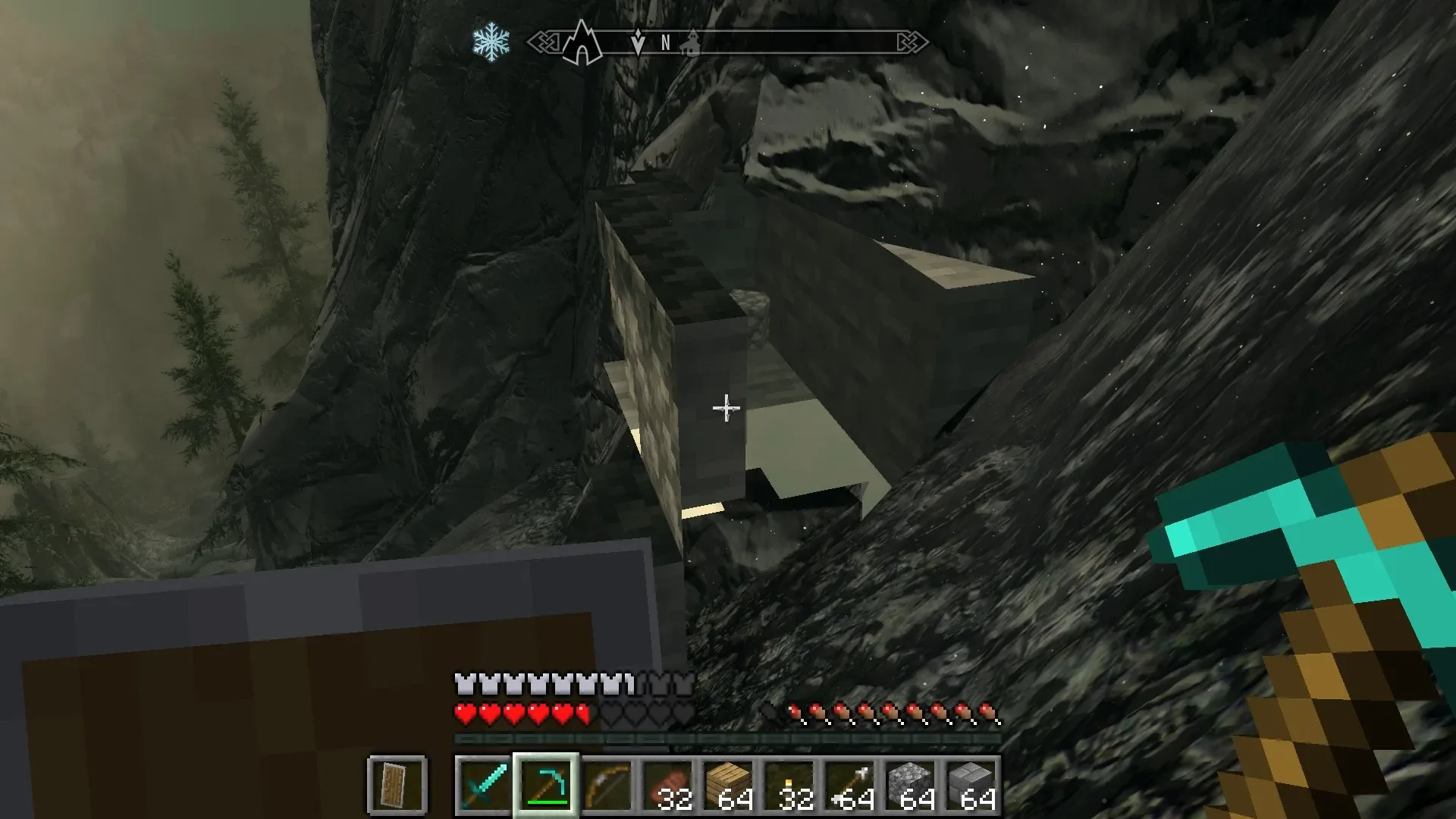
A test of an early Claude-coded mod by chasmlol, which adds Minecraft items to Skyrim, illustrates the difference between an amusing premise and an integrated system. The mod allowed parts of the world to be broken into blocks, a feature with obvious crossover appeal. Yet mining only a couple of blocks from a mountain led to falling through the environment and becoming stuck among missing pieces and broken geometry.
Related coverage includes AI-Coded Game Mashup Mods Go Viral, but Playability Remains a Major Question.
Other problems were less about raw stability and more about logic. A metal gate could yield wood. Some blocks did not render correctly. An invisible wall stopped movement before combat could even become part of the experiment. Those are serious obstacles in their own right, but fixing them would not automatically solve the mod’s larger design problem.
The player begins with diamond tools, iron armor, golden apples, and other Minecraft items that normally carry value because they are not simply handed out. In a survival-and-crafting game, the effort of gathering materials, discovering recipes, managing danger, and upgrading equipment is central to why the equipment matters. Giving away that equipment at the start strips away much of its context.
The mod includes a crafting table, yet the available systems do not appear to establish a reliable route to the materials needed for crafting. The stone beneath the game world is shallow and seemingly contains no ore, while natural food sources were not encountered in the test. Crafting exists as an object and an interface, but not necessarily as a usable economy. That is the difference between importing a mechanic’s appearance and integrating its function.
Its Minecraft-style HUD also covers Skyrim subtitles. This is a small but revealing collision. Interfaces are not decorative overlays; they deliver information, guide timing, and support accessibility. When one game’s interface obstructs another’s dialogue, the mod is not just visually messy. It is actively interfering with the host game’s ability to communicate.
What “systems integration” actually means
Systems integration is the unglamorous work of making game mechanics affect and reinforce one another. It is what turns a collection of features into a game with internal logic.
For a Minecraft-inspired addition to Skyrim, integration would require more than blocks, tools, and a crafting table. It would mean answering practical questions:
- Where do materials come from, and what risks or effort are involved in obtaining them?
- What makes crafted gear preferable to existing Skyrim equipment in particular situations?
- How do durability, damage, weight, inventory space, perks, merchants, enemies, and quests react to the new items?
- Can the player finish meaningful parts of the game using the new loop, rather than merely pose with its objects?
- Does the interface preserve essential information from the host game?
None of these requirements demand that every crossover become a complete replacement for the original game. A small novelty mod can be perfectly worthwhile. But when clips suggest the possibility of a new way to play, players reasonably expect something beyond an inventory full of powerful items and a briefly functional gimmick.
That is also why the apparent Tarkov-in-Skyrim and skating-in-Modern Warfare 2 projects invite obvious questions. How is gear obtained? How are points scored for tricks? What rewards do points provide? Do those rewards alter the broader experience? A kickflip beside a trickshot is a potent short-form image, but it is not a scoring system, progression path, or objective on its own.
Vibe coding can speed up prototypes, not replace decisions
Vibe coding, in this context, refers to directing generative AI with prompts and iterating on the resulting code, often rapidly, instead of manually constructing every part of a project. The appeal is clear. A creator can attempt an outlandish prototype far more quickly than they could through conventional development alone. The trend’s speed is part of its spectacle; at least one Tarkov-themed mod was reportedly made within hours after its creator noticed the crossover format gaining momentum.
Speed, however, is not the same as authorship of a design. An AI can generate or alter code, but it cannot make a game’s interlocking decisions disappear. Someone still needs to determine the intended player experience and then test whether the game delivers it. Someone has to decide whether an imported resource should be rare, whether a new movement option breaks level layouts, whether enemies can respond to it, and whether a reward makes later choices too trivial.
Technical terms can make this clearer. A prototype is an early build used to prove that an idea is possible. A vertical slice is a small but representative piece of a fuller game experience, containing enough finished and connected elements to show how the final design might work. Much of the viral material presently resembles prototypes: proof that a character, item, animation, or mechanic can appear in an unexpected place. It does not yet demonstrate a vertical slice of a satisfying crossover game.
This is not a condemnation of prototypes. They are useful precisely because they let creators discover where an idea fails before committing further work. The problem comes when a prototype is presented, or received, as though it answers every design question simply because it produced a striking clip.
Why the original games resist being reduced to ingredients
Minecraft, Elden Ring, Skyrim, Nintendogs, and the other games invoked by these mashups are memorable for more than their identifiable items. Their systems were developed to reinforce particular rhythms of play. Resources, combat, movement, UI, rewards, environments, and goals all shape each other. Removing one part from that structure can be fun, but it also removes the support that gave the part meaning.
A diamond tool is not inherently compelling because it has a familiar texture. Its significance comes from the systems around it. Likewise, an Elden Ring boss is not only a large enemy model; it is part of an encounter built around movement, attacks, player tools, difficulty, space, and repetition. Skate-style tricks are not automatically satisfying just because a character spins a board. They need readable control, level design, scoring, and incentives that make repeated attempts worthwhile.
AI-generated mashups are especially vulnerable to treating these elements as interchangeable ingredients. The algorithm rewards the fastest possible recognition: “Game A inside Game B.” Yet the very parts that make a mod playable—balance, feedback, compatibility, menus, progression, objectives, testing—are difficult to summarize in a six-second post.
That incentive gap explains why the clips can look more complete than the projects behind them. A social feed rewards a strange visual juxtaposition immediately. A player rewards a mod only after it survives sustained use.
What players should look for before downloading
Not every experimental crossover deserves to be dismissed, and early work should be allowed to be early work. Still, anyone tempted by these clips should separate a demonstrated feature from a demonstrated game.
- Check whether there is an actual public download. A video alone does not establish that a mod is available or works outside a carefully selected moment.
- Look for a clear installation path and requirements. Compatibility and dependencies are practical signs that a project has moved beyond a one-off showcase.
- Ask how the loop works. Where do resources come from? What is the goal? What changes after the initial novelty wears off?
- Watch for evidence of ordinary play. Menus, traversal, combat, failure states, crafting, and progression reveal much more than a single spectacular stunt.
- Expect uncertainty around unverified claims. A rapidly produced clip may show a real feature, but it may not show a stable, distributable, or complete mod.
The appeal of a wild crossover is real, and there is nothing wrong with enjoying a surreal clip for what it is. But a game is not made playable by placing one famous game on top of another. Until these projects provide systems that connect, choices that matter, and a loop that holds together beyond the punchline, they are better understood as viral prototypes than destinations for a new playthrough.
For a different view of what sustained, human-led work around game reconstruction can look like, see this community list for human-led game decomps and recomps.