Dark Souls has earned its reputation as a bleak fantasy about ruin, loss and ambitions that curdle into catastrophe. Its worlds are oppressive, its mysteries are guarded, and its victories rarely arrive without an ugly cost. Yet there is another truth hiding in the cracks between all that crumbling stone: Dark Souls is frequently, deliberately and magnificently ridiculous.
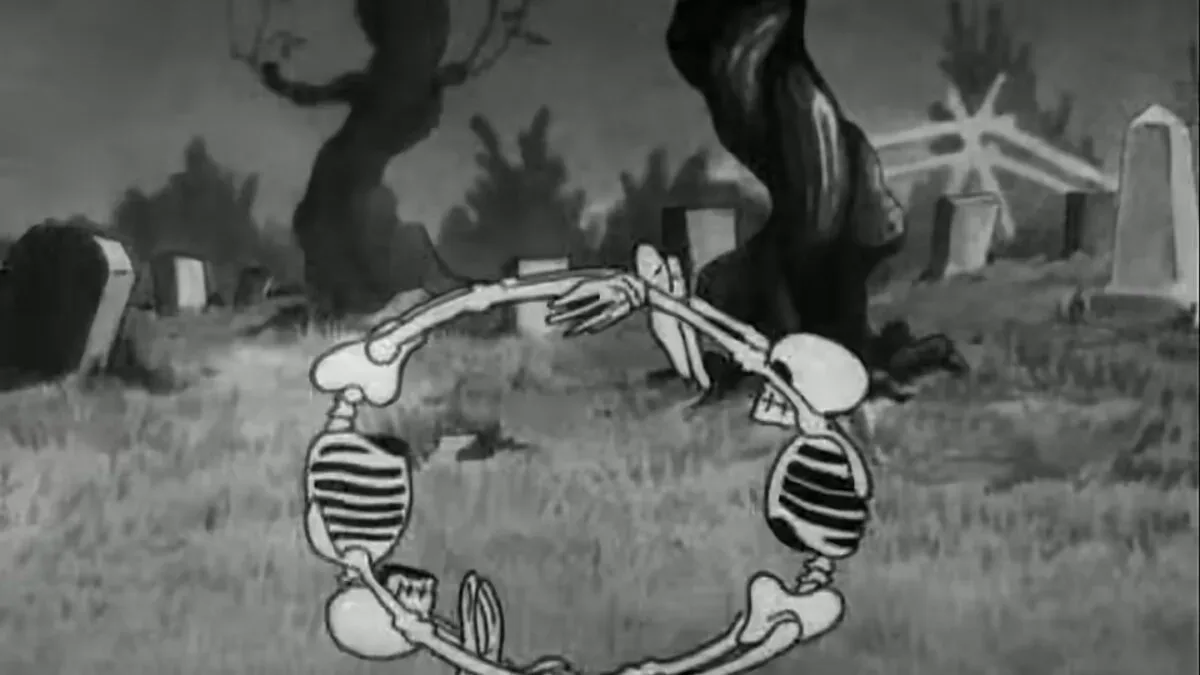
The Bonewheel is the clearest exhibit. It is, at its most basic, a skeleton attached to a large wheel made of bones. That description does not become less absurd after reflection. It becomes more absurd. The creature’s premise has the logic of a cartoon invention: take one undead adversary, strap it to an extremely inconvenient circular vehicle, then send it charging through spaces where a player has little room to react.
The result can be panic, death and the loss of hard-earned souls. It can also be very funny. The Bonewheel is not funny because it tells a joke. It is funny because its entire physical existence is a joke that keeps moving toward the player at speed.
Dark Souls’ other genre is slapstick
It is easy to talk about Dark Souls entirely in the language of challenge, lore and tragedy. Those things are there. The game presents a world where apparently decent non-player characters can meet ignoble ends, villains may demand difficult fights before their own downfall, and apparent objectives can bring consequences that feel cruelly ironic.
But grim material and comedy are not opposites. In fact, the severity of Dark Souls makes its comic eruptions hit harder. A game that spent every moment winking at the player would not get nearly as much mileage out of a sudden, ludicrous disaster. When the surrounding mood is mournful and ominous, a charging skeleton wheel is an interruption so extreme that it becomes memorable on sight.
That contrast is central to the effect. One moment asks the player to advance carefully through an ancient, hostile environment. The next moment asks them to process a bone-based wheel with a skeleton in it, potentially while being bounced, staggered or shoved somewhere they emphatically did not plan to go. The scene is frightening in real time and comic as soon as there is enough distance to understand what happened.
That delayed laughter matters. A player may not laugh while attempting to survive an ambush. They may be too busy making an unsuccessful escape, colliding with scenery or watching their character fall. But once the immediate frustration passes, the event can play back like a short silent gag: a cautious approach, an outrageous reveal, a sudden burst of motion and a devastating outcome.
Why physical comedy is unusually hard in games
Physical comedy depends on timing, space and motion. In a film or a cartoon, the creator controls every beat. In a game, the player has agency. They can stop, turn around, roll early, misjudge distance, become stuck against level geometry or make the exact wrong decision at the exact worst moment. That uncertainty makes reliable slapstick difficult to stage, because the game has to leave room for the player’s choices without letting the situation become unreadable nonsense.
Related coverage includes Dark Souls' Bonewheels Show Why FromSoftware's Slapstick Still Works.
Dark Souls builds comedy out of that uncertainty rather than trying to eliminate it. Its hazards and enemies are arranged to create tense possibilities. A tight route, a concealed threat or a dangerous drop does not guarantee one perfectly choreographed result. Instead, it produces a range of outcomes: a clean escape, a narrowly averted catastrophe, a messy collision, or a self-inflicted plunge.
In technical terms, this is where enemy placement and level geometry do much of the comic work. Enemy placement means where opponents are positioned relative to the player’s likely route and sightline. Level geometry is the shape of the playable environment: corridors, corners, ledges, obstacles and open ground. Put a fast, awkwardly shaped threat near a constricted path and the game creates a problem that is legible before it is fully solvable. The player understands that something is bad, but may not have enough time or space to respond elegantly.
That is a classic setup for slapstick. The joke is not simply that an enemy attacks. The joke is that every component of the scene conspires to turn a reasonable plan into a spectacularly undignified failure.
Movement is part of the punchline
Player movement gives this style of comedy its special sting. Dark Souls can make small errors consequential. A mistimed dodge-roll, an overcommitted step or a moment of directional confusion near an edge can turn a routine traversal into a fatal fall. The player is not merely observing a mishap; they are helping to perform it.
That can be infuriating, particularly when souls are on the line. Souls are a valuable resource in Dark Souls, and losing a large amount after a careless death can make the accident feel costly rather than cute. A failed return trip to recover them raises the stakes further. Still, the comedy survives because the mechanism of failure is often so immediately recognizable. The player knows what went wrong. They can frequently point to the exact roll, step or panicked input that transformed safety into disaster.
There is a peculiar honesty to that. A fall caused by a decision made in a hurry can feel less like a detached punishment and more like an embarrassing pratfall. The game did not need a quip to mock the player; their own trajectory supplied it.
The death animation can complete the gag. A solemn world does not prevent a defeated character from looking awkward when physics, momentum or a bad landing take over. Dark Souls understands that vulnerability is not always noble. Sometimes it is just a heavily armed adventurer discovering that gravity has no patience for drama.
The Bonewheel works because it is both threat and sight gag
Bonewheels are effective because they operate on two levels at once. Mechanically, they demand attention as hostile enemies. Visually, they are an outlandish image. A player sees danger and absurdity together, which creates a brief mental conflict: should this be taken seriously, laughed at, or fled from immediately?
The practical answer is usually to take it seriously first. The comic answer arrives later, often after the player has had time to recover from whatever the Bonewheel did to their plans. That sequence is essential. A harmless silly enemy would be a novelty. A genuinely disruptive enemy with a fundamentally silly design becomes a story generator.
It also demonstrates a strength of games as a medium. The funniest part of a Bonewheel encounter may not be identical for every player. One person may meet it at a corner and recoil. Another may panic-roll into danger. Another may be hit at precisely the wrong angle. The broad setup is shared, but the humiliating detail belongs to the player. That makes the memory unusually durable: it is not just a gag seen in a game, but a calamity personally authored through a combination of level design, enemy behavior and human error.
A hostile bestiary with comic timing
Bonewheels are hardly alone in making Dark Souls feel less solemn than its reputation suggests. The game’s world contains ordinary and giant skeletons, giant mosquitoes, mushroom people, basilisks, zombie-like foes and a strange mass of spear-wielding figures around a statue in the Painted World. These are dangerous inhabitants of a dark fantasy setting, but they are also evidence of an imagination willing to be ugly, uncanny and sometimes plainly bizarre.
Basilisks, in particular, can inspire dread rather than amusement, while mushroom people trade on an appearance that is difficult to reconcile with conventional fantasy menace. The game does not have to resolve that contradiction. It uses it. The player may laugh at the shape or premise of a foe right up until the encounter turns lethal.
This approach prevents the world from becoming visually monotonous. A relentlessly grim game can risk flattening its own mood: if every creature is equally dour and conventionally intimidating, the surprise fades. Dark Souls instead lets grotesque weirdness puncture the gloom. Its strange enemies do not dilute the danger. They make the danger stranger, and therefore more memorable.
That tension between tragedy and absurdity is also why the game’s comedy does not feel like an escape from the fiction. The laughter is embedded in the same hostile world as the sorrow. An unlucky fall is still a fall in a land of ruins. A ridiculous monster is still capable of killing the player. The joke and the threat occupy the same space.
Failure can be a story, not just a setback
There is a practical lesson in this for anyone returning to Dark Souls or entering it with only its formidable reputation in mind: do not mistake every death for evidence that the game is only punishing you. Some deaths will be frustrating. Some will come after a costly mistake. Yet an encounter can be both mechanically punishing and aesthetically funny, especially when the player’s own hurried response makes the outcome worse.
That does not mean players must enjoy losing progress. It means the game’s best disasters often have a shape that can be learned from. Look at sightlines before committing to a narrow path. Be cautious around ledges. Avoid treating every dodge-roll as a universal answer. And when an enemy’s design seems too bizarre to be dangerous, assume that is exactly when it has earned the right to be dangerous.
Most importantly, leave room to appreciate the absurdity after the respawn. Dark Souls is not secretly a comedy game in the sense that its sorrow and challenge are fake. It is a comedy game because its grim seriousness creates the perfect stage for physical disaster. The more dramatically it frames a perilous approach, the better it is when a skeleton wheel turns that approach into a cartoon catastrophe.
Other games can aim for overt jokes, banter and playful writing. Dark Souls finds another route. It puts a player in a dangerous place, gives them a little too much confidence, introduces something impossible-looking around a corner, and lets movement, collision and panic do the rest. The Bonewheel may be a menace, but it is also an artist of impact. Three cheers for it—preferably from a safe distance.
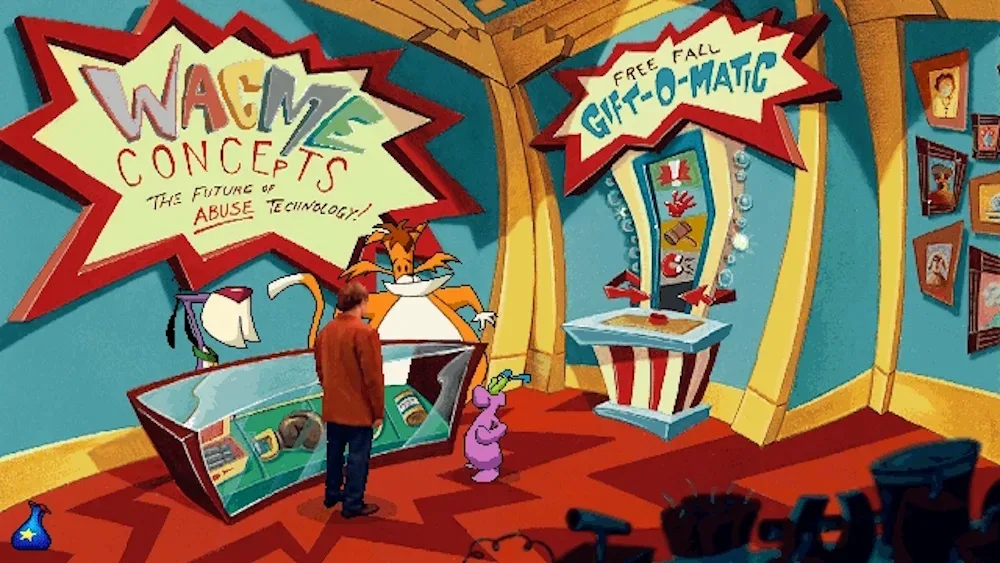
For another game where cartoon energy and games collide in a very different form, revisit Toonstruck’s wild FMV cartoon adventure.