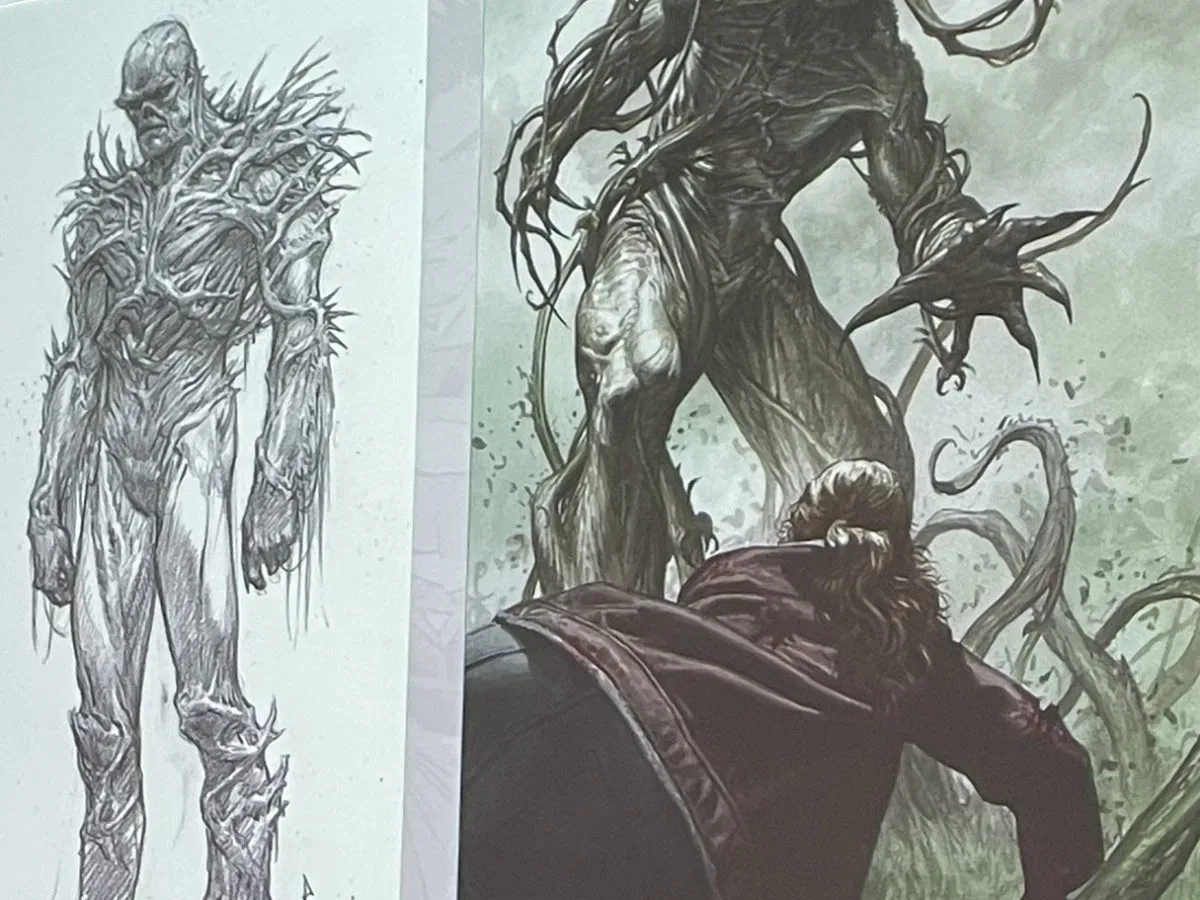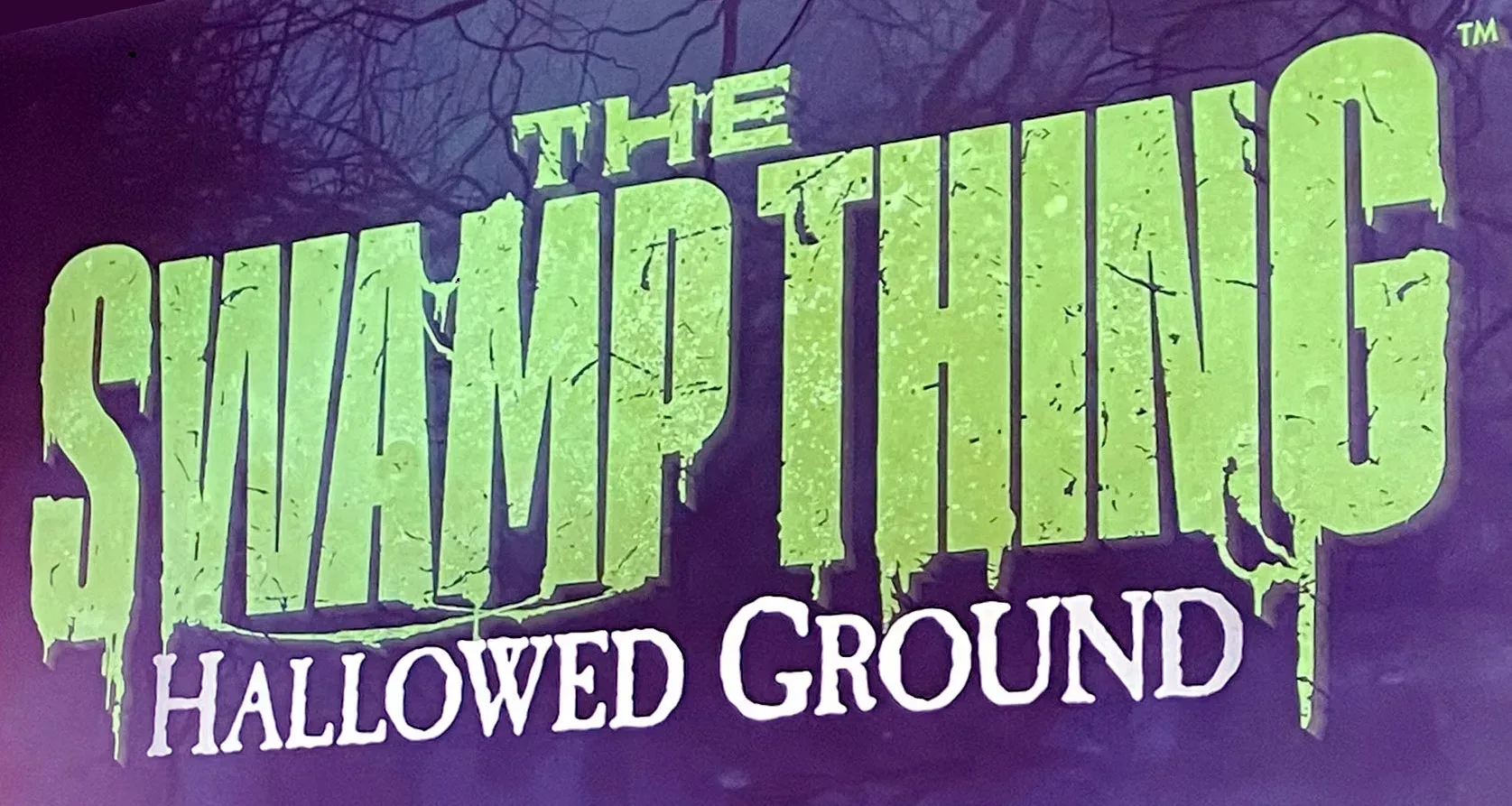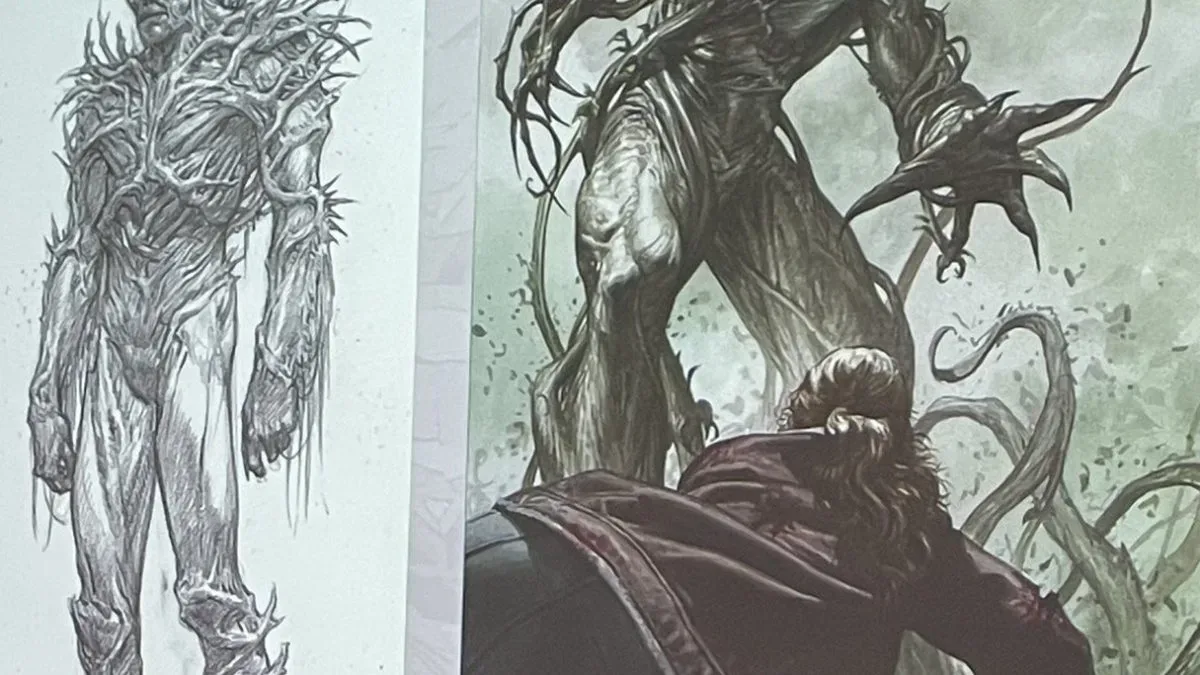
DC Next Level has revealed Swamp Thing: Hallowed Ground, a new standalone Swamp Thing project planned for 2027. Steve Foxe will write the book, while Riccardo Federici is set to provide the full art.
The announced premise places Swamp Thing, the Green, and sacred sites created or revered by people at the center of a horror story. That is a promisingly focused setup for the character: rather than treating Swamp Thing only as a superhero with plant-based abilities, it points toward the stranger, spiritual, and ecological territory that has long made the character distinct within DC’s universe.
What the title’s premise suggests
The Green is the key piece of terminology in the announcement. In Swamp Thing stories, it refers to the metaphysical connection linking plant life. It gives the character’s horror an unusual scale. A threat does not have to be limited to one monster, one city, or one conventional criminal scheme; it can touch the natural world, the boundary between humanity and nature, or an idea people believed they had safely buried beneath ritual and history.
Adding sacred human locations to that framework creates a natural point of tension. Sacred ground is not automatically natural ground. It can carry memory, belief, ceremony, conflict, protection, exploitation, or all of those things at once. The announcement does not identify particular locations, characters, or threats, so readers should not infer a specific historical setting or storyline. But the central contrast is clear: this is positioned as a meeting point between the Green’s ancient, nonhuman perspective and places where human beings have assigned profound meaning.
That distinction matters for Swamp Thing. The character works especially well when a story allows the natural world to be more than scenery or a convenient source of powers. A sacred-site premise has room for questions about stewardship, reverence, fear, and ownership without requiring the book to become a simple environmental parable. Horror is often strongest when familiar beliefs and places are made uncertain. In this case, the uncertainty can run in both directions: humanity may not understand what lives beneath or beyond its holy ground, while the Green may not recognize the rules humans have built around it.
A standalone approach can be a useful entry point
Hallowed Ground has been described as a standalone story. In practical terms, that suggests a book intended to tell its own complete narrative rather than functioning chiefly as one chapter of a large crossover or a continuation dependent on a lengthy reading list.
That does not mean continuity will be irrelevant, nor does it establish the project’s format, page count, or release schedule; none of those details have been announced here. It does, however, make the book potentially approachable for readers who know Swamp Thing primarily by reputation, as well as for longtime readers interested in a self-contained creative-team showcase.
For a character with a history of wildly different tones, standalone projects can be particularly valuable. Swamp Thing can operate in superhero comics, creature horror, body horror, gothic fantasy, ecological fiction, or metaphysical drama. A self-contained premise gives Foxe and Federici a chance to establish their own atmosphere and rules without needing to spend the entire opening stretch servicing a broader line-wide plot.
Why Steve Foxe fits a horror-led Swamp Thing book
Foxe arrives with experience across horror and superhero comics. He co-created Razorblades: The Horror Magazine with James Tynion IV, edited titles including The Department of Truth and W0RLDTR33, and has also worked on Marvel projects such as Dark X-Men. Taken together, that background suggests familiarity with both genre tension and the structural demands of established comic-book universes.
That combination is meaningful for Swamp Thing. Horror writing is not merely a matter of startling imagery. On the page, it involves controlling what readers know, what they suspect, and what remains deliberately unseen. Superhero writing, meanwhile, often needs to make extraordinary powers legible and dramatic while keeping characters emotionally recognizable. Swamp Thing benefits when those two instincts work together: the character should feel capable, but the world around him should still be capable of unsettling him—and the reader.
The announced subject matter also calls for care in how human belief and sacred places are handled. The available details do not establish the book’s specific approach, so it would be premature to make claims about its themes or representation. Still, the premise itself indicates that the story’s horror will have to do more than place Swamp Thing beside a generic haunted landmark. It needs to make the relationship between the Green and human sacred ground feel consequential.
Riccardo Federici is handling the complete art
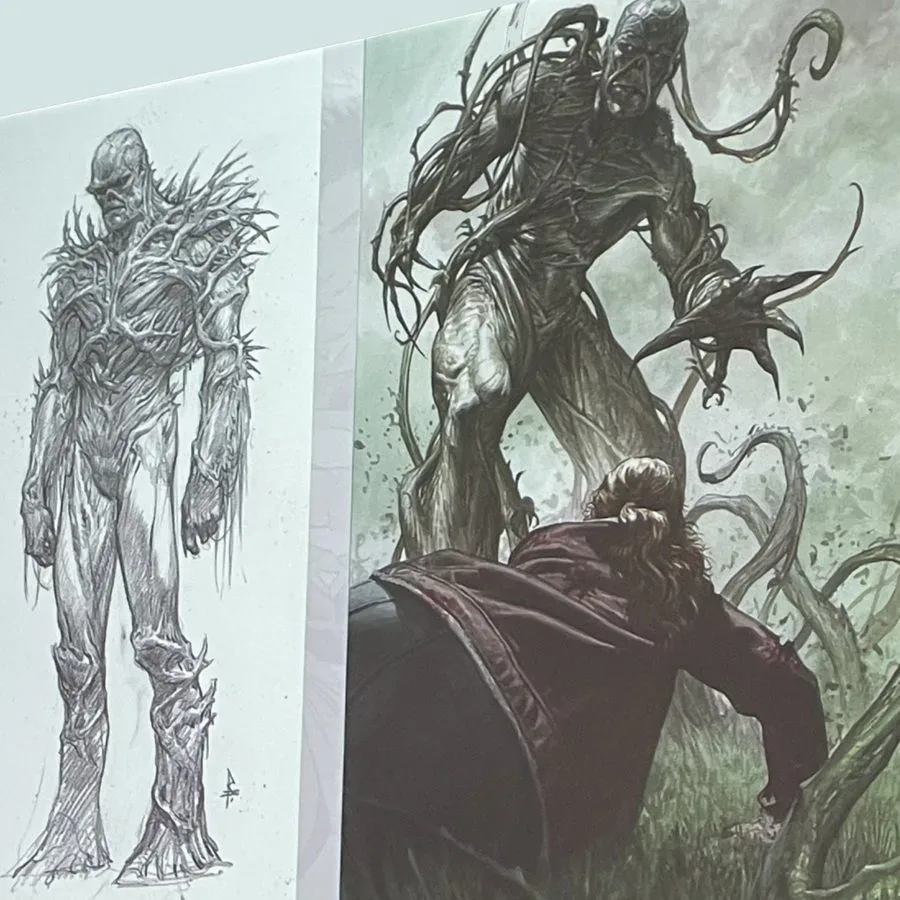
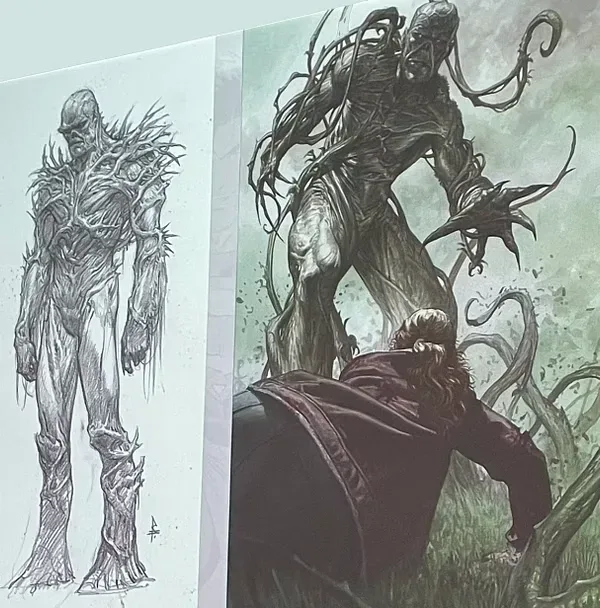
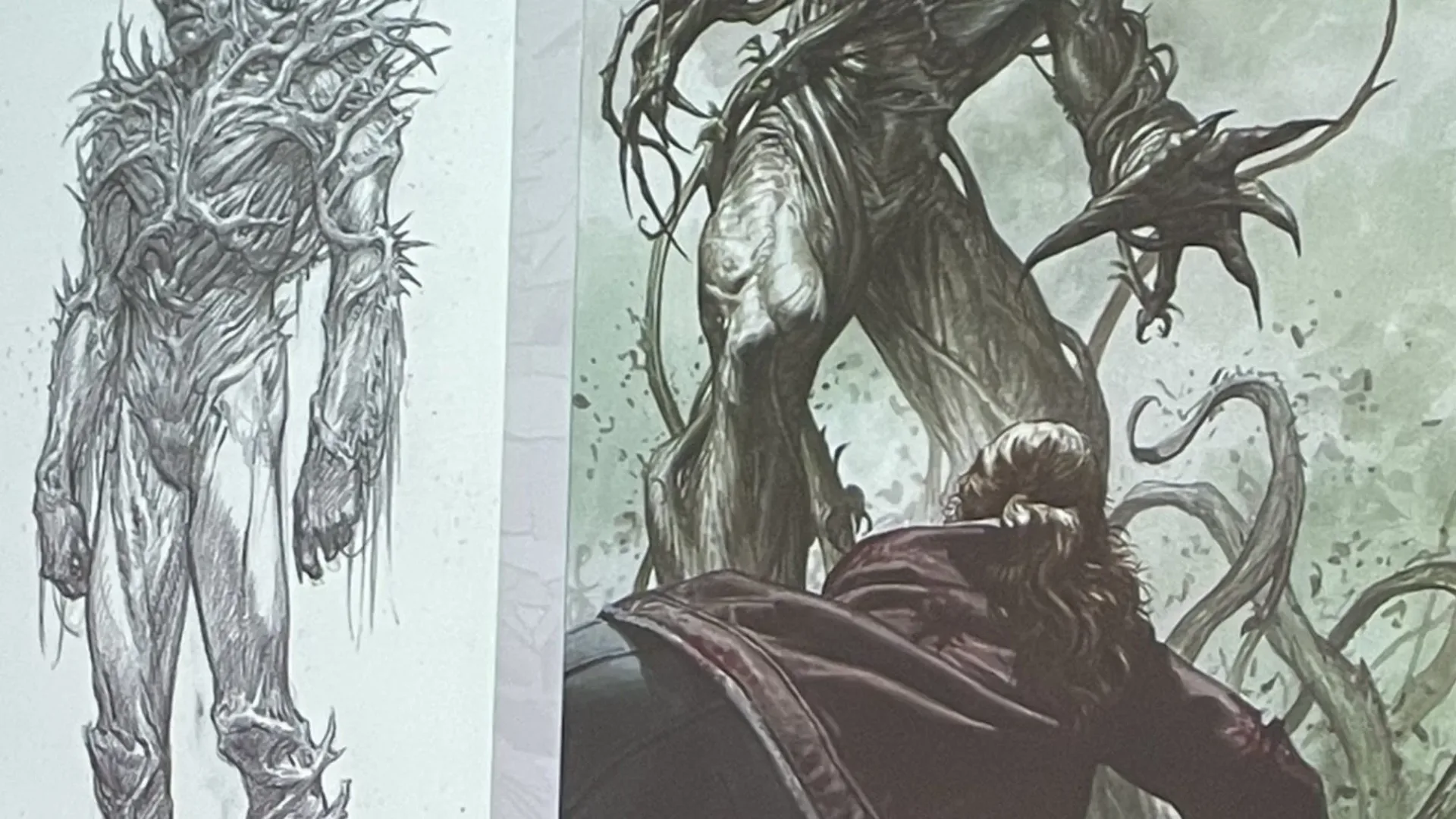
Federici will provide full art for Swamp Thing: Hallowed Ground. His detailed, painterly work has appeared on titles including The Last God and Aquaman, and he has previously created Swamp Thing imagery, including statue designs.
“Full art” is a straightforward but important credit. It indicates that Federici is not being announced only for covers or a limited visual contribution; he is attached to the interiors as the project’s principal visual storyteller. For a horror comic, that role shapes far more than a character’s surface appearance. Page composition governs suspense. A dense scene can make a setting feel ancient or oppressive; an abrupt expanse of negative space can make a reveal feel isolating. The timing between panels can stretch a moment of dread or turn an image into a sudden interruption.
Federici’s established visual reputation makes the pairing a logical one for material built around the organic, the sacred, and the grotesque. Swamp Thing is a character whose form can be beautiful, mournful, threatening, or all three in the same image. A highly rendered approach could make the boundary between roots, ruins, soil, water, and flesh feel less fixed, which is exactly the kind of visual instability horror stories often use effectively.
There is also a useful distinction between a character’s design and a comic’s storytelling. Past Swamp Thing imagery and statue work show Federici’s familiarity with the character’s visual possibilities, but an interior series asks for sustained mood, scene-to-scene clarity, and dramatic pacing. The full-art assignment means those elements will be central to how Hallowed Ground establishes its identity.
Swamp Thing’s metaphysical-horror lane is back in focus
The new book follows the publication of Swamp Thing 1989, which restored Rick Veitch’s previously unfinished late-1980s material. That release has renewed attention on a branch of Swamp Thing storytelling rooted in metaphysical and historical horror.
Metaphysical horror is horror driven by questions bigger than an immediately physical danger: identity, reality, time, faith, death, consciousness, or humanity’s relationship to forces it cannot fully define. It is a natural fit for Swamp Thing because the Green already makes the character’s world larger than a single body or location. The horror can arise not just from what attacks, but from the possibility that ordinary human assumptions are incomplete.
Historical horror, in this context, uses the weight of the past as part of the threat or unease. Old places, inherited stories, collective memories, and unfinished acts can all matter. The phrase does not confirm that Hallowed Ground will revisit any particular era or event. It does clarify why the project’s emphasis on sacred human sites is notable: locations can become vessels for the past, and Swamp Thing is uniquely positioned to encounter history as something still alive in the land.
Readers looking for more DC comic context can also see how another major character is being approached through mystery in a recent Batman and Detective Comics development. The two projects are not presented as connected, but they underline the continuing appeal of high-concept, character-led stories in DC’s comic output.
What has and has not been announced
The confirmed essentials are substantial: Swamp Thing: Hallowed Ground is a 2027 DC Next Level project; Foxe is writing; Federici is creating the full art; and the story is being framed as a standalone horror tale involving the Green and sacred human sites.
At the same time, many practical details remain unconfirmed in the available announcement. There is no specified release date, issue count, edition format, supporting cast, villain, cover lineup, or purchasing information. There is likewise no stated connection to another ongoing Swamp Thing story or DC event. For now, the most reliable way to view the project is as a creator-driven Swamp Thing horror book with a clear thematic starting point, not as a fully detailed publishing program.
That is enough to make the creative match interesting. Foxe’s horror and superhero background, combined with Federici’s detailed visual style, gives Hallowed Ground a strong foundation for a version of Swamp Thing that leans into dread, myth, and the uncomfortable overlap between human reverence and the natural world.