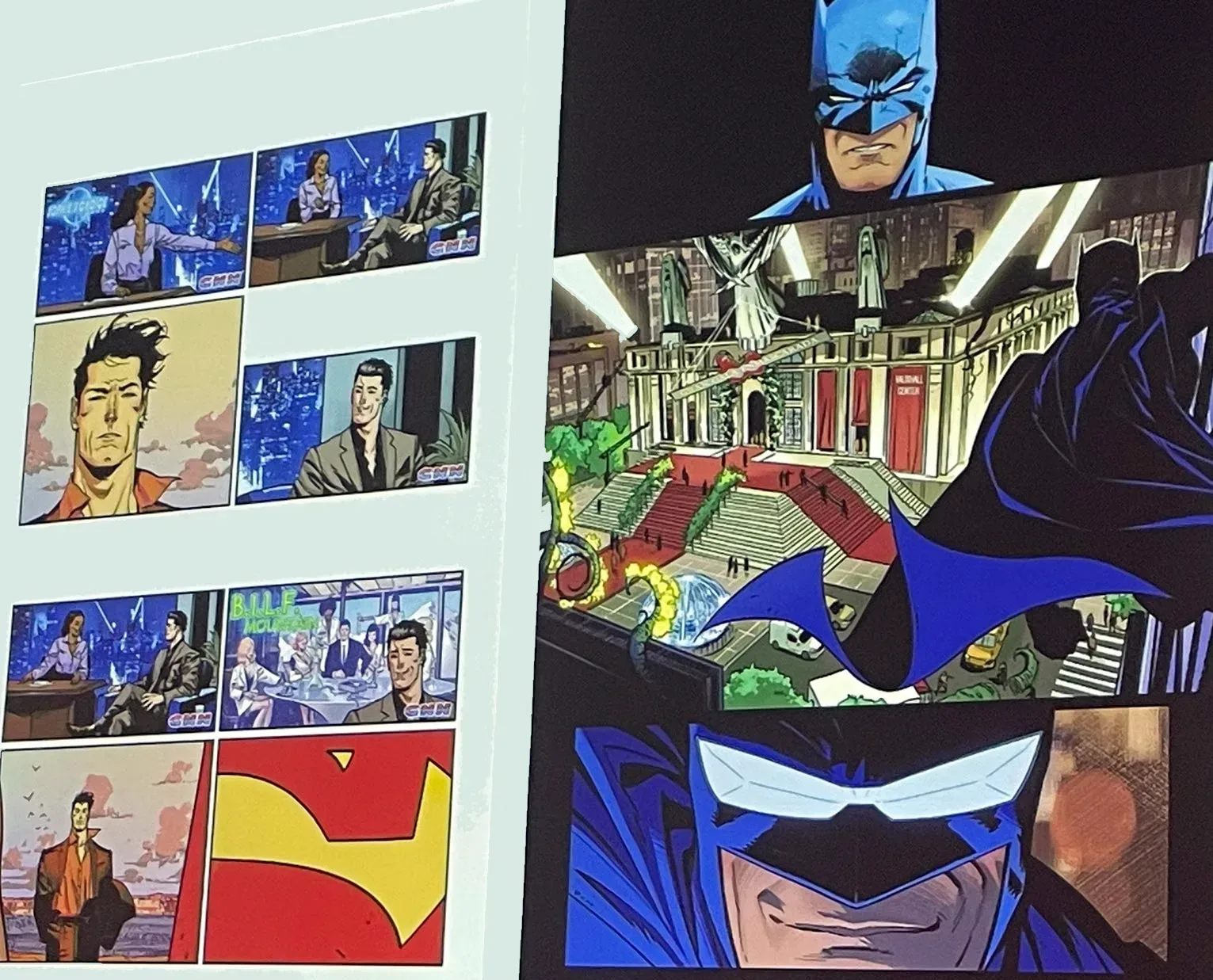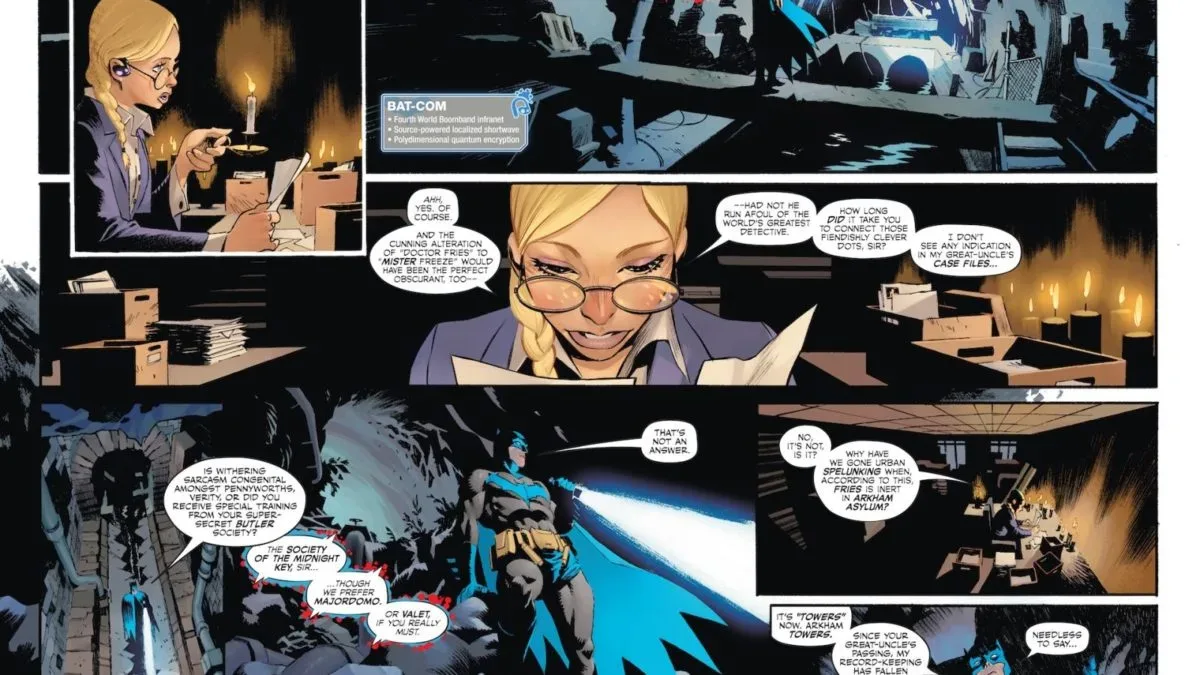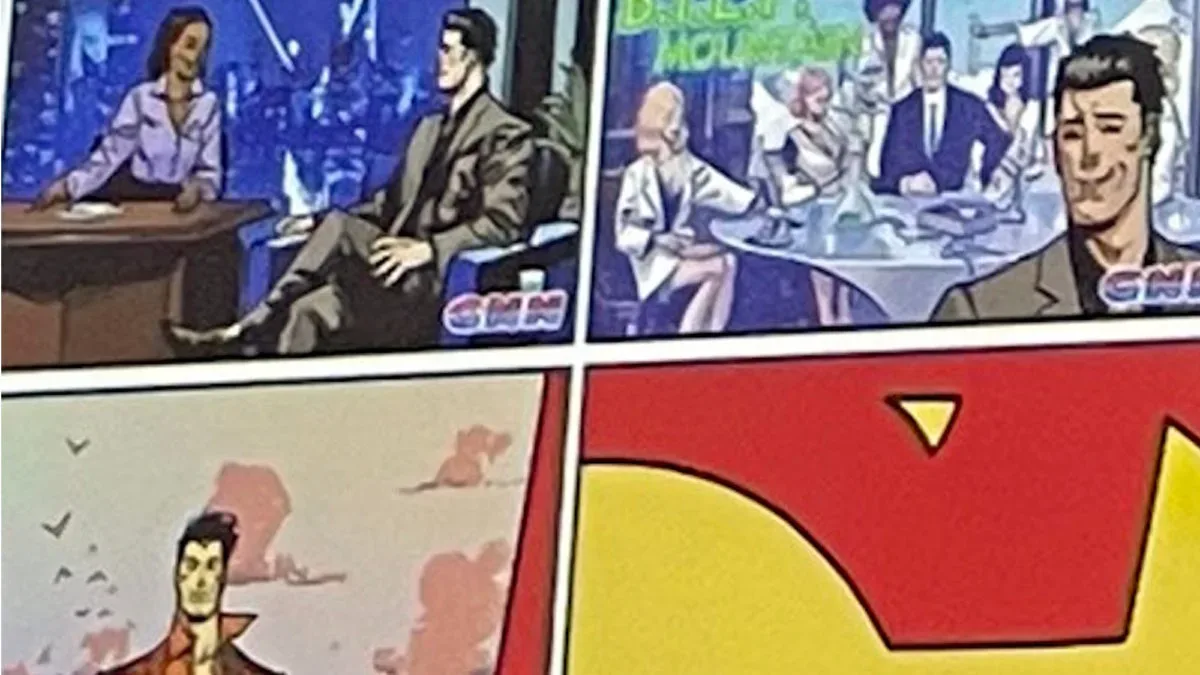
Bruce Wayne is about to become the victim in his own detective story. Batman #15, written by Matt Fraction with art by Jorge Jiménez, is set to place Gotham’s billionaire playboy at the center of a highly public assassination—and leave Batman with the unnerving task of finding the person who killed his civilian identity.
The premise was discussed during a New York Comic Con panel with a deliberately provocative line about “killing billionaires.” More importantly for the comic itself, the creative framing points toward a mystery rather than a simple action spectacle. Fraction compared the setup to Columbo: a useful shorthand for a crime story driven not merely by identifying a culprit, but by following a detective as they worry at the details, contradictions and motives surrounding an apparently known crime.
At the same time, Detective Comics #1115, from writer Tom Taylor and artist Mikel Janín, will put another member of the World’s Finest duo in an equally strange position. Clark Kent has been accused of murder, imprisoned and left awaiting trial. Batman visits him as the person most capable of investigating the allegation—yet the evidence Batman finds is said to make Clark look more guilty, not less.
The two solicitations establish parallel mysteries involving Batman’s closest friend and Batman’s own public identity. They do not confirm a crossover, a shared culprit or a conspiracy connecting the cases. Still, the timing, the detective-focused hooks and reported comments about closer coordination between the books make the overlap worth watching.
Six assassins, one gala and a murder nobody can ignore
Batman #15 follows the fallout of Bad Seeds. Its central event is the El Granda Gala Enmascarado, where six assassins descend on Gotham with Bruce Wayne as their target. The solicitation promises that Wayne will die before the eyes of the world by the end of the evening. That public setting matters: a gala creates witnesses, security, social rivals and potentially a mountain of misleading accounts. It also makes the separation between Bruce Wayne and Batman much harder to maintain.
Normally, Bruce’s two lives give him a tactical advantage. Batman can investigate threats against Wayne while the target remains at a distance from the detective. Here, the premise turns that arrangement inside out. Gotham sees Bruce Wayne shot down, and Batman must openly pursue the killer of the man he supposedly had no reason to know as intimately as he does.
That is the fundamental comic-book tension of the arc. The reader knows Batman and Bruce are one person, but the people of Gotham do not. A murder investigation is built around relationships, motive and access. Every one of those categories becomes dangerous when Batman is trying to solve the assassination of his alter ego without exposing the fact that he is also the victim.
The six-assassin detail expands the possible shape of the mystery. They may be competing professionals, members of one coordinated operation, deliberate decoys, or simply the visible layer of a larger plot. The available material does not answer which interpretation is correct. It does, however, make clear that the first gunshot will not end Batman’s work. Batman #16 explicitly continues the investigation, with Gotham’s tensions escalating as Batman hunts the killer and untangles the conspiracy that put Bruce in the crosshairs.
Jiménez’s role is notable because this type of story needs to sell two scales at once: the theatrical public violence of an attack at a gala and the smaller, painstaking work of a detective sorting through a crime scene. The listed cover artists across the issues include Jiménez, Jim Cheung, Dustin Nguyen, Becky Cloonan and David Aja, with Frank Quitely also listed for #15.
Clark Kent’s case is not a straightforward rescue mission
In Detective Comics #1115, Batman initially appears to have a cleaner objective. Clark Kent has been charged with murder, is in custody and needs his friend to establish his innocence. But Taylor and Janín’s setup immediately complicates the expected path: Batman’s investigation yields material that condemns Clark rather than clears him.
That is an important distinction. A whodunit asks who committed a crime. This story also raises a more intimate question: whether a hero’s trust can survive apparently persuasive evidence. Batman is not merely investigating a case involving Superman; he is investigating the civilian identity of Superman, someone whose moral character he believes he knows. The book’s solicitation presents that pressure as something that could redefine the World’s Finest partnership.
Detective Comics #1116 will keep Clark behind bars while Batman races for the truth. Its central question is blunt: did Clark really commit murder? That wording should not be treated as confirmation that he did. It establishes the dilemma Batman will have to confront as the evidence grows more difficult to dismiss.
There is a practical narrative advantage in putting Clark in legal jeopardy rather than simply having Superman fly off to confront a cosmic emergency. Incarceration creates a constraint that Batman understands particularly well. Clark’s extraordinary abilities do not automatically solve a case if escaping would worsen the allegation, compromise the people around him or undermine the chance of proving what truly happened. The drama comes from the gulf between what Clark could physically do and what he needs Batman to prove.
Are the two cases connected?
Readers can reasonably see the outlines of a possible connection. One title features Bruce Wayne apparently assassinated in front of the public; the other has Clark Kent arrested for murder. Batman is the investigator in both situations. Superman is reportedly involved in the Batman storyline, and the books have been discussed as becoming more closely tied.
But that remains analysis, not confirmation. No supplied story information establishes that Clark has anything to do with Bruce’s apparent death, that Bruce has staged anything, or that the two murder cases belong to one crossover. The announced descriptions support parallel investigations. Any stronger theory is speculation until the issues themselves provide evidence.
That restraint is especially worthwhile with a premise as inherently elastic as a superhero murder. “Bruce Wayne will die” can mean a literal death, a manufactured death, a disappearance interpreted as death, or another twist built around the public’s perception of events. The solicitation confirms the apparent outcome at the gala; it does not explain how the status quo will be resolved.
A proposed reading theory has imagined Bruce faking an assassination as a way to draw out threats, with Clark potentially becoming entangled in the scheme. It is a playful possibility, but the current details do not substantiate it. The stronger takeaway is simply that both books are putting Batman’s faith, methods and secret-identity management under extraordinary strain at the same time.
What “Columbo-style” suggests—and what it does not
Calling the Bruce Wayne story “Columbo-style” does not necessarily mean the comic will copy a television formula exactly. It does suggest an interest in the mechanics of detection. In the classic model, the enjoyment often comes from seeing how an investigator establishes proof, exposes a false alibi or finds the small detail a perpetrator overlooked. For Batman, that approach can be more revealing than a broad citywide brawl because it puts his reasoning at the forefront.
There is an added wrinkle here: the detective is investigating his own murder. Batman may know facts no one else does about Bruce’s routine, enemies and vulnerabilities, but deploying that knowledge too freely risks arousing suspicion. A useful mystery will therefore need to balance what Batman can infer privately with what he can demonstrate publicly.
The return of Dr. Zeller and the Joker’s tank has also been indicated in material shown around the forthcoming issue. Dr. Zeller appears to have survived the subway train and Zsaz events in Bad Seeds. Beyond that return, there is no confirmed explanation of how she factors into the assassination case.
Release schedule and format
- Batman #15 — Matt Fraction and Jorge Jiménez; 40 pages; $4.99; on sale November 4, 2026.
- Detective Comics #1115 — Tom Taylor and Mikel Janín; 32 pages; $4.99; on sale November 18, 2026.
- Batman #16 — Matt Fraction and Jorge Jiménez; 40 pages; $4.99; on sale December 2, 2026.
- Detective Comics #1116 — Tom Taylor and Mikel Janín; 32 pages; $4.99; on sale December 16, 2026.
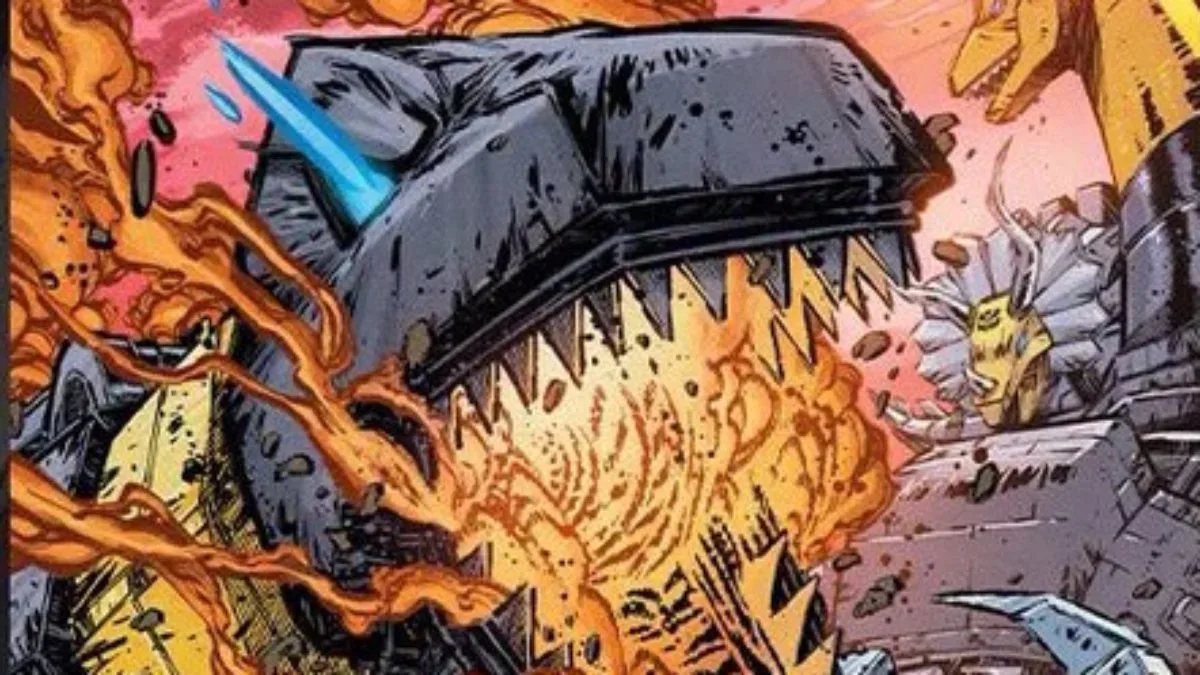
For readers following the mystery as it develops, the release order provides a clear sequence: Bruce Wayne’s apparent assassination arrives first, followed two weeks later by Clark’s incarceration and Batman’s first steps into that separate case. December then advances both investigations in alternating books. Fans interested in how comic arcs establish a looming new direction can also see a different example in this look at a Transformers comic arc.
Whatever connection may or may not emerge, the immediate appeal is clear. Batman is being asked to do the thing Gotham believes he does best—solve impossible crimes—under conditions that make conventional detective work nearly impossible. One case asks him to uncover who murdered Bruce Wayne. The other asks whether the man he trusts most has committed murder. Neither is a comfortable assignment for the Dark Knight.