The Energon Universe’s Transformers comic is lining up a three-issue progression that starts with a frightening change for Megatron, moves into a search for missing Autobots, and ultimately brings Grimlock and the Dinobots into the series. The newly detailed issues are Transformers #38, #40 and #42, each written by Robert Kirkman and featuring a different artist.
It is a compact set of teases, but it outlines a meaningful escalation. Megatron’s emergence as Megatronus Rex places an immediate threat in front of the Autobots. Beachcomber’s subsequent mission shifts the focus toward the wider question of where potential allies may be on Earth. Then the Dinobots arrive, with Grimlock’s presence explicitly framed as their Energon Universe debut.
For a shared-universe comic, that sequence matters. The Energon Universe is the continuity in which these stories are being told; in practical terms, it is the setting and ongoing narrative framework rather than merely a label attached to an individual issue. New character arrivals and major transformations therefore have room to affect the cast and conflicts beyond a one-off encounter.
Transformers #38 introduces Megatronus Rex
Transformers #38 is written by Robert Kirkman, drawn by Jason Howard, colored by Mike Spicer and lettered by Rus Wooton. Its setup centers on whatever has emerged from Megatron’s cocoon, with the book identifying Megatron’s new form as Megatronus Rex.
The supplied details do not explain what a Megatronus Rex transformation entails, how it happened, or whether it changes Megatron’s goals. Those are important distinctions that readers will have to find in the issue itself. What is clear is that the development is positioned as bad news for the Autobots, not simply a visual redesign or a passing title.
That framing gives #38 a straightforward dramatic job: establish the scale and consequences of Megatron’s altered status. A character transformation can change a comic’s stakes in several ways. It may signal greater power, a new identity, a strategic shift, or a threat that forces opponents to rethink their response. None of those specific outcomes has been confirmed here, so they should be treated as possibilities rather than plot facts. Still, presenting Megatron’s emergence as the first beat in this run strongly suggests it will be the pressure point from which the following issues develop.
Beachcomber searches for missing reinforcements in #40
Transformers #40 follows in January, with Howard Porter joining the title on art. Kirkman remains the writer, while Mike Spicer and Rus Wooton continue as colorist and letterer. The issue sends Beachcomber across Earth at Optimus Prime’s direction to find Autobot reinforcements.
Its central mystery is deliberately double-sided: who is out there, and do they actually want to be found? That is more than a simple rescue premise. A search for reinforcements implies that the Autobots need numbers, knowledge or capabilities that the current group does not possess. The question of willingness introduces uncertainty about the status of whoever Beachcomber locates. They may be hidden, separated, reluctant, threatened or operating according to their own priorities; the available description does not settle which.
An archaeological element is also teased, pointing to a possible connection between the search and material buried in Earth’s past. The information stops short of identifying a site, artifact or historical explanation. It does, however, make #40 the bridge between the immediate danger surrounding Megatron and the prehistoric imagery associated with the Dinobots’ arrival.
Porter’s arrival is also a notable creative-team change within the run. Comics frequently rotate artists while retaining a writer and core production contributors, allowing a serial plot to continue while each phase gains a different visual interpreter. Here, Jason Howard is attached to #38, Porter to #40 and Dan Mora to #42. That does not tell readers exactly how the visual approaches will differ, but it does make the three issues a clearly marked sequence of creative handoffs around one ongoing story.
Grimlock and the Dinobots arrive in Transformers #42
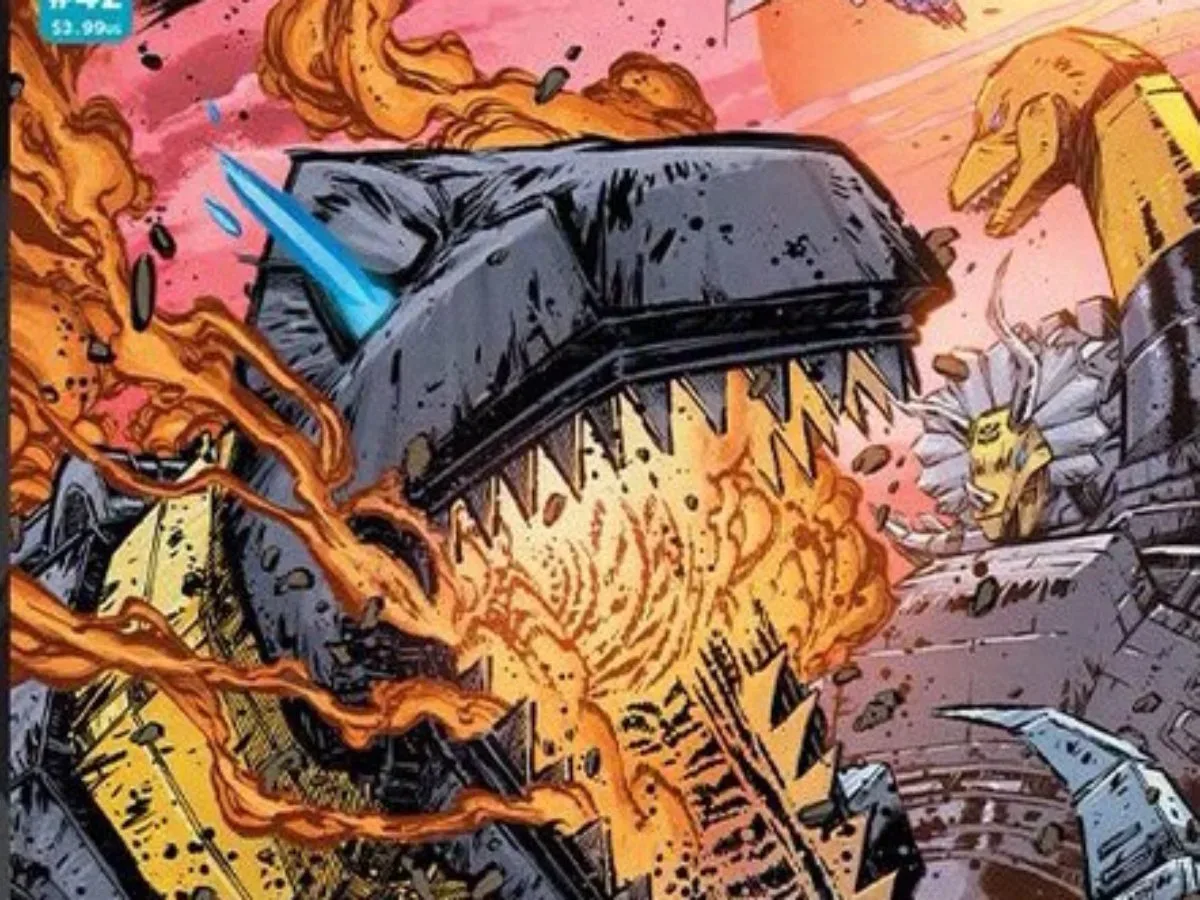
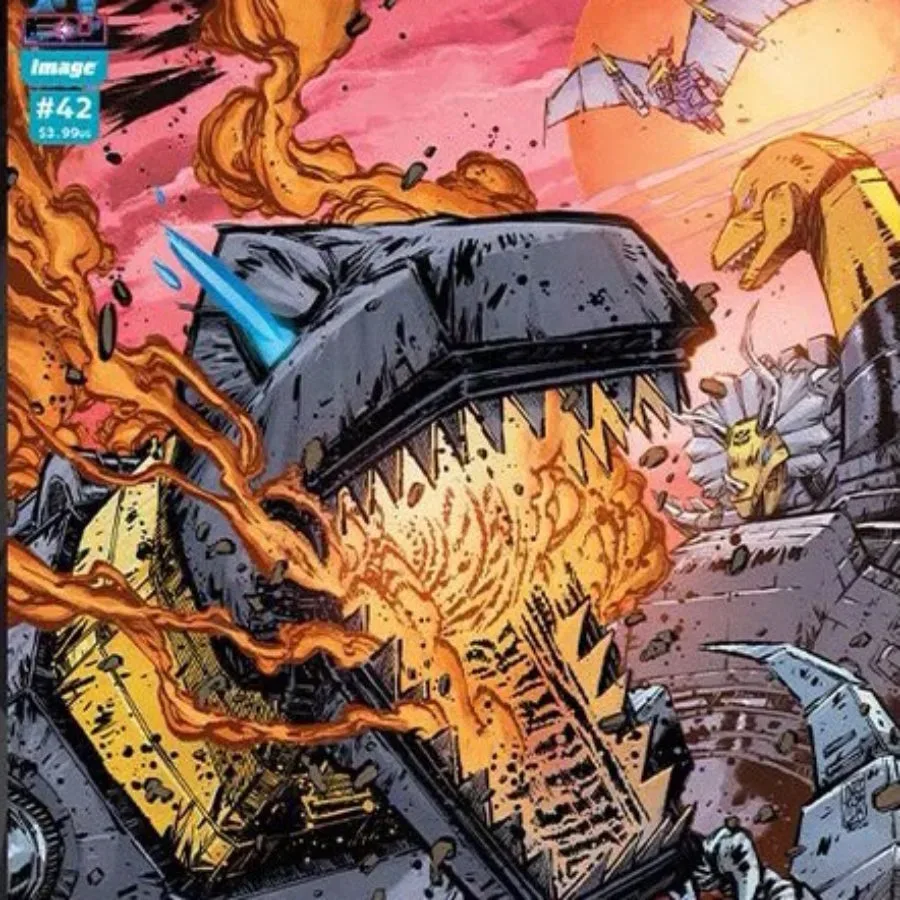
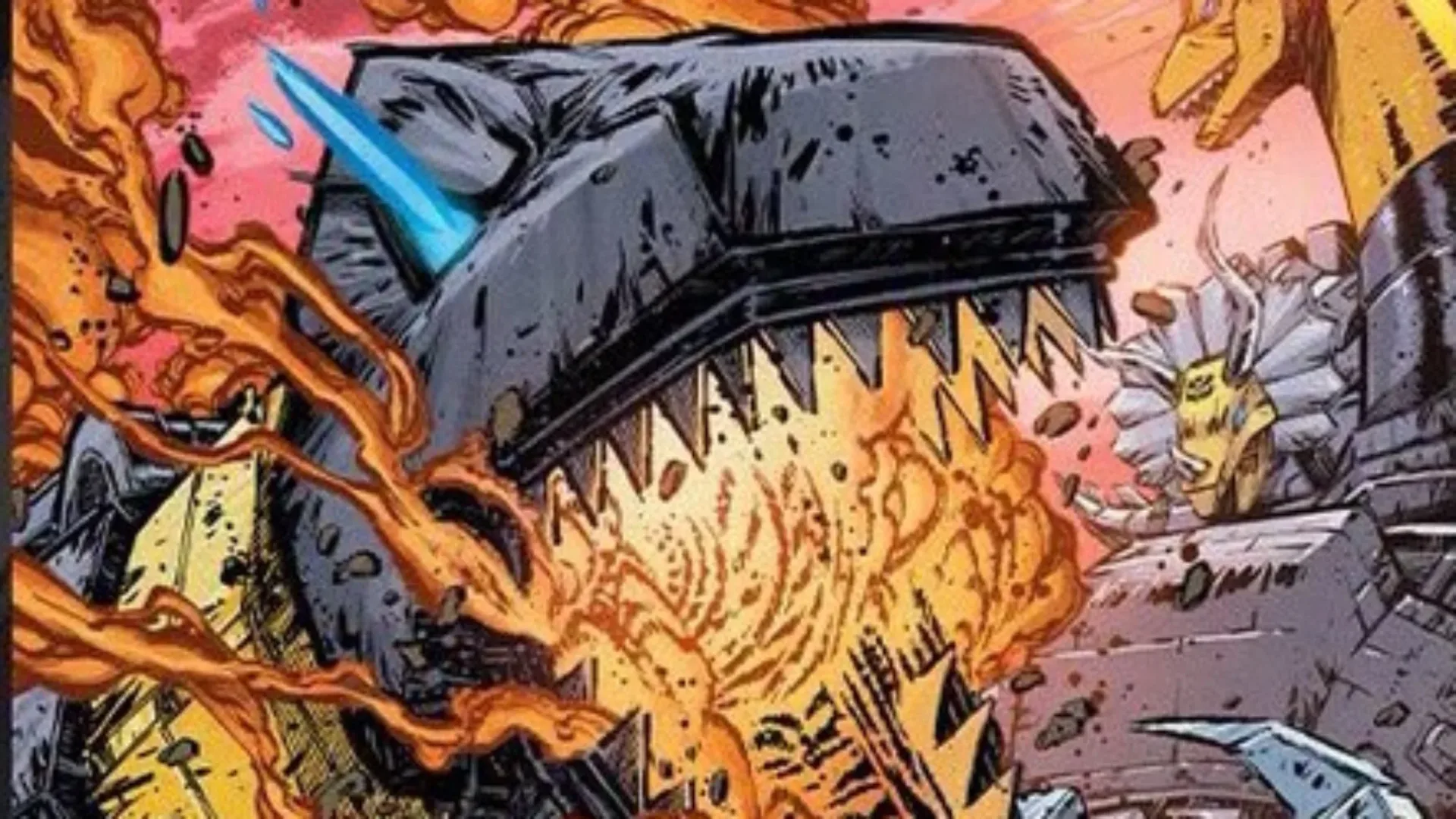
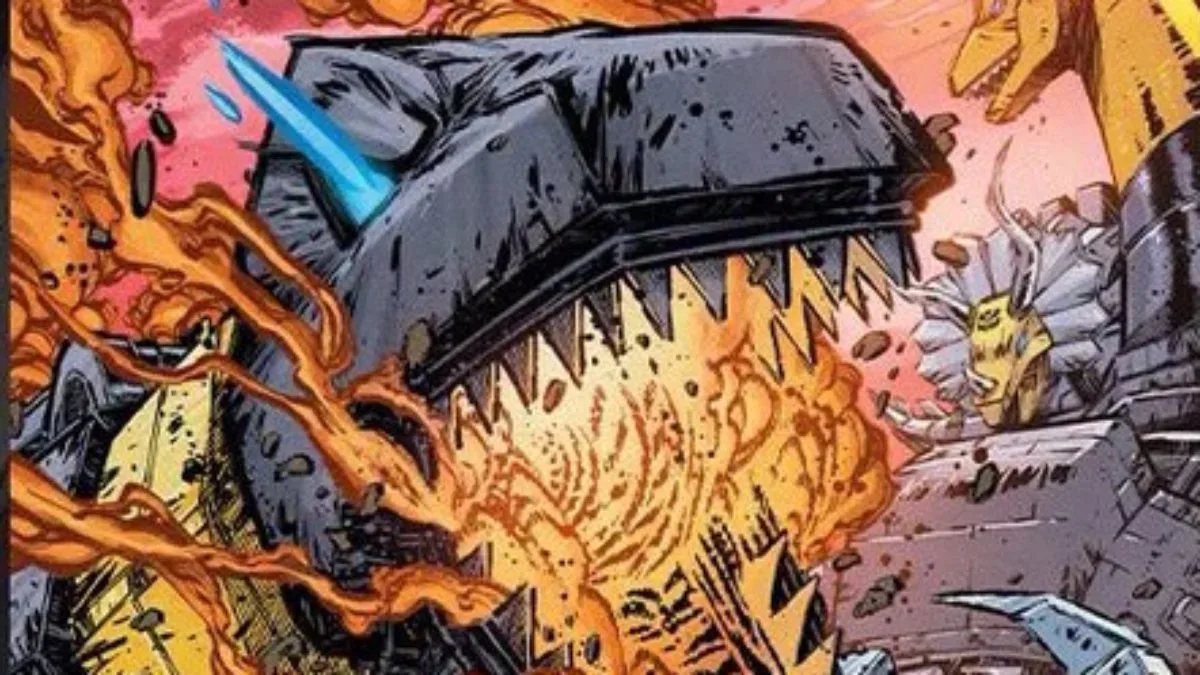
Transformers #42 brings Dan Mora onto art and introduces Grimlock and the Dinobots to the Energon Universe. Kirkman writes the issue, with Spicer on colors and Wooton on letters. The issue’s promotional wording makes the core promise unmistakable: the Dinobots are here, led by Grimlock.
The Dinobots’ debut is the largest roster expansion confirmed in these plans. Rather than treating their arrival as background texture, the setup puts Grimlock at the center of the reveal. The prehistoric angle teased around the preceding Beachcomber story makes it reasonable to see a potential narrative connection, though it has not been expressly confirmed that #40’s search directly discovers the Dinobots or causes their arrival.
That difference is worth preserving. A tease can establish that two ideas sit close together in the publishing plan without revealing their exact plot mechanics. Readers looking to avoid surprises can safely take away the confirmed essentials: Beachcomber is looking for Autobots in #40, and Grimlock and the Dinobots debut in #42. The route between those points remains part of the story.
Grimlock’s voice is invoked in the announcement language, reinforcing that the character is not being kept at a distance from the initial reveal. But the details do not list the full Dinobot lineup, their alternate modes, their allegiances in this continuity, or the circumstances of their first appearance. Those omissions leave room for the comic to define this Energon Universe version of the group on the page.
What the three issues tell readers—and what they do not
There is a useful distinction between confirmed publishing information and interpretation. The confirmed material establishes issue numbers, major character hooks, creative credits and the January timing for #40. It also establishes a pattern: a Megatron-centered threat in #38, an Autobot search led by Beachcomber in #40, and a Dinobot debut in #42.
It does not provide release dates for #38 or #42, a full synopsis for any issue, cover details, pricing, variant information, or an explanation of Megatronus Rex. It likewise does not confirm the missing Autobots’ identities, say whether all Dinobots debut at once, or spell out the nature of the hinted archaeological material. Avoiding assumptions is especially useful with serialized comics, where solicitation copy is designed to create questions as much as it is designed to answer them.
- Confirmed: Megatron becomes Megatronus Rex in Transformers #38.
- Confirmed: Beachcomber searches Earth for Autobot reinforcements on Optimus Prime’s mission in Transformers #40, which is scheduled for January.
- Confirmed: Grimlock and the Dinobots make their Energon Universe debut in Transformers #42.
- Not yet specified: the mechanics of Megatron’s transformation, the identities and intentions of those Beachcomber finds, and the exact circumstances of the Dinobots’ entrance.
A convention reveal focused on serial storytelling
The plans were revealed during New York Comic Con 2026 at the Javits Center in New York City. The convention is marking its 20th anniversary with a Coney Island theme and spans comics alongside movies, television, anime, games, cosplay, books and more. For this particular announcement, the emphasis is not on a separate event story or a collectible promotion. It is a forward look at the next major beats in an ongoing comic narrative.
That makes the issue numbering important. #38, #40 and #42 are not standalone labels; they show readers where the advertised developments sit in the series’ continuing order. The absence of details for #39 and #41 does not mean they are irrelevant. It simply means this reveal highlights the specific moments the publisher wants readers to track: Megatron’s new state, Beachcomber’s mission and the Dinobots’ first appearance.
Fans following comic-book developments across different Marvel-related adaptations may also be interested in how questions of creative direction can reach beyond the printed page, as explored in this look at performer consent and a canceled Spider-Noir project. The circumstances are separate, but both stories underline how character-driven franchises can have important developments across multiple forms of pop culture.
Why the reveal has a clear rhythm
The most compelling aspect of this slate is its rhythm. First comes an antagonist’s ominous evolution. Next comes a search that broadens the playing field. Finally comes the entrance of a fan-recognizable team with an immediately distinctive identity. Even without more plot detail, those beats give the run a legible direction.
For readers, the practical takeaway is to watch the issues as connected chapters rather than isolated attractions. #38 appears positioned to define the crisis, #40 to investigate the available response, and #42 to introduce a major new factor into that response. Whether the Dinobots arrive as allies, complications or something more ambiguous has not been disclosed. What has been disclosed is enough to establish that the Energon Universe is preparing to make both Megatron’s change and Grimlock’s debut central parts of its next Transformers stretch.