Baroness may be heading back toward Cobra in G.I. Joe #30, scheduled for release on January 20, 2027. The issue’s revealed hook is concise but loaded: “BARONESS… AGENT OF COBRA?”
That question matters because Anastasia Cisarovna’s place in the current Energon Universe does not simply repeat the character’s familiar franchise role. She began this continuity as a captured mercenary and terrorist, then became a founder of the G.I. Joe Initiative. The new tease therefore creates a direct question over whether that allegiance is about to change—or whether the comic is deliberately inviting readers to distrust what seems like an obvious turn.
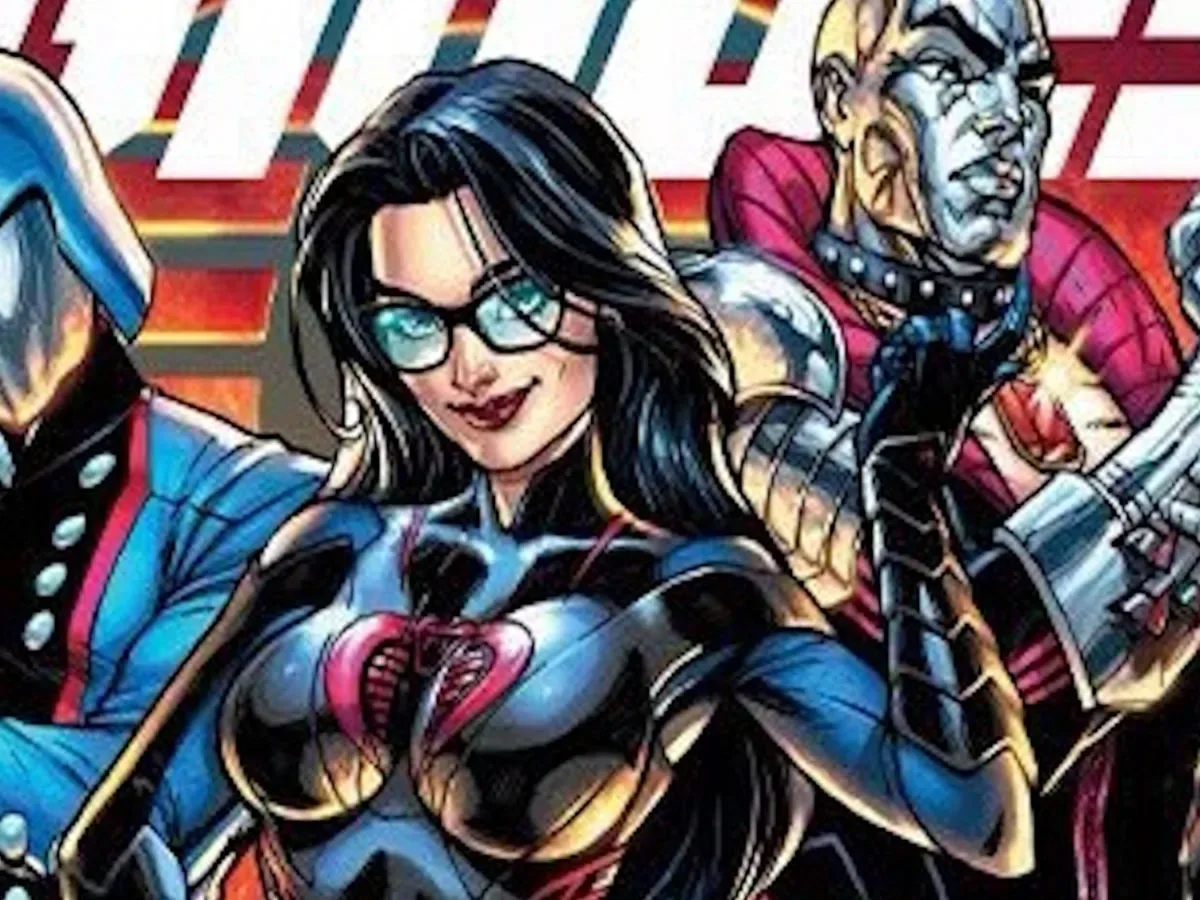
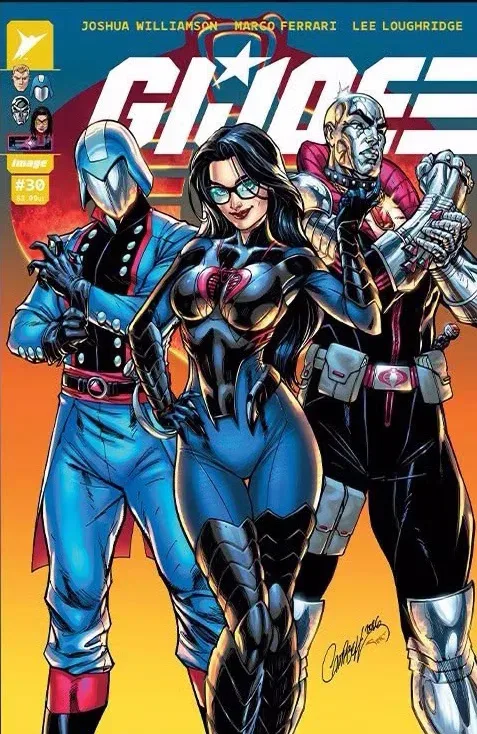
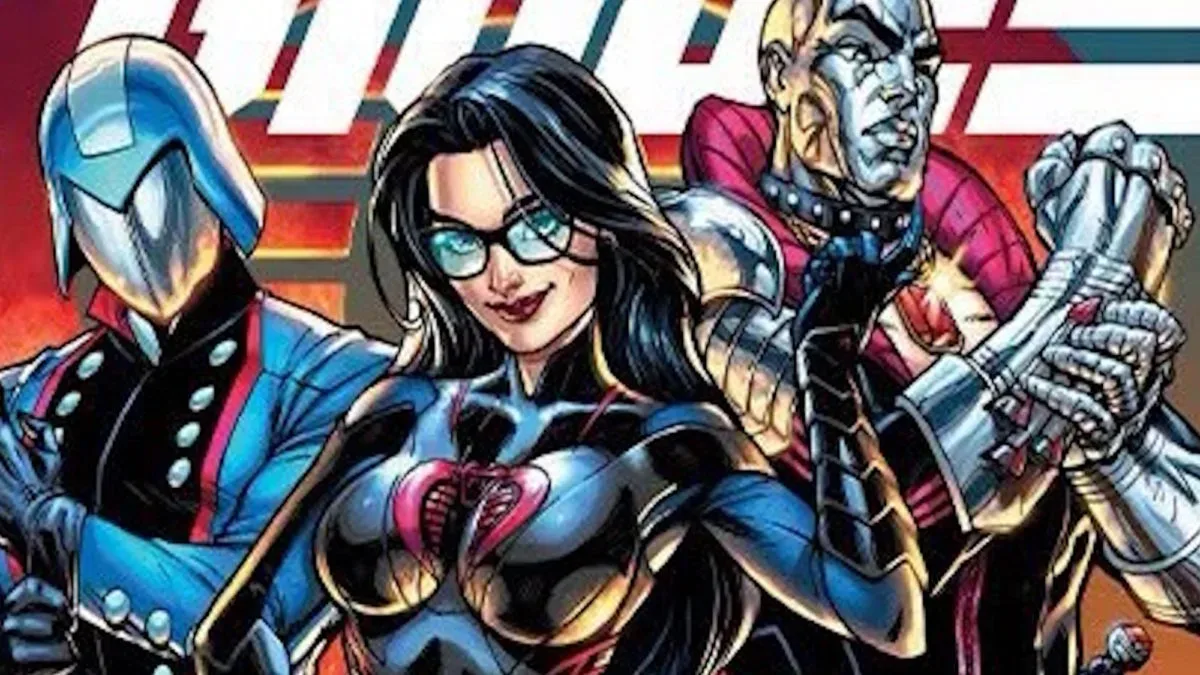
The accompanying presentation leans into recognizable Baroness imagery, placing her in gear associated with her classic Cobra identity and using the traditional Cobra emblem. It is a striking visual contrast with the character’s standing on the Joe side of this continuity, and it puts espionage rather than simple battlefield action at the center of the issue’s apparent premise.
Why the question mark is the real story
The solicitation does not confirm that Baroness has defected. It asks whether she is an Agent of Cobra. That distinction is important.
In a military-fiction setting built around intelligence work, a displayed affiliation can mean several different things. A character could have genuinely switched loyalties; be working undercover; be carrying out a mission that requires a public betrayal; or be the target of an operation designed to make allies doubt her. The supplied information does not establish which explanation is true, so any answer beyond the tease remains speculation.
Still, the set-up has weight because Baroness is not a peripheral figure being temporarily placed in a suspicious costume. In many versions of G.I. Joe, she is one of Cobra’s most prominent operatives: an intelligence agent and field commander who works under Cobra Commander. Her history commonly involves espionage, sabotage, and direct clashes with G.I. Joe. Returning her to that iconography is therefore a meaningful narrative signal, even if it is not yet proof of a permanent villain turn.
What “double agent” means in this context
A double agent is someone who appears to work for one side while secretly serving another. Fiction often uses the term loosely, but its storytelling value is clear: the audience is asked to question the character’s access, motivations, and every piece of information they deliver.
For Baroness, that possibility would be especially potent. Her established skills as an intelligence operative make her credible on either side of an infiltration story. Her prior role in founding the G.I. Joe Initiative raises the personal stakes as well. A suspected betrayal would not merely add another Cobra operative to the board; it could put doubt inside the organization Baroness helped create.
There is another possibility: the tease may be a bluff directed at readers rather than a literal summary of the plot. Comic solicitations and cover-driven reveals can foreground a dramatic question without explaining its resolution. Until the issue is published, the safest reading is that G.I. Joe #30 is positioning Baroness’ allegiance as its central tension.
A classic visual identity meets a different continuity
Baroness’ classic design is among the most immediately identifiable in the franchise: dark hair, glasses, a black catsuit, and a red cobra emblem. That image is strongly tied to Cobra, the terrorist organization that functions as G.I. Joe’s principal adversary. It communicates character history before she says a word.
Using that look in an Energon Universe story where Baroness has been a Joe founder does more than provide a nostalgic cover image. It draws attention to the gap between who the character has traditionally been and who she has become in this particular continuity. The story can use that gap to examine whether a past identity is something a character can leave behind, something others refuse to forget, or something they choose to reclaim.
That tension is also why an uncomplicated reading of the teaser may be premature. A character with Baroness’ background is naturally suited to layered loyalties and strategic misdirection. Her longstanding association with Cobra gives the idea of a return immediate plausibility, while her Energon Universe position supplies a genuine reason for readers to question it.
The creative team and cover lineup
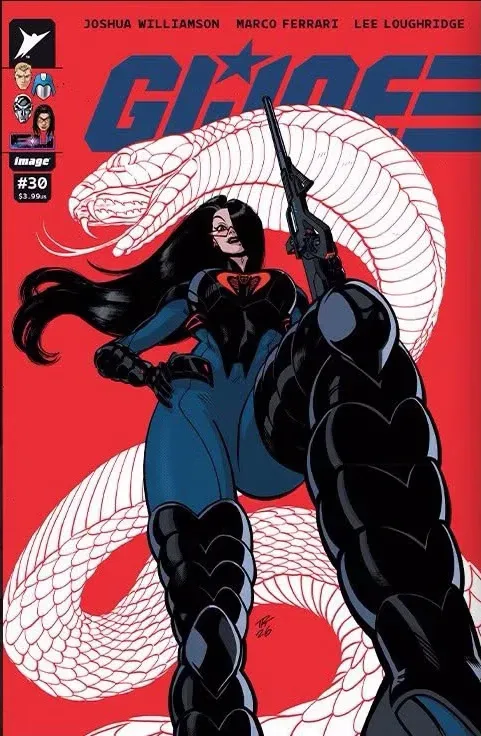
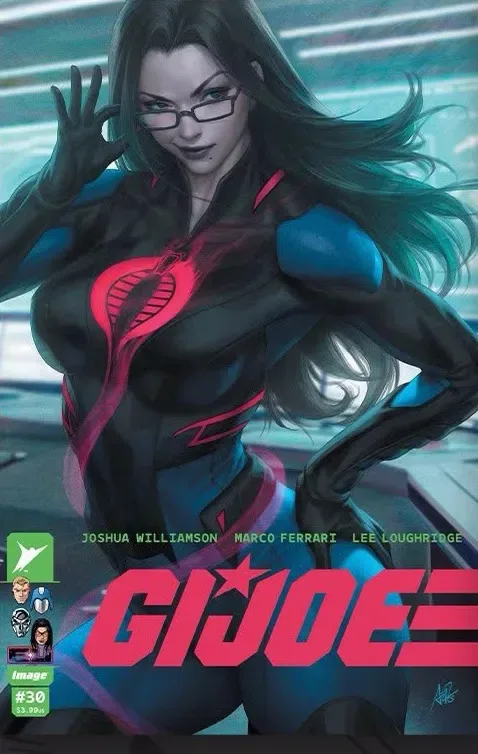
Joshua Williamson is credited as writer on G.I. Joe #30, with Marco Ferrari on art and Lee Loughridge on colors. The announced cover selection includes:
- Cover A: Tom Reilly
- Cover B: J. Scott Campbell and Alex Sinclair
- Cover C: Stanley “Artgerm” Lau
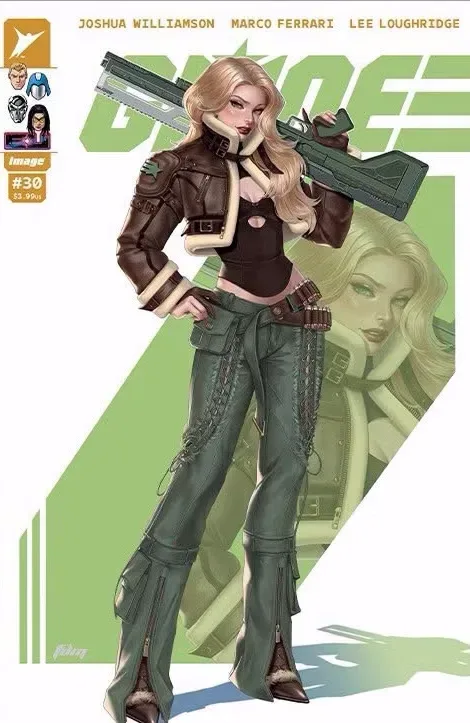
- Cover D: Fadime Yildirim’s 1:25 Streetwear Variant
The 1:25 label identifies an incentive-ratio variant: retailers typically qualify to order one copy of that edition after ordering 25 qualifying copies of the standard issue. It describes the ordering structure, not a confirmation of a retail price, rarity in the broader market, or future collectible value.
For readers primarily following the story, the key item remains the standard issue and its January 20 date. For cover-focused buyers, the announced lineup offers several distinct artist interpretations, while the solicitation itself keeps the narrative attention squarely on Baroness.
What this could mean for G.I. Joe
A Baroness-centered loyalty crisis has practical implications for the book’s cast and conflict. If she truly joins Cobra, G.I. Joe could lose someone with foundational knowledge of the Initiative. If she is undercover, the plot may require her to act in ways that alienate former allies. If the apparent switch is manufactured, the story could test how much trust the team has built around her.
Each route supports a different kind of comic. A genuine defection would emphasize fallout and a reshaped enemy hierarchy. An undercover operation would emphasize secrecy, risk, and communication failures. A false accusation or deception would emphasize internal division. None is confirmed, but all flow directly from the question the issue is presenting.
It also keeps the focus on a defining feature of the wider G.I. Joe premise: the conflict is not only about overt combat. Intelligence, infiltration, sabotage, and conflicting agendas are part of what makes a character such as Baroness essential to the franchise’s drama.
The announcement arrived during New York Comic Con’s 20th-anniversary event at the Javits Center in New York City. Readers tracking related convention developments can also see coverage of a separate New York Comic Con programming change.
For now, G.I. Joe #30 has delivered a sharp setup rather than an answer. Baroness in Cobra-associated dress and insignia is an unmistakable image, but the question mark is doing major work. Whether it signals a real return to Cobra, an infiltration play, or a deception aimed at both G.I. Joe and the audience will not be clear until the issue reaches readers in January 2027.