Gu You’s The First Taste of Loneliness approaches bereavement through an object small enough to hold in one hand: a final jar of homemade pickles. Shortly after her father dies, Yue, played by Zhou Xun, opens the last jar he made, tastes it and recognizes that this ordinary pleasure cannot be repeated. It is an intimate scene with a large emotional reach. The food is not simply a memento; it is a routine that has suddenly become finite.
That emphasis on the domestic and unremarkable gives the film its clearest identity. The story begins in a much more outwardly anguished register, as three women keep vigil while a husband, father and grandfather nears the end of a long struggle with pancreatic cancer. Yet the drama’s deeper interest lies after the immediate crisis: in how a family continues to make room for loss while work, school, romance and daily household life continue demanding attention.
Running 135 minutes, the film is the final installment of Gu’s “Landscape” trilogy. The preceding films are Dwelling in the Fuchun Mountains, which premiered in Cannes in 2019, and 2023’s Dwelling by the West Lake. The trilogy’s connections are stylistic rather than narrative, with each film built as a melancholic portrait of family life. The First Taste of Loneliness premiered in the main competition at the Busan Film Festival.
Three women, three forms of moving forward
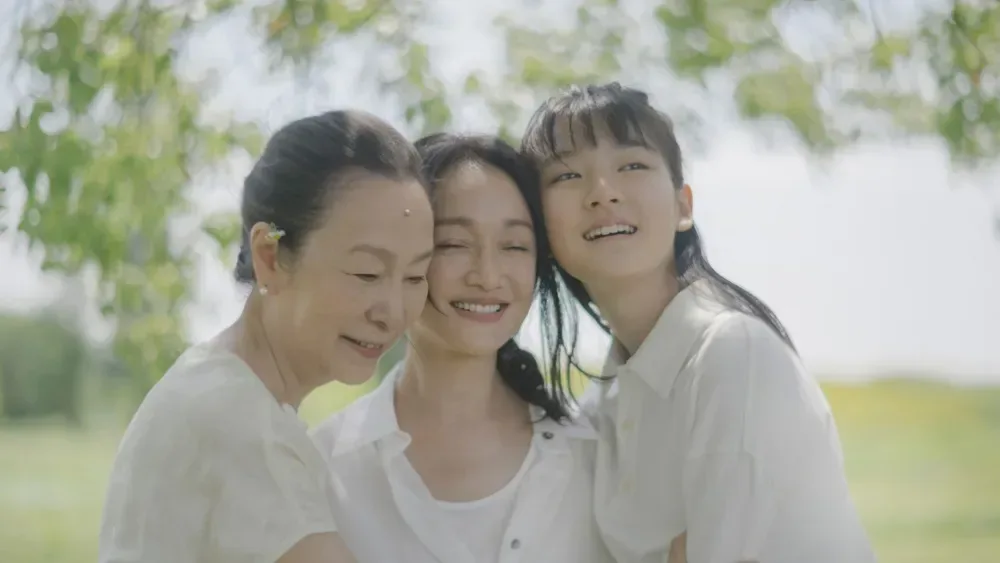
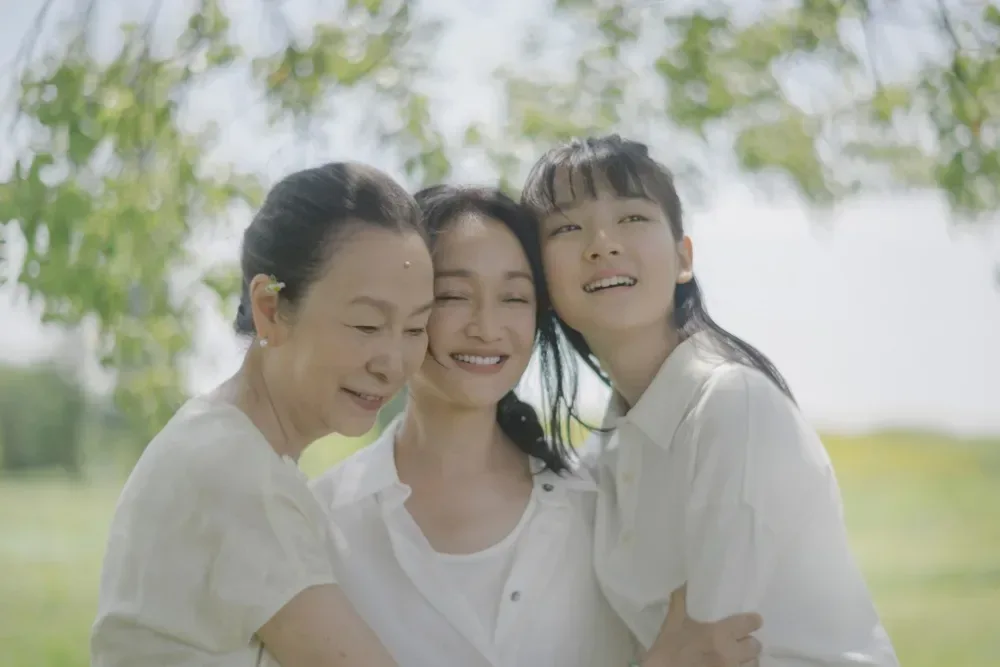
The film centers on Yue, her mother Luna, played by Xi Meijuan, and Yue’s teenage daughter Moon, played by Wang Shengdi. Yue has returned from Beijing to Hangzhou with Moon following a divorce. She had worked as a fashion director, and the return places her back in the apartment that has long belonged to her parents.
The home is not a neutral setting. It is a large, rambling apartment overlooking the Qiantang River, full of books, old cassette tapes, ornaments, notes and photographs. Cinematographer Takimoto Mikiya gives sustained attention to those possessions, making the apartment a record of accumulated affection rather than merely a place where the plot happens. The deceased patriarch remains palpable not through supernatural devices, but through the things he handled, kept and left behind.
That distinction matters to the film’s treatment of grief. It does not frame mourning as a single emotional event with a tidy resolution. The women have to decide what remains, what changes and what it means to experience happiness when someone is gone. Relief and guilt can sit beside sorrow, particularly when a family has spent a long time living around illness. The film allows those conflicting reactions to coexist.
Luna encourages Yue not to become stranded by divorce, bereavement or uncertainty about her future. But Luna also faces a version of the same challenge. She begins cautiously responding to the interest of Xu, played by Xu Chaoying. Meanwhile, Moon is having difficulties at school but is also reaching an age at which she wants to make decisions for herself. Yue’s adjustment is therefore two-sided: she is a daughter re-entering a crowded family home and a mother learning that care cannot mean control forever.
Gu and co-writer Yang Yikun braid these arcs around a shared question: how can a family change without treating the dead as disposable? The answer suggested by the film is not to preserve everything in place. Rather, it is to recognize that memory and forward motion are not opposites. Clearing space, accepting new companionship or granting a child more independence can feel like disloyalty in the early stages of loss, even when they are necessary parts of life.
Related coverage includes ‘The First Taste of Loneliness’ Finds Grace in Life After Loss.
Scale and intimacy pull in opposite directions
There is an interesting tension between the story’s close focus and its filmmaking style. Mikiya’s camera frequently moves in broad, floating pans and links characters with sweeping motions. Scenes can be heavily populated, while the palette leans into misty gray and mossy green. These choices lend a sense of formal grandeur to material rooted in kitchens, living rooms, public squares and family conversations.
In technical terms, a pan is a camera movement that turns horizontally from a fixed position, while a wider moving shot can visually connect people who occupy different parts of a setting. Here, the visual approach appears designed to make the apartment and the city feel like more than background. A woman’s private decision is part of a larger family arrangement, and the camera’s movement can express that relationship without needing dialogue to spell it out.
The strategy also connects this film to the broader “Landscape” approach. Landscape in this context is not just scenery. The family apartment, its river view and its stored objects become a kind of emotional terrain. The characters move through spaces that retain evidence of previous generations and past versions of themselves.
That visual assurance sits alongside a more accessible, more overtly emotional strain than the earlier trilogy entries. The film’s performances are described as closely attuned to one another, with Xi especially affecting as Luna attempts to maintain the decorum expected of a widow while allowing herself a renewed source of joy. A scene in which Luna dances with Xu among other couples in a public square gives the film a concise image of that balance: romance is possible, but it is inseparable from the sadness that preceded it.
Where sentiment becomes too insistent
The First Taste of Loneliness is not uniformly restrained. Its opening treatment of raw grief can be intense to the point of overstatement, and some dialogue delivers background information heavily. The score by Sylvian Wang, notably piano-forward and plaintive, also sometimes tells the audience what a scene already communicates through the actors and imagery.
This is a familiar dramatic risk: when music signals sorrow too forcefully, it can narrow the viewer’s space to interpret a moment. In a film whose strongest scenes depend on understatement, added emotional emphasis may feel redundant. The pickle jar works because its meaning emerges from context. The scene needs neither a grand speech nor a large narrative revelation to register the permanence of the loss.
Still, the heightened passages do not make the film feel cynical. Its sentiment comes from an evident investment in the people on screen and their uneven process of readjustment. The larger question is one of calibration. When the film trusts a gesture, a room or a routine, it finds a gentle precision. When it presses too hard through exposition or music, it risks converting lived feeling into a cue.
A home full of evidence
The apartment’s clutter is crucial because it turns remembrance into a practical issue. Bookshelves and tapes do not just symbolize a life that has ended; they ask the living people in the home to decide what happens next. That is the less theatrical labor of bereavement: not only missing someone, but encountering their presence in the things that remain.
There is a useful real-world resonance in the film’s attention to notes, photographs and recordings. Such items can carry personal history, but they are also vulnerable to time and accident. For anyone organizing irreplaceable family material, the principles in the 3-2-1 backup rule offer a practical way to think about keeping copies of digital photos and documents in more than one place. Preservation cannot replace a person, of course, but it can protect parts of the record through which families remember them.
That distinction mirrors the film’s sensitivity. The objects in Yue and Luna’s home are meaningful because they belong to a continuing life, not because the film treats them as museum pieces. The goal is not to freeze the household at the moment of death. It is to acknowledge that a room can hold both an absence and a future.
What the title finally suggests
The title points to loneliness as something newly encountered, not necessarily something permanent. For Yue, Luna and Moon, it takes different forms: a daughter without her father, a widow considering intimacy again, and a teenager beginning to separate from her mother. Their stories do not converge on a single lesson or identical emotional destination.
Instead, the film finds its softest strength in the possibility that carrying on does not erase devotion. A dance can remain elegiac. A family can make room for a new relationship without denying an old one. And the taste of a homemade pickle can contain both gratitude and the sharp knowledge that there will be no next batch.
With Gu directing, Gu and Yang Yikun writing, Takimoto Mikiya behind the camera, Liu Xinzhu editing and Sylvian Wang composing, The First Taste of Loneliness uses one family’s changing household to explore a difficult emotional contradiction: life after loss can feel like betrayal, until it gradually becomes another way of honoring what was shared.