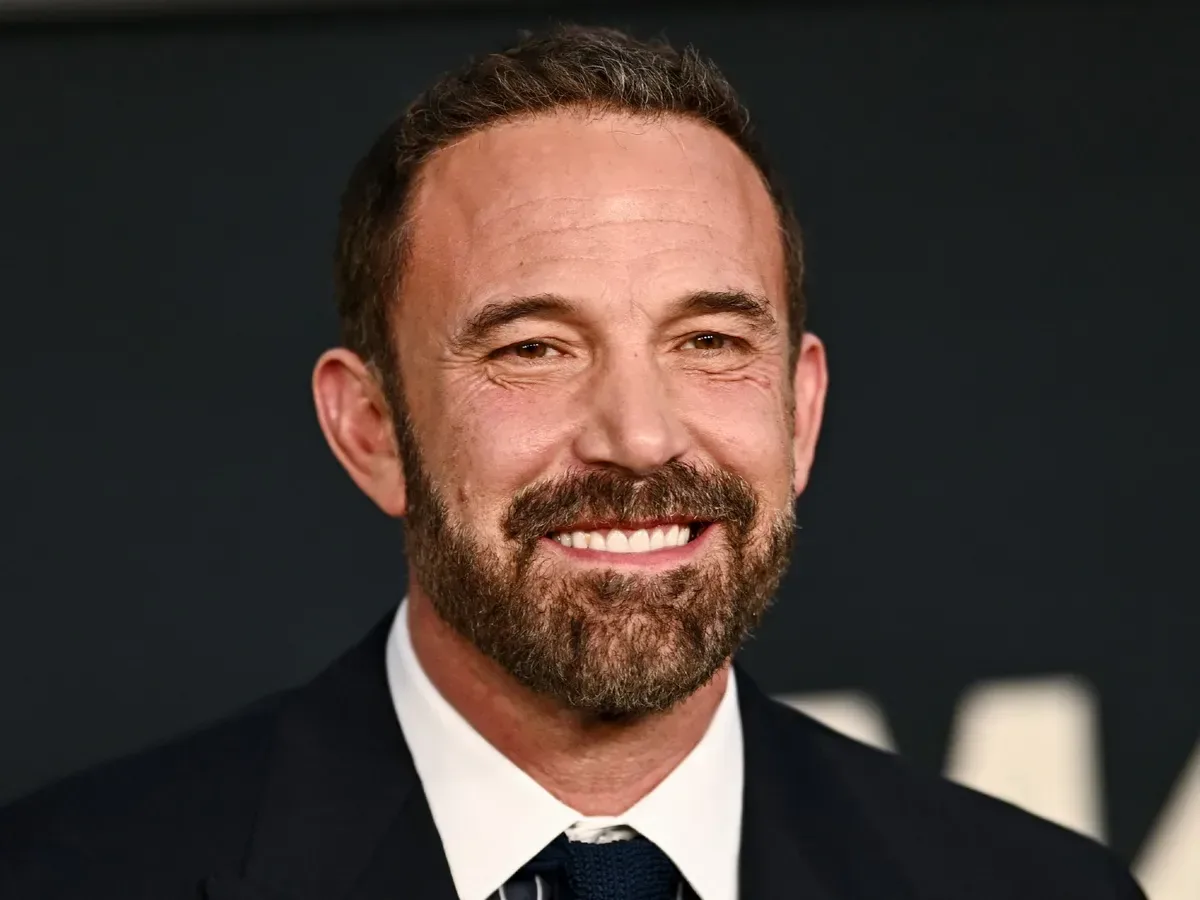
Animals is a kidnapping thriller built around a particularly ugly kind of pressure test: what happens when a wealthy lawyer running for mayor must confront the gap between the public virtue he sells and the private compromises he has made? Ben Affleck directs and stars as Mark Kimball, a Los Angeles attorney whose expensive mayoral campaign is already struggling to persuade voters that he understands ordinary lives. Then a Halloween-night call says his son, Denny, has been taken, and that $7 million is required to get him back.
The film has the machinery of a sleek, fast-moving pulp thriller: an imperiled child, a ransom that cannot easily be paid, a mysterious caller, an uneasy marriage and a fixer who enters the story radiating threat. But Affleck, working from a screenplay credited to himself, Connor O. McIntyre and Billy Ray, loads its opening with political and personal liabilities that turn the central emergency into something more complicated than a race against a deadline.
That tension makes Animals compelling even when its appetite for lurid turns threatens to undercut the sharper points it wants to make. The movie is not presented as an intricate realist puzzle. It is a nasty, knowingly heightened story about leverage, public image and the things people decide they can live with—until the bill arrives.
A campaign built on an unstable image
Mark’s campaign materials sell a carefully constructed version of the candidate: a man of the people with the reassuring vocabulary and calibrated imagery expected of a serious political bid. The reality is harder to disguise. He and his wife Abigail, played by Kerry Washington, live in a Beverly Hills home valued at more than $10 million. Mark has committed much of his own money to the campaign, yet remains behind in polling, particularly with Latino voters.
The film’s most pointed material lies in the contrast between that polished campaign message and the Kimballs’ treatment of Cecilia, their Mexican nanny, played by Adriana Paz. Abigail and Mark want to appear compassionate, but their compassion has boundaries. When Cecilia asks whether her boyfriend Ramon, an undocumented immigrant played by Luis Gerardo Méndez, might be able to work for them, Abigail turns him down because of the danger it could pose to Mark’s candidacy.
That choice is not framed as a stray bit of exposition. It establishes the film’s core interest in hypocrisy: Mark seeks power in a system whose rules he publicly invokes, while his household benefits from forms of care and labor that he is unwilling to defend when it could cost him politically.
Abigail identifies the contradiction early, warning that Mark cannot enforce laws he does not follow. It is a direct statement of the movie’s moral terrain, and it matters because the kidnapping puts every previous compromise under harsher light. The ransom case does not create Mark’s ethical problems. It weaponizes the ones already there.
The kidnapping raises more than one kind of guilt
On Halloween, Cecilia and Ramon take Denny trick-or-treating with their own child. Mark stays focused on campaign work, while Abigail conducts an online affair. When the ransom demand arrives, the parents have immediate cause to panic, but their fear is entwined with guilt and suspicion. Their decision to entrust Denny to Ramon, their treatment of Cecilia, their concealed private behavior and the vulnerability of Mark’s political persona all become part of the pressure surrounding the disappearance.
Related coverage includes Animals Review: Ben Affleck’s Kidnapping Thriller Goes for Sleek, Nasty Pulp.
This is where the script uses the familiar kidnapping-thriller setup to pursue a broader question: when a crisis forces a powerful person to make impossible decisions, are those decisions revealing character or merely exposing the terms under which that character was always operating? Animals repeatedly pushes Mark toward that divide. His identity as a father cannot be separated from his identity as a candidate, a former lawyer or a rich man whose money is suddenly less available than it appears.
The film’s twists reportedly expand the initial premise without making the story needlessly dense. Some developments can be seen coming, but a pivotal reveal changes how the audience reads the stakes and puts Mark’s integrity under renewed strain. That distinction is useful. A thriller does not need every turn to be unforeseeable; it needs its turns to rearrange the emotional and moral board. Here, the major shift is designed to do exactly that.
Affleck is well suited to the role because Mark’s outward confidence can curdle into visible fear. The performance begins with the assured manner of a practiced public figure, then lets that composure erode as the situation becomes more difficult to control. The character is not an idealized hero. He is a man accustomed to status and command discovering that neither protects him from consequences.
Gillian Anderson arrives to make the mess stranger
Steven Yeun plays Sam, Mark’s campaign manager, who is tasked with keeping the operation afloat even as the family emergency threatens to consume it. Sam brings in Dayle Burton, a British fixer played by Gillian Anderson, to help secure the ransom because Mark’s wealth is tied up in his campaign.
A fixer is a broad thriller archetype: a well-connected operator employed to solve a problem outside formal channels, usually by knowing whom to call, which rule to bend and how to make other people afraid. Dayle is deliberately flamboyant within the otherwise polished setting. She arrives in a crisp white pantsuit, speaks with intimidating calm and delivers hard-edged observations about obligation and adult compromise. Her presence signals a shift toward the story’s more gleefully disreputable instincts.
That tonal pivot is both part of the fun and part of the limitation. Anderson gives Dayle a commanding entrance, but the character operates more as a vivid pressure device than as a fully grounded human presence. Once she joins the action, plausibility matters less than momentum. The question becomes not whether every development is likely, but how aggressively the film will continue to twist its characters into corners.
There is a clear appeal in that approach. A 106-minute thriller benefits from forward motion, and Animals is constructed to keep viewers asking what new complication will emerge and what Mark will sacrifice to contain it. Still, the movie’s most provocative possibility is not its pulpiest one. Its strongest material comes when it glimpses a larger, harsher picture of American inequality—one in which the wealthy and politically ambitious can speak fluently about rules while others bear the consequences of those rules.
A sharp premise that chooses velocity over depth
Animals frequently brushes against potent political satire. Satire, in this context, is not merely a joke about campaign advertisements or macho candidates. It is the use of exaggeration and contradiction to expose the systems behind those images: marketing that substitutes for accountability, performative concern that stops at political inconvenience, and a public culture eager to elevate domineering personalities.
The movie has material for a more sustained examination of all of that. Mark’s lagging support among Latino voters, Cecilia and Ramon’s precarious circumstances, and the Kimballs’ selective moral concern all point toward a story about political opportunism and unequal risk. But the film does not remain with those ideas long enough to fully develop them. It prefers the escalating mechanics of the ransom plot, marital secrets and the mounting question of what a desperate candidate will do to save both his son and his future.
That is not necessarily a failure of genre intent. Animals is fundamentally a diversion, and it embraces its own sensationalism. Yet the friction between its sharper observations and its broader thriller flourishes is impossible to ignore. Every time the narrative approaches a more devastating social insight, it seems ready to veer back into a more conventional shock or provocation.
For a related piece of context around the movie’s stranger imagery, see our coverage of Ben Affleck’s comments on the fuzzy bunny mask in Animals.
The craft keeps the tension moving
Affleck’s direction is efficient rather than showy. The film moves with purpose and does not appear interested in treating its plot as a grand prestige statement. That practicality suits the material. The better choice may be to meet Animals on the level it most consistently occupies: a glossy adult thriller with a mean streak, not an exhaustive political drama.
Robert Elswit serves as cinematographer, while William Goldenberg and Christopher Rouse edit the film. Harry Gregson-Williams composed the score. The visual approach is professional and subdued, favoring a muted, taupe-leaning palette over a strikingly distinctive look. It is a competent frame for a story chiefly powered by discomfort, performances and plot acceleration rather than visual spectacle.
The ensemble includes Adriana Paz, Luis Gerardo Méndez, Christopher Woodley and Ray Fisher alongside Affleck, Washington, Anderson and Yeun. Washington has a key role as a spouse whose own decisions ensure that the crisis belongs to both members of the marriage. Paz and Méndez are essential to the story’s moral architecture: their characters are not incidental household details, but the people through whom the Kimballs’ political self-image is most clearly challenged.
What to expect from Animals
Released on Netflix, Animals is an R-rated, English- and Spanish-language thriller with a 106-minute running time. Viewers looking for a relentlessly realistic crime drama may find its later turns too heightened. Those willing to accept the heightened mode, however, may find much to enjoy in its briskness, its unpleasant humor and the increasingly strained spectacle of a man trying to control a disaster that has found every weak point in his life.
Affleck’s return to the director’s chair does not aim for grandeur here. It aims for clean, compulsive genre entertainment with a political sting. The movie does not always capitalize on the deepest implications of its premise, but it knows how to create a compromised protagonist, put him under unbearable scrutiny and keep tightening the screws. That makes Animals a slick, tart and frequently gripping piece of adult pulp—one with enough genuine moral ugliness beneath the twists to give its kidnapping nightmare some bite.