Content note: this review discusses abuse, sexual violence, suicide, exploitation and a death sentence.
Ibuku, the fourth feature from Indonesian writer-director Eddie Cahyono, begins from a painful contradiction. Its title translates to “my mother,” and the opening belongs to the daughter, Sri, but the film chiefly follows Sumiati, the mother played by Christine Hakim. That structure matters. The drama is not simply asking whether a mother can repair a broken relationship; it makes viewers sit with the far tougher question of what remorse looks like when the damage cannot be easily undone.
At 96 minutes, Ibuku concentrates its emotional weight on Sumiati’s attempt to raise enough money to travel to Saudi Arabia, where Sri is imprisoned. Her daughter has been sentenced to death after killing her employer, who had attempted to rape her. Sumiati has recently been widowed and is still trapped by the financial consequences of her husband’s gambling debts. She turns to fellow villagers for loans, while confronting the choices that helped set Sri on this path.
The film premiered in Competition at the Busan Film Festival on October 8, 2026. It is an Indonesia-Japan-Hong Kong production, with Cahyono also credited as screenwriter, Muhammad Firdaus as cinematographer, Cahyono and Greg Arya as editors, and Krisna Purna as composer. Ayushita Nugraha plays Sri, while Landung Simatupang plays village chief Djatmiko.
A mother’s point of view, without an easy acquittal
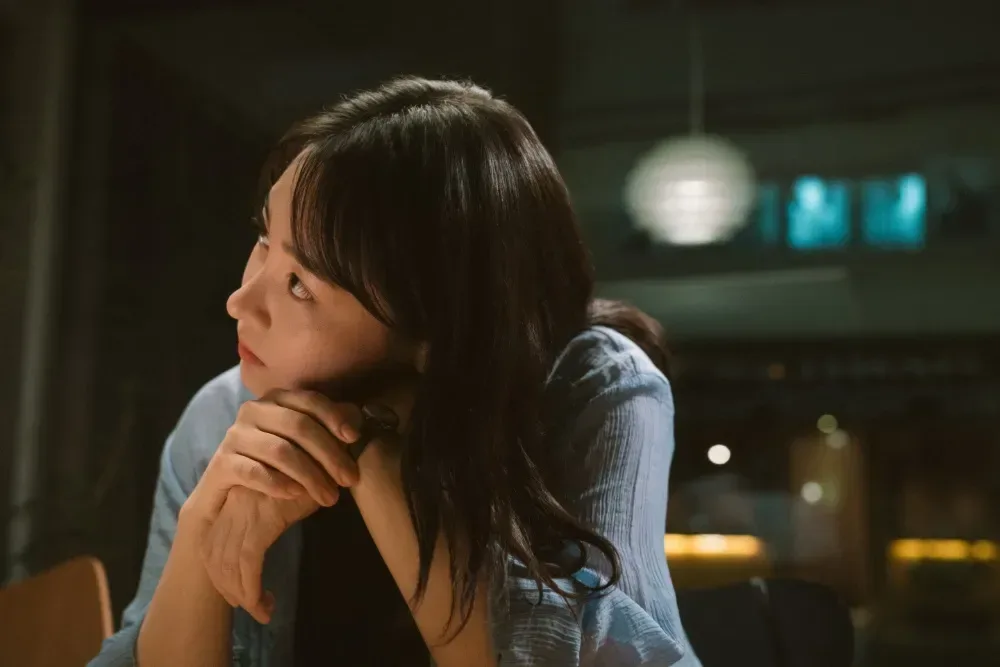
The film’s first major gesture is both direct and formally striking. Sri appears surrounded by projections of Sumiati, as if images of her mother have become a cage. She says she wishes she could hate her mother. The feeling comes from abandonment into an abusive arranged marriage, and later from the conditions that drove Sri to leave Indonesia for work in Saudi Arabia.
That opening gives the drama a crucial ethical foundation. Sumiati may be the person the audience spends the most time with, but she is not permitted to become the sole victim of the story. Her suffering is real: she has lost her husband, faces the likely loss of her daughter and has little money or power. Yet the film connects her despair to a decision she made under economic pressure. Sri’s marriage, arranged in the hope that a dowry could ease debt, was an act with lasting consequences.
This is where Ibuku appears most incisive. It treats exploitation not as a distant abstraction but as a chain of pressures moving through a family and a village. Debt narrows Sumiati’s choices. Patriarchal expectations narrow Sri’s choices. An abusive marriage pushes Sri toward migration. Overseas work exposes her to further violence and leaves her at the mercy of a legal crisis far from home. None of that erases individual responsibility, but the film’s outlook resists the convenient idea that catastrophe begins with a single bad decision.
That focus has clear relevance to the film’s subject of migrant-worker exploitation. Rather than treating Sri’s experience abroad as an isolated tragedy, Cahyono traces the conditions that made departure feel necessary. The result is a story where “home” is neither a simple refuge nor a one-note villain. It is a place of community, memory, debt, judgment and regret.
Related coverage includes ‘Ibuku’ Centers Grief, Guilt and a Mother’s Impossible Search for Redemption.
Christine Hakim makes stillness expressive
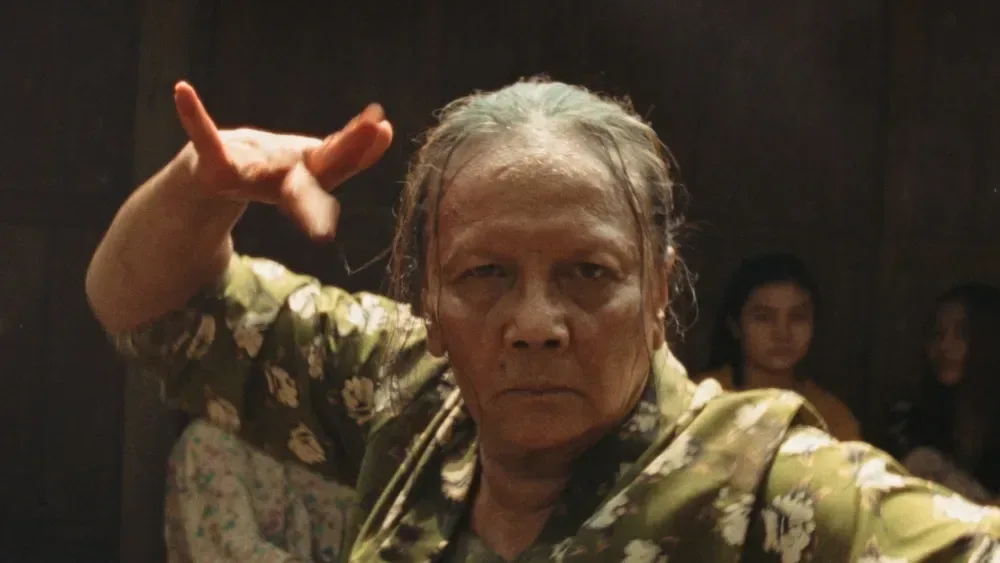
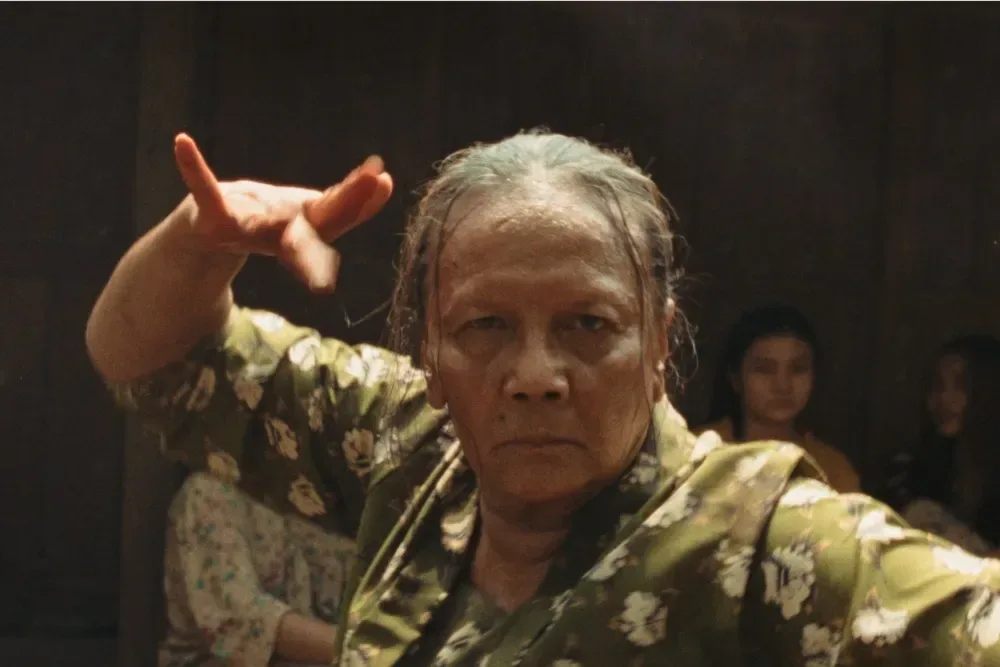
Hakim carries the film’s central burden with a performance built from restraint rather than overt display. Cahyono’s camera repeatedly stays with Sumiati as she cooks, gathers, dances, searches for water and works on pipework. These routines are not detours from the drama. They are the drama’s language: a woman trying to continue the ordinary labor of life while preparing for a loss that feels unbearable.
The cinematography is often still and observational when fixed on Hakim’s face, allowing tiny shifts in expression to register. Elsewhere, intimate handheld images move through the house and village landmarks with a grainy, hazy texture. The effect is less about offering concrete supernatural answers than making absence tangible. Sri and Sumiati’s late husband seem to remain embedded in rooms, paths and objects even when they are not physically there.
That is an important distinction in a film described as dreamlike. Dreamlike imagery can be used to explain a character’s psyche too bluntly, turning every internal feeling into a visual clue. Ibuku is at its strongest when it avoids that trap. Its spiritual atmosphere grows from the attention given to bodies, places and rituals, and from Hakim’s ability to suggest a lifetime of grief and self-reproach without verbalizing every emotion.
Jathilian gives the film a ritual vocabulary
Sumiati was once celebrated as a Jathilian performer. Also known as Kuda Lumping, the Javanese dance form is presented here as a ritual involving performers understood to be possessed, with a shaman and percussion accompanying the event. The detail is more than local color. It gives the film a vocabulary for states that ordinary conversation cannot hold: mourning, guilt, communal memory and the desire for forgiveness.
Cahyono links the dance’s spiritual dimension to the wider visual approach. The village does not simply serve as a realistic backdrop for a social-problem narrative. It becomes a charged landscape, inhabited by memory and by the judgments Sumiati imagines or receives from others. Djatmiko, the village chief, embodies part of that communal pressure. He is depicted as sympathetic but burdened, with his own possible past wrongs involving Sumiati to confront.
The film’s most memorable locations deepen this approach. A tree’s extensive roots lead into a cave where Sumiati searches for water; later, she tries to establish usable pipework there. The water is rendered with an orange glow, making a practical need feel connected to something older and less easily named. It is one of the clearest examples of the film turning material struggle into image rather than explanation.
When the imagery speaks too loudly
Not every surreal flourish has the same precision. The film reportedly includes an image of Sumiati’s dead husband watching from the tree where he died by suicide, as well as a more overtly fantastical sequence in which Sumiati is lifted into the air by invisible wires after joining a dance without permission. These moments risk making the film’s themes overly literal.
That criticism is not a rejection of the film’s spiritual register. On the contrary, its subtler images are often what give Ibuku its force. The opening composition of Sri against filmed images of her mother’s dancing already communicates the impossible distance between them. The home’s haunted quality, Hakim’s silences and the tactile attention to work and ritual can carry the emotional idea without a need to underline it.
When the film trusts that quieter method, it achieves a difficult balance. Sumiati is neither absolved nor condemned as a simple villain. Sri is not reduced to a symbol of suffering. The story recognizes how financial precarity and patriarchal control can deform intimate relationships, while preserving the painful specificity of a mother who knows she failed to protect her child.
What makes Ibuku linger
Ibuku is not presented as a tidy tale of redemption, and its premise does not leave room for easy emotional release. A visit to Sri cannot undo the arranged marriage, the migration born of desperation or the violence that followed. “Redemption” here is better understood as an attempt to face responsibility: Sumiati gathering money, enduring the village’s scrutiny and trying to approach the daughter she has already lost in so many ways.
That makes Hakim’s performance especially vital. The film places a great deal on her face, and she gives its silences shape. Her Sumiati can appear determined, exhausted, ashamed and tender in close succession, with no sense that one quality cancels another. Cahyono’s strongest choice is to let that complexity remain unresolved.
For viewers interested in international cinema that pairs social reality with a deliberately poetic visual style, Ibuku offers a severe and emotionally attentive experience. Its occasional broader surrealism may divide audiences, but the underlying drama remains potent: a mother attempting to reach a daughter she helped drive away, in a world where the price of survival is repeatedly paid by women with the fewest choices.
For another recent pop-culture story centered on an artist navigating a major public setback, see Barry Manilow Cancels Las Vegas Shows After Bronchitis Cuts Return Short.