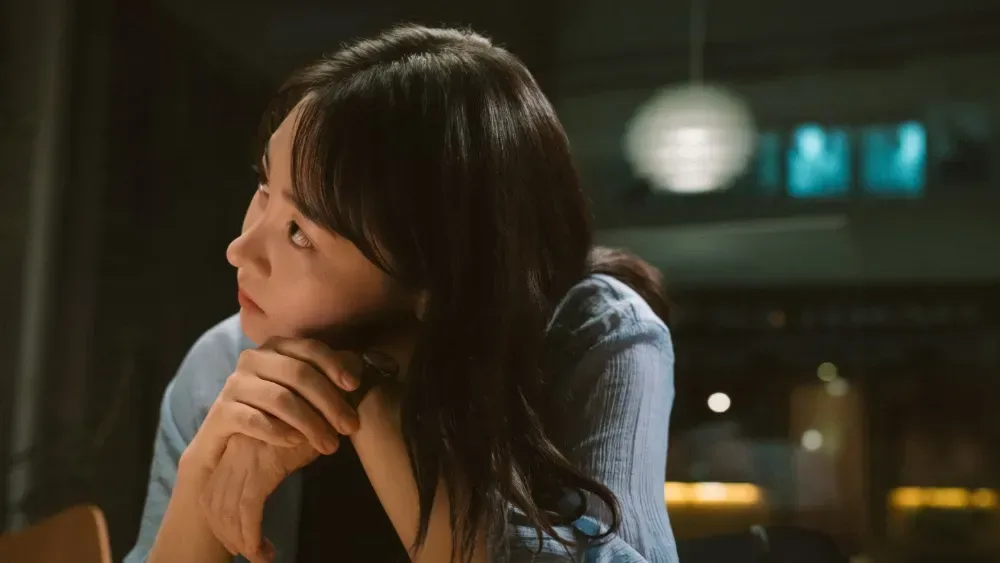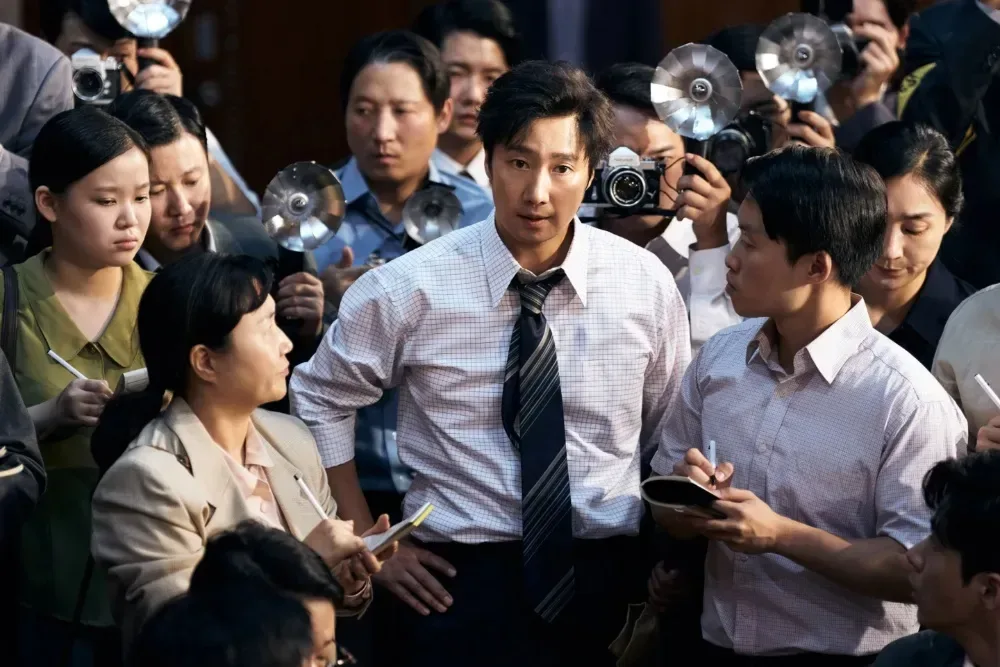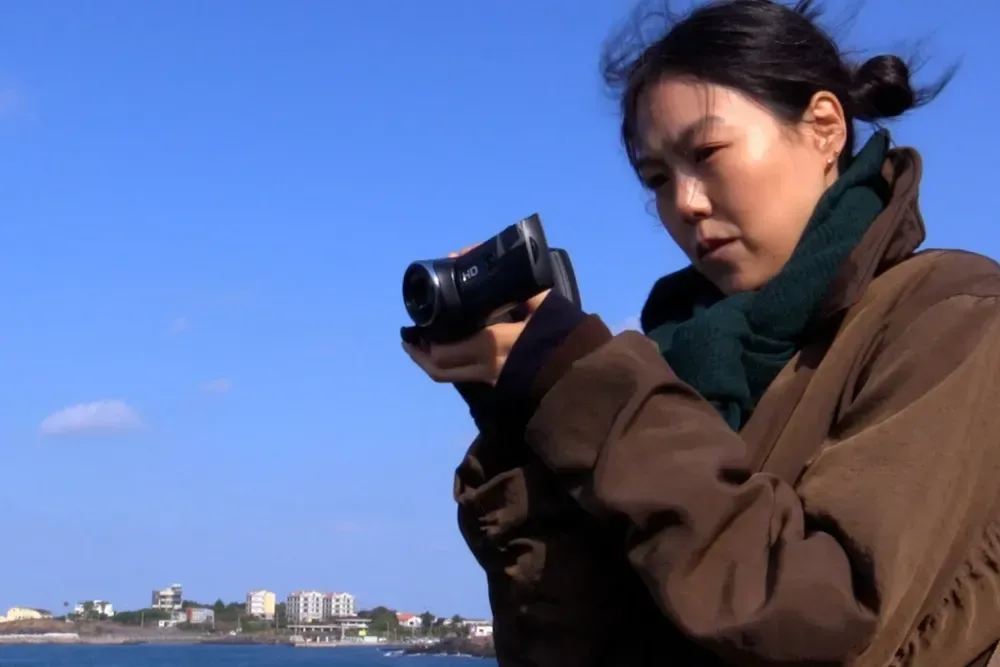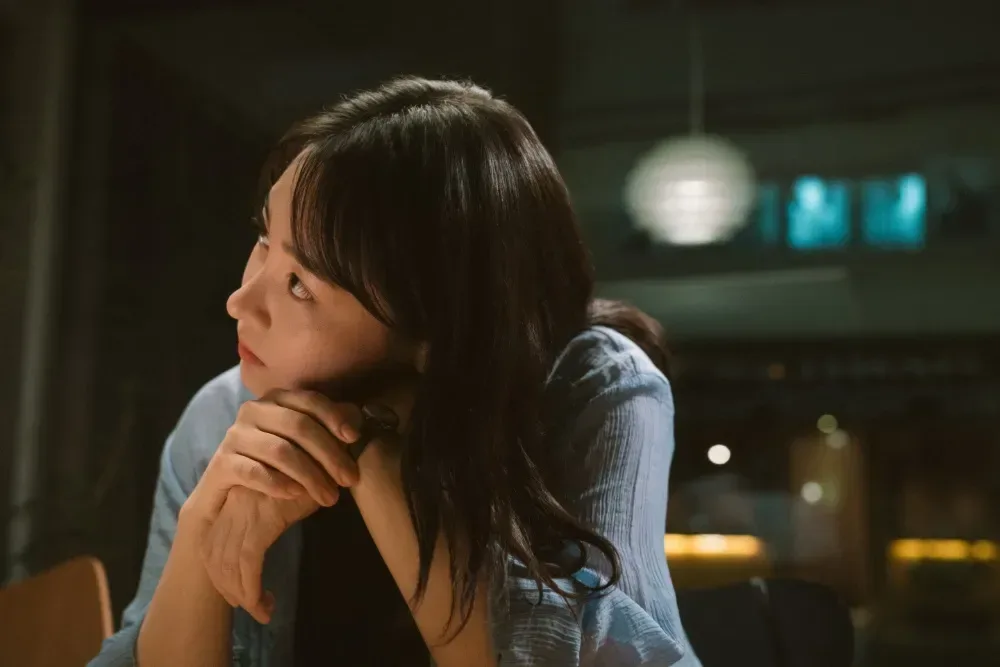
Kim Jong-kwan’s The Table: Day and Night turns a stylish Seoul coffeehouse into a compact stage for four romantic encounters. The 80-minute Korean-language anthology, which opened the Busan Film Festival on October 6, 2026, returns to a form the filmmaker has explored before: separate stories, connected more by place and atmosphere than by plot.
The premise is simple and potentially rich. A café is a place built for temporary intimacy: people arrive with time to spare, conversations can feel unusually significant, and strangers at nearby tables become half-imagined characters. Here, the action remains inside the establishment while the season shifts from summer toward autumn. That restriction gives the film a visual and structural identity, even when its individual stories pursue very different emotional registers.
A sequel in structure, not just name
The Table: Day and Night expands on Kim’s 2016 film The Table. The earlier work followed four couples meeting at the same café table over one day. This new film again uses four chance meetings in one coffeehouse, but spreads them over several weeks and lets its stories range further from straightforward relationship drama.
That makes it an anthology film: a feature made from multiple shorter, self-contained narratives. Anthologies can create variety and let performers make a quick, concentrated impression. They also face a recurring problem: because each segment has limited running time, a fascinating setup can end before it has earned a satisfying emotional payoff. The Table: Day and Night seems especially interested in the promise held by a meeting—the charged possibility before two people understand each other—rather than in resolving every complication it introduces.
Kim’s career makes this approach unsurprising. Following his 2004 short How to Operate a Polaroid Camera, he has worked on anthology and omnibus projects including Persona in 2019 and The Killers in 2024. His feature work has also repeatedly used loosely linked vignettes, including Worst Woman and Frosted Window. His films gravitate toward snapshots of people at a turning point, where a small conversation can reveal a larger private uncertainty.
Four meetings, four very different temperatures
The opening chapter, A Midsummer Night’s Dream, centers on Hyeon-oh, played by Joo Jong-hyuk, and Yoo-jin, played by Kim Min-ha. Hyeon-oh restores old watches; Yoo-jin brings in an inherited antique watch that has not functioned for years. It is a naturally romantic image—two people drawn together through a broken object that measures time—and the segment leans into a fairy-tale mood.
Kim Min-ha’s presence gives the episode immediate appeal, particularly for viewers who know her from Pachinko. Yet the story’s premise appears more developed than its character work. Yoo-jin is positioned as a wistful figure with a meaningful connection to the old timepiece, but the segment does not fully explore the emotional potential of that inheritance or the encounter it initiates.
The second installment, Still Ourselves, changes course sharply. Chang Ryul plays Young-min, approached by Sang-mi, portrayed by Han Sun-hwa, an old middle-school acquaintance who claims he does not remember her. Their reunion moves between comedy and distress as Sang-mi, increasingly unsteady, asks Young-min to protect her from an unseen threat.
Han’s performance is a key reason the story lands with force. Sang-mi is presented as restless, unpredictable and close to emotional overload, a figure whose urgency keeps the audience unsure whether the scene is heading toward farce, danger or heartbreak. The instability is not simply a plot device; it becomes the energy of the segment. Among the film’s characters, Sang-mi is one of the clearest examples of how its women carry the more compelling dramatic weight.
The third chapter, T.P.A., brings Shim Eun-kyung’s web novelist Hye-jin together with Lee Hee-jun’s filmmaker Dong-nam. He wants permission to turn one of her successful works into a film and makes an energetic case for himself and his project. Hye-jin is no passive creative figure waiting to be discovered: she is already accomplished, self-possessed and navigating a professional exchange in a male-dominated industry.
There is another layer to this story. Hye-jin begins imagining a romance between the café’s regular baristas. The device makes the coffeehouse feel less like neutral décor and more like an engine for projection. Customers bring their baggage through the door, but they also invent narratives for the people around them. The café may not literally be magical, yet the film treats it as a place where romance is always waiting to be written onto an ordinary glance or routine interaction.
The final episode follows aspiring pop idol Nakyung, played by Jeon So-young, and Jong-su, her childhood boyfriend, played by Kim Dong-hwi. Their conversation concerns what remains of their teenage relationship. It is the most directly retrospective of the four tales, returning to the central anthology question of whether a limited meeting can clarify the past or merely expose how much people have changed.
The café is the film’s most dependable character
Kim’s decision never to leave the coffeehouse does more than save connective tissue between stories. It establishes a deliberately theatrical rule: lives may be vast and complicated outside, but viewers get only the portion that can be expressed over coffee. That limitation encourages implication rather than exposition. A watch, an adaptation pitch, a fearful plea and an old romance each bring an unseen history into the room.
It also makes the café’s design unusually important. Cinematographers Kim Ji-yong and Lee Ju-yeon shoot the space in warm tones that emphasize its welcoming, carefully composed atmosphere. The presentation evokes roasted coffee and late-afternoon light without turning the location into a glossy advertisement. Paintings of isolated, enigmatic people hang on the walls, visually echoing the customers who come to sit, talk and leave.
Kim Ji-yong’s previous credits include Park Chan-wook’s Decision to Leave, and the care given to the coffeehouse helps explain why the setting remains memorable even when the stories vary in effectiveness. The recurring tables become a visual refrain. They suggest continuity, while the people sitting at them remain temporary.
The closing image of empty tables reinforces the director’s larger fascination: this is a venue that could host unlimited beginnings, endings, awkward reunions and imagined futures. That notion is both the film’s charm and its frustration. A space filled with possibilities can make every brief encounter feel meaningful. But it can also make individual stories feel like sketches for fuller films rather than complete dramas in their own right.
Why the anthology’s tone can work against it
The four sections move from the fanciful to the flirtatious, from anxious comedy to professional sparring. Such variety is often one of an anthology’s pleasures, but it requires a unifying emotional confidence. Here, the café, the seasonal passage and the warm photography provide that unity more consistently than the writing does.
The most persuasive episodes are those driven by women whose interior lives cannot be reduced to the men sitting opposite them. Hye-jin’s authority as an artist and Sang-mi’s volatile distress give Shim Eun-kyung and Han Sun-hwa especially strong material. By comparison, the male characters more often function as catalysts: the watch repairer, the doubtful former classmate, the filmmaker making a pitch, the childhood boyfriend looking backward.
That imbalance does not negate the film’s romantic interest, but it does clarify where its dramatic electricity lies. The stories become sharper when the women resist the neat expectations of a café romance—whether that means professional caution, unstable fear, creative imagination or a difficult reckoning with a former relationship.
A small-scale film with an inviting surface
The Table: Day and Night has a notable ensemble: Kim Min-ha, Joo Jong-hyuk, Han Sun-hwa, Chang Ryul, Shim Eun-kyung, Lee Hee-jun, Jeon So-young and Kim Dong-hwi. Kim Jong-kwan directs and wrote the screenplay. Baek Gyeong-suk produces, with Kim Ji-yong and Lee Ju-yeon credited for camera work.
For audiences interested in Korean anthology cinema, the film’s appeal is easy to identify. It is compact, handsomely photographed and constructed around performers who can convey history in a brief exchange. Its limited setting is not an obstacle but a formal choice, one that allows every cup, chair and neighboring table to feel potentially significant.
Still, its strongest idea may be the one it cannot stop circling: a café full of strangers contains more stories than any single film can tell. The Table: Day and Night makes that abundance feel inviting, even if several of its own stories do not go quite far enough. For a broader view of the business conversations shaping film production, see the federal film tax credit push and its union backing.