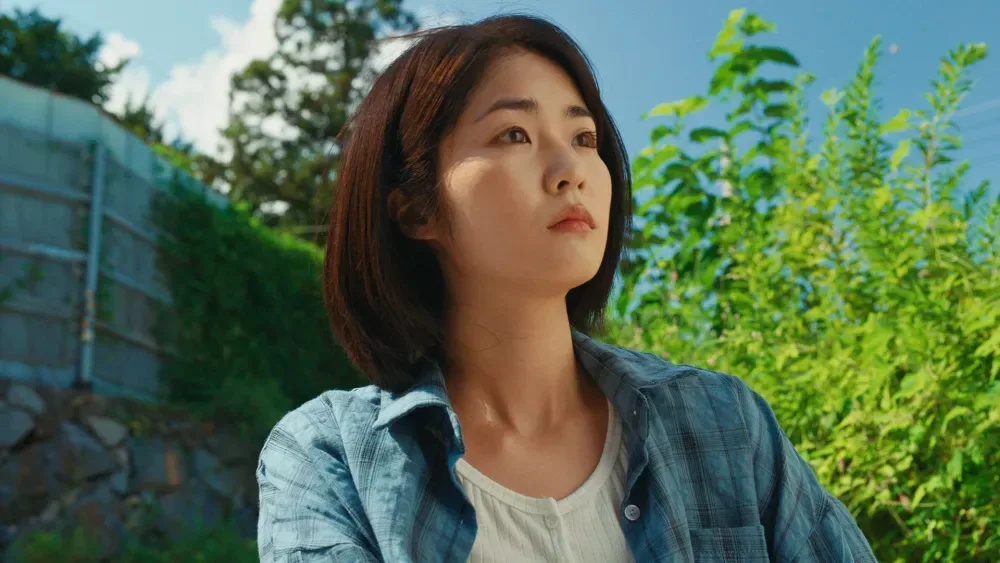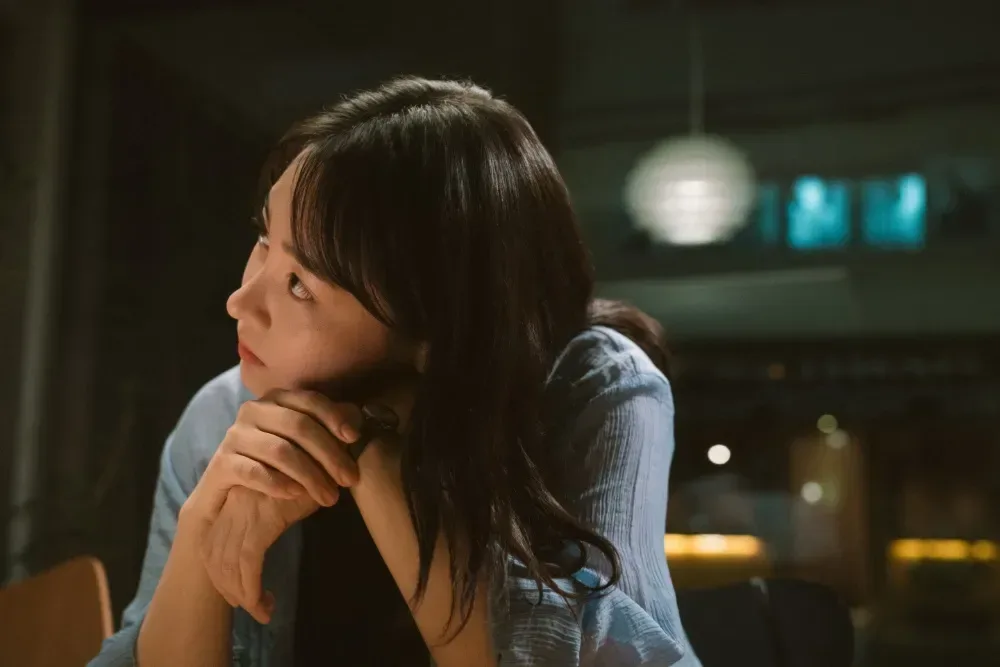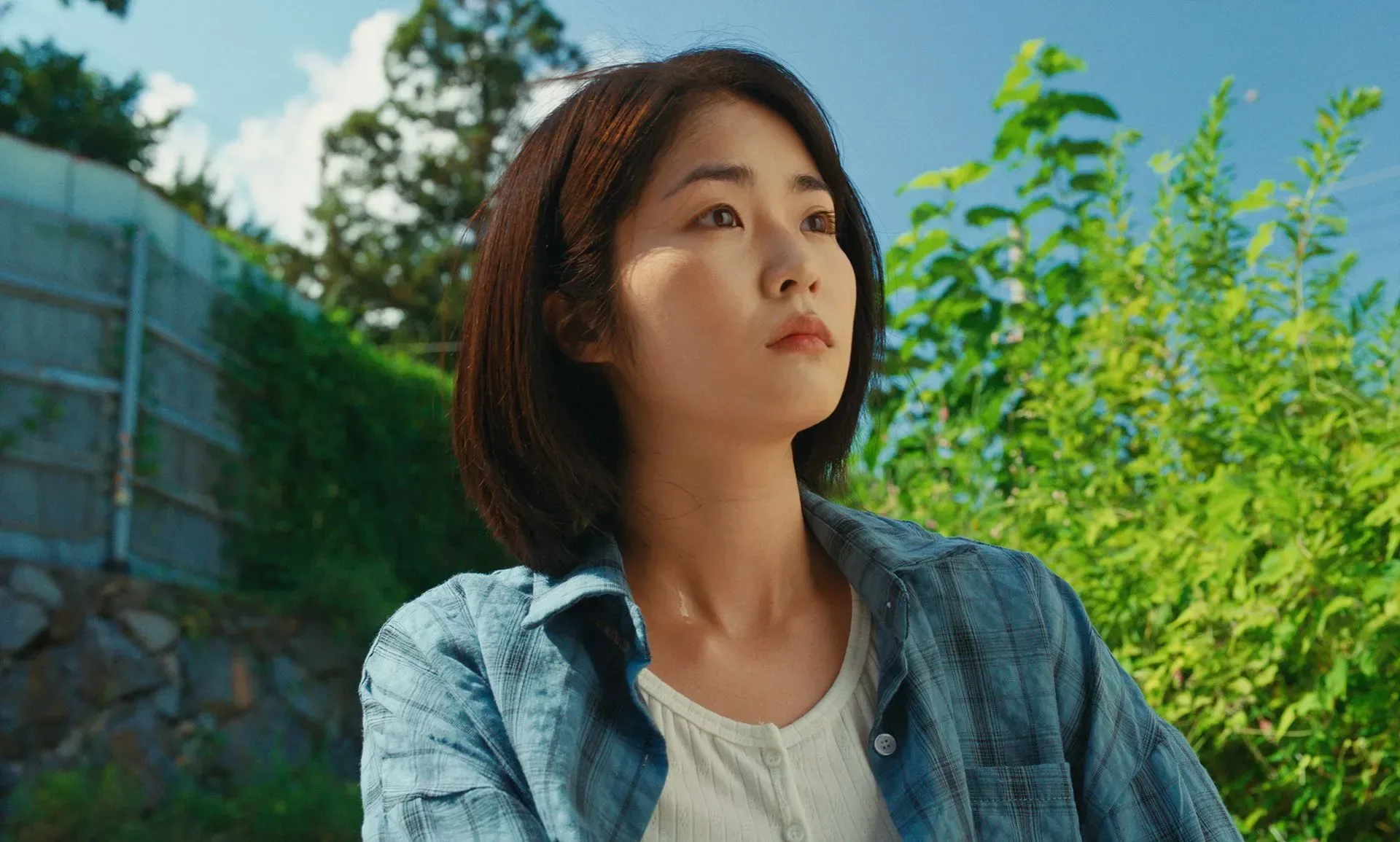
Beach Fictions is built around a deceptively simple proposition: a difficult day can be told again, with some of its details shifted, and become a different emotional experience. Lim Hayeon’s South Korean debut feature follows Tae-ju, a young woman reeling from a bruising evening with friends and an unsatisfying breakup, through two versions of events that lead her away from Incheon and toward a quiet beach town.
The film’s premise may sound like a time-loop puzzle or a dramatic exercise in alternate timelines. Its approach, however, is more delicate than either label suggests. The two narratives do not depend on enormous twists or radically opposed outcomes. Instead, Beach Fictions watches how seemingly minor variations—a conversation, an encounter, a damaged phone, a warning taken seriously or dismissed—can alter the meaning of a day. At 145 minutes, it has room to let those small changes register rather than treating them as mere plot mechanics.
That patient construction supports a story concerned with agency: the ability to make meaningful choices and act on them. Tae-ju is not simply deciding whether a romance will work. She is also navigating the expectations and opinions of friends, a boyfriend, strangers and, perhaps most intriguingly, a novelist who may be shaping her life on the page.
A social wound becomes a coastal detour
The opening places Tae-ju in a restaurant with friends. The camera initially keeps her at a distance, and the energy around the table does not belong to her. A detached voiceover later reveals itself as the perspective of Ewha, a novelist who has been watching Tae-ju. Even before the situation openly turns cruel, the scene establishes Tae-ju’s loneliness within a group.
That loneliness becomes explicit when her friends leave the table to smoke and she realizes they are gossiping about her. Soon afterward, her casual boyfriend Hyun-jin makes clear that he has little interest in advancing their relationship. The two disappointments arrive in quick succession, leaving Tae-ju with her private fears newly confirmed.
Her answer is impulsive but understandable: she leaves town for the coastal guesthouse of a friend. On the train, she meets Ewha, the older writer whose narration has already complicated the viewer’s relationship to Tae-ju. Ewha tells her that she resembles the protagonist of the novel she is writing. From that point, the movie raises a destabilizing possibility. Is Tae-ju the inspiration for a fictional character, the author’s character somehow acting independently, or a real person being interpreted by somebody else?
That is the film’s metatextual element. Metatextual describes a work that reflects on its own status as a constructed story—in this case, a film about a woman whose life may also be a novel in progress. Lim’s script uses the device not only as an intellectual game but as a way to sharpen Tae-ju’s vulnerability. Other people are repeatedly telling her who she is, what she should want, and how she ought to read a situation. The question of authorship becomes personal.
Two versions, subtle differences
At the beach town, Tae-ju meets Manhyuk, a charming street magician played by Kim Wookyum. Their immediate attraction gives the film its romantic momentum, though it is not presented as uncomplicated escape. Tae-ju’s hostess warns her that Manhyuk is a local womanizer and has at times worked as a sex worker. In one telling, Tae-ju’s day with him goes badly. In the second half, a changed sequence of meetings and circumstances produces a different set of possibilities.
The important distinction is that Beach Fictions does not appear to frame one timeline as a definitive correction of the other. Both are made of tentative encounters and incomplete information. Manhyuk may be the biggest variable, but the film places equal weight on less obviously decisive elements: Tae-ju’s water-damaged phone and the effort to get it repaired; an outing with fellow guests that recalls, but can also revise, the pain of her earlier social exclusion; and a psychic consultation that Ewha recommends.
Those details make the film less interested in the question, “Which version is real?” than in a more human question: how much of a person’s fate is made by the stories they are given, the warnings they absorb, and the choices they make while uncertain? Fate and self-determination are not treated as clean opposites. A character can be influenced by a prediction or another person’s judgment while still making decisions of her own.
A diptych rather than a conventional parallel-timeline film
The film’s structure has been described as a diptych. In art, a diptych is a work composed of two panels designed to be seen together. Here, that idea fits the two consecutive accounts of a similar day. Rather than constantly cross-cutting between alternatives, the movie lets one version play out before revisiting the day through another arrangement of events.
That choice matters. Cross-cutting can turn alternate timelines into a contest, encouraging viewers to compare every beat as a clue. A consecutive structure allows each version to establish a mood before the differences become fully apparent. The contrasts in Beach Fictions are not said to be drastic. They can be as slight as a movement from comfort to unease, or from warm melancholy to cooler isolation.
That restraint also avoids reducing Tae-ju to a character who simply needs to choose the correct route. Her circumstances are emotional as much as logistical. The film’s two-part form recognizes that a changed connection can change what a person notices, risks or believes they deserve. It is a romance, but its larger concern is the unstable process of becoming oneself.
Image and music carry the emotional variation
Lim also serves as the film’s writer and editor, while Sinuk Park handles cinematography and Wonghong Lee provides the score. The credited craft roles are central to how the story communicates its fine differences. The camera opens with a nighttime glide across an illuminated Incheon before moving into the restaurant’s busy atmosphere. Later imagery in the coastal setting is richly sunlit, but sunlight is not automatically reassurance. A bright frame can still leave Tae-ju looking separate from the people around her.
That visual approach is particularly suited to a story about emotional interpretation. Isolation is not announced through a simple switch from darkness to light. It can emerge through composition: where Tae-ju is placed in relation to others, how much space surrounds her, and whether a moment feels shared or observed. The same broad environment can carry very different moods.
Lee’s delicate jazz-piano music performs a related function. Rather than imposing a single emotional reading, it can nudge a scene from inviting to anxious. This is useful in a film where the same social and romantic possibilities are being reconsidered. The score does not need to declare that an alternate reality has begun; it can signal a modest but meaningful shift in Tae-ju’s inner weather.
Hansol Park anchors the film’s uncertainty
Hansol Park plays Tae-ju as both fragile and recognizably alert to the risks around her. She can seem willing to drift along with what others want, a quality that fits Ewha’s suggestion that she might be a protagonist not yet fully formed. Yet the performance also retains the hurt of a person learning to guard herself after humiliation and rejection.
That duality is essential. If Tae-ju were only a blank figure, the movie’s questions about authorship would remain abstract. If she were fully assured and decisive from the start, the pressure exerted by friends, partners and writers would lose force. Park gives the character enough sensitivity to make every social slight sting, while letting the later variations feel like attempts to negotiate a different relationship with the world.
Sujeong Ye’s Ewha is equally important as the figure who makes the film’s central ambiguity visible. She is kind enough to become a confidante, yet her profession means that kindness comes with an unsettling creative power. A novelist naturally transforms life into material; Beach Fictions turns that ordinary artistic act into a question about whether observation can become possession. Kim Wookyum’s Manhyuk, meanwhile, brings an appealing charisma that makes Tae-ju’s attraction credible without erasing the grounds for caution.
Why the film’s questions extend beyond its romantic plot
The romantic storyline is the clearest way the two versions diverge, but the film’s broader point concerns the pressures placed on vulnerable young women to accommodate everybody else’s desires and readings of them. Tae-ju has already been talked about by friends and dismissed by a boyfriend before she meets a writer who may see her as a character. In the beach town, she encounters further advice, warnings and predictions. Each may contain truth; none is necessarily neutral.
That accumulation gives the fantasy of authorship real-world weight. To be “written” by someone else does not only mean being literally fictional. It can mean accepting a social role supplied by a friendship group, a romantic partner or a supposedly knowing observer. The film’s alternate day therefore feels less like a technical thought experiment than a study of how people revise themselves after being hurt.
The central insight is not that every choice unlocks a wholly new life. It is that small changes can affect which possibilities feel available. Tae-ju’s two stories leave room for fate, imagination and self-determination at once. No single force receives complete control, and the movie’s bittersweet tone seems to come from holding those forces in tension rather than resolving them.
Beach Fictions premiered in competition at the Busan Film Festival on October 14, 2026. Produced by the Korean Academy of Film Arts, it marks Lim Hayeon’s feature debut and lists Hyunsuk Park as producer. Its reported 145-minute running time may be a consideration for viewers drawn to its light-touch romantic surface, but the scale is purposeful: the film needs time for two nearly adjacent stories to reveal the distance between them.
For another recent screen-industry story centered on the uncertain future of an ongoing narrative, see the developing decision around Lanterns season two.