A group of California Democrats and entertainment-union leaders is pressing Congress to move quickly on a proposed federal incentive for film and television production, framing the measure as a response to the growing competition for U.S. projects from abroad.
The proposal, introduced last month, would establish a transferable tax credit worth 20% to 30% of eligible U.S. labor costs for films and television shows. Its advocates say it is designed to make domestic production more financially competitive at a time when many countries offer their own incentives to attract shoots, crews and related spending.
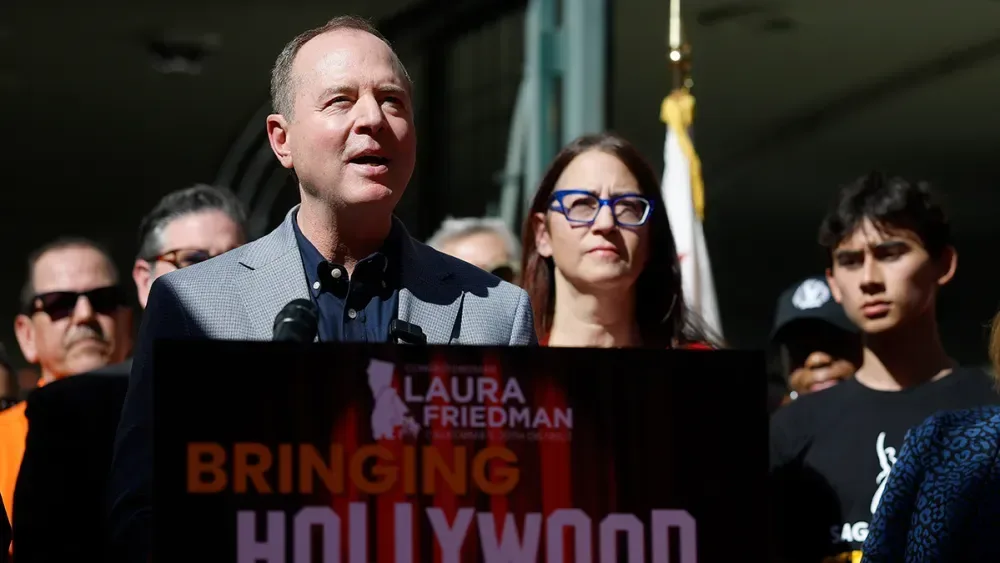
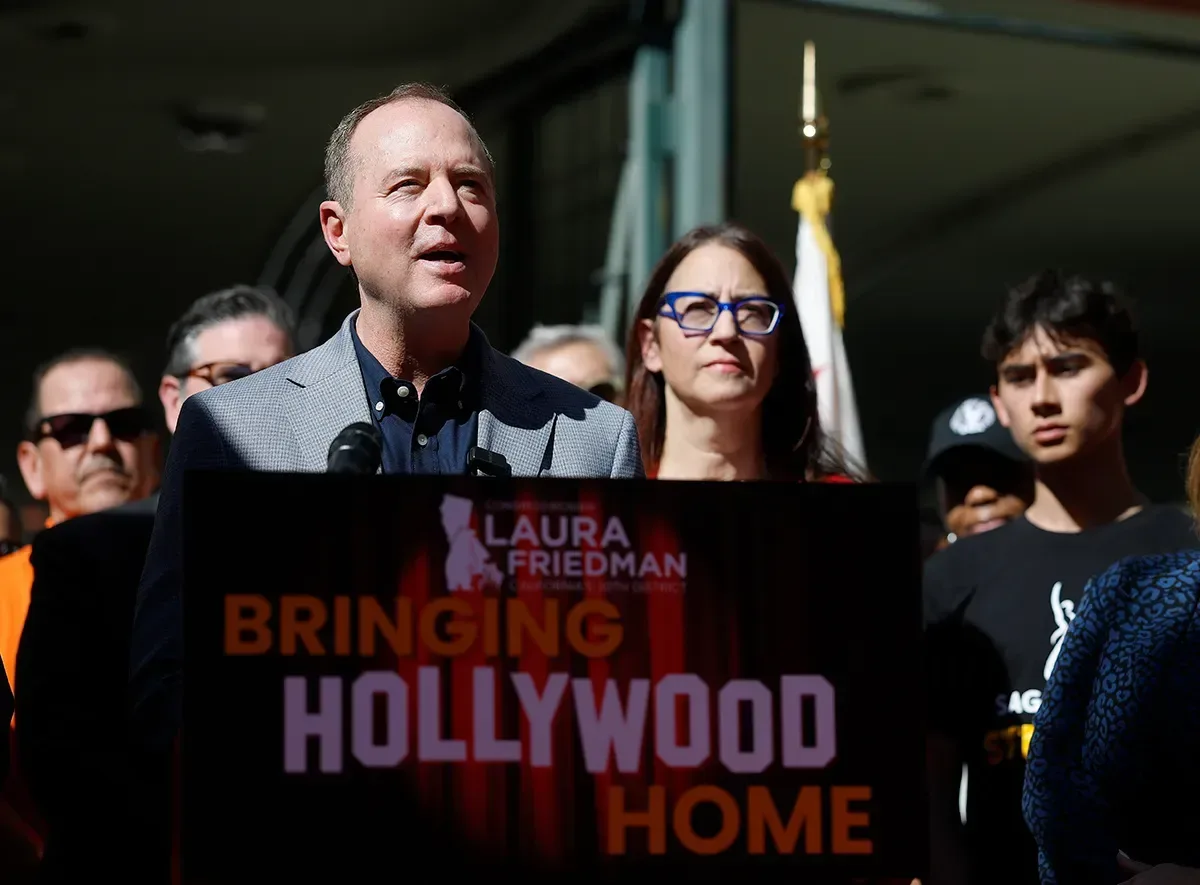
Sen. Adam Schiff joined eight Democratic House members from Southern California at a Glendale event outside the Alex Theatre, alongside leaders from major entertainment unions. Their central argument was straightforward: production work can move to the places where the economics are most favorable, and federal policy is needed if the United States wants to retain a larger share of that work.
Schiff said the effort has bipartisan support in the Senate. Twelve senators are backing the bill, split evenly between Democrats and Republicans. The newest listed cosponsors are Sen. Thom Tillis of North Carolina and Sen. Chris Coons of Delaware.
What the proposal would do
The key policy tool is a transferable tax credit. In simple terms, a tax credit reduces a taxpayer’s tax liability. A transferable credit can be transferred to another taxpayer, potentially making it more useful to a production company that cannot fully use the credit itself. The supplied proposal ties the credit to U.S. labor costs, putting workers at the center of its structure rather than treating it as a broad payment for every expense associated with a production.
The base incentive would range from 20% to 30%. The legislation also includes several potential additions:
- A 5% bonus for filming in a designated disaster area.
- A bonus for independent films.
- A bonus for shoots in rural opportunity zones.
Los Angeles County would qualify in its entirety for the disaster-area bonus through January 2030 because of the previous year’s fires. That provision is especially consequential for a region with a deep concentration of production infrastructure and entertainment workers, but supporters are emphasizing that the bill is not exclusively a California or New York measure.
State programs could stack with the proposed federal credit. In California and New York, supporters say that combination could take total incentives to 50% or higher. They contend that level would surpass incentives available in other countries. Whether that translates into more domestic productions would ultimately depend on the final legislation, the way productions qualify, and the financial calculations made by studios, independent producers and financiers.
The policy case: competing for work, not just prestige
For supporters, the debate is about employment as much as it is about the cultural identity of Hollywood. A screen production does not only employ performers and directors. It can involve crews, craftspeople, post-production staff and a broad array of workers whose jobs depend on shoots being located where they live and work.
Duncan Crabtree-Ireland, executive director of SAG-AFTRA, argued that other countries use incentives precisely because those governments recognize the value of production jobs. Mike Miller, vice president of IATSE, said passage during the post-election session would have an immediate effect on 2027 production, adding that hundreds of thousands of entertainment workers are counting on the outcome.
The claims arrive alongside new union-backed figures on the U.S. position in worldwide production spending. Over the past 25 years, the U.S. share reportedly fell from 74% to 42% in film and from 94% to 64% in television. Those percentages describe relative share, not a simple collapse in total activity: both film and television have grown over that period. Still, the direction points to a more internationally distributed production economy than the one that existed a quarter-century ago.
That distinction matters. A falling share can occur even while a country’s own production spending grows, if activity elsewhere grows faster. The advocates’ concern is that, in a globally competitive environment, U.S.-based workers and facilities may lose projects that might otherwise have been made domestically.
Why the deadline is so tight
The political window described by the bill’s supporters is narrow. Congress is expected to have roughly five weeks in its lame-duck session after the election to act. A lame-duck session is the period after an election but before the newly elected members take office. It is often a compressed, consequential stretch of legislative work, particularly when lawmakers are attempting to attach a measure to a larger bill.
Rep. Laura Friedman, whose office organized the Glendale press event, said she is cautiously optimistic and wants the measure on the president’s desk by mid-December. Her preferred route is passage in essentially its current form as part of a larger tax package. That approach could give the incentive a vehicle for enactment, but it also means the proposal’s fate may be linked to negotiations beyond film and television policy.
The campaign has been developing for close to two years, Friedman said, rather than emerging as a sudden late-session proposal. The reported bipartisan Senate roster is a meaningful element of that strategy. Incentives affecting production can matter to regions with very different entertainment-industry footprints, from established production hubs to states seeking more shoots and local spending.
The Motion Picture Association has likewise argued that the measure could benefit all 50 states. At the same time, the studio group has taken a more measured stance on timing, stressing the importance of passing the right version rather than merely moving fast.
What remains uncertain
Strong advocacy does not equal enactment. The supplied details establish support from unions, Southern California lawmakers and a bipartisan group of senators, but they do not establish that Congress will pass the proposal in the available session or that it will remain unchanged in a larger tax package.
There are also practical questions that follow any incentive plan, even when supporters agree on its objective. Productions would need clarity about qualifying labor costs, the interaction between federal and state programs, eligibility for bonuses, and the mechanics for transferring credits. Those details determine how predictable the program is for people making financing and location decisions well ahead of a shoot.
For workers, the most important practical point is timing. Film and television projects are planned before cameras roll, so an incentive’s influence may emerge through future project budgets and location choices rather than as an overnight change to existing productions. Miller’s estimate focuses on 2027, reflecting that production planning reality.
The incentive discussion is unfolding while the broader television business continues to change; industry developments in television strategy are another reminder that jobs and production decisions sit within a wider commercial landscape. The tax-credit proposal, however, is specifically focused on making U.S. labor costs more competitive when productions decide where to work.
A rare point of alignment, with a difficult finish
President Donald Trump called in August for Congress to pass a film incentive immediately, using sharply negative language about Hollywood’s current condition. Combined with the cross-party Senate support cited by Schiff, that creates an unusual overlap between union arguments, California Democratic advocacy, studio-industry interests and at least some Republican backing.
But the coalition’s agreement on the problem does not eliminate the challenge of getting a tax measure through Congress on a short clock. Advocates are therefore treating the post-election period as decisive. Their message is that global incentives have already reshaped the competition for production, and that delaying a federal response means more time for that trend to continue.
For now, the proposal is best understood as an active legislative push rather than a completed program. Its possible 20% to 30% base credit, supplemental bonuses and ability to combine with state incentives explain why unions and lawmakers see it as potentially significant. Whether it becomes a meaningful factor in 2027 production will depend first on the more immediate question: whether Congress can turn the proposal into law before the year closes.