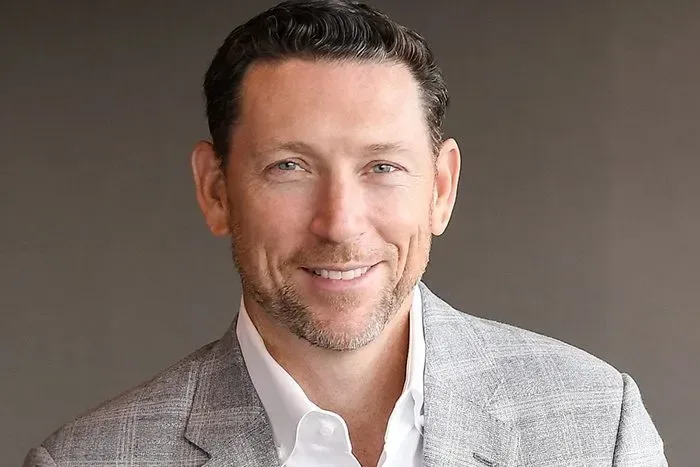
Ben Samek has been named CEO of Banijay America, taking charge of the combined U.S. organization formed following Banijay Entertainment’s merger with All3Media. The appointment puts a longtime Banijay executive at the center of a larger production operation whose portfolio ranges from established unscripted series to international format franchises and newer digital, live and immersive initiatives.
Samek will report to Banijay Entertainment deputy CEO Jane Turton. His new remit follows his time as CEO of Banijay Americas, a role he held from February 2023, after previously serving as the company’s president and chief operating officer beginning in 2018.
The leadership change is more than a revised title. It establishes the executive structure for a merged business that now brings Banijay America and All3Media’s U.S. presence under one roof, while also creating a centralized production-services operation intended to support producers across Banijay Entertainment’s global network.
A combined U.S. platform built around producers and franchises
Banijay America’s production-label lineup includes Endemol Shine North America, Bunim/Murray Productions, Truly Original, 51 Minds, Authentic Entertainment, Endemol Shine Boomdog and Banijay Mexico. Those labels sit behind a broad range of unscripted and entertainment programming, and the All3Media integration adds further franchises, including Studio Lambert’s The Traitors.
Among the major franchises now within Samek’s domain are Big Brother, MasterChef, MasterChef Junior, Below Deck, Summer House, The Challenge, Deal or No Deal Island, Fear Factor: House of Fear and Lego Masters. Their inclusion illustrates why scale is central to the merger: a large production group can maintain separate creative labels while coordinating resources, pursuing more formats and looking for ways a successful idea can move among markets, platforms and adjacent experiences.
In TV-business terms, a format is the repeatable framework of a show: its core rules, structure, casting model and production approach. That framework can be adapted for different territories. A franchise, meanwhile, generally means a property that can sustain multiple seasons, local versions, spinoffs or extensions beyond a single program. Samek has framed the combined group’s ambition around developing durable franchises that can reach audiences across platforms and experiences.
That distinction matters because the portfolio is not being presented simply as a collection of individual titles. The broader objective is to support producers and ideas capable of generating lasting business value, whether through a continuing series, an international version, a digital extension or an immersive project.
What Turnkey Studio Services adds
The merger also brings a newly centralized unit, Turnkey Studio Services, into Banijay America. Justin Medeiros will serve as executive vice president of production, while Jacob Cohen-Holmes becomes head of current programming. Both previously led a comparable operation within All3Media America.
Turnkey Studio Services is designed to provide production support and studio services for Banijay Entertainment producers around the world. Studio Lambert, the company behind The Circle, Undercover Boss and The Mob, is among the producers referenced as part of that global support network.
“Centralized production services” can sound like corporate shorthand, but its practical meaning is fairly straightforward. Instead of each label independently building every operational capability needed to mount a production, a shared team can provide support across the group. The available information does not spell out precisely which services Turnkey will provide on every project, so it would be premature to define its workflow more narrowly. Still, the stated aim is clear: it is a group-wide production and studio-support resource rather than another standalone creative label.
For a company whose labels operate across multiple markets, that structure could make collaboration easier while preserving the producer-led model emphasized by the leadership team. The central balancing act will be retaining the identity and entrepreneurial instincts of individual banners while giving them access to a larger organization’s reach and infrastructure.
Samek’s track record points beyond conventional TV windows
Samek’s recent work offers some clues about the direction of travel. He oversaw the expansion of Somebody Feed Phil from Netflix into a broader arrangement at YouTube. A new season of the series is also listed among upcoming YouTube programming.
That move is notable because it treats audience connection as something that can extend beyond one conventional distribution destination. It does not mean every show can or should follow the same route; different genres, talent arrangements and audience habits make each property distinct. But it shows why the language around “platforms and experiences” is important to this leadership appointment. The group is explicitly looking at TV production alongside digital distribution and other forms of IP expansion.
IP, short for intellectual property, refers here to a recognizable creative asset that can potentially be developed in more than one form. In the entertainment context, that can mean a television format, a recurring series brand or a concept that supports new audience touchpoints. The company has also cited Samek’s work expanding into immersive experiences, another indication that it sees selected properties as opportunities beyond their original screen format.
This does not automatically signal a wholesale shift away from television. Banijay America’s slate remains rooted in major TV brands. Rather, the stated strategy suggests an effort to give the right projects more than one route to audiences and to invest selectively in ideas that can keep developing over time.
Upcoming programming and an enlarged development slate
The newly combined organization enters this next stage with several projects named as upcoming: Simon Says, Predator vs. Prey with Alan Ritchson and Arizona Hot for Netflix, plus the new YouTube season of Somebody Feed Phil. The available details establish those titles as upcoming but do not provide release dates, episode counts or further production particulars.
Even so, the mixture is informative. It places Netflix projects alongside a YouTube continuation while the wider company portfolio includes long-running broadcast and cable-adjacent unscripted staples, competition formats and reality franchises. For viewers, a corporate reorganization is rarely visible directly on screen. Its eventual significance is more likely to be felt in the kinds of ideas a company can develop, the partners it can work with and the ways successful shows are carried forward.
In that respect, the merger is an industrial story with a creative downstream effect. Bigger organizational capacity does not guarantee a hit, and the announcement makes no claims that it does. What it can provide is a wider base of labels, formats, production support and distribution-facing experience from which to pursue the next series or extension.
New leadership structures in the Americas
The Banijay America news arrived alongside the creation of Banijay Latin America, a new organization for the company’s production businesses and activities in the region. Laurens Drillich will lead Banijay Latin America as CEO. Samek will remain involved there as a board member and consultant.
At the parent-company level, RedBird IMI and Banijay Group partnered on the Banijay Entertainment–All3Media merger earlier in the year. RedBird IMI CEO Jeff Zucker is chairman of the board, while Marco Bassetti is CEO, alongside Turton.
Those roles clarify the reporting line around Samek’s appointment. As CEO of Banijay America, he leads the combined U.S. structure; Turton is his direct senior executive within Banijay Entertainment; and Samek retains a defined advisory and board connection to the newly launched Latin American operation.
For the company, the immediate task is integration: placing the All3Media addition, the existing Banijay labels and Turnkey Studio Services into a structure that can serve producers without flattening the distinct identities that made those production companies valuable in the first place. For the audience, the visible measure will come later in the programs and franchises that emerge from that structure.
The entertainment business has no shortage of corporate realignments, but this one comes with a particularly recognizable unscripted catalog and a stated interest in taking selected ideas across more than one kind of platform. For another look at how television properties and celebrity culture can intersect, see our coverage of Dakota Johnson revisiting the Madame Web conversation on Saturday Night Live.