Generative video is often discussed in terms of a single prompt and a single impressive clip. Utopai Studios is making a different argument: the technology becomes more useful to professional film and television crews when it is embedded in the wider process of making, revising and tracking a project.
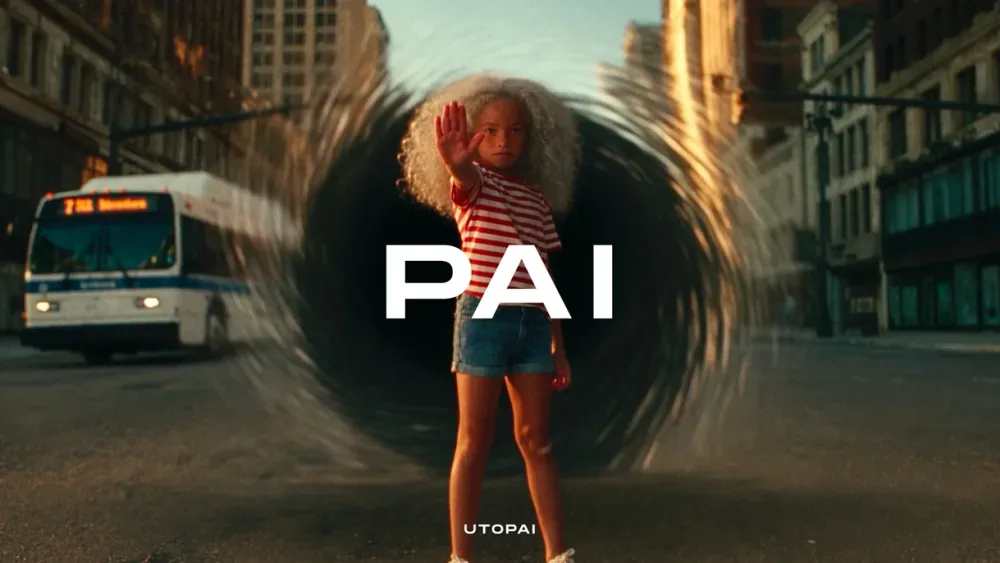
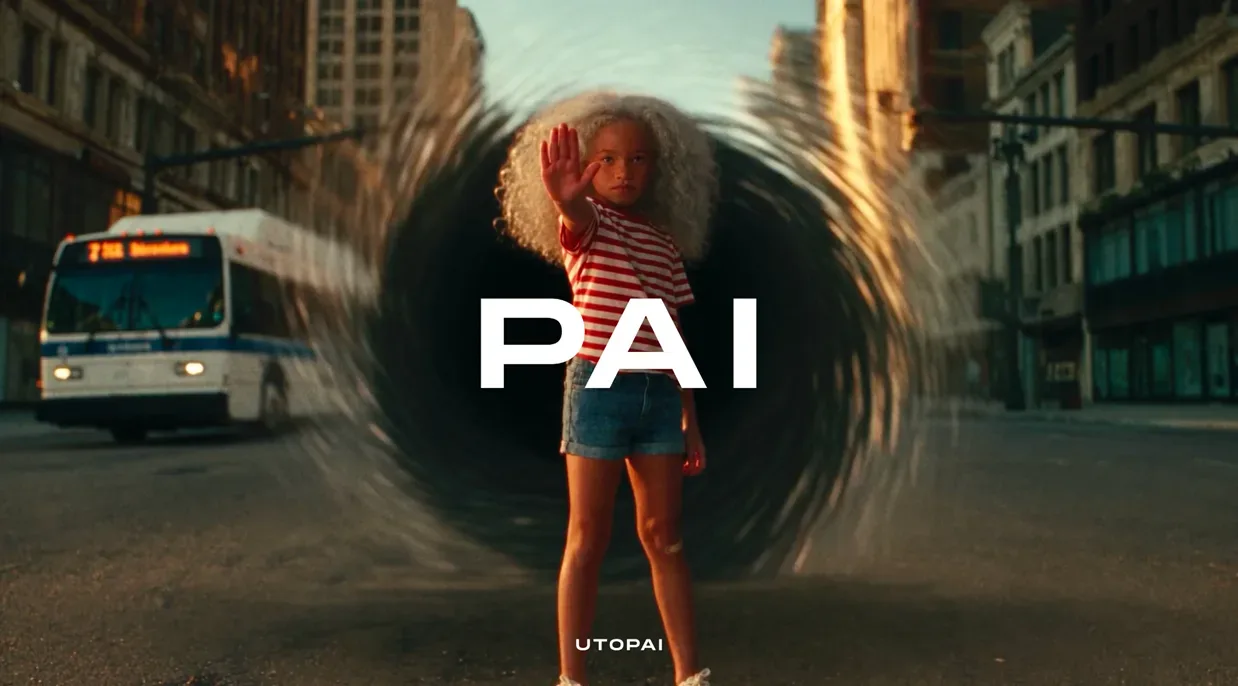
The studio has introduced PAI, short for production intelligence, as a shared environment designed to connect screenplay material, scenes, shots, characters, locations, objects and visual references. Its Utopai X video-generation model operates within that workspace, where filmmakers can create and compare takes, preserve earlier versions and move chosen material toward an editing timeline and existing post-production tools.
That distinction matters. A film is not merely a collection of isolated moving images. It can include hundreds or thousands of shots whose settings, characters, performances, camera decisions and visual rules must remain coherent as plans evolve. Utopai’s stated goal is to provide AI assistance without shifting final creative decisions away from filmmakers.
What “production intelligence” means here
In Utopai’s framing, production intelligence is not just another name for a video model. It is an attempt to create a persistent layer around the model: one that retains project context and can help a team work with that context through planning, ideation and iteration.
For more context, explore Killproof Gives Gun Honey’s Unbreakable Evie Parker Her Own Series, With NYCC Sampler Ahead of April 2027 #1.
PAI can break a screenplay down into scenes and shots while keeping project elements linked. The company’s so-called Production Assistants are AI agents inside the platform that use those connected details to help plan shots, develop concepts and make iterations. The system is intended to leave the creative authority with the filmmaker, who determines what is generated, retained or altered.
An AI agent, in this context, means software intended to carry out defined assistance tasks using the information available in the project workspace. That is meaningfully different from a one-off prompt box. The practical promise is that an assistant can work from a project’s existing context rather than force a creator to restate the same character, location or visual reference every time they make a change.
The company’s approach centers on an issue that becomes increasingly important after a first draft of an image succeeds: controlled revision. A director may want to adjust one piece of a shot while holding approved choices steady. That could mean retaining the established world, character or staging while developing the next creative option. Utopai identifies this kind of continuity as a core production requirement rather than a nice-to-have feature.
Utopai X’s ranking is a signal, not the entire workflow
Utopai X has reached second place globally on Artificial Analysis’ Text-to-Video Leaderboard With Audio, receiving an Elo score of 1,150. It sits nine points behind the top-ranked Wan 3.0 and is the highest-ranked model from a U.S.-based company on that leaderboard.
The result comes from blind human-preference testing. Viewers compare video outputs made from the same prompt without being told which model created each result, and their selections inform the Elo score. Elo is a comparative rating system: a score is useful for showing relative performance within that particular testing setup, rather than serving as a universal measurement of every production need.
That is why the placement should be read as validation of Utopai X’s competitive output in this specific benchmark, not as proof that a full production pipeline has been solved. The studio itself is pitching the ranking as supporting evidence for the generation technology underneath PAI, while concentrating its broader case on how that technology can be managed across a real project.
Utopai says its model is particularly capable with reflections, caustics, world understanding and high-level spatial consistency. These are technical concerns with an immediately visible effect on generated video. Reflections are the mirrored or partial images seen on surfaces such as glass, metal or water. Caustics are concentrated patterns of light produced when light is refracted or reflected, such as the moving bright patterns associated with water and glass.
Spatial consistency refers to whether elements of a scene behave as though they occupy the same three-dimensional space from moment to moment. For filmmakers, that is a plain-language continuity challenge: lights, objects, characters and camera positions need to make visual sense together. A convincing isolated frame is less valuable if subsequent footage loses the physical or visual logic established by the shot.
Why the workspace may matter more than a model-only pitch
PAI’s proposed workflow keeps Utopai X inside the project environment. A filmmaker can build out a shot in PAI, choose Utopai X for generation, evaluate multiple takes and keep prior versions available. Selected footage can then move to an editing timeline and eventually into established post-production environments.
Version retention is a modest but important part of the proposition. Professional creative work is iterative, and iteration creates choices that may need to be revisited. Keeping previous work accessible means a team can compare options rather than treat every newly generated take as a replacement for what came before. It also supports a workflow where approval is deliberate instead of accidental.
The company is not presenting its platform as a replacement for post-production ecosystems. Its stated aim is to connect with systems production teams already use. That interoperability goal is significant because a production environment has to accommodate many decisions and many contributors over time; a generative model’s output is only one component of the final screen work.
Utopai’s chief scientific officer, Zijian He, describes the intended benefit as increasing control over creative ideas, allowing artists to explore more possibilities and iterate faster while making choices with the same intention they bring to other production stages. The language emphasizes assistance and control, rather than a claim that filmmakers can be removed from the process.
For a useful comparison of the company’s positioning, see this overview of Utopai’s production-intelligence strategy.
A studio is also the test environment
Utopai Studios says it is developing PAI and Utopai X within an operating film and television studio, and describes itself as the world’s largest independent AI-native film and television studio, valued at $1 billion. Its premise is that live production use supplies problems that are difficult to recreate in a purely research-based setting.
The company is applying the approach to The Most Serious Fart, an upcoming animated feature written and directed by Mike Bender. Beyond establishing that the project is being used in the company’s process, no release details or further production specifics were provided.
Utopai says feedback from filmmakers and artists working on productions can inform improvements to its models, agents and workflows. It also says real productions create proprietary production data that feeds into that development cycle. In theory, improvements can then return to the current project and carry into future work.
This is the company’s proposed compounding advantage: experienced production personnel, production data, models, agents and an AI-native pipeline each improve the usefulness of the others. It is an ambition rather than an independently established outcome. Its success will depend on whether the system can preserve project-specific creative direction while remaining usable inside the practical demands of a production.
The claim extends beyond Utopai’s own slate
Utopai is also looking toward partnerships with film and television organizations outside its own projects. It is positioning PAI not as a standalone generative AI product, but as infrastructure that could be integrated into established professional workflows.
That is a considerably larger claim than saying a model can produce attractive video. It suggests a platform meant to coordinate models, project knowledge and filmmaker-led decision-making through the process of producing a film or series.
For studios and production partners, the potential value is not simply faster image generation. It is the prospect of making ambitious creative exploration manageable without severing the links among script decisions, visual references, selected versions and the footage that ultimately proceeds into post-production. Whether that prospect is realized depends on the quality of the production context, the reliability of the generated material and the degree of control filmmakers retain at each stage.
Utopai X’s No. 2 leaderboard placement gives the company a notable data point in support of its model. PAI is the more consequential bet: that generative video can become part of a context-aware production system where the filmmaker, rather than the prompt alone, remains at the center of the work.