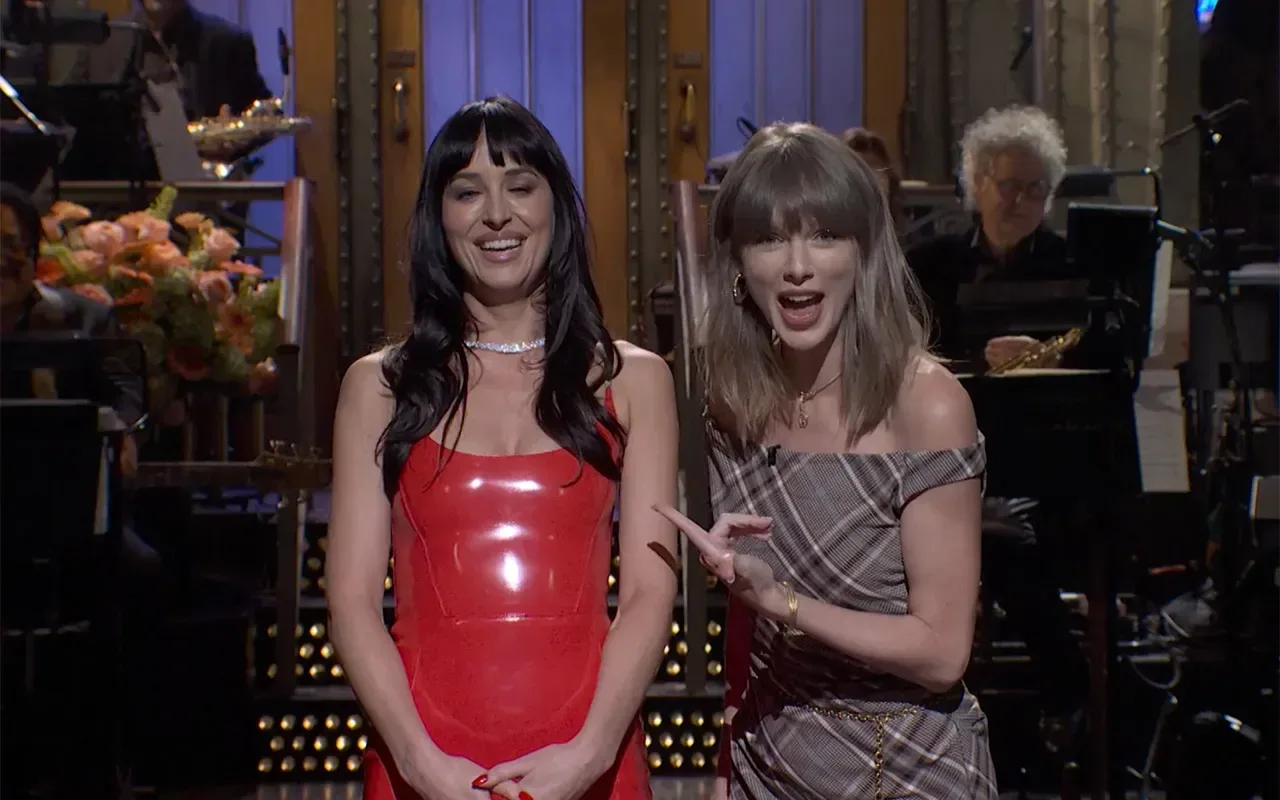
Dakota Johnson has turned one of the most enduring jokes around Madame Web into part of her own comedy material. While hosting Saturday Night Live, Johnson returned to the fact that she had previously appeared on the show in 2024 to promote the Spider-Man-adjacent film. This time, she quipped that she was still promoting it because it still had not made money.
The gag works because Madame Web has become a shorthand for a superhero movie that landed badly with critics, became a major online meme target and failed to generate the theatrical momentum normally expected of a studio comic-book release. Johnson’s willingness to make herself part of the joke is also notable: she received a Golden Raspberry award for Worst Actress for the film.
But “hasn’t made any money” is a punchline, not a complete accounting statement. The movie took in $100.5 million at the box office against a reported $100 million gross budget. Those two numbers may look close enough to suggest that the film nearly broke even, but theatrical grosses are not the same thing as a studio’s eventual revenue or profit.
Why a $100.5 million gross does not automatically mean break-even
Box office reporting generally describes the money generated through ticket sales, rather than the exact share that returns to the distributor and the studio. It also does not, by itself, establish the full cost of releasing a movie. The supplied budget figure is $100 million, while the overall financial equation can be affected by distributor costs. That distinction matters here: the film is believed to have made a loss after such costs are considered.
In plain terms, a movie can gross an amount similar to its reported production budget and still be unprofitable. The gross is a headline-friendly public number; profitability is a much wider calculation. That is why Johnson can make the joke, and why observers can reasonably describe Madame Web as a box-office disappointment, without pretending that its ticket-sales total alone tells the entire business story.
It is also worth separating three labels that are often blurred together in movie discourse:
- Box-office disappointment: a film whose theatrical receipts do not meet commercial expectations or do not appear sufficient to cover its full costs.
- Critical failure: a film that received broadly negative reviews. Madame Web had a 10% approval score on Rotten Tomatoes.
- Historic box-office bomb: an exceptionally large financial loss, usually judged by estimated losses rather than the gross alone.
Madame Web clearly fits the first two descriptions on the information available. The third is a different, more exacting claim—and one the numbers do not support.
A flop, yes—but not the biggest one
The movie’s reputation can make it tempting to file it among Hollywood’s all-time largest commercial disasters. That is not accurate. Madame Web is a high-profile underperformer, but it is not reported as the biggest box-office bomb in Hollywood history, nor as the worst-performing comic-book movie.
John Carter is widely regarded as the largest commercial failure, with losses estimated at up to $200 million. The Lone Ranger is reported to have lost up to $190 million. In comic-book terms, The Marvels is identified as the poorest-performing film, with a loss in a similar range to The Lone Ranger.
The important difference is scale. Madame Web had a much lower reported budget than those huge losses. That does not soften the film’s critical reception or transform its theatrical performance into a success, but it does put its commercial failure into proportion. A movie can become culturally famous as a flop while losing less money than larger, more expensive productions.
That distinction is useful beyond this single title. Audiences often see a film’s gross, compare it directly with a budget and then declare victory or defeat. Yet blockbuster economics are more complicated than that one comparison. Likewise, the loudest internet response does not necessarily identify the largest financial loss. In Madame Web’s case, the conversation was amplified by memes, poor reviews and a distinctly awkward place within a broader superhero landscape.
Why Madame Web became such an easy target
Commercial disappointment alone does not always create a long afterlife online. Madame Web had a second problem: its critical response was severe. The film’s 10% Rotten Tomatoes approval rating captured a broad negative reaction, and it later collected three Golden Raspberry awards, including Johnson’s Worst Actress award.
The criticism centered on the screenplay. One assessment described the premise as an interesting hybrid, but argued that an overcrowded script, generic dialogue and character types that felt basic undermined both the cast and the prospective Spider-Women at the film’s center. That criticism helps explain why the movie did not simply vanish after theaters. Its reception became a subject of discussion in its own right.
Johnson’s joke recognizes that odd second life. The punchline is not merely that the movie did not meet commercial expectations; it is that the title remains familiar enough for a live audience to understand the reference immediately. There is a degree of self-awareness in taking ownership of that cultural memory rather than trying to ignore it.
There is also a practical career point here. A performer is not the sole author of a film’s script, marketing, budget or distribution strategy. Awards and online ridicule may attach to an actor because they are the most visible face of a project, but the stated criticism of Madame Web concerned its writing and the way its characters were handled. Johnson’s monologue reframed a painful public result as a controlled, brief comic beat.
The wider Spider-Man spin-off problem
Madame Web did not arrive in isolation. It was part of a run of live-action Spider-Man spin-offs that began with Venom in 2018 and also included Venom: Let There Be Carnage, Morbius, Venom: The Last Dance and Kraven the Hunter.
That slate pursued stories around characters connected to Spider-Man without delivering the planned crossover that would have integrated Spider-Man with the villain-led offshoots. The crossover never materialized. As a result, each entry faced the challenge of establishing its own appeal while operating beside one of the best-known superhero characters in popular culture.
Earlier this year, Sony Pictures chief Tom Rothman acknowledged that audiences were not satisfied enough with the live-action spin-off films. That assessment does not pin a single cause on Madame Web, but it gives the movie a broader context. The issue was not simply whether one film could create a viral line or become the internet’s favorite punching bag. It was whether audiences saw sufficient value in the overall direction of these offshoots.
For superhero franchises, brand familiarity can bring attention, but it does not guarantee enthusiasm. A recognizable comic-book connection may get a project into the conversation; it cannot by itself resolve concerns over story, character or audience expectations. Madame Web became a particularly visible example of that gap.
Johnson’s joke is sharper than the literal claim
Johnson’s line should not be read as a formal declaration of the movie’s books. It is a comedian-host’s deliberately exaggerated way of acknowledging a well-established public narrative. The financial details are more nuanced: $100.5 million in box-office receipts from a reported $100 million gross budget does not make the movie one of the industry’s very largest losses, but it also does not establish profitability when distributor costs are included.
The joke is sharp precisely because it cuts through those qualifications. Madame Web has become associated with poor reviews, disappointing theatrical business, online mockery and awards-season ignominy. The nuance matters for assessing the scale of the flop; the reputation explains why the punchline lands.
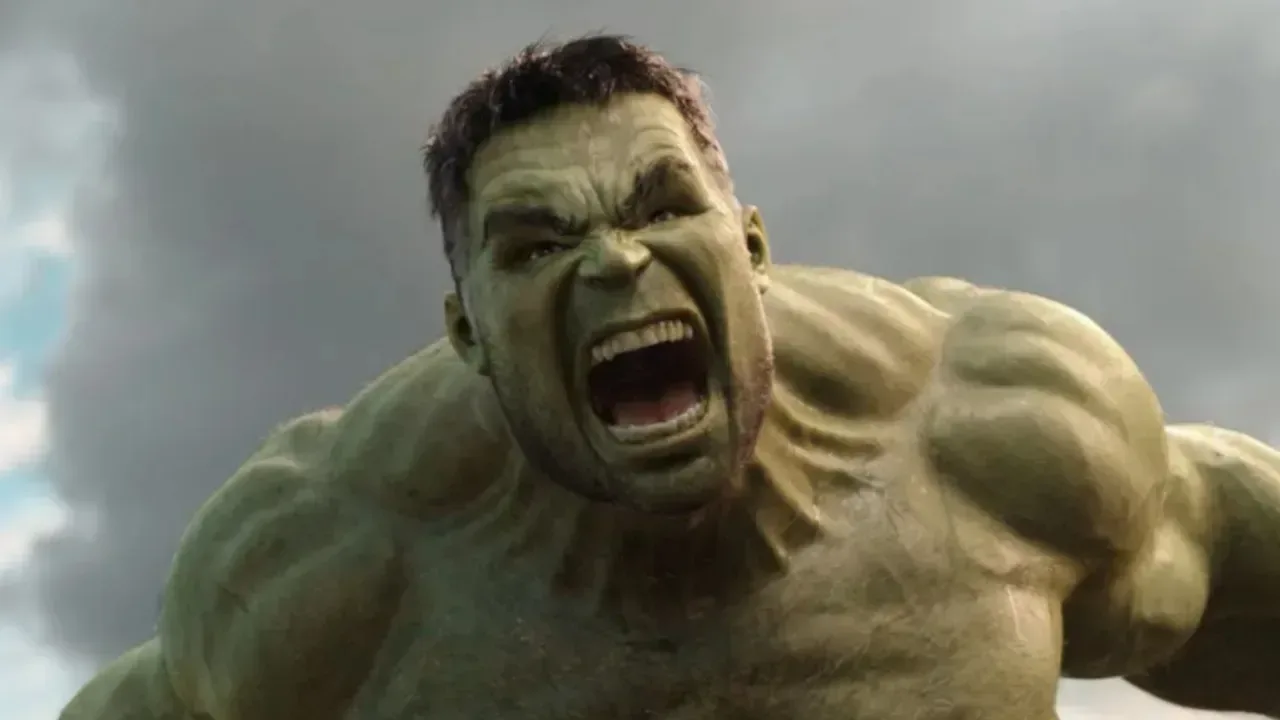
Marvel-related casting and franchise discussion will continue to draw attention, including around figures such as Mark Ruffalo’s comments about continuing as Hulk. But Johnson’s monologue is a reminder that not every superhero headline is about the next crossover or a future installment. Sometimes, the most durable franchise conversation is a star making a brutally concise joke about the last one.