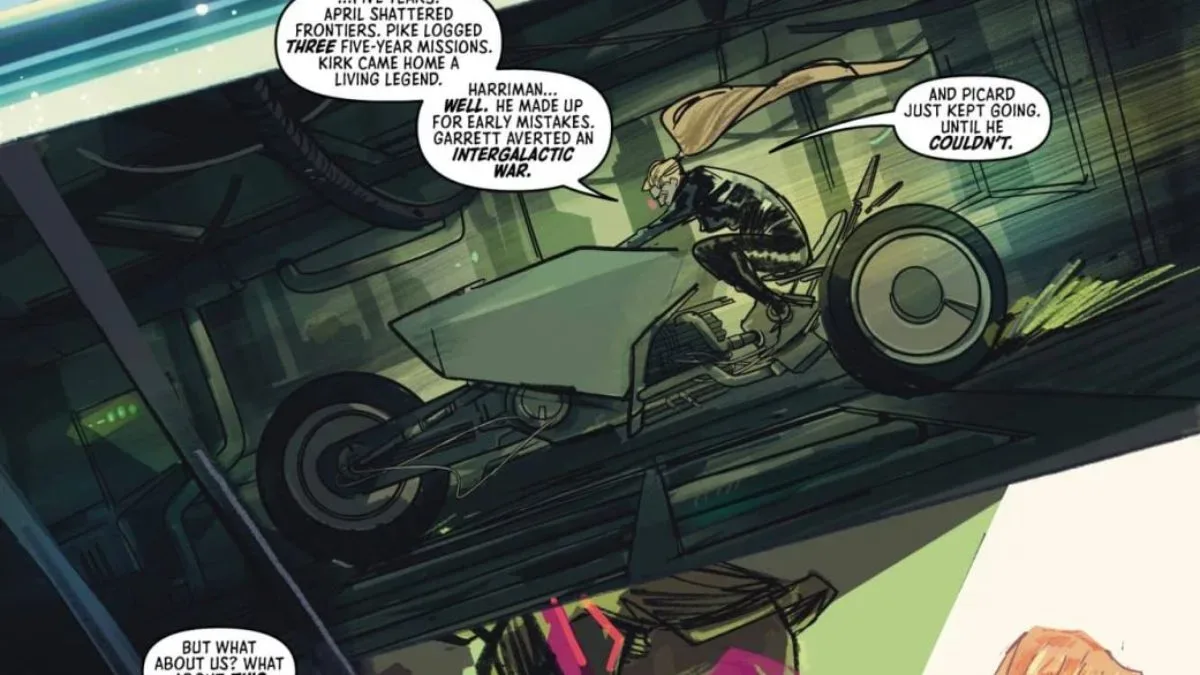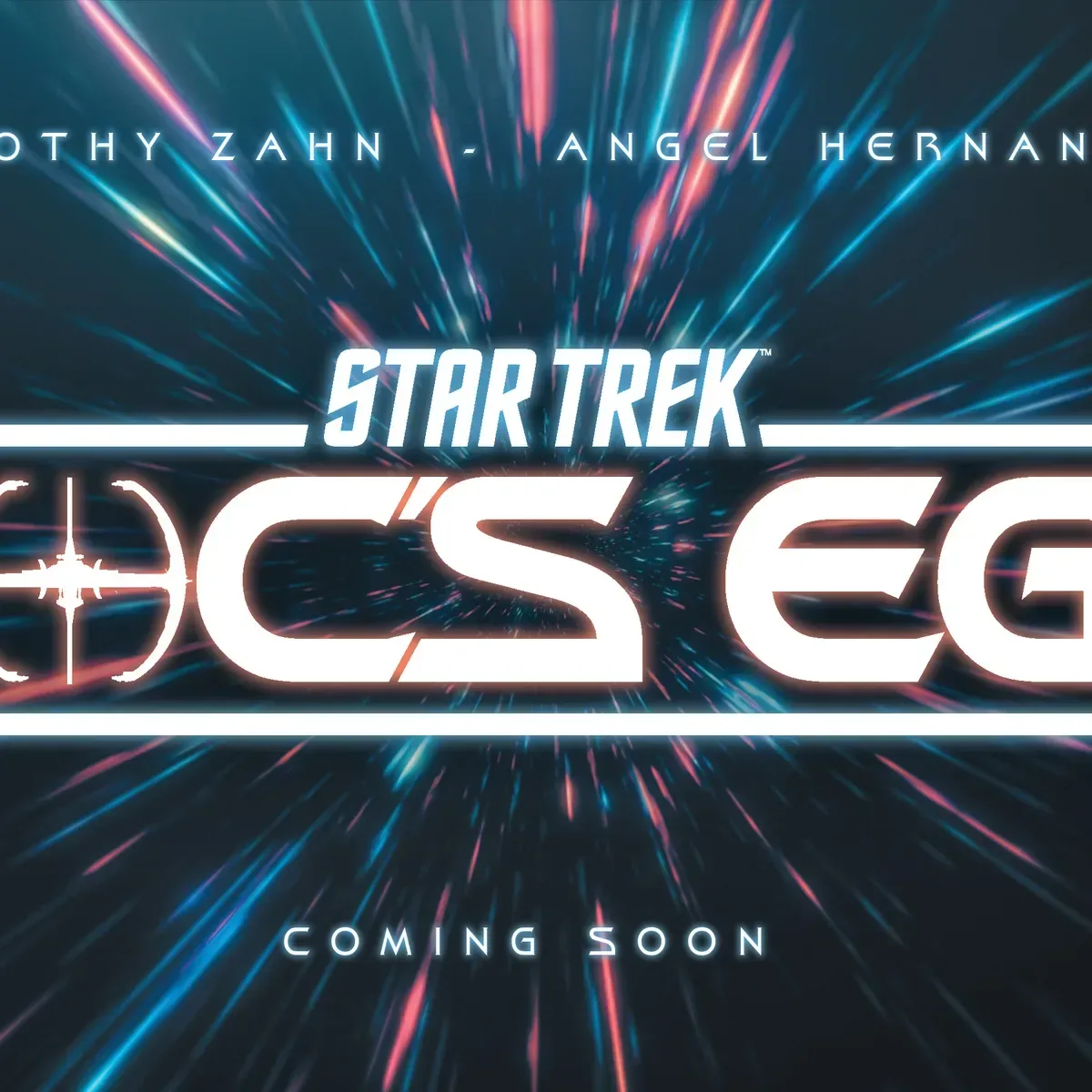
Timothy Zahn is headed for Deep Space 9. The author will write Star Trek: Roc’s Egg, a new graphic novel illustrated by Ángel Hernández and scheduled for release in October 2027.
The premise plants a mystery in one of Star Trek’s most naturally suited settings for it: a space station where arrivals, departures, commerce and competing interests all pass through the same corridors. A valuable object called the Roc’s Egg reaches the station and appears to be destroyed in transit. That immediately brings a Federation JAG investigation to Deep Space 9, but the apparent loss is only the start of the case.
The inquiry is set to uncover a secret auction, wealthy collectors, dangerous criminals, a potentially misleading artifact and a murder waiting in the wings. In other words, the book is positioning the station not simply as a familiar backdrop, but as a pressure cooker for a story where the value of an object can conceal a much bigger question: who benefits from what everyone believes happened to it?
A mystery built around an apparently destroyed treasure
The crucial detail in Roc’s Egg is that the artifact is seemingly destroyed. That wording matters. It does not confirm the Roc’s Egg survived, was swapped, or has some hidden property. It does establish that the initial explanation is not necessarily the final answer—and that uncertainty gives the Federation’s investigators a reason to keep pulling at the threads.
The surrounding details suggest several overlapping motives rather than a straightforward missing-property report. The artifact has enough perceived worth to attract an auction. The station includes both affluent collectors and criminals. And the official description warns that the object may not be what it seems. Each piece shifts the story away from a simple recovery mission and toward a broader conspiracy in which authenticity, ownership and reputation may all be in dispute.
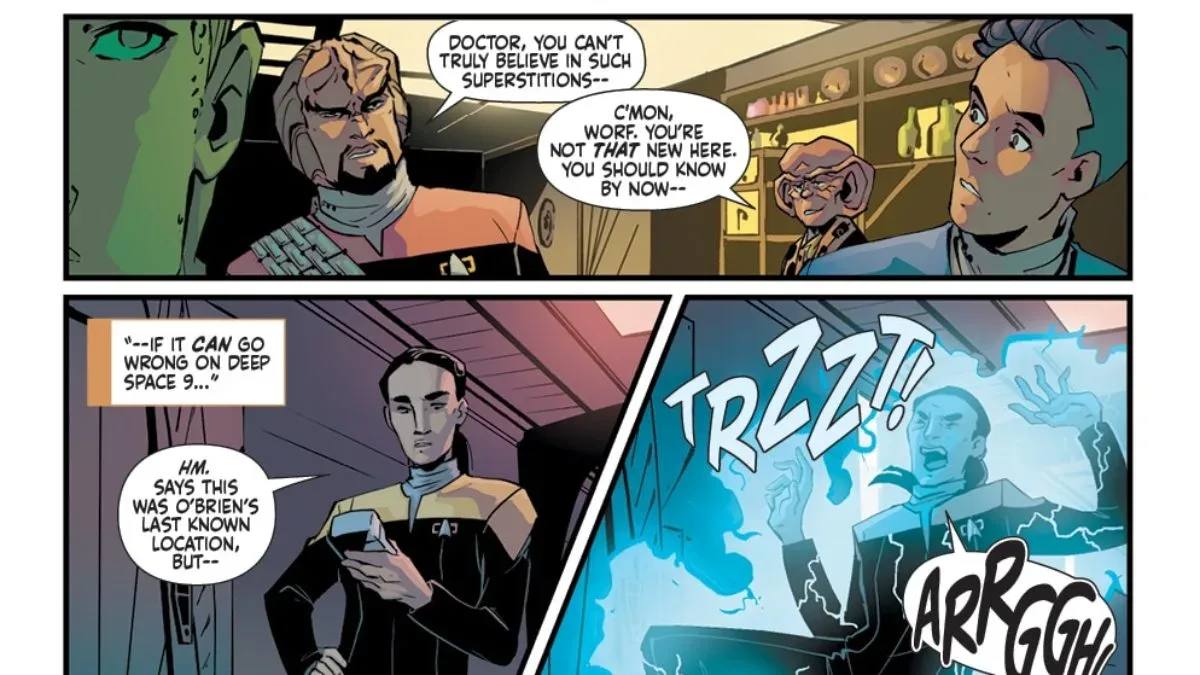
That setup also gives Hernández a potentially rich visual assignment. Graphic novels can communicate a mystery through what characters notice—or fail to notice—in an environment: an object in a display case, a transaction in the background, an expression held a beat too long. The announced creative pairing gives Zahn responsibility for the story and Hernández responsibility for translating the station-bound investigation into sequential art.
What is a Federation JAG investigation?
“JAG” is shorthand for Judge Advocate General, a term generally associated with a military legal branch. Within the stated premise, a Federation JAG investigation means the destruction of the artifact is being treated as a matter serious enough for an official legal inquiry, rather than merely an unfortunate shipping accident.
That distinction is useful for the kind of story Roc’s Egg appears to be telling. A JAG team can ask formal questions about evidence, testimony, responsibility and motive. It also creates tension between procedure and the messier realities of a station full of people with private agendas. The book’s description does not identify the members of the investigative team or explain their exact authority, so those details remain to be revealed.
Related coverage includes Timothy Zahn Heads to Deep Space 9 for Star Trek: Roc's Egg in 2027.
Why Deep Space 9 fits the case
Deep Space 9 is central to the announcement, not an incidental location. The station is described as being full of wealthy collectors and dangerous criminals, while the mystery turns on a private auction and a priceless-looking artifact. Those ingredients make a fixed location especially practical: suspects can be close at hand, legitimate business can overlap with illicit dealing, and every public gathering can offer an opportunity for a concealed exchange.
The phrase “something is rotten on Deep Space 9” makes the intended tone clear. This is not being framed as a voyage to a new anomaly or a single battle against an external threat. It is a closed-in mystery where the central challenge is deciding which version of events is credible. The impending murder raises the stakes beyond the artifact itself, suggesting that knowledge of the truth may be dangerous.
That is a promising match for a graphic-novel format. A station mystery can use changing locations without losing its geographic focus: official offices, auction spaces, docks, quarters and public areas can all become stages for evidence or deception. Still, readers should be careful not to assume specific characters, locations or plot mechanics beyond what has been announced. The available description establishes the premise, not the full cast or the route the investigation will take.
Zahn’s move from Star Wars to Star Trek
Zahn is widely associated with Star Wars fiction. His original Thrawn trilogy helped build the Expanded Universe in the early 1990s, and he has continued writing stories involving the character in the newer Star Wars continuity. Roc’s Egg therefore marks a notable franchise shift: he is bringing his fiction work to a Star Trek graphic novel rather than another galaxy far, far away.
The project is not presented as a crossover. It is a Star Trek story, set on Deep Space 9, with its own artifact-driven investigation. The connection is creative rather than fictional: an author with a major history in one landmark science-fiction franchise is contributing to another.
Zahn described his relationship with Star Trek as going back to the original television series in 1966. He characterized the opportunity to contribute after 60 years as an honor and said he would always cherish it. That personal history helps explain why the project carries more weight than a routine credit change. It is a chance for an established genre writer to work in a universe he has followed since its beginning.
“My association with Star Trek goes all the way back to 1966 and the original TV series. Now, after sixty years, I’ve been given the chance to add my own small grace note to that rich and vibrant symphony.”
Ángel Hernández joins as illustrator
Ángel Hernández is attached as the illustrator and is described as a Star Trek veteran. That experience is particularly relevant for a book set on a recognizable station and built around familiar franchise institutions such as the Federation. A mystery can introduce new faces and new objects, but it still needs its setting to feel legible and grounded; an artist who already knows the franchise’s visual language is well placed to balance those demands.
The announcement does not provide interior-page previews, cover art, a page count or further information about the book’s format. It also does not identify a colorist, letterer or additional creative contributors. For now, the confirmed creative team is Zahn on writing and Hernández on art.
The practical takeaway for readers
Star Trek: Roc’s Egg is due in October 2027. Its announced ingredients are a Deep Space 9 setting, a Federation JAG investigation, an artifact apparently destroyed during transit, a secret auction, collectors and criminals, and a larger conspiracy that may culminate in murder.
- Title: Star Trek: Roc’s Egg
- Writer: Timothy Zahn
- Illustrator: Ángel Hernández
- Setting: Deep Space 9
- Story type: Artifact-centered mystery and conspiracy
- Release window: October 2027
It is too early to draw conclusions about continuity ties, character appearances or how the Roc’s Egg will fit into wider Star Trek stories. The announced premise does, however, make the book easy to place tonally: it is a whodunit shaped by institutional investigation, hidden commerce and a station whose residents all appear to have something to hide.
For readers following how major science-fiction properties continue to move between formats, this is another reminder that franchise storytelling does not stop at television or prose. Comics and graphic novels give creators room for self-contained mysteries with a specific visual identity—much as other screen-born worlds continue to pursue new media paths, including the still-developing BioShock film adaptation. In Zahn and Hernández’s case, the destination is Deep Space 9, and the object at the center of the trouble may be worth far more—or far less—than anyone initially believes.