The live-action BioShock movie remains in development, and director Francis Lawrence has offered one of the clearest signs in some time that work is still moving forward. Lawrence says the team is continuing to work on the screenplay, believes it is “pretty close,” and feels positive about where it stands.
That is not a release-date announcement, a casting reveal, or confirmation that cameras are ready to roll. It is, however, a meaningful update for an adaptation first announced in 2022 and one that has spent years navigating delays, changing scale and the ordinary uncertainty of film development. Lawrence also made his enthusiasm unusually plain, saying he would love to make the film and has been pushing to get it made.
For fans waiting to see Rapture translated into live action, the key phrase is still script. A screenplay is the foundation that determines what version of the story the film will tell, whose perspective will lead it, how much of the game’s world can fit in a feature-length format, and what kind of production the project can realistically become. Being close to a script is encouraging; it is not the same as a film entering production.
A smaller-scale approach does not mean a smaller idea
Previous reporting established that the adaptation was reworked around a smaller budget in 2025. Producer Roy Lee characterized the revised direction as a more personal point-of-view project rather than a much grander adaptation. That phrasing matters because BioShock is remembered for a setting whose scale is central to its appeal: Rapture is an underwater city with an elaborate visual identity, a troubled social order and a history that shapes every encounter within it.
A reduced budget can sound like a concession, but it also points toward a creative choice about focus. A personal point of view generally means that a film puts greater weight on one character’s journey and immediate stakes instead of trying to survey every corner of its fictional world. In practical storytelling terms, that can help an adaptation avoid turning into a guided tour of recognizable locations.
It may also be especially useful for a game-to-film translation. Video games can devote many hours to exploration, optional encounters and environmental details. A movie has far less time. The screenplay therefore has to decide which pieces of lore are essential to the central dramatic line and which elements are best conveyed through the setting, design and character behavior rather than exposition.
Nothing public establishes precisely how the new film will make those choices. The film’s specific plot details remain under wraps. Still, the combination of a more personal framing and the stated connection to the first game gives viewers a reasonable outline of the creative challenge ahead: preserve the dread, ideas and atmosphere associated with Rapture without assuming that a feature film can reproduce the game beat for beat.
The first BioShock is the stated foundation
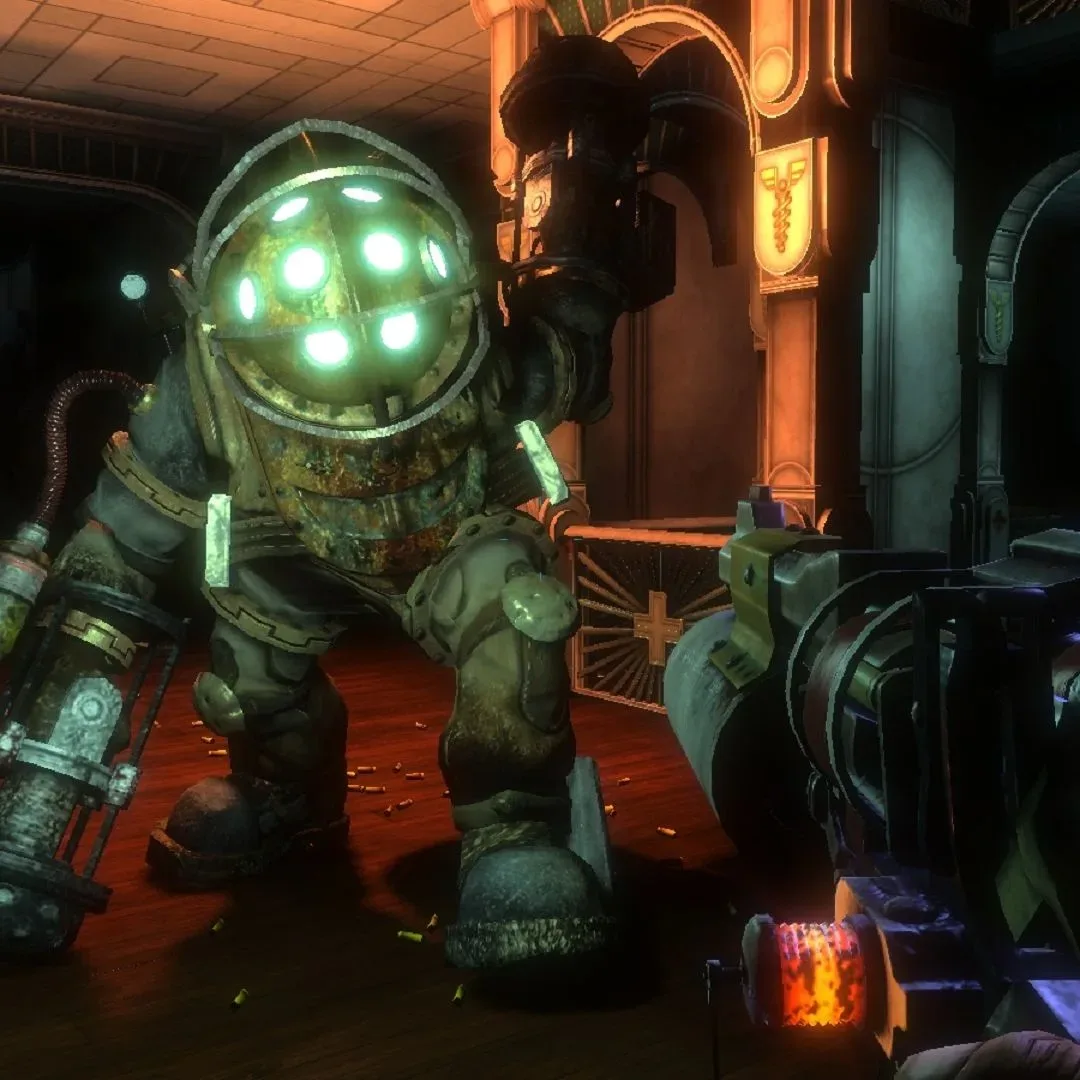
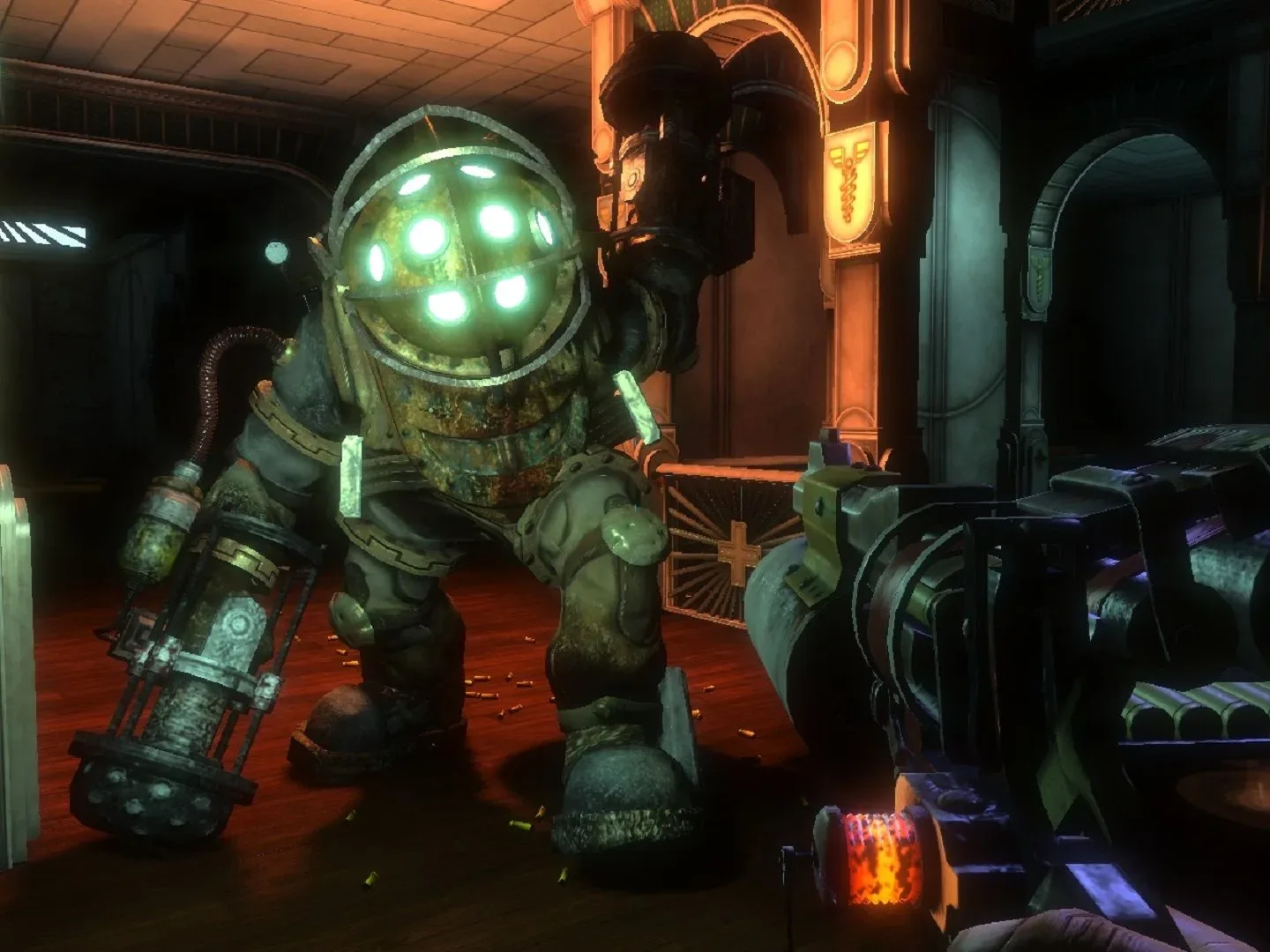
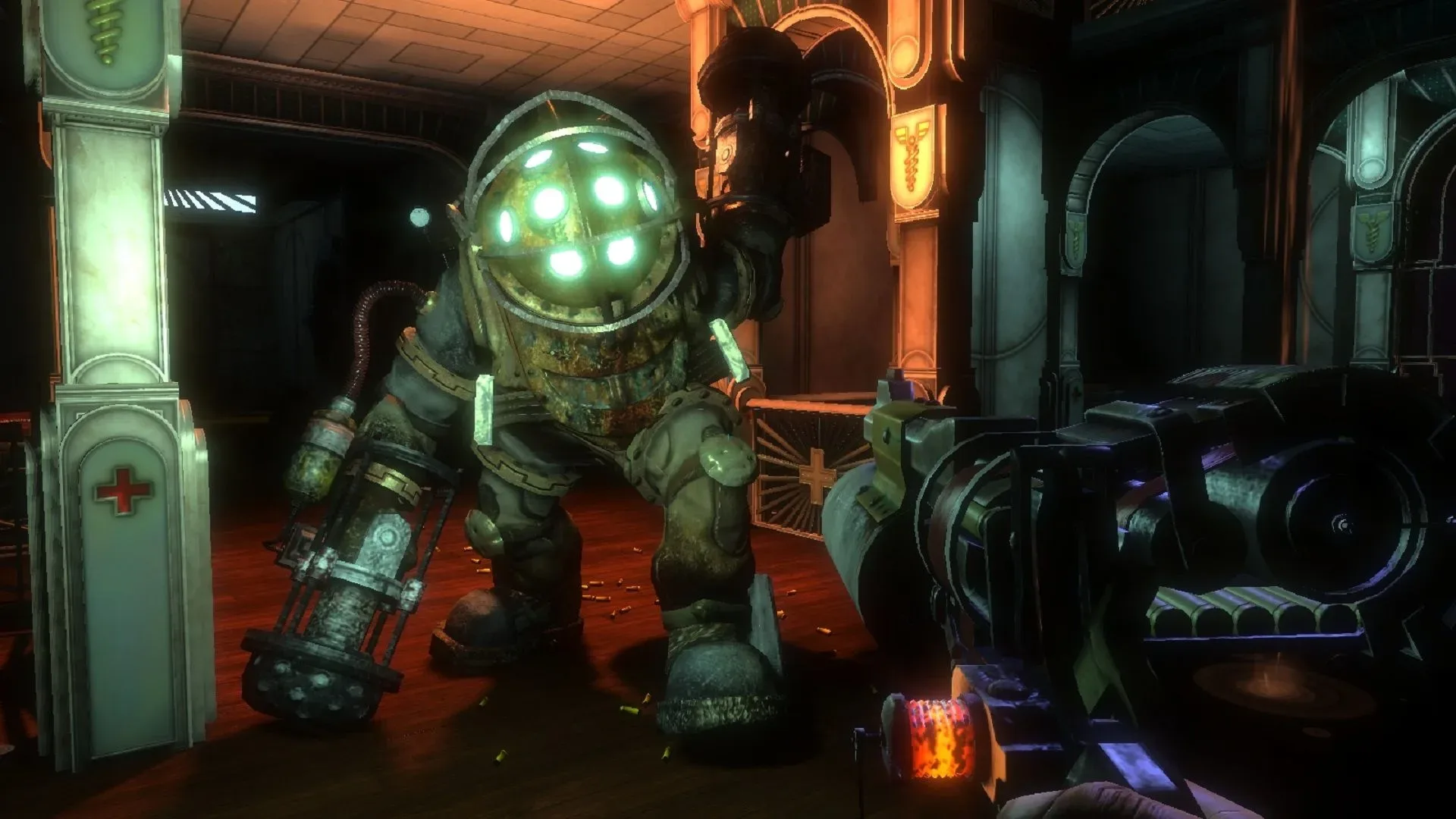
Lee has said the movie will be based on the first BioShock. Released in 2007, the first-person shooter begins when its protagonist, Jack, crash-lands in the Atlantic Ocean and discovers an entrance to Rapture beneath the waves.
Related coverage includes BioShock Movie Script Is "Pretty Close" as Francis Lawrence Reaffirms Netflix Adaptation Plans.
Rapture is not simply an unusual backdrop. The city’s downfall is intertwined with ADAM, a genetic material capable of granting superhuman abilities. The discovery of ADAM contributed to Rapture becoming a dystopian, war-ravaged society. That combination gives the game a built-in set of cinematic problems and opportunities: isolation, extraordinary powers, a collapsed community, and a protagonist suddenly dropped into a place whose past is inseparable from its danger.
For readers less familiar with the game, a first-person shooter is a game presented through the player character’s perspective, typically centered on movement, combat and direct interaction with an environment. Film cannot duplicate that interactive viewpoint in the same way. Its equivalent work has to come through camera perspective, performance, sound, editing and the information the script withholds or reveals. The adaptation will need to convert the sensation of discovering Rapture into a narrative experience for viewers who are not controlling Jack themselves.
That does not necessarily require abandoning the game’s premise. It means adapting its function. The crash, the hidden doorway and the descent into an underwater city can establish the audience’s outsider perspective just as they establish Jack’s. From there, the movie will need to choose how much to explain, how quickly to introduce ADAM’s consequences, and which parts of Rapture’s collapse should be foregrounded.
Why a finished script remains the important milestone
Development can be frustratingly opaque from the outside because several stages are often discussed as if they were interchangeable. They are not. A project can have a director attached, a producer involved and a recognizable property behind it while still needing a screenplay that aligns story, scope and budget.
- Development is the broad stage in which a project is shaped, including screenplay work and planning.
- A screenplay lays out the movie’s scenes, characters, dialogue and narrative structure.
- Pre-production generally comes later and involves practical preparation such as detailed design work, casting and scheduling.
- Production is the filming stage.
Lawrence’s update places the public conversation firmly in development. The wording suggests progress, but it does not establish that the screenplay is complete or that the project has moved into pre-production. Likewise, there is no confirmed release window for the BioShock film in the information currently available.
That distinction is worth keeping clear, especially after a long period of sparse public news. Announced adaptations can spend substantial time in script development because the first draft is rarely the final answer. The difficulty is heightened here by the reported budget revision: the screenplay must satisfy the creative ambitions of a major game adaptation while operating within the project’s revised scale.
Delays have shaped the project’s long road
Netflix announced the live-action BioShock project in 2022, with Lawrence attached to direct. Since then, the project’s momentum has been affected by Hollywood strikes as well as Lawrence’s work on another major franchise film. The lack of frequent updates therefore should not be read as a confirmed cancellation or as proof of a completed movie waiting to be unveiled. It reflects a project that has remained in development amid real production-industry interruptions and competing commitments.
Lawrence is currently occupied with The Hunger Games: Sunrise on the Reaping, a film centered on Haymitch Abernathy’s games. That movie is scheduled to reach theaters on November 20, 2026. Lawrence has described it as a return to form for that franchise, with surprises along the way.
His Hunger Games commitment provides useful context for the BioShock timeline without answering it. Directors can be involved with development work while another production is taking their immediate attention, but it would be speculative to turn that into a prediction about when BioShock might shoot or premiere. No such dates have been confirmed.
What fans can responsibly take from this update
The most concrete takeaway is that Lawrence still wants to direct the film and believes the script is nearing a strong place. The adaptation has also retained its reported grounding in the first BioShock rather than being publicly repositioned as an adaptation of a later entry. Its budget-conscious reworking is reportedly intended to support a more personal perspective, not to erase the connection to Rapture.
There is also plenty that remains unknown. There is no announced cast, no disclosed production start, no revealed screenplay outline and no confirmed premiere date. Fans should be wary of treating a promising script update as confirmation of any of those next steps.
Still, a director publicly reaffirming both his commitment and his confidence is more substantial than vague assurance that a project exists somewhere in a studio pipeline. Rapture is a setting that depends on atmosphere as much as spectacle, and a focused adaptation could make that atmosphere its primary asset. Whether the final screenplay finds the right balance between the city’s mythology and one character’s experience is the question that will define the movie far more than the size of any single set piece.
Until further official details emerge, the BioShock film’s status is best described plainly: it is still being developed, the screenplay is reportedly close, and its director remains eager to take the plunge. For another look at how game creators and leaders talk about pursuing the work that matters most, read Shawn Layden’s comments on developers chasing the game they cannot ignore.