The Great Flood, a mixed-reality real-time strategy game in development for Meta Quest, is heading to Kickstarter with a $10,000 funding goal. LingVision Games and SoulFire Studio Team have outlined a campaign running from October 8 through November 5, 2026, ahead of a planned Q4 2026 launch for the free-to-play game.
The campaign is positioned as support for the project’s final launch work rather than an early attempt to establish its fundamental shape. The teams say the game’s core mechanics and design are in final testing, while campaign proceeds are intended to aid final launch efforts, marketing and player-base growth. Stretch goals may be detailed if the initial target is met.
That distinction matters for prospective backers. A Kickstarter can fund a game at very different stages: sometimes it enables a concept to be made at all; other times it supports a project that is moving through its last development and release preparations. The Great Flood is described as the latter, though the available campaign details do not specify which individual features, content, or launch tasks will be affected by the final funding total.
A tabletop-scale RTS premise for Meta Quest
The Great Flood is a tactical RTS built around matches against either artificial intelligence or other players. It supports 1v1 and 2v2 contests, and its modes include both PvE and PvP play.
RTS means real-time strategy: choices happen continuously during a match instead of being divided into turns. In practical terms, that puts pressure on players to make and revise decisions while the battle is underway. The game’s stated systems include deploying a team, changing tactics mid-battle and placing defensive towers. Those elements point to a format where positioning, response time and the use of available units or abilities are central considerations.
The “mixed-reality” label identifies its Meta Quest focus. Mixed reality is generally used for experiences that combine digital game elements with a player’s real-world surroundings, rather than presenting only a fully virtual environment. The developers have not detailed the exact room-mapping, interaction, visibility or play-space requirements for The Great Flood, so prospective players should avoid assuming particular mixed-reality functions until they are formally described.
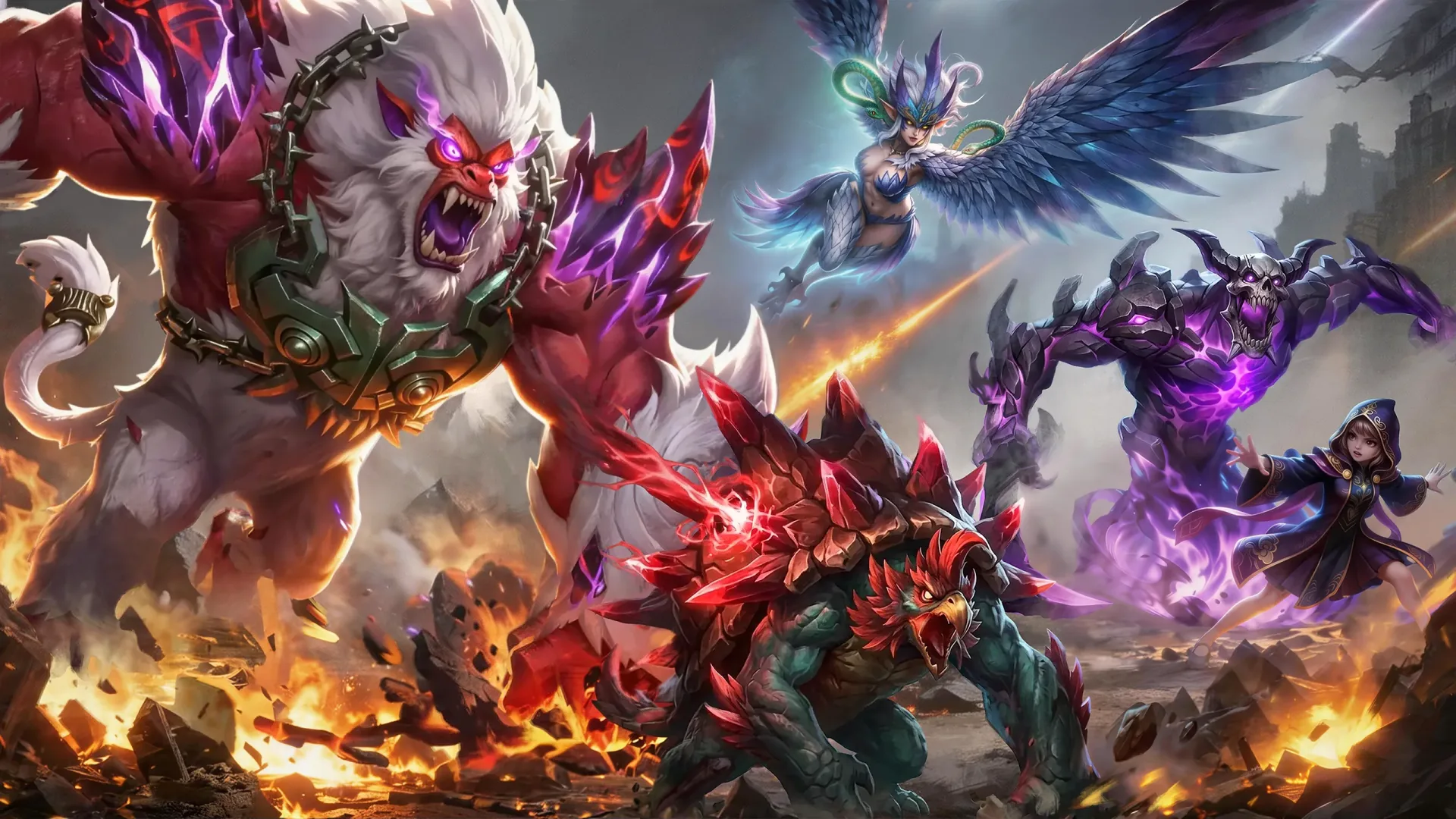
Its combatants come from a mythic roster spanning divine beings, deities and humanoid monsters. Before a battle, players assemble a squad comprising two heroes plus eight units or spells. Each option is said to have distinct traits for the battlefield, giving the title a roster-building layer alongside moment-to-moment tactical play.
What the squad structure suggests—and what remains unknown
The two-hero, eight-unit-or-spell setup establishes a clear deck- or loadout-style boundary for team creation. Players will have to decide which heroes and supporting options belong together before entering a match, rather than bringing an unrestricted roster into every battle. The presence of spells alongside units also indicates that a squad can include direct effects as well as characters placed on the field.
Related coverage includes The Great Flood Kickstarter Opens for Meta Quest Mixed-Reality RTS.
However, many balance-critical details have not yet been shared. There is no stated information on resource systems, unit acquisition, match duration, progression, hero availability, matchmaking, monetisation beyond the planned free-to-play model, or whether every item in a squad has a fixed or adjustable cost. Likewise, “defensive towers” confirms a construction component but does not establish how many towers can be placed, how placement works in a mixed-reality setting, or how towers interact with heroes and other units.
Those are not small omissions for an RTS, particularly one intended to accommodate competitive PvP. They are simply areas where interested players will need more information as final testing proceeds. For now, the confirmed pitch is a mythological team-builder with live tactical adjustment, tower placement and both solo/cooperative-versus-AI and player-versus-player options.
Kickstarter timing and stated purpose
The campaign’s $10,000 goal is modest in comparison with the scale often associated with full game production, which aligns with the teams’ description of it as launch-stage support. Their stated priorities are final launch efforts, expanded marketing and cultivating a player community.
Building a player base is especially relevant to a game advertising 1v1 and 2v2 human competition. PvP modes depend on a sufficient number of players seeking matches, while AI modes offer a separate route to play when human opponents are not the focus. The announcement does not say how online services will work or how the PvP population will be managed, but the campaign’s emphasis on audience growth makes the multiplayer element a notable part of its release strategy.
Marketing and community-building are also distinct from the game’s core design. Backers should read the campaign as a bid to support the route to launch and awareness around the title, not as a promise that the funding goal unlocks a newly specified gameplay system. Any stretch goals will be announced only if the initial goal is reached.
That makes the campaign worth following for two separate reasons: it will show whether The Great Flood reaches its stated target, and it may bring more precise information about potential stretch objectives. For broader context on how studios are discussing technology, scale and game development, see this look at AI’s proposed role in game production.
Backer rewards: digital items, design input and physical collectibles
The reward ladder begins at $5, which adds a supporter’s name to the credits. At $14.99, backers receive an exclusive supporter avatar, credit recognition and $14.99 in in-game credits. The $29.99 tier adds another exclusive avatar and frame, along with the listed in-game-credit amount.
At $49.99, the rewards expand with Deluxe Edition DLC, a digital artbook and an original soundtrack. The announcement identifies these as included rewards but does not describe the DLC’s contents, the artbook’s format beyond being digital, or the soundtrack’s track list and delivery method.
The $99.99 tier includes access to a Player Design Council, where a backer can design a unique card skin, as well as a limited-edition acrylic stand set. This is the first listed tier that combines a direct creative contribution with a physical item. A card skin ordinarily refers to cosmetic presentation rather than a change to a card’s game mechanics; the announcement calls the reward a skin but does not provide additional rules for its design or implementation.
The higher levels become more heavily collectible-focused. At $249.99, the Collector’s Kit includes a plush toy, enamel pin and blanket, plus an exclusive prestige-grade avatar. The $499.99 tier adds a 1:6 custom collector statue and a personalised thank-you note from the team. Neither physical reward tier has listed shipping details, regional limitations, material specifications, edition quantities or estimated fulfilment timing in the supplied campaign information.
One important reading point for the digital-credit tiers: the listed figures describe in-game credits, not a cash refund or a declared exchange rate. The announcement does not explain what the credits buy, whether they can be used at launch, or whether all in-game content will be purchasable with them. Players weighing the tiers will need those specifics before treating the credits as equivalent to a particular set of digital goods.
What is confirmed for launch
- Platform: Meta Quest.
- Release window: Q4 2026.
- Business model: Free to play.
- Modes: PvE and PvP, with 1v1 and 2v2 matches against AI and human opponents.
- Team building: Two heroes and eight units or spells per squad.
- Battle options: Team deployment, tactical changes during battle and defensive-tower placement.
- Campaign dates: October 8 to November 5, 2026.
- Funding goal: $10,000.
The Great Flood’s central appeal will rest on how naturally its squad construction and real-time decisions translate to Meta Quest mixed reality. The announced framework provides the broad strokes: mythological combatants, tactical team composition, tower defence elements and competitive or AI-focused play. Its Kickstarter is set to provide the next measure of interest as the developers move toward their intended Q4 release window.