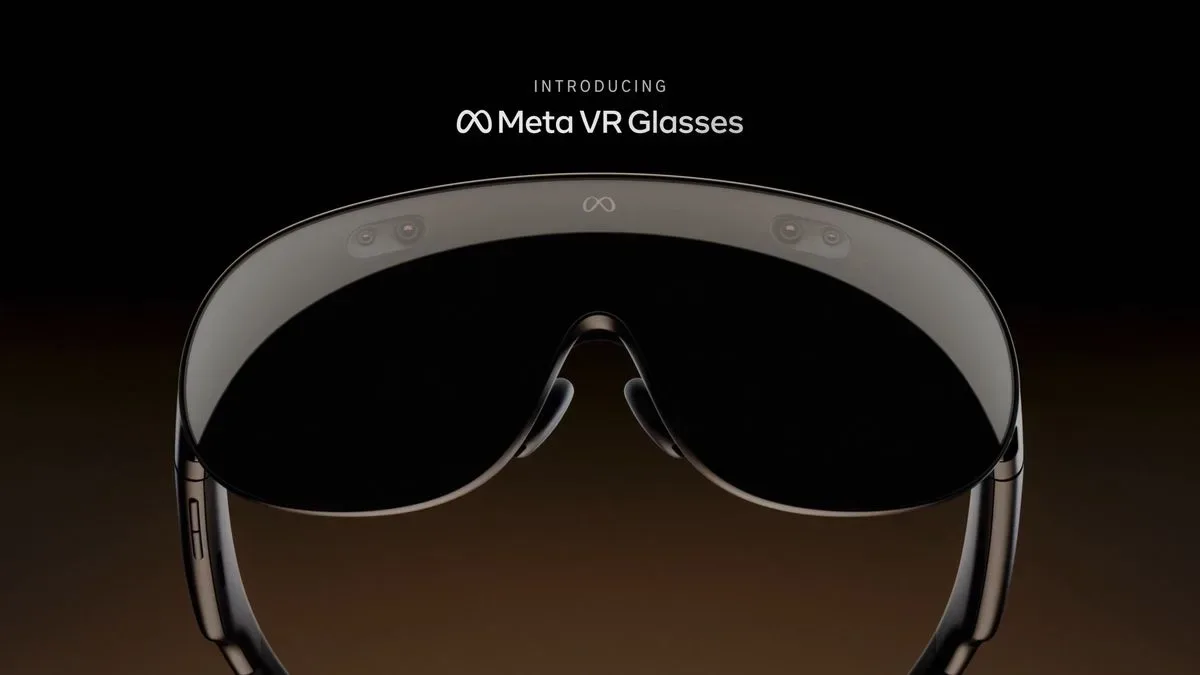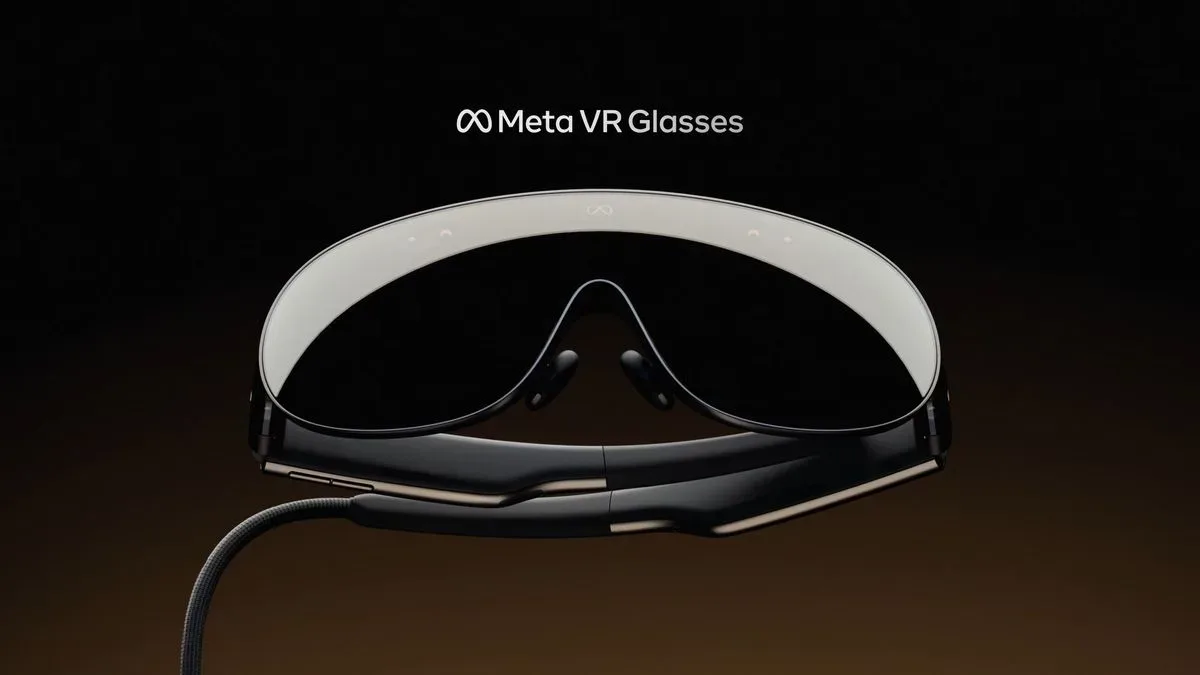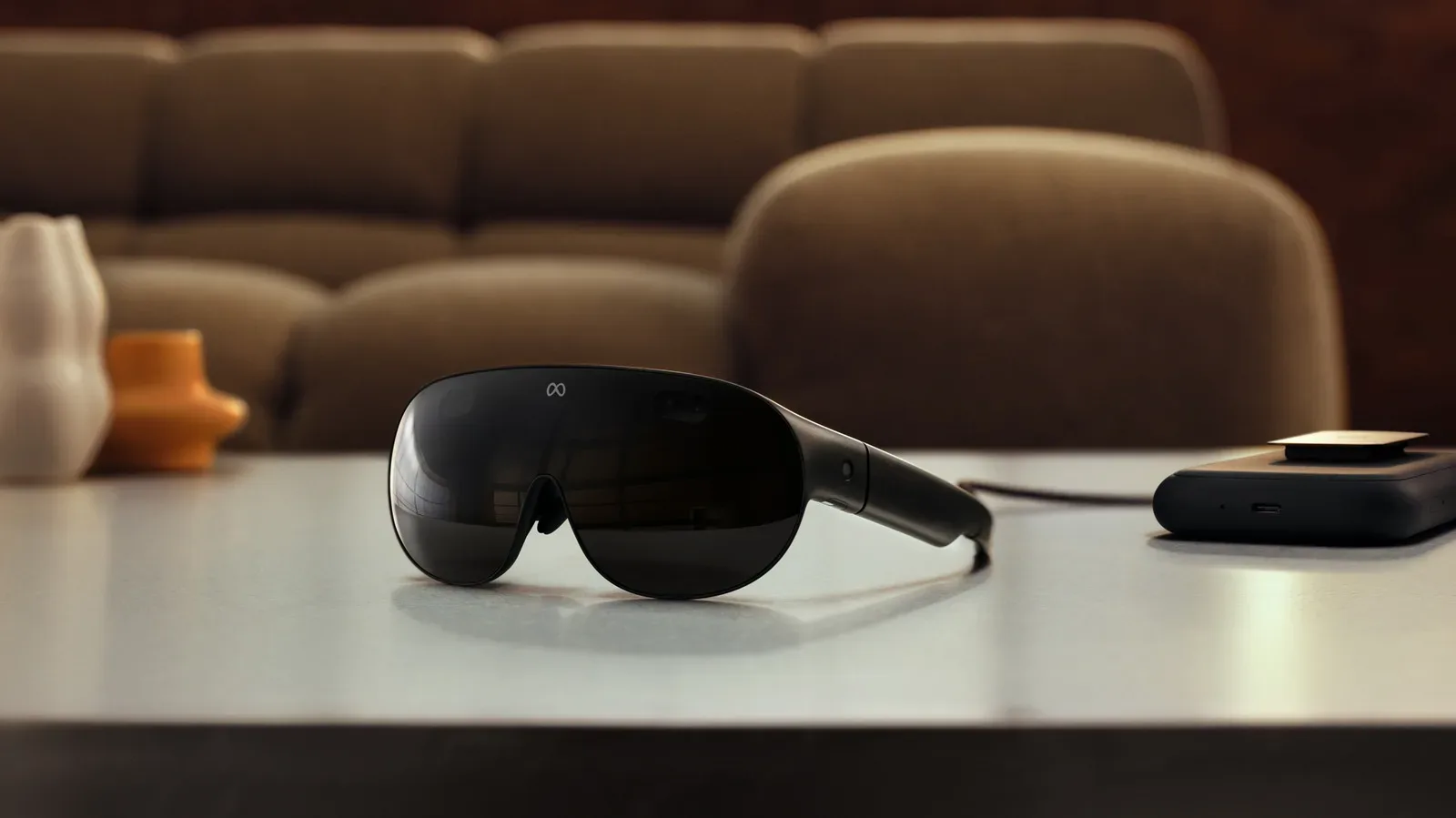
Meta’s next VR device is not being positioned as a Meta Quest 4. The company’s newly detailed Meta VR Glasses point instead to a higher-priced, lighter, more portable interpretation of mixed reality: one built around a glasses-like form factor, hand tracking, media viewing and virtual screens rather than the controller-led VR gaming pitch that defined the Quest line.
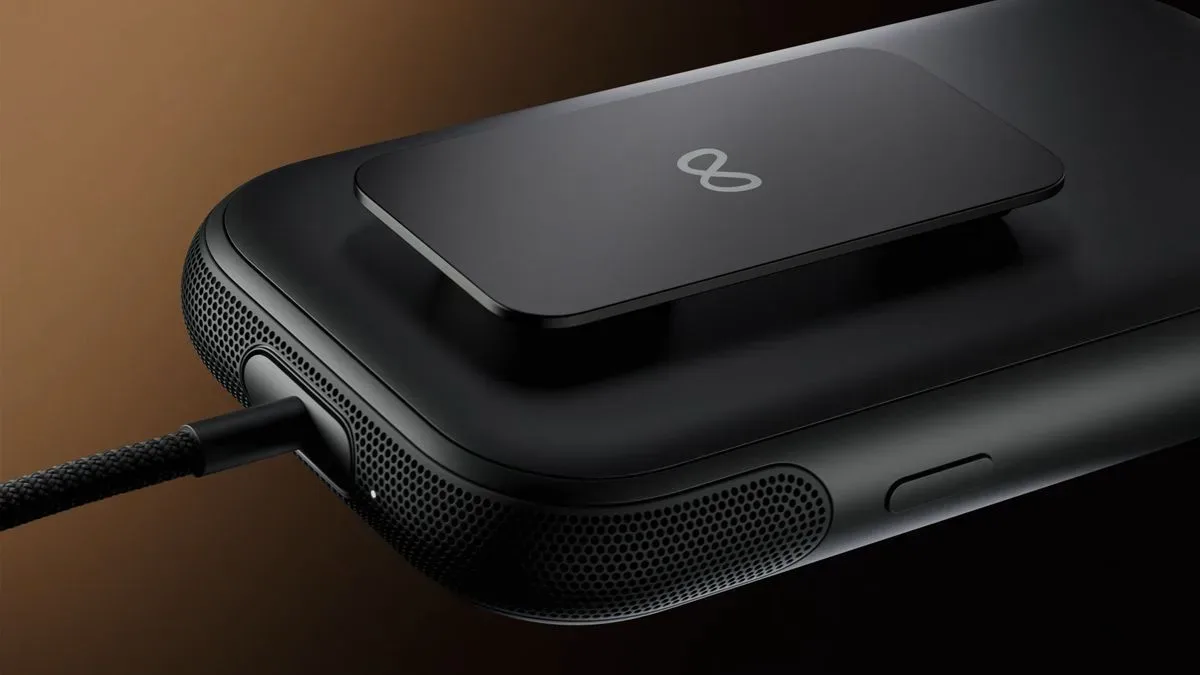
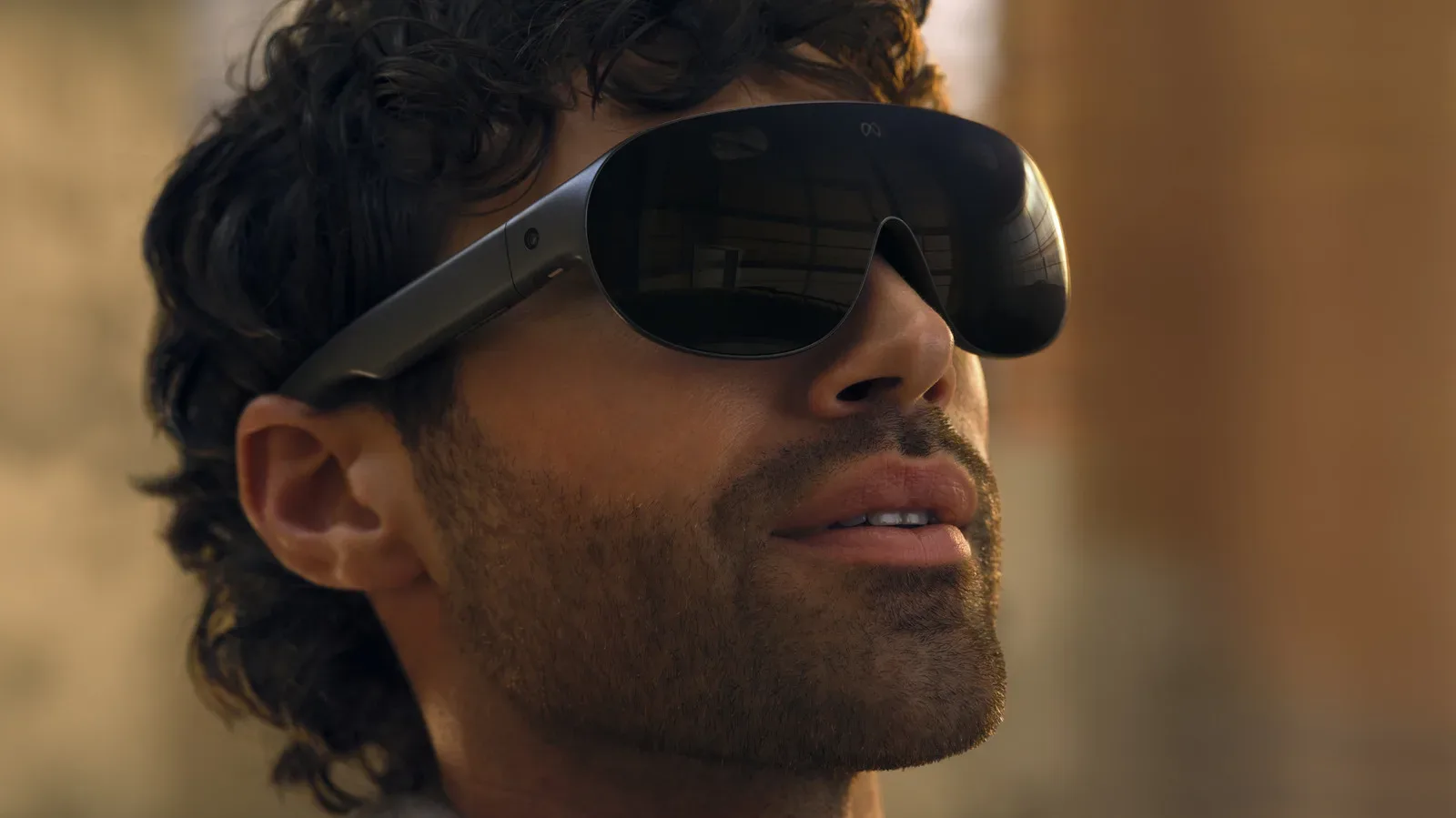
The headline numbers make the split clear. Meta says the VR Glasses will launch in spring 2027 for $1,299 in the US, with no UK price stated. Controllers are not included and will cost extra. At 100g, the glasses are far lighter than the 515g Quest 3, but that reduction involves a notable design change: the Snapdragon Reality Elite processor and battery are housed in a separate pocket-sized puck. Meta quotes battery life of up to three hours.
That may make the device more comfortable on a user’s face, but it also means the product should be judged as a new category within Meta’s hardware ambitions, not simply as the next rung on a familiar Quest upgrade ladder. Anyone waiting specifically for an affordable, conventional successor to the Quest 3 or Quest 3S still does not have one.
A glasses-first design comes with real trade-offs
On paper, the VR Glasses are aiming for premium image quality in a very light device. Meta lists two Micro-OLED displays with 5K, “Infinite” and Dolby Vision specifications per eye. Micro-OLED is a display technology in which individual pixels emit their own light, a setup commonly associated with high contrast and compact display panels. Dolby Vision is a high-dynamic-range video format intended to preserve a broad range between bright and dark portions of compatible content.
Those terms matter particularly for films, sports and desktop-style virtual screens, all uses that depend heavily on perceived image clarity and contrast. But display specification alone does not determine whether a VR product is a strong fit for every use. Meta also lists a 70-degree horizontal field of view, substantially below the 110-degree figure associated with most VR headsets in the supplied information.
Field of view, often shortened to FOV, describes how much of the virtual scene a user can see without moving their head. A broader view can make an environment feel more encompassing, which is especially significant for fast games, social VR and experiences designed to create a strong sense of presence. A narrower field of view does not make a product unusable, but it is a meaningful compromise for buyers who primarily want an immersive gaming headset.
There is a similarly practical distinction in the external puck. Separating the heaviest computing and battery components from the eyewear could ease facial pressure and make folding portability more plausible. The counterweight is that users have another object to carry, charge and connect. Meta says the glasses can be plugged into any USB device and used as a display, which potentially broadens their role beyond standalone VR. Still, prospective owners will need to decide whether pocketed hardware is a sensible convenience or an unwelcome tether for the situations they imagine using it.
Quest games are supported, but gaming is not the whole pitch
Meta says the VR Glasses can access games already available through the Quest store and run the same mixed-reality apps. It also says more than 75 VR games will be available at launch in versions reworked for hand tracking. That is important compatibility news: owners are not being asked to treat the glasses as a completely isolated software platform.
Yet compatibility is not quite the same thing as a product being designed around the needs of core VR games. The standard package’s lack of controllers, its hand-tracking focus, the 70-degree horizontal FOV and the emphasis on connection to a PC or console as a large virtual display all suggest that games are one part of a wider entertainment and spatial-computing proposition.
Hand tracking lets a headset or glasses detect a user’s hands and translate gestures into controls. It can be intuitive for navigating menus, moving windows and interacting with virtual objects. But many VR games are designed with tracked controllers in mind, including buttons, triggers, analogue sticks and haptic feedback. Reworking a game for hands may enable it to function in a controller-light setup; it does not automatically mean the new control method will be equivalent for every genre or player preference.
Mixed reality blends digital content with a view of the physical world, rather than placing the wearer entirely inside a virtual environment. In this case, Meta’s direction sounds closer to a device for placing screens and apps in a room, consuming entertainment, using spatial interfaces and occasionally playing adapted VR games. It is a notably different proposition from buying a headset chiefly for action games, fitness software or long controller-driven sessions.
For people whose goal is a massive personal display for a connected console or PC, the USB display capability may be among the product’s most relevant promises. For people expecting the next mass-market Quest, the base price and omitted controllers are just as relevant. The launch configuration begins at $1,299 before any controller purchase, so the entry cost needs to be considered as a package rather than a single headline number.
The Quest question remains open
The naming is instructive. Meta has not called these Quest 4, and the supplied details do not support reading them as a direct replacement for Quest 3 or Quest 3S. Quest has been associated with making VR comparatively accessible; the VR Glasses are unapologetically more premium in price and more experimental in physical design.
That does not establish that Meta has abandoned conventional VR headsets. Meta’s chief technology officer has said the company is not finished with VR. However, the glasses demonstrate where a large part of the immediate product energy is going: lighter wearables, hand-first interaction, a detached compute unit and uses extending beyond games.
The business backdrop makes that shift worth watching. Reality Labs has gone through multiple rounds of layoffs this year, and major game studios tied to Quest support have been shuttered. The supplied material also says the accessible Quest pricing has not made the headset business profitable, while Meta’s Ray-Ban smart glasses have been profitable. Those facts do not prove a final roadmap for the Quest brand, but they give context to why a company might explore a more expensive wearable format.
The useful takeaway for gamers is not that the VR Glasses cannot run games. They can. It is that buying decisions should follow the intended use, rather than the familiar Meta association. A buyer who values light weight, portable viewing and a virtual monitor may see the design’s compromises as sensible. A buyer seeking a dedicated gaming headset should scrutinize the field of view, controller cost, hand-tracking support for the games they actually play and the three-hour stated battery ceiling.
For a closer breakdown of Meta’s stated entertainment, 3D film, sports and Xbox Cloud Gaming plans, see Meta’s $1,299 VR Glasses plans.
Wearability also makes privacy part of the product decision
Meta’s hardware pivot cannot be evaluated only through resolution, weight and software libraries. Wearable cameras and AI features create privacy questions for wearers and for the people around them. The concern is straightforward: a device that is easy to take everywhere can also make capture and computer-assisted interpretation of a scene feel less conspicuous than holding up a phone or using a larger headset.
The supplied information notes that Meta recently issued an update which disabled the integrated cameras on smart glasses where users had turned off the recording light, following thousands of instances of that light being disabled. A recording indicator is an important social signal, but it cannot resolve every concern on its own—particularly where AI functions can access camera input under rules that users and bystanders may struggle to understand at a glance.
Meta is also expanding its wearable AI offering with “Muse,” described as an agentic AI. Agentic AI generally refers to a system intended to carry out multi-step tasks toward an objective, rather than merely responding to a single prompt. The supplied details do not spell out every feature or data practice connected to Muse, so it would be premature to make claims about how it will operate in the VR Glasses. Still, its inclusion makes clear explanations of camera access, recording indicators, data handling and user controls all the more important.
For consumers, the practical questions are simple even if the underlying technology is not: When is a camera active? What tells nearby people it is active? What information is retained? Which AI features use visual data? Can those features be disabled reliably? Until those answers are clearly communicated, the social friction around wearable cameras will remain part of the value calculation—especially for a device explicitly designed to be taken out of the house.
What to watch before spring 2027
Meta has provided a strong outline, but several purchase-critical details remain unresolved in the information available so far. There is no UK price. Controllers are confirmed as separate-cost accessories, but their price is not stated. “Up to” three hours of battery life is not a fixed runtime, and real-world endurance will vary by workload. The list of the more than 75 hand-tracking-ready games will matter much more than the count alone, because suitability depends on which titles are included and how they have been adapted.
- For gaming-first buyers: wait for controller pricing, game-specific control details and a better picture of how the 70-degree view feels in the genres you play.
- For display and media users: pay attention to USB compatibility, comfort over longer sessions and the formats supported by the Micro-OLED screens.
- For privacy-conscious buyers: look for clear, specific explanations of recording cues, camera permissions and AI access before treating portability as an uncomplicated advantage.
- For Quest owners: software compatibility is encouraging, but the glasses’ price and form factor indicate a companion category rather than an automatic upgrade path.
Meta’s VR Glasses may end up being an important statement about where it believes immersive computing is going: less headset-like, more wearable and less exclusively tied to games. That direction has obvious appeal in the 100g design and the promise of high-end displays. But it also raises the bar for execution. At $1,299 before controllers, buyers will reasonably expect not just striking hardware, but an answer to the fundamentals of control, comfort, battery life, gaming fit and privacy.