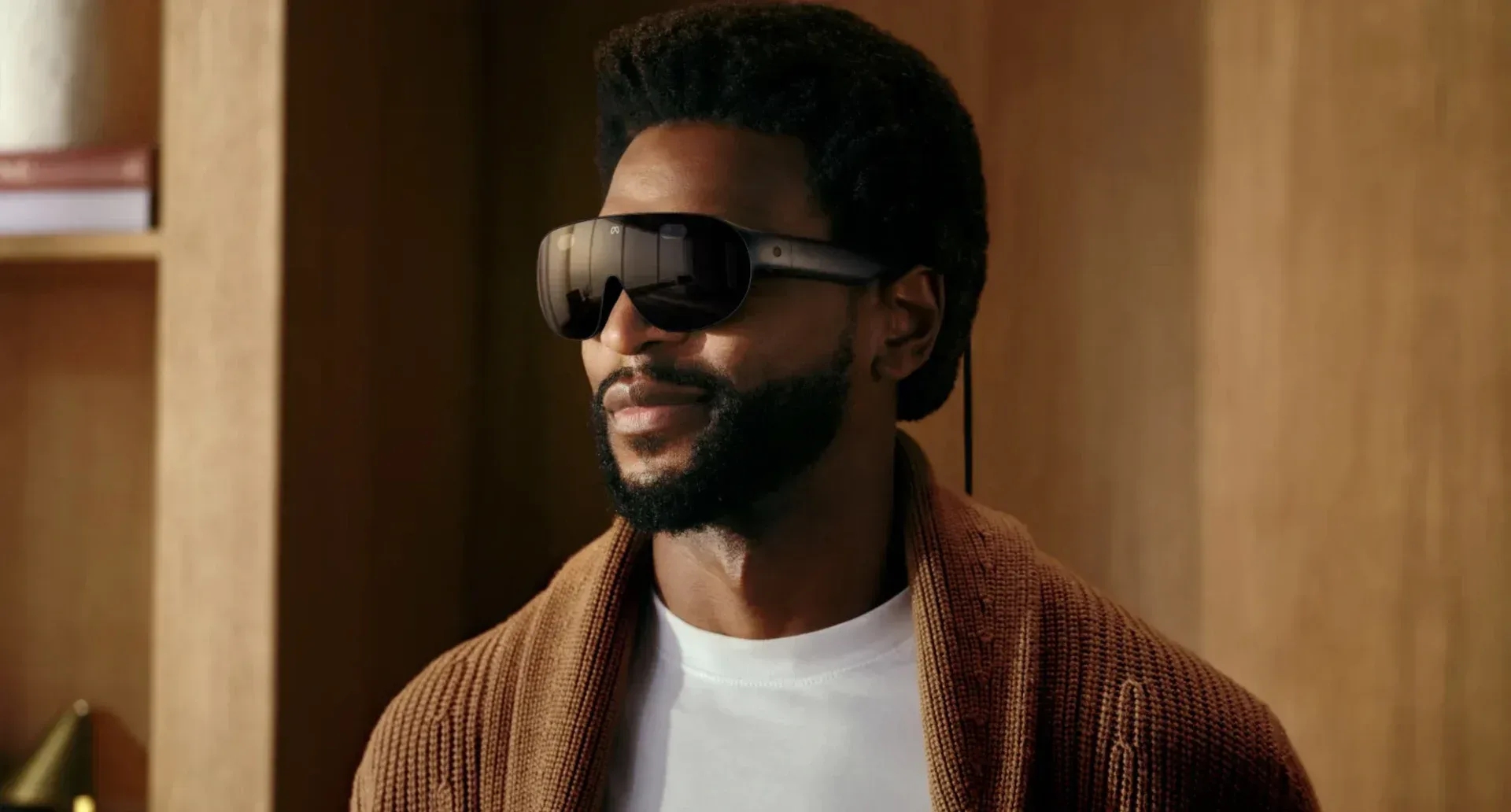
Meta has outlined a new premium virtual-reality device designed to shift the visual bulk, battery and compute hardware away from the wearer’s face. Priced at $1,299 and scheduled to begin shipping next spring, the unnamed VR glasses are positioned as an expansion of the company’s Quest line rather than a conventional gaming-only headset.
The pitch is deliberately broad: a private cinema for 3D films, an immersive sports screen, a workspace and a game machine. For players, the most consequential details are Meta’s claim of more than 75 supported games at launch, hand-gesture control, and Xbox Cloud Gaming support through a handheld gaming pack. For viewers, Meta is promising 3D movie programming from major studios and streaming services, plus sports experiences built with organizations including the NBA, MLB and ESPN.
The device follows the Meta Quest 3, which arrived in 2024. Meta says the glasses are five times lighter than that headset. The practical reason is central to the product’s design: instead of putting the processor and battery inside the headset itself, the company has moved them into a separate puck connected to the glasses by a wire.
That choice makes this a different proposition from a fully self-contained headset. The facial hardware may be substantially lighter, but users will need to account for a tether and a separate piece of hardware while watching, working or playing. The stated benefit is that the part actually worn on the face can be closer in form to glasses while retaining the processing needed for high-resolution VR.
For more context on the company’s wider pitch around the device’s light weight, cloud play and entertainment ambitions, see our coverage of Meta’s VR-glasses plans.
What Meta says the hardware offers
The glasses use a Qualcomm chip and are paired with a battery rated for up to three hours of continuous media playback. That is a specific media-use estimate, not a confirmed measure of gaming duration, productivity use, streaming conditions or mixed VR activity. Those scenarios can place different demands on a device, so prospective buyers should avoid treating the playback figure as a universal battery-life promise.
Meta describes the visual system as a 5K Infinite Display built with micro-OLED panels. Micro-OLED is a display technology in which pixels are formed on a silicon backplane; in a headset context, it is associated with very compact panels that can be placed close to the user’s eyes. The reported 5K designation communicates a high-resolution display target, though it does not by itself explain every part of image quality, such as optics, field of view, motion handling or the resolution of a given app’s content.
The company also says this is the first IMAX-certified VR device. It supports Dolby Vision and spatial-audio experiences using Dolby Atmos. Dolby Vision is a high-dynamic-range video format intended to preserve a wider range between dark and bright portions of an image when compatible content and display support are present. Dolby Atmos is an audio format designed to place sounds in a three-dimensional space. Those labels describe supported presentation formats; the eventual experience will still depend on whether a film, app or stream is delivered in a compatible version.
Related coverage includes Meta Details $1,299 VR Glasses With 3D Films, Sports and Gaming Plans.
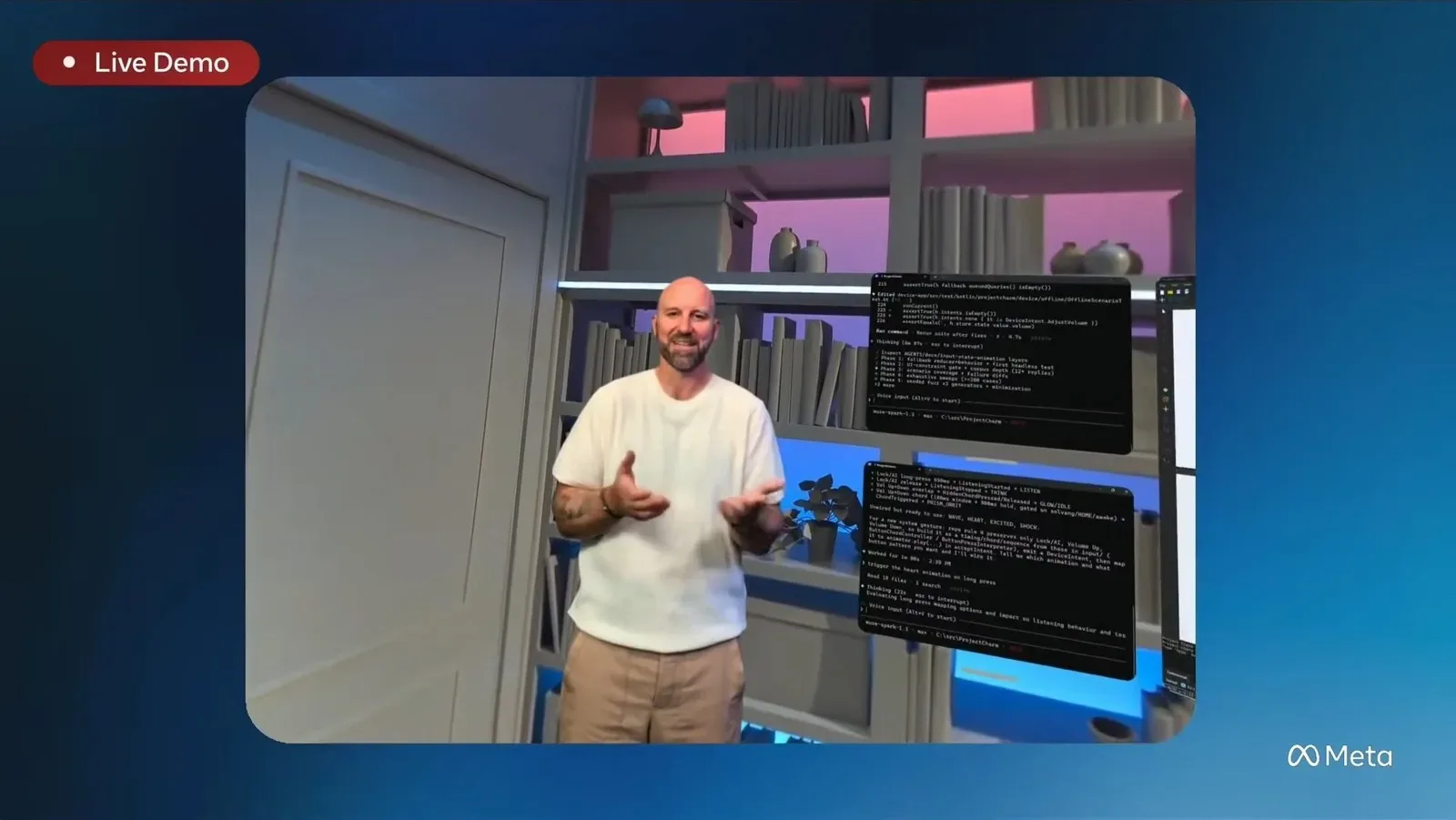
An onboard AI agent is intended to assist with tasks and content access. Meta also says wearers can create a photorealistic “hologram” of themselves for the display. Here, “hologram” should be read as the company’s description for a realistic digital representation in the virtual environment, rather than a claim that a physical, freestanding holographic image is being projected into a room.
A cinema-focused content strategy
Meta’s entertainment plans lean heavily on stereoscopic video. The company says the glasses will stream 3D versions of Disney films including The Avengers and Black Panther. It also named VR-enhanced versions of Avengers: Infinity War and Star Wars: A New Hope.
The distinction matters. A 3D version generally refers to a movie delivered with separate left- and right-eye imagery to create depth perception inside the headset. “VR-enhanced” indicates that the titles will receive some form of enhancement for the device, but Meta has not specified the exact presentation features in the information provided. It would be premature to assume that an enhanced title has been remade as a fully interactive VR production.
Additional 3D features are planned from Peacock, HBO Max and Paramount+, along with selected Lionsgate titles. James Cameron’s Lightstorm Vision is also working on blockbusters that will be presented in 3D for the first time next year. Meta has not identified the films in that initiative, so the scope and final list remain unknown.
This content slate is important because display hardware alone does not create a dependable home-cinema library. The announced deals suggest Meta is seeking recognizable films across multiple services, but they do not establish that every title in a partner’s catalog will be available in 3D. Availability may vary by title and service, based on the programming described so far.
Gaming: gestures, cloud access and a handheld pack
Meta says more than 75 games will be supported at launch and can be played using hand gestures. Hand tracking uses cameras and software to recognize a player’s hand movements, allowing virtual menus or actions to be controlled without traditional controllers. That can make basic interaction more direct, but the announcement does not provide a list of the 75 games or explain how individual games use gesture input.
The glasses will also support Xbox Cloud Gaming with a handheld gaming pack. Cloud gaming means a game runs on remote servers and is streamed to the player’s device, rather than being processed entirely on the glasses themselves. The device receives video and audio while sending player inputs back over a network. This can broaden the types of games reachable from a headset, but it also makes a player’s network connection part of the experience. Meta has not detailed the exact contents of the handheld pack or which Xbox Cloud Gaming titles will be supported.
The two approaches serve different needs. Gesture-based play targets VR software built around natural movements, menus and virtual objects. A handheld-oriented cloud setup points toward games that are better suited to conventional buttons, sticks and triggers. Meta’s plan therefore does not present one input method as a replacement for the other; it places both in the same device ecosystem.
There is no supplied indication that the glasses will replace a console, run every cloud title natively, or include a bundled Xbox controller. The confirmed claim is support for Xbox Cloud Gaming alongside a handheld gaming pack, so those considering the glasses primarily for games should wait for fuller details on compatible software, controls and service requirements.
Sports are part of the premium pitch
Meta has also struck agreements with the NBA, MLB, ESPN and other partners for immersive sports experiences, beginning with college football. In this context, “immersive” signals programming meant to take advantage of a VR display and spatial presentation. The announcement does not specify the number of events, the camera formats, regional availability, subscription arrangements or whether every game from a given league will be offered.
Still, sports programming complements the company’s argument that the device can work as more than a solitary game headset. A virtual courtside-style viewpoint and a large personal cinema are both experiences that make sense in a head-mounted display, provided the content is available and delivered in the expected format.
What the product changes—and what remains unanswered
The clearest hardware change is the separation of glasses from battery and compute puck. Meta’s five-times-lighter comparison to Quest 3 indicates an attempt to address one of VR’s practical hurdles: having substantial weight directly on the face. The trade-off is not hidden. A cable and external puck are essential components of the setup, rather than optional accessories.
The $1,299 price also places the device in a premium tier. Its value proposition rests on combining several categories—VR games, cloud gaming, 3D movies, sport, work tools and AI assistance—in a single display system. That breadth is notable, but buyers will need more information before judging the complete proposition, particularly the full game lineup, exact content availability, regional terms, details of the handheld pack and how the software handles everyday use.
For now, Meta has provided the broad outline: lighter glasses tethered to a compute-and-battery puck, a 5K micro-OLED display, up to three hours of continuous media playback, 3D film partnerships, sports programming and gaming support through gestures and Xbox Cloud Gaming. The remaining specifics will determine whether that outline becomes a convincing all-purpose VR platform when shipping begins next spring.