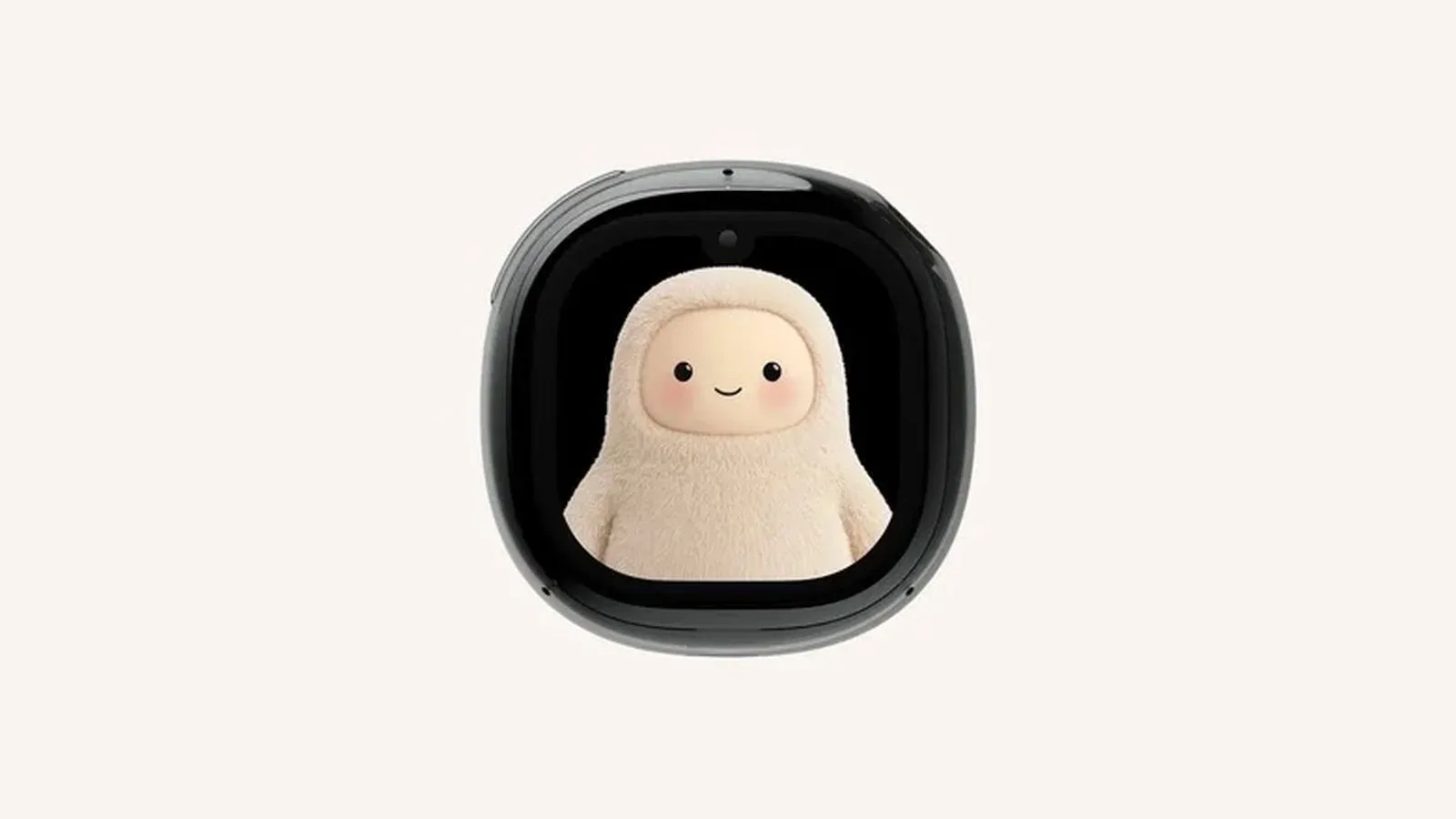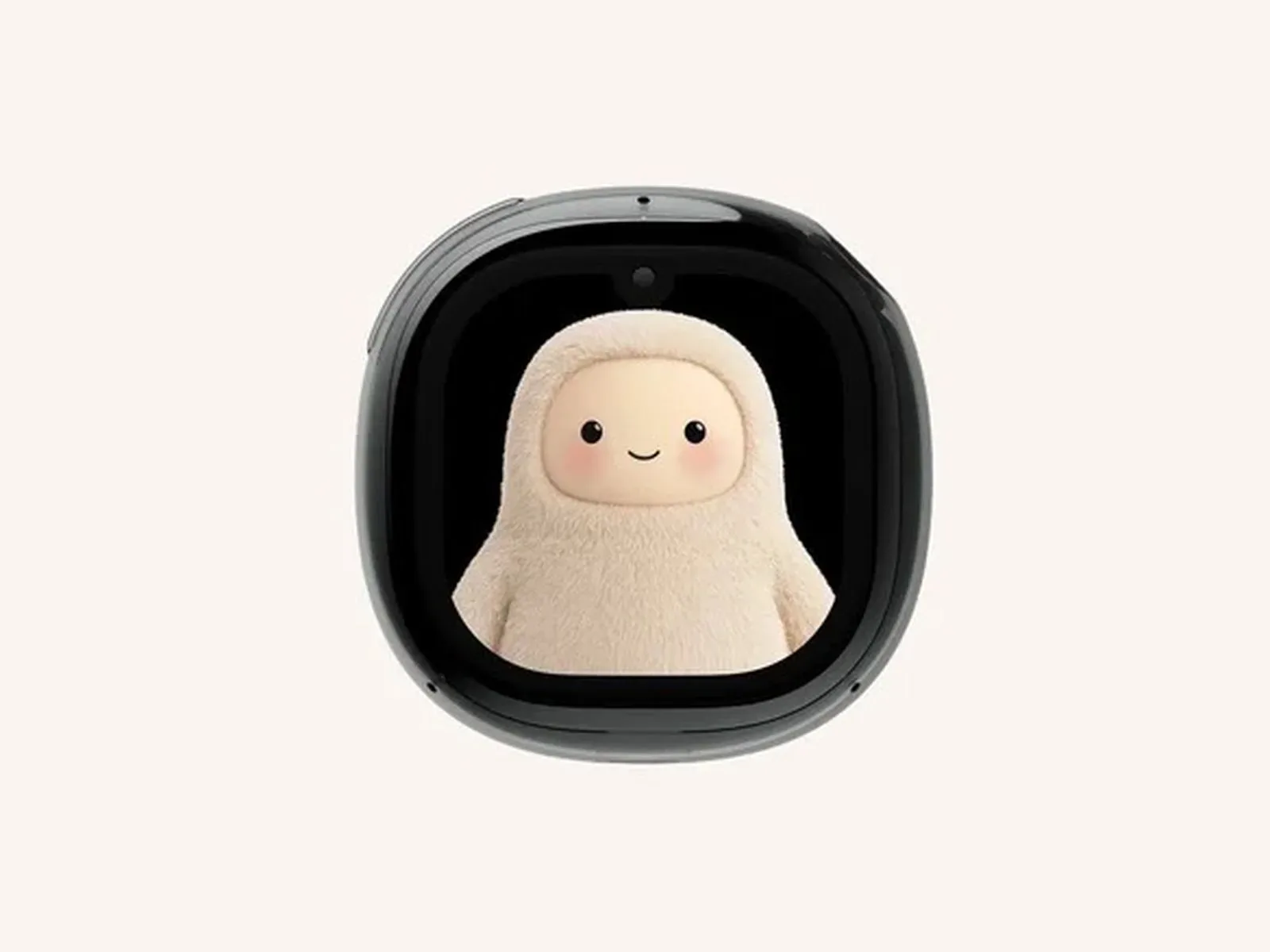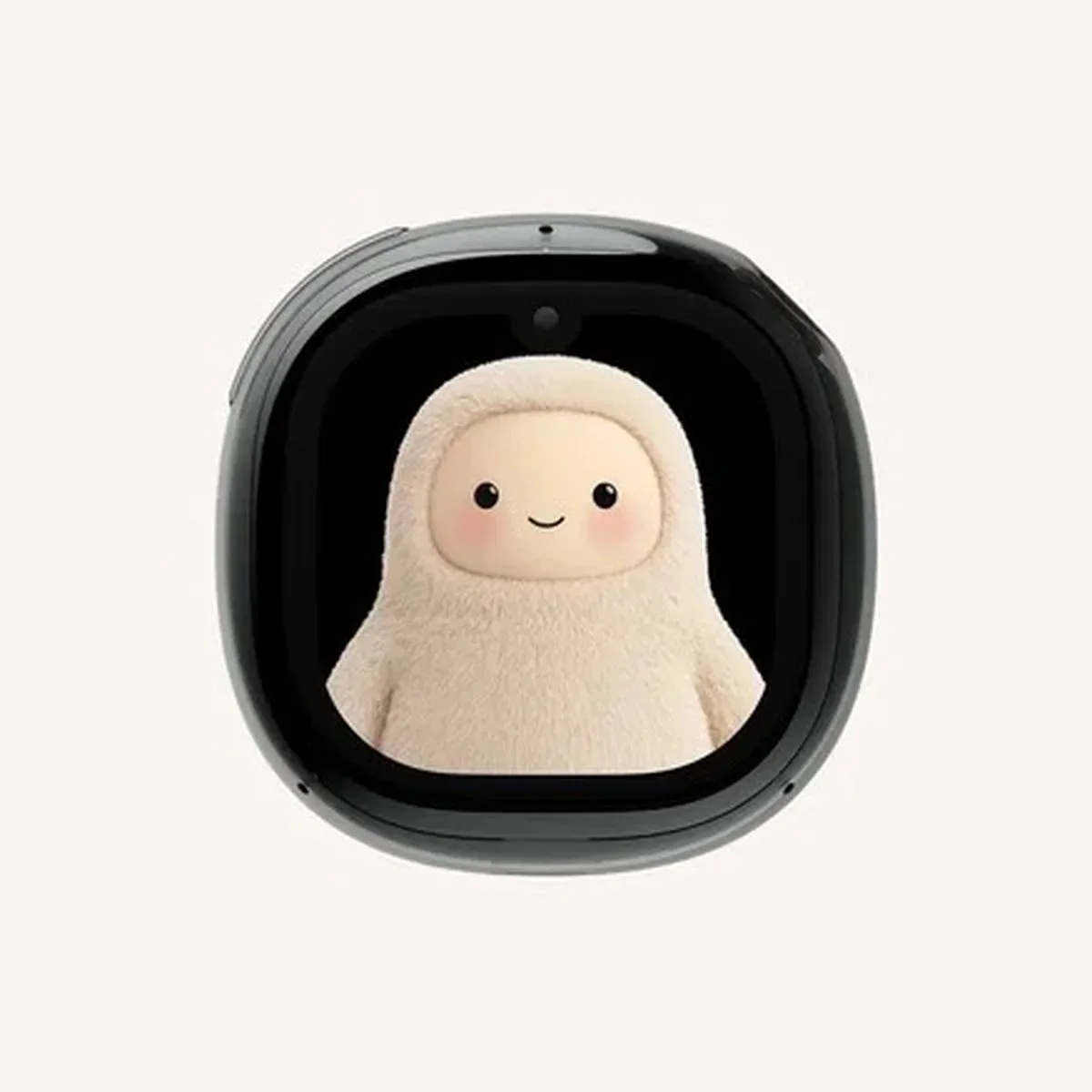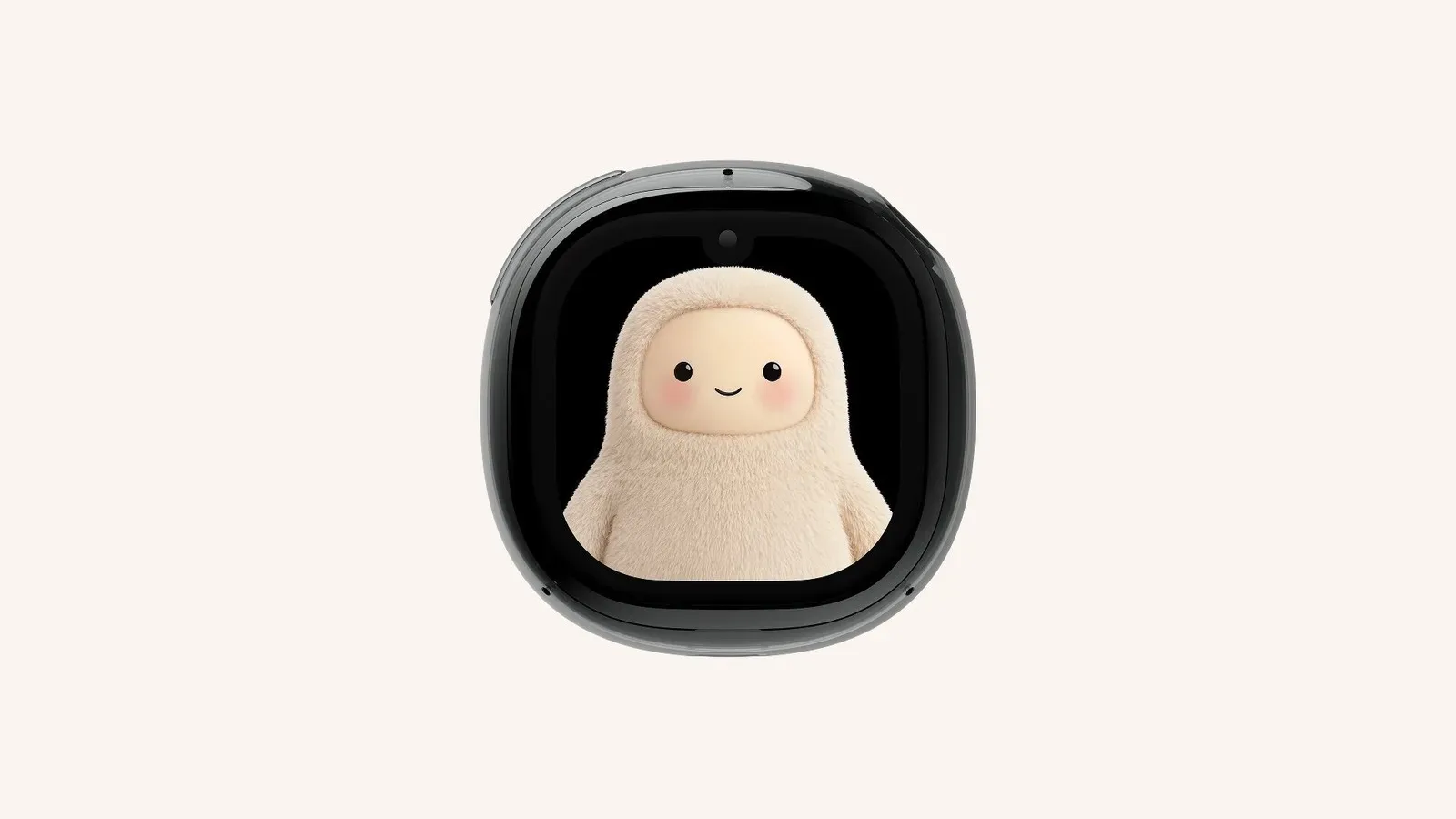
Meta used the closing beat of its Connect presentation to reveal a hardware idea that is easy to describe but harder to place: Muse Charm, a small puck-like device designed for conversations with the company’s Muse AI. It is roughly Apple Watch-sized, intended to fit on a keychain or in a pocket, and displays an interactive avatar with distinctly virtual-pet energy.
The appeal is not that it performs a brand-new task. Its central proposition is speed and presence. Rather than unlocking a phone, finding an app and starting a voice interaction, users would tap a fingerprint sensor in the device’s corner and begin talking. Meta says the Charm contains its real-time voice and avatar stack, with the aim of making Muse available as a dedicated object rather than another destination on a screen.
That makes the Charm a notably different bet from a smartwatch, a phone or even a pair of smart glasses. It is not presented as a general-purpose computer. It is a purpose-built access point for a single kind of interaction: speaking to an AI that is visually represented by a small, animated character.
“If you’re not wearing glasses, this is going to be by far the fastest way to talk to your Muse and to show what’s going on around you,” Meta said during the presentation.
Meta has said it expects the Muse Charm to go on sale during the holiday season, but significant questions remain unanswered. There is no announced price, no confirmed battery-life estimate, no detailed explanation of the cameras or sensors implied by the ability to show an AI what is nearby, and no full breakdown of what functions will require a phone, an account or a subscription. Those details will matter more than the puck’s charming avatar when it is time to judge whether this is a useful companion or an extra gadget competing for pocket space.
A dedicated device for the AI relationship
The Tamagotchi comparison is about the presentation, not a stated list of gameplay mechanics. The Muse Charm’s visible avatar appears intended to make voice AI feel less like a command-line assistant and more like a continuing presence. That distinction is important. A voice assistant normally succeeds when it disappears into a short transaction: set a reminder, answer a question, start a timer. An AI companion asks the user to return, converse and form a habit around the interaction.
Meta’s choice to package that relationship in a tiny physical object is an attempt to reduce friction. Real-time voice, in this context, means an interaction designed to feel conversational and responsive rather than a sequence of spoken prompts followed by delayed text or audio replies. The company is also emphasizing an avatar stack: the collection of software that gives the AI a visible character and synchronizes that character with the voice experience.
That combination may make an assistant feel more approachable, but it also creates a higher standard for usefulness. A user may forgive a phone app for being merely functional. A pocket companion framed around personality must earn repeated attention without becoming distracting, overly dependent on an internet connection or vague about what it can and cannot do.
There is a practical argument for a standalone object, too. Phones are powerful but crowded. Alerts, apps and the simple act of looking at a large display can pull a quick request into a longer detour. A keychain device with one obvious control could make sense for people who want hands-free-style AI access but do not wear smart glasses. Conversely, the Charm will need to explain why tapping it is better than using the voice controls already present on a phone, earbuds or watch.
Its timing also puts it in a broader hardware race around personal AI. Apple has reportedly shelved work on an AI pendant, leaving Meta’s announced Charm as one of the more direct attempts to make an AI companion into a small, standalone consumer device. Apple’s own hardware direction remains a closely watched subject, including in its ongoing modem transition, covered in this look at Apple and Qualcomm’s renewed global patent license.
Meta’s wider hardware plan: three ways to reach AI and mixed reality
The Charm was the surprise, but the larger Connect hardware picture is more revealing. Meta is pursuing multiple form factors at once: a tiny AI companion, camera-equipped smart glasses and a lightweight mixed-reality headset. Each approaches the same broad ambition—making AI and digital interfaces more immediate—from a different angle.
Meta VR Glasses are the most gaming-focused of the group. Meta says the headset weighs 100 grams, making it five times lighter than Meta Quest 3. It uses a tethered puck for storage and battery rather than putting every component on the wearer’s face. That design choice appears to be central to the weight reduction: shifting battery and storage away from the headset can make a device less front-heavy, although it also means the user manages a connected external component.
The glasses are listed with a 5K display and full-color passthrough video. Passthrough is the camera-fed view of the real world shown inside a headset. Full color is especially relevant to mixed reality because it can make room-scale movement, virtual interfaces and awareness of nearby objects feel less abstract than a monochrome external view.
At 100 grams, the new device is substantially lighter than Apple’s M5 Vision Pro, which is listed at 750 to 800 grams depending on configuration. Weight alone does not determine comfort, display quality or capability, but it is a meaningful number for a headset intended for longer sessions. Headborne hardware is unusually sensitive to balance and pressure, so a major reduction in facial load can be more consequential than a small difference on a phone or controller.
Meta says VR Glasses will run every game available for Quest headsets and support Xbox Cloud Gaming. That compatibility message is crucial. New hardware is easier to consider when it arrives with an existing game library instead of asking players to wait for software built exclusively for it. Xbox Cloud Gaming, meanwhile, is a streaming service: compatible games are run on remote servers and delivered over an internet connection, rather than being processed entirely on the headset. The convenience comes with a dependency on connection quality and responsiveness.
Meta also says users can connect the glasses to a PC or Mac, then use a virtual keyboard and trackpad placed on a desk. This suggests the device is being positioned for work as well as games and media. A virtual keyboard and trackpad are software-rendered controls anchored in the user’s view or physical surroundings, intended to mimic familiar desktop input without requiring a conventional monitor setup.
Meta VR Glasses are scheduled for a spring launch with prices starting at $1,300. That price and the tethered design place them well beyond an impulse purchase, but the emphasis on Quest compatibility, PC and Mac connections, and cloud gaming gives the product a clearer proposed role than a headset built around a single use case.
Ray-Ban Meta remains the everyday option
Meta is also continuing its camera-equipped Ray-Ban smart-glasses line. The third-generation Ray-Ban Meta model is said to have a slimmer design, a dedicated button for Meta AI, and nine hours of battery life, up from eight hours in the prior generation. The glasses start at $449 and will be available in multiple styles.
On paper, the most notable changes are tied to capturing and understanding the environment. The 12MP camera supports 3K video capture, while a six-microphone array is claimed to remove more than 90 percent of background noise. Meta also says Dolby Atmos Spatial Audio support is coming soon. Spatial audio refers to sound designed to convey direction and space, rather than a flat left-right stereo image; its value here will depend on the eventual implementation and supported content.
The company is adding an FDA-cleared hearing enhancement feature to its AI Glasses later in the year. It will be available through a Meta One subscription or for a one-time $149 payment, and Meta plans a 30-day free trial. FDA clearance is a regulatory status that matters because the feature concerns hearing enhancement; it should not be read as a general statement that the glasses replace every form of hearing care or serve every user need.
The contrast among Meta’s products is increasingly sharp. Ray-Ban Meta aims to blend into an everyday accessory while adding camera, audio and AI controls. VR Glasses prioritize a lightweight immersive display for games, mixed reality and computer tasks. Muse Charm eliminates the glasses entirely, focusing on an always-near conversational AI avatar.
What needs clarification before Muse Charm can make its case
For now, the Charm is an intriguing concept rather than a fully specified product. The unanswered questions are not minor implementation details; they define its everyday practicality.
- Privacy and sensing: Meta has indicated that users can show Muse what is happening around them, but has not outlined the Charm’s relevant hardware or controls. Buyers will want clear information about when any sensing is active and how that interaction is signaled.
- Battery and connectivity: A keychain-sized device lives or dies on how often it needs charging, whether it works independently and what happens when a connection is poor or unavailable.
- Price and ongoing cost: The company has not named a price or subscription arrangement for the Charm. Those terms will shape whether it feels like a convenient companion or a costly shortcut to phone-based AI.
- Use beyond novelty: The avatar can make the device memorable, but the lasting test is whether Muse helps users accomplish valuable tasks often enough to justify carrying dedicated hardware.
Meta’s announcement is nevertheless a useful signal of where it thinks AI interfaces are going. The company is not treating AI as a feature that simply lives behind a button in existing apps. It is experimenting with physical forms optimized for different moments: glasses for seeing and hearing the world, a headset for immersion, and a tiny Charm for immediate conversation. The holiday release target means the next set of details should determine whether the AI Tamagotchi comparison is only a visual hook—or the beginning of a genuinely distinct category of personal device.