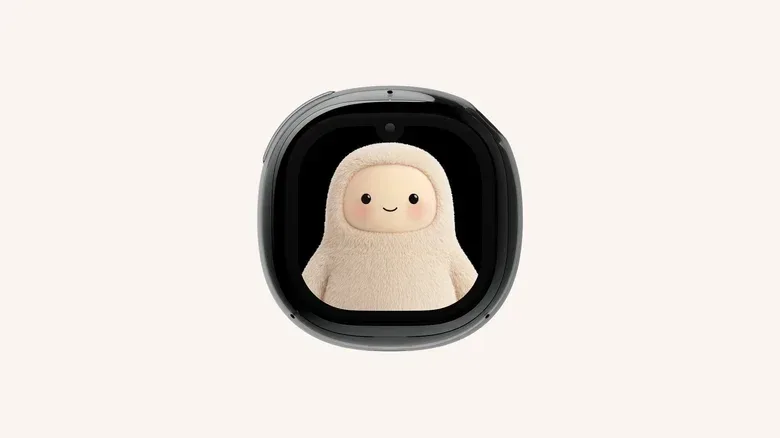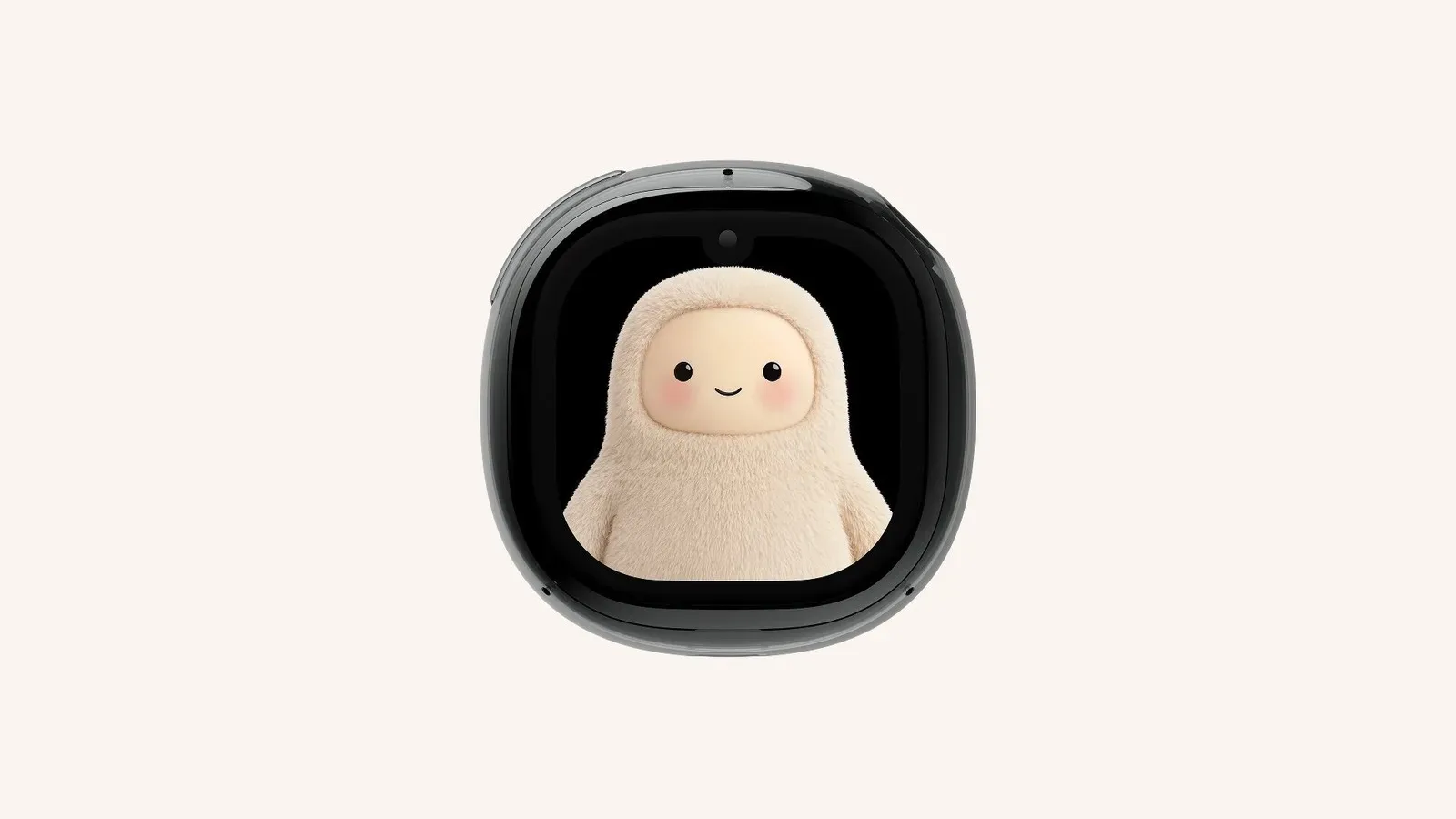
Meta has put a distinctly toy-like face on its Muse AI plans with Muse Charm, a small keychain device shown on stage at Connect. The comparison that immediately fits is a Tamagotchi-style gadget: a compact object with a tiny screen and an animated character living on it. But this is not being presented as a digital pet. It is a dedicated way to access an AI assistant represented by an interchangeable on-screen avatar.
The central pitch is availability. Rather than asking someone to open an app or put on a headset, Muse Charm is meant to be close at hand, on a keychain, with an interaction beginning through a fingerprint sensor positioned at one corner of the device. During the presentation, Mark Zuckerberg demonstrated tapping that sensor to start talking with Muse.
That makes the device notable less for the amount of information currently available than for the form Meta has chosen for the AI. Muse Charm suggests a move away from AI as a purely text-box or voice-speaker experience and toward something intentionally characterful, visible and portable. The question is whether that compact, personable presentation can be translated from an on-stage concept into a finished device people will want to carry every day.
What Meta has actually shown
The confirmed outline is narrow but clear. Muse Charm is a keychain-sized device containing Meta’s Muse AI. It has a screen, a fingerprint sensor, and a small animated avatar that visually stands in for Muse. The avatar is interchangeable, meaning its appearance is not fixed to one character.
Meta describes the device as carrying the full Muse experience, including a real-time voice and avatar stack, in a package that fits on a keychain. In plain terms, a real-time voice stack is the collection of technology needed to support a spoken exchange with an AI: taking in speech, generating a response and delivering that response quickly enough to feel conversational. The avatar stack refers to the systems that provide the character’s visual presence on the display, including its animated representation.
Those descriptions establish the intended interaction, not a complete specification sheet. No price, battery details, connectivity information, supported languages, privacy controls, durability claims or detailed list of capabilities has been disclosed. Nor has Meta explained the practical scope of the interchangeable-avatar feature. It is therefore too early to assume the Charm will work like a phone replacement, a wearable, a game device or a self-contained AI computer.
It is also important to separate the demo from a finalized retail product. Meta says it still needs to finalize both the Charm’s components and its design, and that only a few units have been built so far. The company is aiming to have it ready to ship for the holidays in December, while promising additional information later.
The Tamagotchi resemblance is about interface, not function
Calling Muse Charm Tamagotchi-like is useful shorthand because it communicates the object’s apparent scale and visual language. A tiny screen, animated character and keychain-friendly body evoke a category of gadgets designed to invite frequent, low-friction attention. That does not mean Muse Charm has been described as a pet simulator or as a game.
Related coverage includes Meta Shows Muse Charm, a Keychain AI Device With an Avatar.
The distinction matters. A virtual pet conventionally asks the owner to care for a persistent creature through a set of game-like routines. Muse Charm, based on what was presented, uses its avatar as the face of a voice AI. The character’s job is to make the assistant visible and potentially more expressive, while the stated interaction is speaking to Muse after touching the sensor.
For players and fans of character-driven game interfaces, that difference may still be interesting. Games have long used portraits, mascots and responsive animations to make menus and systems feel more legible. An avatar gives an otherwise abstract software service a recognizable point of contact. In Muse Charm’s case, Meta is applying that design instinct to an assistant that is supposed to be ready whenever it is needed.
There is a trade-off embedded in that strategy. A friendly animated persona can make a device feel approachable; it can also create expectations of personality, memory and responsiveness that a short product demonstration does not answer. Meta has not yet detailed how Muse’s avatar changes during conversation, what users can customize beyond interchangeability, or whether the character presentation affects what the AI can do. Those are meaningful questions for a product whose identity seems tightly tied to its screen character.
A dedicated object changes the AI interaction
The most consequential element may be the hardware itself. AI features often exist inside devices people already own, where they compete with messages, apps, feeds and every other notification. A separate keychain gadget proposes a more singular relationship: touch the sensor, talk, see the avatar, then move on.
That simplicity could be an advantage if Meta can deliver it. A physical interaction point makes the intended action obvious. The fingerprint sensor at the corner is also a concrete tactile cue, potentially reducing the need to navigate a screen before speaking. Yet the same simplicity means the details that have not been revealed will matter greatly. A small device has limited room for controls and display information, so the quality of its voice interaction and the clarity of its feedback will do much of the work.
It also puts the Charm’s “always available” ambition under scrutiny. Availability is more than physical size. In practice, it depends on such unanswered basics as power, network access, setup and the user’s willingness to have an AI device within reach. Meta has not provided enough information to judge those issues, and the unfinished state of the product means its final design could change.
The Charm is part of a wider Muse-focused moment for Meta at Connect. The company’s event opened with attention on Muse AI while a Quest 4 announcement did not materialize, as covered in Meta Connect Opens With Muse AI Focus as Quest 4 Remains Unannounced. Muse Charm makes that AI emphasis tangible: not just software discussed onstage, but a proposed object designed to sit on a set of keys.
What remains unknown before December
Meta’s holiday target should be read as an objective rather than a firm consumer launch promise. The company has said it is still finalizing components and design, and has built only a small number of units. A device in that position may receive substantial refinement before shipping, if it ships on the proposed timetable.
Several practical details will determine what Muse Charm ultimately is:
- Conversation model: Meta has shown real-time voice interaction, but has not laid out the breadth or limits of the conversations Muse Charm will support.
- Avatar options: The avatar is interchangeable, but the available choices and customization model have not been specified.
- Privacy and controls: The presentation identified a fingerprint sensor as the way to initiate interaction, but did not provide broader detail on how voice data or access controls will work.
- Hardware design: Components and the overall design remain unfinished, so the demonstrated units should not be treated as the final physical product.
- Release particulars: Meta is targeting the December holiday period, but has not provided a price or further shipping specifics.
Those unknowns do not diminish the core idea; they define the gap between a compelling demonstration and a device that can be evaluated on everyday terms. A keychain AI must earn its place through convenience and dependable interaction, not merely through novelty. The screen avatar may be the element people remember, but it will need to support the conversation rather than distract from it.
Why the avatar is more than decoration
Muse Charm’s animated figure is a functional design choice as well as an aesthetic one. Voice-only systems can feel opaque: a user speaks, waits and hears a response, with little visible indication of what is happening. A screen avatar offers a focal point for acknowledgement and reaction. Even without knowing the precise animations Meta plans to use, the concept gives the assistant a body language of sorts within the limits of a tiny display.
The use of interchangeable avatars adds another layer. It suggests Meta sees the assistant’s visual identity as something users may want to alter rather than accept as a permanent corporate mascot. That can make a device feel less generic, but it also raises a design challenge: the selected character needs to remain understandable as an AI interface. The avatar should convey that Muse is listening or responding without creating confusion about whether the device is a toy, game or communications tool.
For now, Muse Charm is best understood as an early, deliberately compact expression of Meta’s Muse AI strategy. It has a clear hook: tap a keychain device, speak to an AI and see an animated character answer back. It does not yet have the public technical detail required to establish how well that hook will work outside a presentation.
Meta has said more information is coming soon. Until then, the most concrete takeaway is also the simplest: the company is trying to make AI feel less like an invisible feature buried in a larger device, and more like a tiny companion object with a screen, a voice and a place on a key ring.