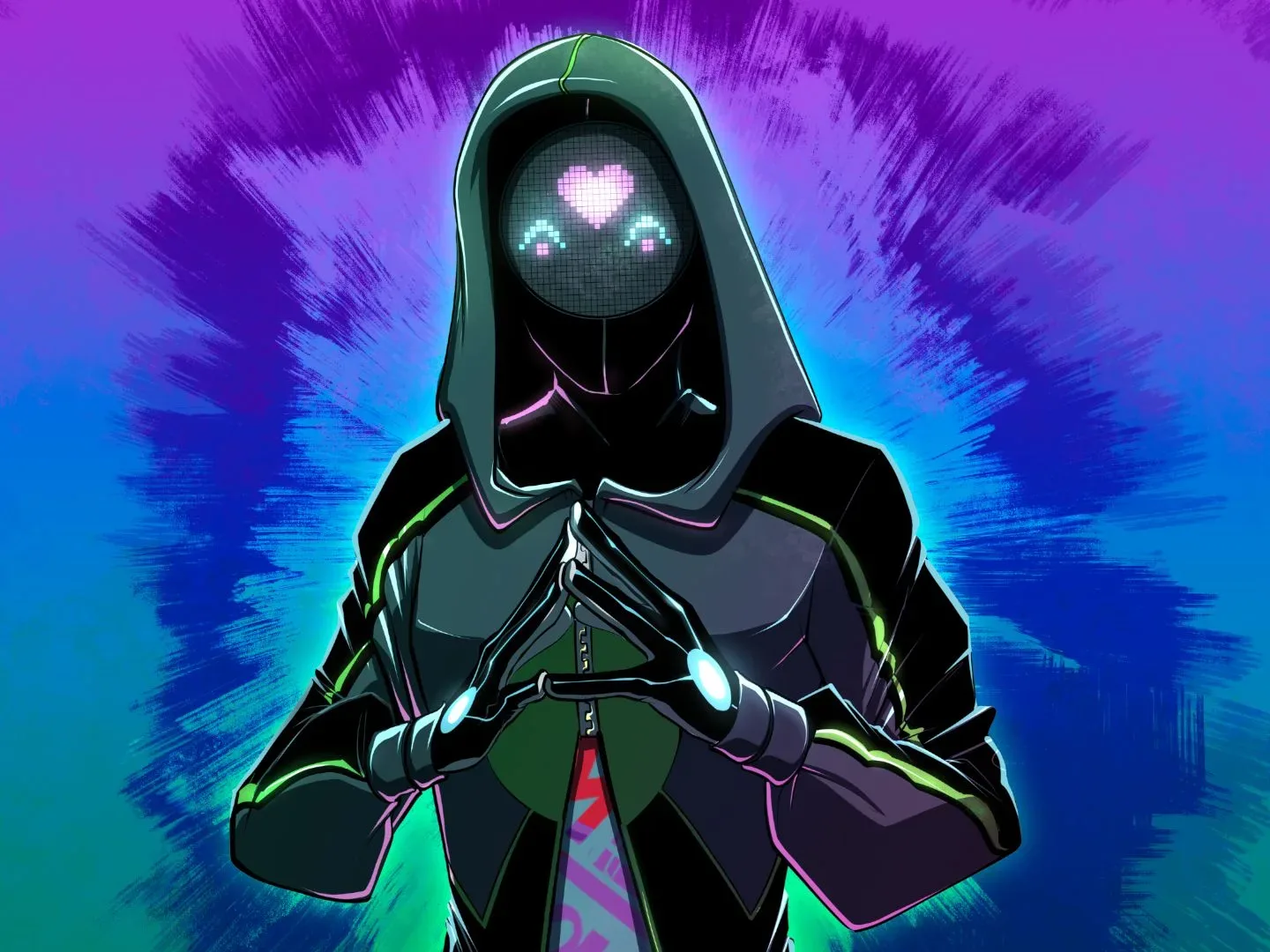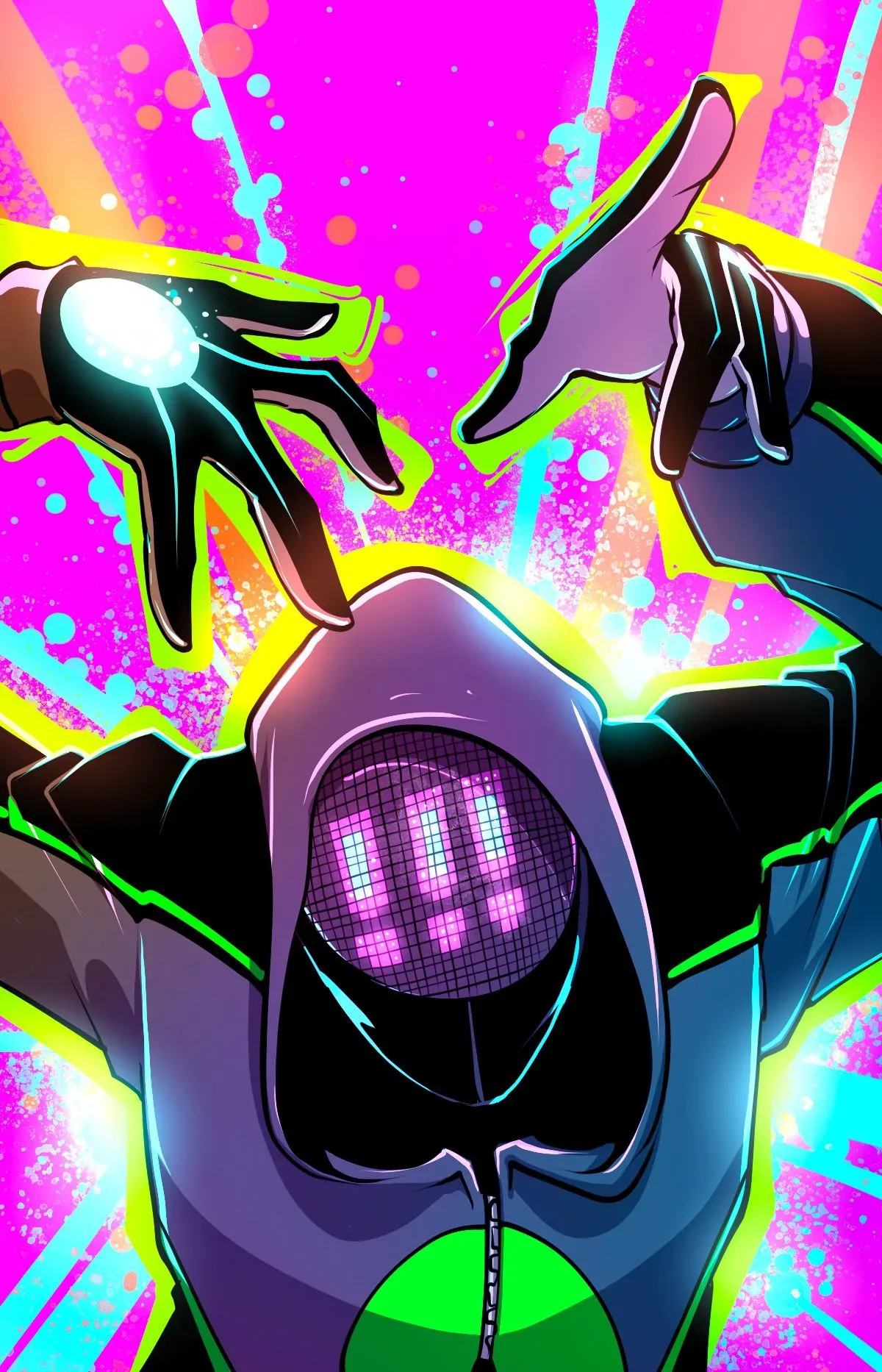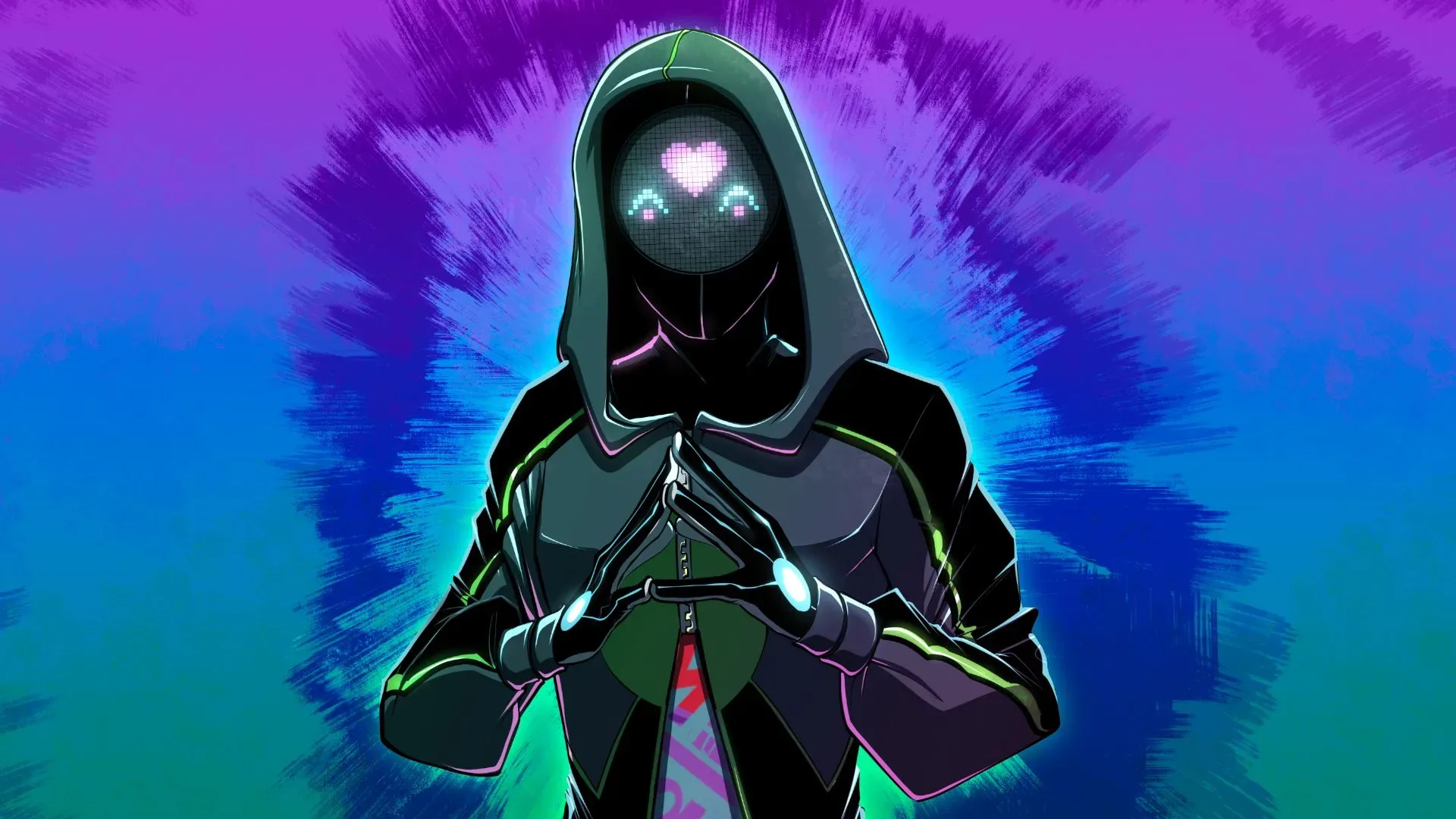
Dice Throne Nexus has filled its fourth and final hero slot with Hacker, a character whose central trick is not simply landing bigger hits, but interfering with the other player’s own setup. The upcoming dice-and-card strategy game is scheduled to launch through Kickstarter on October 13, and Hacker joins the previously revealed Snyper, Punch-A-Tron 3000 and The Ghostrunner.
Hacker’s theme is direct and appropriately unpleasant for the person sitting opposite her. Her official description says she “doesn’t fight you” so much as “rewrites you.” The character uses a holographic wrist-keyboard to deploy traps, produce EMPs and inject malware into opposing Hero boards. In practical terms, the pitch is a combatant focused on disruption: she looks to manipulate the systems, status effects and planning space that her rival normally uses to execute their own strategy.
That makes Hacker an intriguing final reveal because the available description is about interaction rather than raw force. Snyper, Punch-A-Tron 3000 and The Ghostrunner establish the rest of Nexus’ announced quartet, but Hacker’s stated identity is the most explicitly antagonistic one: she makes the opponent’s board part of her attack plan.
A Hero designed around disruption
Dice Throne is built around individual heroes, each with their own dice, board and abilities. That hero-by-hero structure matters here. A board is not merely a place to track health; it is part of the player’s decision-making toolkit. When a character can alter or exploit what is happening there, the attack is potentially aimed at the opponent’s future options as much as their current position.
For more context, explore Razer’s Wolverine V4 Pro Bets on Capacitive Thumbsticks for Xbox and PC.
The material revealed so far frames Hacker as a character who creates problems that cannot necessarily be solved by attacking straight through them. Traps and malware evoke delayed or persistent obstacles, while EMPs suggest interference with an opponent’s established tools. The precise rules, timing and individual effects have not been detailed, so it would be premature to call any one mechanic especially strong. But the design direction is clear: Hacker’s game plan is to create friction, force uncomfortable choices and capitalize when a rival’s board has accumulated things she can exploit.
In tabletop-game language, this kind of design is often called take-that. The term refers to effects that directly hinder, punish or undo another player’s plan rather than solely advancing the user’s own engine. It can be a broad label, covering everything from small taxes and restrictions to cards that remove resources or reverse an opponent’s progress. Hacker appears to fit the more pointed end of that spectrum, because her tools are presented as operating on the rival Hero board itself.
Take-that mechanics can make a duel feel more reactive. Instead of treating an enemy’s status tokens or board state as background information, players may need to assess them as a danger in their own right. The consequence is not necessarily that every turn becomes defensive; it is that a player’s sequencing and timing can become more important. Building up multiple beneficial or harmful markers may carry a new question: can Hacker convert that pile of tokens into a setback?
Server Wipe shows the basic idea
The clearest specific example revealed for Hacker is a card called Server Wipe. It removes all status-effect tokens from an opponent, then deals one point of damage for every token removed. Even with only that outline, it conveys the character’s intended rhythm very effectively.
Status-effect tokens are physical markers that indicate an ongoing condition or modifier. The supplied details do not define every status effect in Dice Throne Nexus, nor do they establish which kinds Hacker can place or exploit. What Server Wipe does demonstrate is a two-part payoff:
- It clears the opponent’s accumulated status-effect tokens.
- It transforms the number removed into damage.
That is more than a simple removal effect. If an opponent has only a small number of tokens, Server Wipe’s damage component would be correspondingly limited. If many have accumulated, the card’s potential punishment rises with that number. It is an example of a scaling effect: a game effect whose result changes according to a measurable condition, in this case the amount of token cleanup performed.
There is a useful strategic wrinkle in the concept. A token-clearing card may erase conditions that were helping the opponent, but it could also eliminate statuses they might have wanted removed for different reasons. Without full rules text and a broader look at the game’s token types, it is not possible to map every interaction. Still, Server Wipe makes the important point that Hacker is not only about saying “no” to an opposing board. She is apparently built to turn board clutter or status buildup into immediate damage.
That approach supports the character fantasy neatly. A direct-damage fighter wins by making their own strike more powerful. Hacker’s revealed angle is closer to identifying vulnerabilities in an existing system, then using the system’s own complexity against its owner.
Why the board-focused approach could change decisions
For opponents, Hacker’s presence could make visible board information more consequential. Players in strategy games generally evaluate resources, damage and active effects; a disruption character adds another layer by making the shape of that information potentially hazardous. A crowded status area could become a target. A carefully arranged set of effects could be interrupted. A plan that assumes several turns of uninterrupted setup may be less dependable.
That does not automatically mean the right response is to avoid tokens, effects or planning. The available information does not establish such a broad conclusion. Instead, the practical implication is awareness: opponents may need to consider whether a particular board state creates an unusually attractive opening for Hacker. The value of an effect can depend not just on what it does for its owner, but on whether it gives a disruption specialist something profitable to erase, hijack or punish.
For the Hacker player, a character with this identity may reward reading the opponent rather than following a fixed damage routine. The most attractive moment to deploy disruption is likely to depend on what the rival has already built, what they are likely to do next, and whether the payoff is large enough to justify using a card now rather than holding it for a later turn. That is analysis of the revealed concept, not a claim about finalized balance: complete abilities, deck contents and rules are still needed to know how consistently Hacker can execute those plays.
It also suggests a different kind of tension than a straightforward race to reduce an opponent’s health. A player may be pressured to act before their ideal setup is complete, while Hacker may be tempted to wait until the opposing board presents the best target. The result could be a game of thresholds—how much value can one side accumulate before the other side turns that accumulation into a liability?
What is confirmed, and what remains unknown
The confirmed details are relatively focused. Dice Throne Nexus will feature four heroes: Hacker, Snyper, Punch-A-Tron 3000 and The Ghostrunner. Hacker’s stated tools include traps, EMPs and malware aimed at opposing Hero boards, while Server Wipe removes every status-effect token from an opponent and awards one damage per token removed. The Kickstarter launch is planned for October 13.
Several important details have not been established in the revealed material. There is no full Hacker card list, no complete explanation of her dice faces or board layout, and no detailed rundown of exactly how traps, EMPs or malware function. There is also no confirmed assessment of matchups, complexity level, balance or how Hacker will perform against the other three Nexus heroes. Those are all questions for a fuller rules reveal and the eventual campaign materials.
That distinction is worth keeping in mind. “Control,” “disruption” and “take-that” are useful ways to describe Hacker’s evident direction, but they are not substitutes for exact text. A single character can feel very different depending on activation costs, limits, duration, counterplay and how often a key card appears. Server Wipe, for example, sounds threatening in a token-heavy situation, yet its real strategic weight depends on circumstances not currently public.
A low-barrier way into the wider game
For people curious about Dice Throne before Nexus arrives, the franchise’s hero-centered structure provides a relatively clear entry route. The available information says players do not need to start with an expensive core box; individual hero packs can be selected based on the characters that appeal to them. Existing options include X-Men-themed heroes such as Cyclops, Gambit and Jean Grey.
That modularity is especially relevant to a character like Hacker. A player who enjoys board manipulation and reactive interference may be drawn to her specific style, while someone preferring more conventional offense or resilience could gravitate toward another hero. The hero-pack approach means interest in a particular play pattern can guide a purchase or a first game, rather than requiring a commitment to every character at once.
The complete Nexus quartet will be easier to judge once more materials are shown around the October 13 Kickstarter launch. For now, Hacker supplies the final lineup with a sharply defined role: a tech-themed saboteur whose most dangerous weapon may be the opponent’s own carefully maintained board. For more details on the reveal, see the Hacker announcement coverage.
Shop the products
Check current price, model and availability at the retailer.