Phil Searching for Mort is now available for ZX Spectrum Next, giving a 1988 isometric adventure a new outing on the modernized Spectrum-compatible machine. Developed by MJB Software, the game is presented as a faithful conversion of En Busca de Mortadelo!, an earlier title created by graphic artist Alfonso Fernández, also known as AF.
The premise is appropriately cartoon-catastrophic. Phil must rescue his partner Mort after villains turn him to stone. The route to a cure is not a straightforward trip to a laboratory: Phil first has to work through a dangerous labyrinth to find and free Professor Bacterio, whose reversal potion is the group’s only stated answer to Mort’s predicament.
That setup carries the comic-book energy of the Spanish Mortadelo y Filemón series that inspired the game. Phil is the forceful, easily irritated member of the pair, while Mort is the tall partner known for disguises. The conversion changes their names in English, but preserves a mission built around broad slapstick stakes, hostile goons and a hero trying to keep order in a situation that plainly has none.
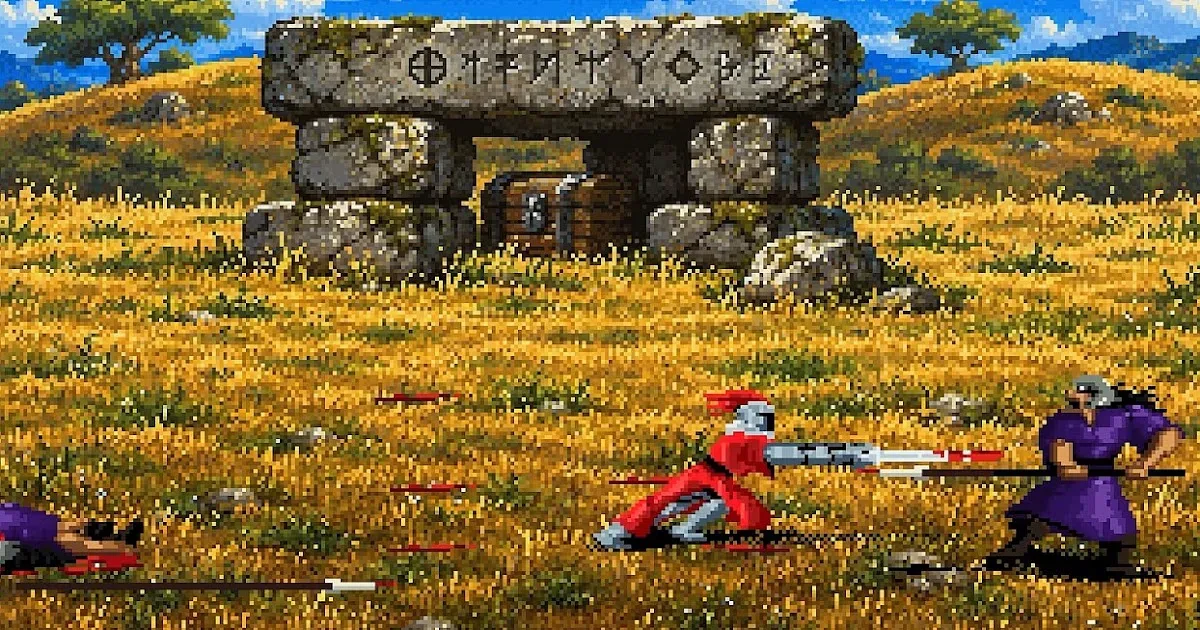
A large maze built from isometric rooms
MJB Software says the game spans more than 190 isometric screens. In practical terms, an isometric game draws its spaces from an angled, top-down-like viewpoint rather than a conventional side view or direct overhead map. That presentation can make platforms, hazards, object positions and exits feel like parts of a small three-dimensional diorama. It also means navigation is a central part of the challenge: the player has to read each screen’s pathways, elevations and obstacles while keeping track of how the rooms join together.
For more context, explore Michael Jordan’s 1998 NBA Finals Game 2 Jersey Sells Privately for Record $14 Million.
More than 190 screens is a meaningful scale for a labyrinth adventure because progression is not described as a run through a single linear action stage. The route to Professor Bacterio is framed as a maze full of threats and problems to solve. Players should expect the game’s geography to matter alongside reflexes, particularly where an object needs to be moved before a blocked route becomes usable.
The action combines several demands. Phil can move quickly, shoot at cartoon enemies, jump over lethal traps and push objects to solve physics-based puzzles. “Physics” here does not imply a simulation-heavy modern system; the supplied description specifically points to puzzles based on moving and pushing things in the environment. The important idea is that objects are not only decoration. Their placement can determine whether Phil can advance through part of the labyrinth.
That blend is well suited to an isometric format. A room may first look like an enemy encounter or a trap sequence, then reveal itself as a spatial puzzle once the player identifies an object that can be repositioned. Conversely, a solution may demand clean movement as well as the right idea, because the game also asks Phil to leap over dangers and push through an enemy-filled maze.
Combat, traps and puzzle-solving share the same route
The listed features suggest that progress depends on switching mental gears rather than treating combat as the entire experience. Blasting enemies addresses immediate pressure. Leaping over traps deals with timing and positioning. Pushing objects asks the player to inspect the room and think about access. Each activity serves the larger rescue objective, which is to reach Professor Bacterio and eventually restore Mort.
The final destination is an enemy lair, culminating in a large boss encounter. The available details do not define the boss’s mechanics, so it would be premature to assume a particular pattern, weapon or puzzle requirement. What is clear is that the game structures its journey as a climb toward a major confrontation rather than simply ending at the moment the professor is found.
For players approaching the game, the useful takeaway is that haste alone may not be enough. The description explicitly encourages fast movement, yet it also emphasizes clever object puzzles. When a route seems closed, a careful look at movable scenery may be more valuable than another attempt to force past an obstacle. Likewise, a room with enemies and traps may require deliberate positioning before Phil makes a jump or begins shifting an object.
What a faithful conversion means here
A conversion is a version of an existing game adapted to a different platform. Calling this one faithful signals that its purpose is to bring the 1988 adventure’s structure and character to ZX Spectrum Next, rather than recast it as an unrelated sequel or a new interpretation. The original was created by Alfonso Fernández, while MJB Software is responsible for the new Next release.
The ZX Spectrum Next angle matters most in the treatment of sound. The release uses the platform’s enhanced audio capabilities for a soundtrack with multiple in-game themes. Those themes do not remain fixed: the music is said to shift into more intense arrangements as Phil gets nearer to the enemy base. This is dynamic music, meaning the musical presentation changes in response to in-game circumstances rather than playing one unchanging piece across every location.
That approach can give the maze a stronger sense of momentum. As the destination draws closer, the soundtrack can communicate escalation before the final confrontation itself arrives. It is a fitting use of an enhanced version of an older-style machine: the conversion is aiming to retain the original adventure’s comic mayhem while giving its audio a more reactive role.
Spanish comic-book roots remain central
The game’s identity is inseparable from the comic tradition behind it. Mortadelo y Filemón is described as slapstick-heavy, and the game’s scenario follows that lead: a petrified partner, ruthless villains, an eccentric professor and a magic potion all make for a deliberately outsized rescue plot. The stated focus on cartoon enemies further reinforces that tone.
Those roots are more than a cosmetic layer. They explain why a rescue mission can accommodate shooting, lethal traps, object manipulation and a giant boss in one adventure. The premise is designed for escalating comic-book disorder, with Phil having to work through increasingly hazardous circumstances to undo a wildly inconvenient curse.
The game also preserves the duo-driven nature of the premise even though Mort is unavailable as an active partner at the outset. Mort’s condition provides the goal, while Phil carries the playable side of the mission. Professor Bacterio, meanwhile, is not merely a background character: freeing him is a necessary step in obtaining the potion needed to reverse the petrification.
What is confirmed—and what is not
Confirmed details include the ZX Spectrum Next platform, MJB Software’s role, the connection to the 1988 En Busca de Mortadelo!, the more-than-190-screen isometric labyrinth, enemy shooting, trap jumps, object-pushing puzzles, a final large boss encounter and reactive musical themes. The story objective is also clear: find Professor Bacterio, secure the means to cure Mort, and bring the rescue to its conclusion.
There are no supplied details on price, distribution method, controls, save features, language options, additional platforms or the exact design of the boss encounter. Those are meaningful practical questions for prospective players, but they should not be filled in with assumptions. The release’s defining promise is already specific enough: a substantial, comic-inspired isometric rescue adventure rebuilt for ZX Spectrum Next with a soundtrack that intensifies as the danger rises.
For further release context, readers can see this report on Phil Searching for Mort.