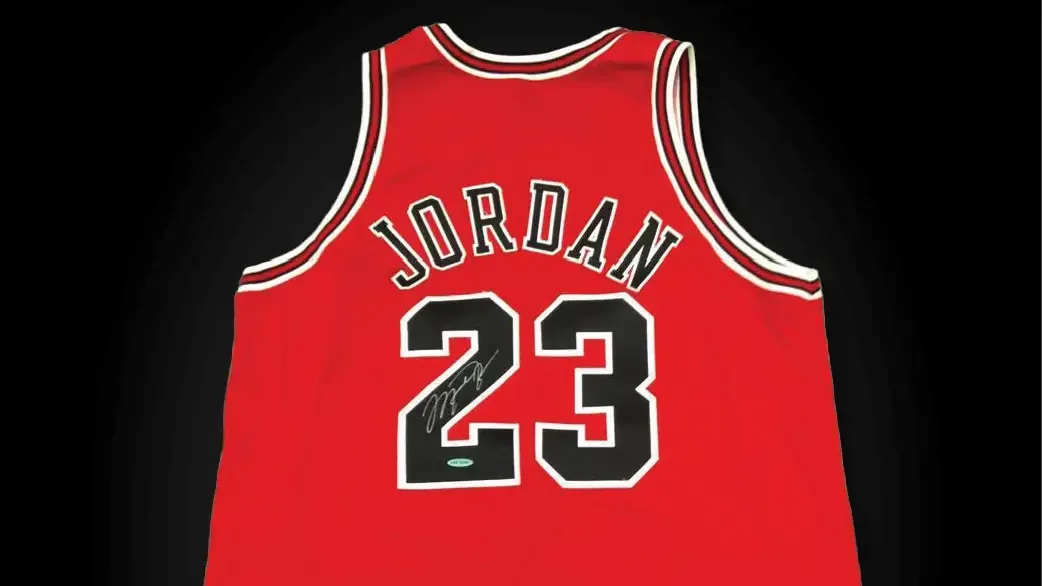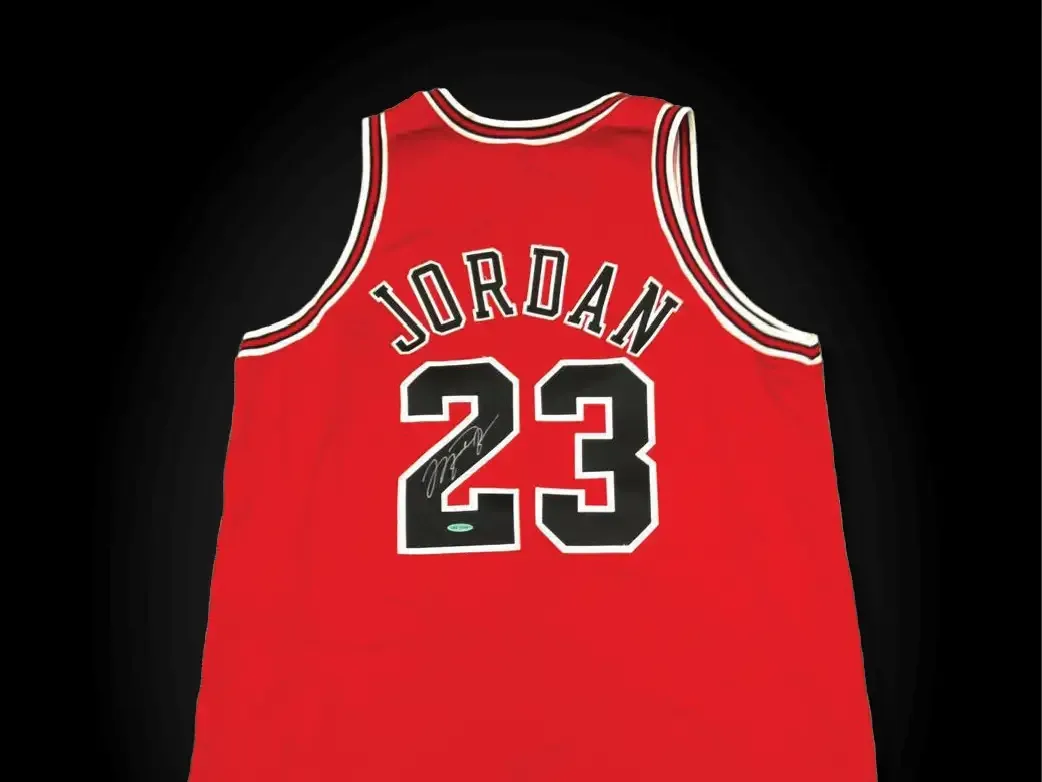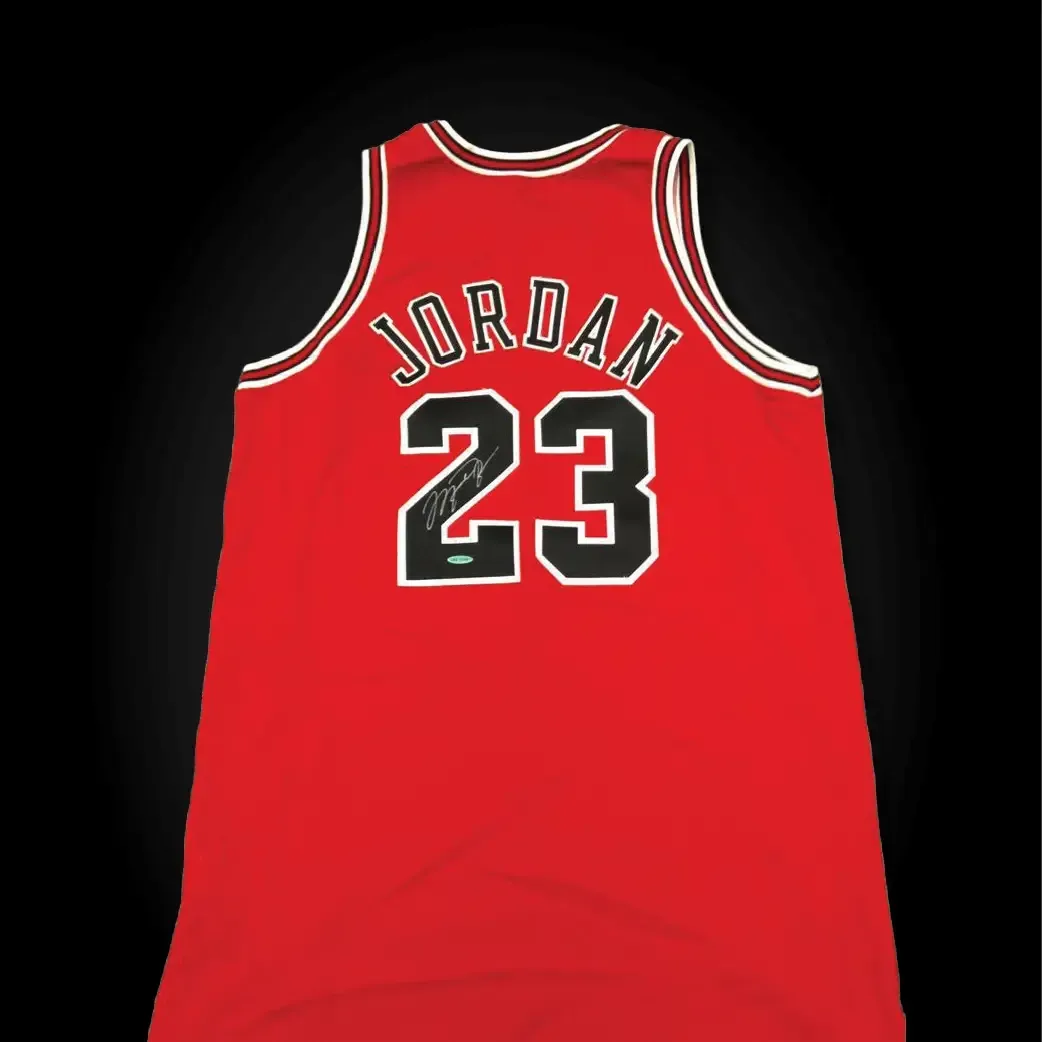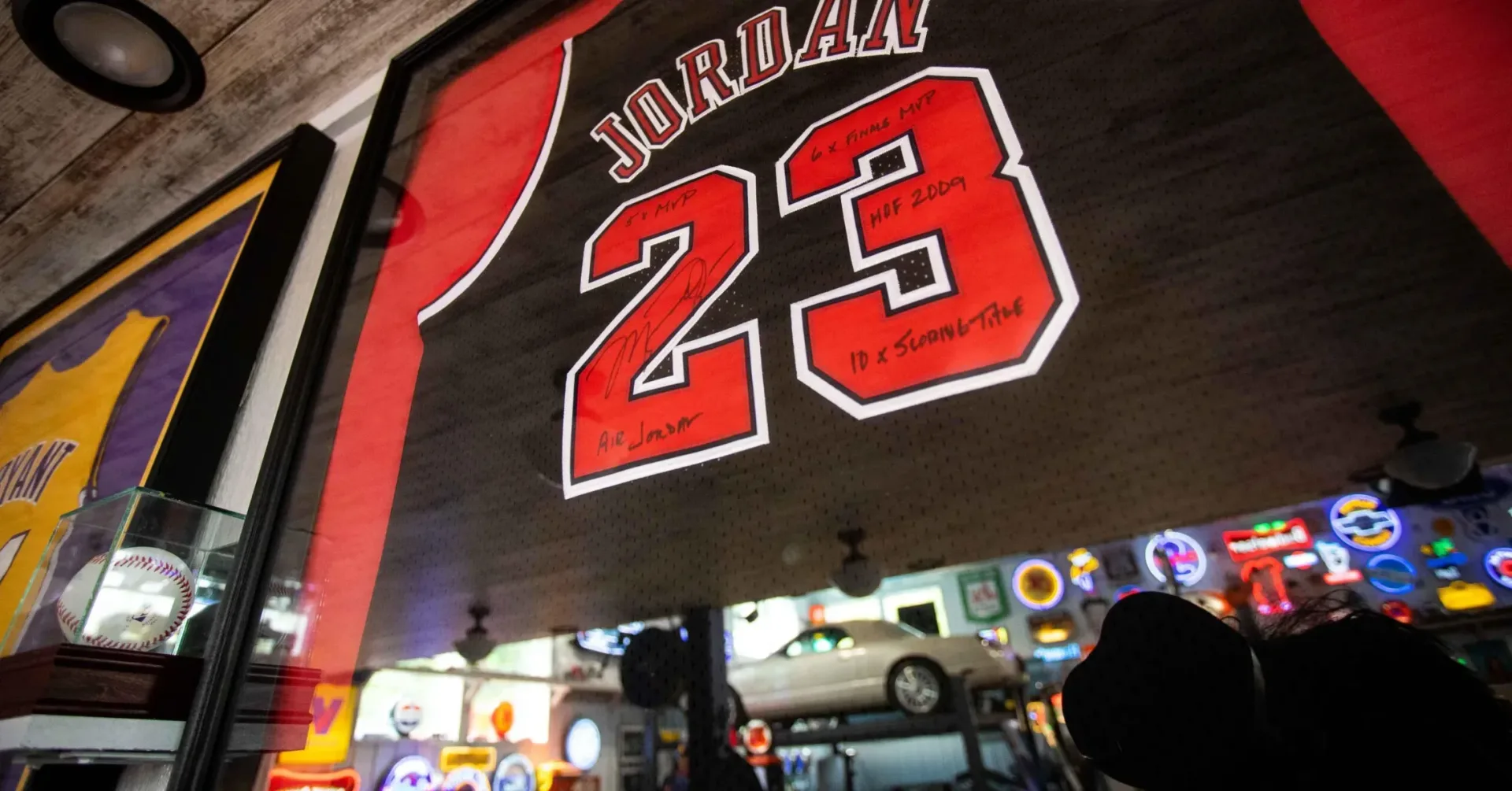
A signed Michael Jordan Chicago Bulls road jersey worn in Game 2 of the 1998 NBA Finals has sold in a private treaty transaction for $14 million, a new record for basketball memorabilia. The buyer was sports memorabilia collector Ron Firman of Rye, New York.
The red jersey was worn on June 5, 1998, when Chicago beat the Utah Jazz 93-88 in Salt Lake City to level the best-of-seven Finals at one game apiece. Jordan scored 37 points. That performance was surpassed only by his 45-point showing in the championship-clinching Game 6 of the same series.
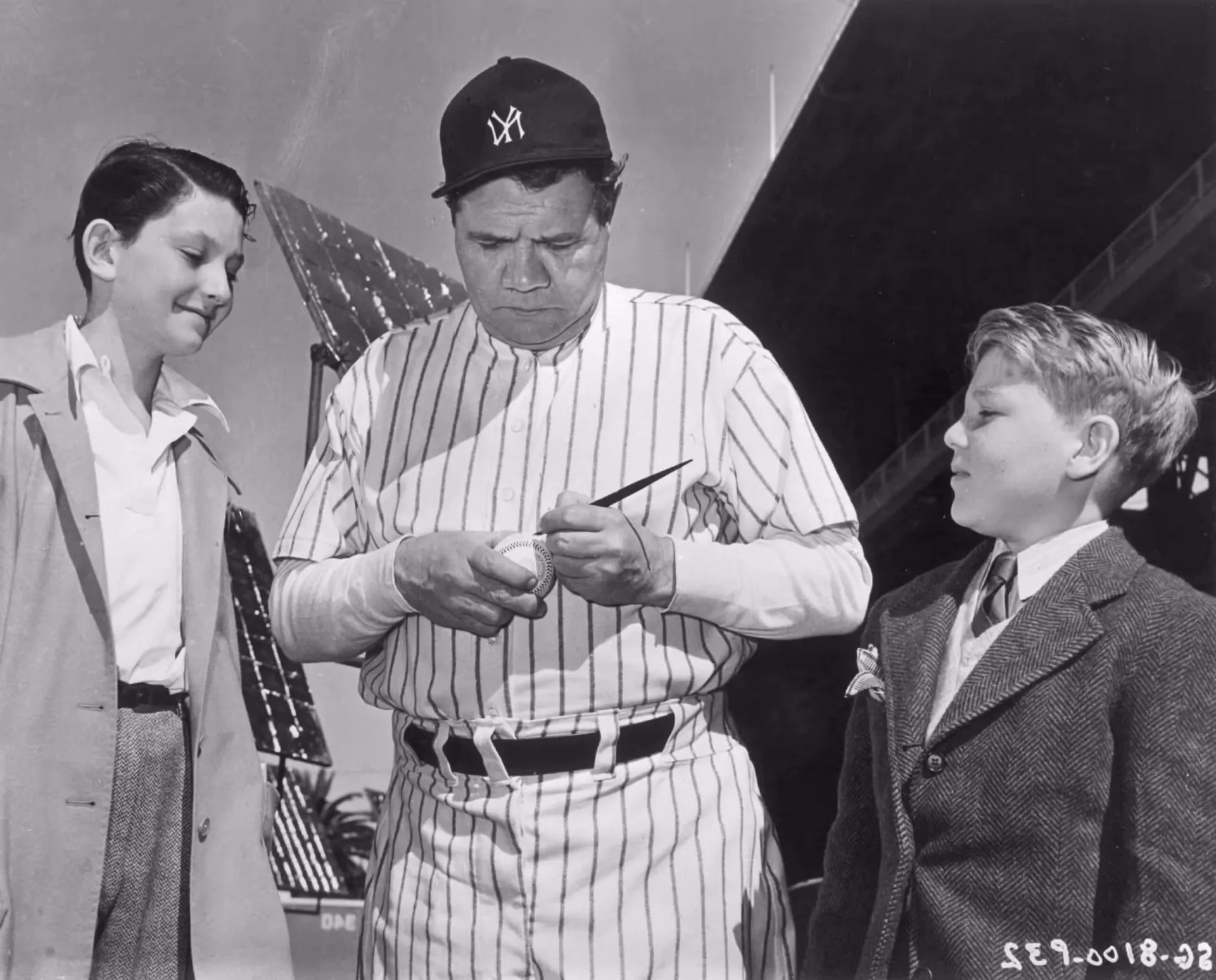
The price places this particular garment in extremely rare company even beyond basketball. It is now the second-highest recorded sale for a game-used jersey from any sport, behind only Babe Ruth’s 1932 “Called Shot” jersey, which sold for $24.1 million. It also moves past the $12.26 million paid at auction for a Jordan home jersey from Game 3 of the 1998 Finals, as well as the $10 million sale of a Jordan Game 1 jersey from that series.
For collectors, the headline figure is dramatic. The more consequential part of the story, however, is why this jersey could command it: a precisely identified Finals game, a defining athlete, a documented chain of ownership, photographic matching, and a Jordan autograph with authenticated signing history. At this level, no single attribute is enough on its own. The value rests in the way those details reinforce one another.
A record built on a specific night
The jersey is not merely associated with the 1998 NBA Finals. It is identified as having been worn during Game 2, a 93-88 Bulls victory over the Jazz on June 5, 1998. That specificity matters enormously in memorabilia.
“Game worn” is a broad description. It can indicate that an athlete wore an item at some point in competition, but collectors usually place a far greater premium on an item that can be connected to a particular contest, especially one with enduring historical importance. Pinning this jersey to Game 2 supplies a fixed sporting event, an opponent, a score and an individual Jordan stat line: 37 points.
The 1998 Finals also sit at the end of Jordan’s storied Bulls career. That period has an unusually concentrated hold on the market because it combines a championship-level team, a career-defining player and a limited group of pieces tied to the series. Jordan wore red Bulls jerseys in Games 1, 2 and 6 of the Finals, and only one of those had previously appeared in a public auction.
That means the Game 2 shirt’s appeal is not based simply on a familiar uniform design or Jordan’s name. It is a scarce surviving artifact from a narrow and exceptionally recognizable chapter of basketball history. In collecting terms, the story is inseparable from the object.
Related coverage includes Michael Jordan’s 1998 NBA Finals Game 2 Jersey Sells for $14 Million.
How the $14 million result compares
The sale becomes the highest known price for any piece of basketball memorabilia. It also establishes a new high-water mark for a Jordan Finals jersey after the $12.26 million Game 3 home jersey sale on September 29.
Comparisons across sports should be made carefully, since items have different histories and marketplace contexts. Still, the broad ranking helps show the scale of the transaction:
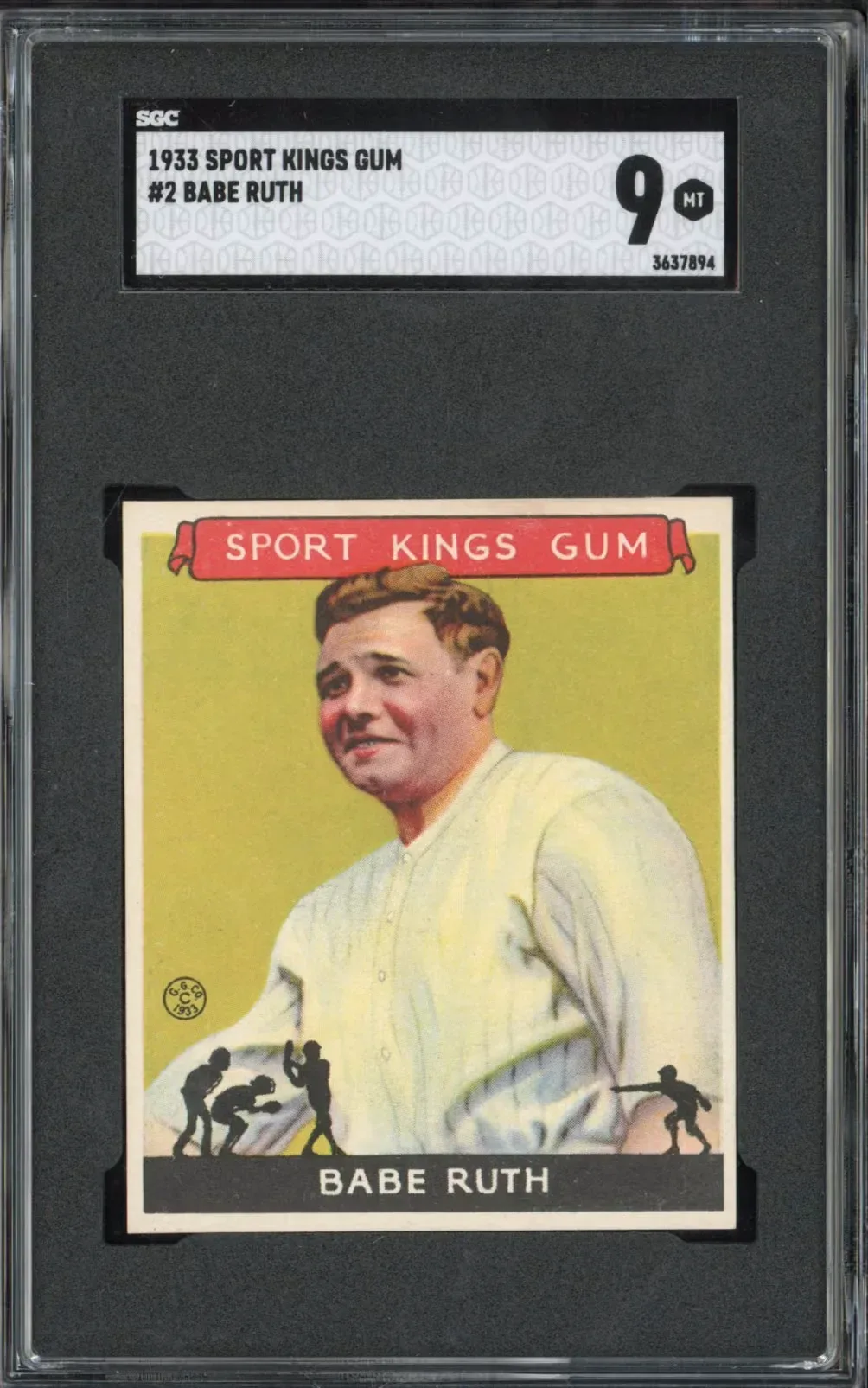
- $24.1 million: Babe Ruth’s 1932 “Called Shot” jersey, the record for a game-worn jersey.
- $14 million: Michael Jordan’s Chicago Bulls road jersey from Game 2 of the 1998 NBA Finals.
- $12.26 million: Jordan’s home jersey from Game 3 of the 1998 NBA Finals.
- $10 million: Jordan’s jersey from Game 1 of the 1998 NBA Finals.
- $9.2 million: Diego Maradona’s 1986 World Cup “Hand of God” jersey.
The new sale is especially notable because it was completed privately rather than under the visible bidding structure of a public auction. A public auction presents a final price after open competition among bidders. A private treaty sale is negotiated directly between parties, generally with an auction house or specialist facilitating the transaction. The $14 million figure is therefore a reported completed sale price, not a public-auction hammer price.
Private sales can be useful for objects where discretion matters, where a seller has a very specific price expectation, or where a specialist can identify an appropriate buyer without waiting for a scheduled auction. They do not make documentation less important. If anything, a landmark private result depends heavily on a buyer’s confidence in the object and its records.
The documentation behind the jersey
Several forms of supporting evidence accompany the Game 2 jersey. It was reportedly purchased directly from the Bulls in 2003 and comes with multiple letters documenting its provenance. Provenance is the ownership and custody history of an item: who had it, when they had it and how it moved from one holder to another.
For a game-used jersey, provenance is not just administrative paperwork. It gives the buyer a traceable route back toward the team. The jersey is also said to have changed hands only once after its original 2003 purchase. A relatively short documented ownership chain can make a major item easier to evaluate than one that has passed through many undocumented sellers.
One of the supporting letters came from Jeff Schultz, the Bulls’ Director of Community Relations, who characterized the jersey as an exceptional game-worn example from his years managing Bulls memorabilia. That is team-connected supporting testimony, while the jersey’s other verification measures address separate questions.
It was photo-matched by MeiGray Authentication and SIA Authentication. Photo-matching is the process of comparing physical details on an item with period photographs. On a jersey, evaluators may look for patterns in fabric wear, loose threads, marks, stitching, number placement or other characteristics that appear in images from a game. A successful photo-match is intended to connect the physical garment to the athlete’s on-court appearance in a particular visual record.
The signature also has its own authentication trail. Jordan autographed the jersey in a signing authenticated by Upper Deck. That does not replace the game-use evidence; rather, it answers a different question. A collector evaluating a signed, game-worn item must consider both whether the player used the object and whether the player signed it. The available documentation addresses those two issues separately.
Why authentication categories should not be blurred
High-profile sales often use terms such as authenticated, photo-matched and game-worn almost interchangeably. They are related, but they are not the same claim.
- Game-worn: the garment was used by the athlete in competition.
- Photo-matched: visual evidence connects the exact physical item to photographs from a particular game or period.
- Provenance: records and documents establish the item’s path of ownership or custody.
- Autograph authentication: evidence supports that the signature is genuine and connected to an authenticated signing process.
In an ideal major-league memorabilia offering, these categories work together. The Game 2 jersey has a team-origin purchase history, documentation letters, two cited photo-matching services and a separately authenticated Jordan autograph. None of those descriptions should be treated as a shortcut for the others, but their combination is a major part of what distinguishes this jersey from an unsigned display piece, a broadly dated team-issued shirt, or a garment with little ownership history.
That is a practical lesson for collectors at every budget. The dollar value may be unusual, but the due-diligence principle is not: identify precisely what a document proves, identify what it does not prove, and keep the paperwork with the item. A seller’s description can summarize a story; records are what allow a buyer to examine it.
What this means for collectors
The sale does not mean every Jordan item, every Bulls jersey or every 1990s basketball collectible has suddenly entered the same financial tier. The $14 million result reflects an extraordinary convergence of player significance, Finals-era context, performance, scarcity and documentation. It is not a broad price guide.
It does underline how sharply the market can separate top-tier, event-specific material from more general memorabilia. The gap between “Michael Jordan-related” and “a documented jersey from a known 1998 NBA Finals game in which Jordan scored 37 points” is vast. Condition, provenance and identification can matter as much as the athlete’s name when collectors are evaluating unique physical artifacts.
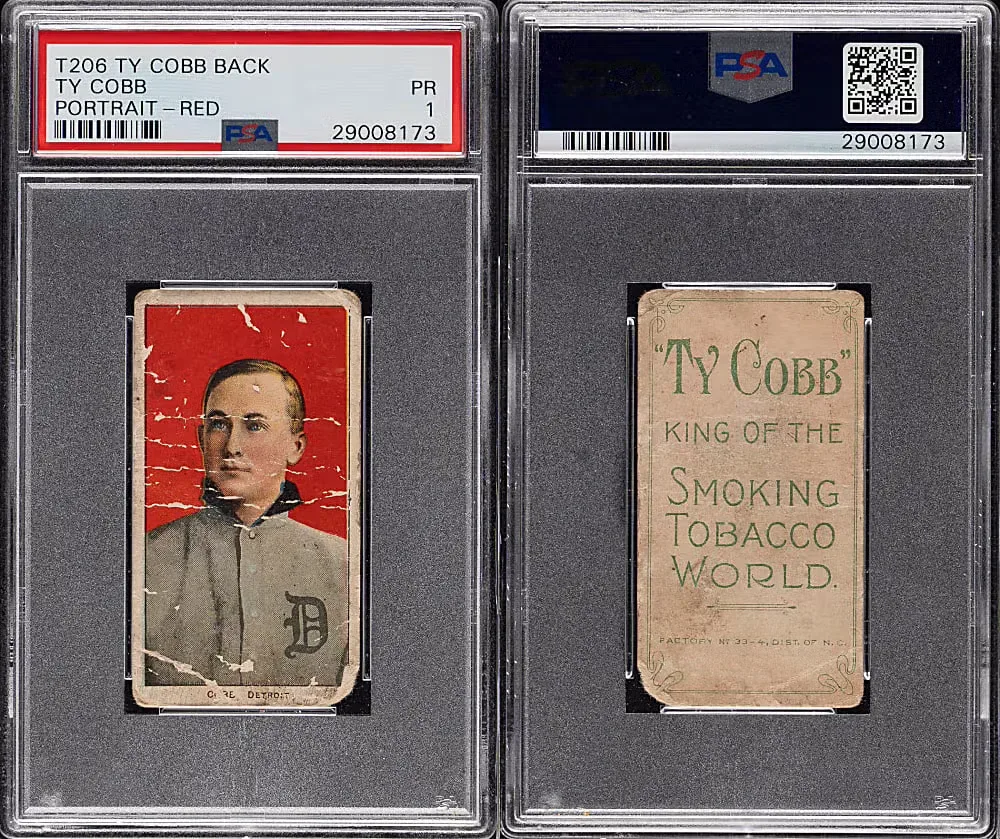
The same logic applies to sports cards, although cards use their own vocabulary of sets, grades, parallels and print scarcity. A card’s appeal often turns on its exact issue and condition; a game-worn jersey’s appeal often turns on its exact game connection and evidence trail. Collectors interested in how historical context shapes value in another sports category can also explore the vintage baseball card sets that remain central to collecting.
Jordan’s 1998 Finals jerseys have now produced three eight-figure sales associated with Games 1, 2 and 3. The Game 2 road jersey’s $14 million result raises the basketball benchmark again, while its documentation provides a clear example of why the strongest artifacts are evaluated as much for their evidence as for their fame.