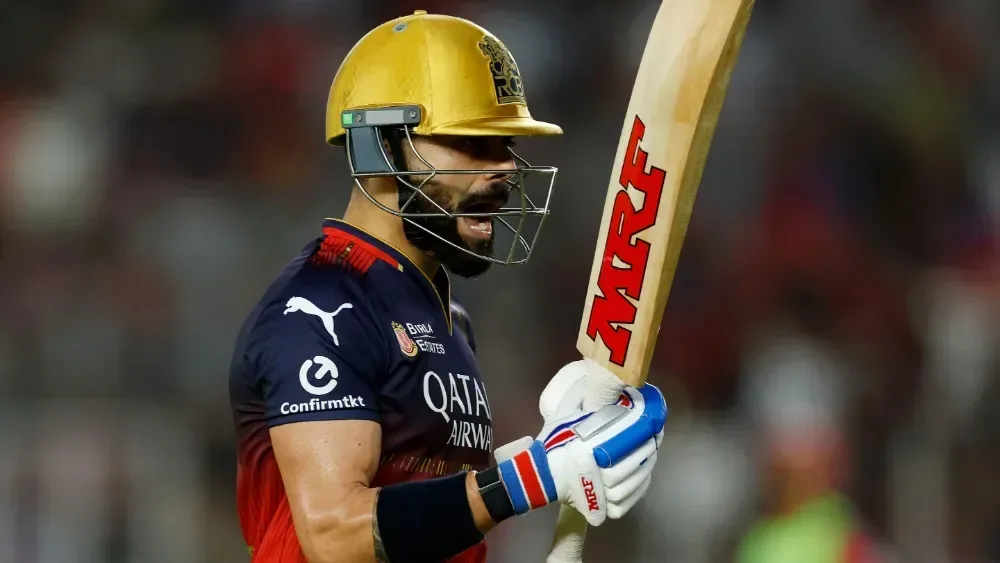
The Indian Premier League remains the standout asset in Asia-Pacific sports media, with research from Media Partners Asia placing its rights value at about $12.4 million per match—a level said to be comparable with the Premier League. But the broader message is less about another surge in rights prices than a change in where sports businesses may find their next returns.
Across the region, sports-rights fees are forecast to grow only 1% to 2% annually through 2030, following growth of roughly 10% a year since 2021. That does not mean sports are suddenly shrinking as a business. Rather, it signals that the unusually rapid escalation in media-rights payments may be giving way to a slower, more selective market.
For fans, leagues, broadcasters and sponsors, that distinction matters. The value of sport is no longer being described simply as a race to secure the next streaming deal. The research points toward attendance, hospitality, sponsors, player-driven interest and women’s competitions as areas where more of the next phase of growth could be created.
The IPL remains the regional outlier
Media Partners Asia’s assessment makes the scale of the IPL’s position especially clear. At an estimated $12.4 million in revenue per match, the league is the only Asia-Pacific property valued at the highest global tier in the research. The comparison with Korea’s KBO baseball league—estimated at about $100,000 per match—illustrates just how concentrated the upper end of the market has become.
India accounted for more than half of the increase in Asia-Pacific sports-rights fees since 2021. Across the region, 64% of all rights fees are concentrated in just 12 of the most valuable rights packages. That is a useful reminder that “APAC sports” is not one uniform marketplace. A handful of premium properties command an oversized share of the money, while many other leagues operate under vastly different media economics.
Rights fees are the payments a broadcaster or streaming service makes for permission to show a competition. They are separate from the wider money surrounding sport: sponsorship, ticketing, premium hospitality and merchandise. A league can have a substantial audience and still not command the same rights fees as another property, because the price reflects competition among buyers, distribution strategy and the perceived ability to turn attention into subscriptions, advertising or other commercial value.
The research covers 14 markets and draws on tracking of more than 150 sports-rights contracts. It values the commercial sports economy in the region at $16.2 billion in 2026. Media rights are the largest component at $6.1 billion, followed by sponsorship at $4.7 billion, ticketing and hospitality at $3.9 billion, and merchandise at $1.5 billion.
Slower rights growth is not the same as a smaller sports economy
Rights fees rose 58% over five years to $5.7 billion, a very substantial increase. Yet the projection now is for the overall regional sports economy to grow by about 5% a year and reach roughly $19.5 billion by 2030, with sponsorship and ticket sales expected to account for much of that expansion.
Related coverage includes IPL Stands Alone as APAC Sports Rights Growth Is Set to Slow.
In plain terms, the forecast suggests that the sports economy can continue growing even if the price of media packages stops leaping ahead at its earlier pace. That is the key commercial tension in this data: rights holders may have to become better at monetising the audience around the games, not merely the live games themselves.
“This is not the end of sport’s boom in Asia Pacific. It is the end of the easy part,” said Vivek Couto, chief executive and executive director of Media Partners Asia.
That characterization fits the figures. Media rights are still the largest individual revenue category, but other income streams offer greater room for growth. The region generates about $4 in commercial sports revenue per person, compared with more than $200 in North America, according to Couto. The comparison should not be read as a prediction that the gap will disappear: the research does not claim that. It does, however, identify a large difference in present commercialisation.
The proposed opportunity lies in several places: more people buying tickets, stronger venue businesses, better use of audience data for sponsorship, local athletes who create a direct connection with viewers, and growing interest in women’s sport. Each requires more than simply placing a match behind a paywall.
Streaming is paying more, but it is not necessarily creating fandom on its own
Streaming services paid 50% of sports-rights fees in 2026, up from 36% in 2021. That puts streamers in a decisive position in many markets: they increasingly set the terms for what premium rights are worth.
But the fan research alongside the rights analysis complicates a familiar assumption. Only 3% of lapsed fans who returned to a sport said they did so because it became available on a platform they already used. Access still matters—fans cannot watch a competition they cannot find—but platform availability alone appears to be a weak explanation for renewed interest.
This matters because it separates distribution from discovery. Distribution is the method by which the match reaches a viewer. Discovery is what makes that viewer care enough to seek it out. A large platform can solve the first issue without automatically solving the second.
The gap has practical implications for a rights holder deciding how to package a tournament and for a streaming service deciding what comes with it. Live matches may be the central product, but the surrounding material—players, personalities, clips, commentary and community conversation—can play a larger role in persuading someone to return. It is a problem familiar across entertainment: audience attention has to be earned before it can be monetised. A related question of audience experience appears in this discussion of why a raw count is not always the best measure of value in Final Fantasy 7.
Personal recommendations and creators are a major part of the funnel
The accompanying fan study surveyed 10,249 fans in Indonesia, Japan, Korea, the Philippines, Thailand and Australia, with 1,029 video interviews added to the online research. Its results suggest sports discovery is often social before it is technological.
Among respondents who started following a sport for the first time, 35% were introduced by someone they knew. Just 14% entered through a major event. That does not diminish the importance of major tournaments, which can bring huge audiences and cultural attention. But it does indicate that personal recommendations are a more common initial pathway in this sample.
Creators also command a meaningful share of viewing. Independent creators account for 42% to 43% of sports-viewing hours on YouTube in Korea and Thailand, while league and club channels account for 10% to 19%. The figures do not mean official channels lack value. Instead, they point to an ecosystem in which unofficial or independent voices can be central to how audiences discuss and follow sports.
The spending figures are similarly revealing. Some 84% of fans who follow players, pundits or creators spent money on sport in the past year, compared with 43% among those following none. The study identifies a correlation, not proof that tracking creators directly causes spending. Fans who are already highly engaged may be more likely both to follow personalities and to spend. Even so, the scale of the difference gives teams and leagues a reason to take personalities seriously rather than treating them as a sideshow.
It also challenges the idea that subscriptions are the sole marker of a paying fan. Of fans who spent money on sport during the previous year, 63% bought no subscription. Their spending could be directed to tickets, hospitality, merchandise or other sport-related purchases; the research does not break that group down in the supplied findings. The important takeaway is narrower: subscription revenue captures only part of the commercial relationship.
Women’s cricket, Japan and local stars are positioned for closer competition
The research identifies Japan, women’s competitions and homegrown stars as likely areas for competing rights bids. Japan is notable because its subscription-streaming market is valued at $6.4 billion, six times the size of its sports-rights fees. That imbalance suggests a market with substantial paid-streaming infrastructure relative to current rights expenditure, though it does not guarantee a particular rights outcome.
Women’s cricket is singled out as an immediate case to watch. The final of the 2025 Women’s Cricket World Cup drew 185 million digital viewers in India. Media Partners Asia expects contested bidding for women’s properties beginning with the Women’s Premier League’s 2028 rights cycle. Strong digital reach is not identical to a rights valuation, but a viewership figure of that scale gives bidders and rights holders an important datapoint when those negotiations approach.
Homegrown sports and familiar local players are another recurring theme. KBO attendance reached a record 12.3 million in 2025, up from 7.3 million in 2019. In Japan, more than 25 million people watched the opening game of Major League Baseball’s 2025 Tokyo Series. The Nippon-Ham Fighters, meanwhile, recorded revenue 59% above 2019 levels in their first year owning Es Con Field.
These examples point to different commercial routes. KBO’s figure concerns people attending games. The Tokyo Series figure concerns television viewership for a global league playing in Japan. The Fighters’ revenue result concerns a club’s venue ownership. They should not be treated as interchangeable measures, but together they show the varied ways interest can become business value: the crowd in the stadium, the event on screen, and the revenue opportunities created by controlling the venue.
The difficult part: investment must turn into durable cash flow
Media Partners Asia tallied around $14 billion in Asia-Pacific sports investment and ownership changes since 2021, much of it involving IPL franchises and venues. Its assessment is that this spending has acquired scarce assets but has not yet produced cash flow.
Cash flow refers broadly to the money moving into and out of a business. An asset can rise in perceived value, or be difficult for competitors to acquire, without immediately generating enough ongoing income to justify the investment. In sport, that income might come from media distributions, ticket sales, sponsorship, hospitality, merchandise and venue activity. The report’s framing suggests the next test is execution: converting prized rights, teams and facilities into reliable operating returns.
Sponsorship is the clearest area of projected upside. Data-priced sponsorship—where deals are valued using audience information rather than broader estimates alone—could grow 6% to 7% annually to 2030. The research says sponsorship spending as a share of GDP in China, India, Korea and Southeast Asia trails the worldwide benchmark. If those markets closed half of that gap, the region could add around $5.4 billion a year.
That is an estimate built on a hypothetical partial closing of the gap, not money already committed. Still, it highlights the change in emphasis. With rights-fee growth slowing, sponsors may become even more important to the economics of leagues and teams. Better audience understanding is central to that argument: the more precisely a property can explain who follows a player, watches clips, attends matches or purchases merchandise, the more defensible its sponsorship pricing may become.
What this means for fans and sports businesses
For fans, the findings suggest a future that may be shaped as much by community and personalities as by the logo on the streaming app. The available evidence says personal connections are a leading route into a sport, independent creators take a significant share of viewing in some markets, and many people who spend on sports do so without paying for a subscription.
For leagues and broadcasters, the IPL’s extraordinary position is a benchmark, not a template that every competition can copy. The regional market is concentrated, streaming-led and increasingly selective. A successful strategy may need to connect live coverage with local players, credible creators, stadium experiences and sponsors that see measurable value in specific audiences.
The biggest headline is therefore not simply that sports-rights growth is slowing. It is that the next stage of Asia-Pacific sports business appears likely to reward organisations that treat fandom as a relationship extending beyond the broadcast window.