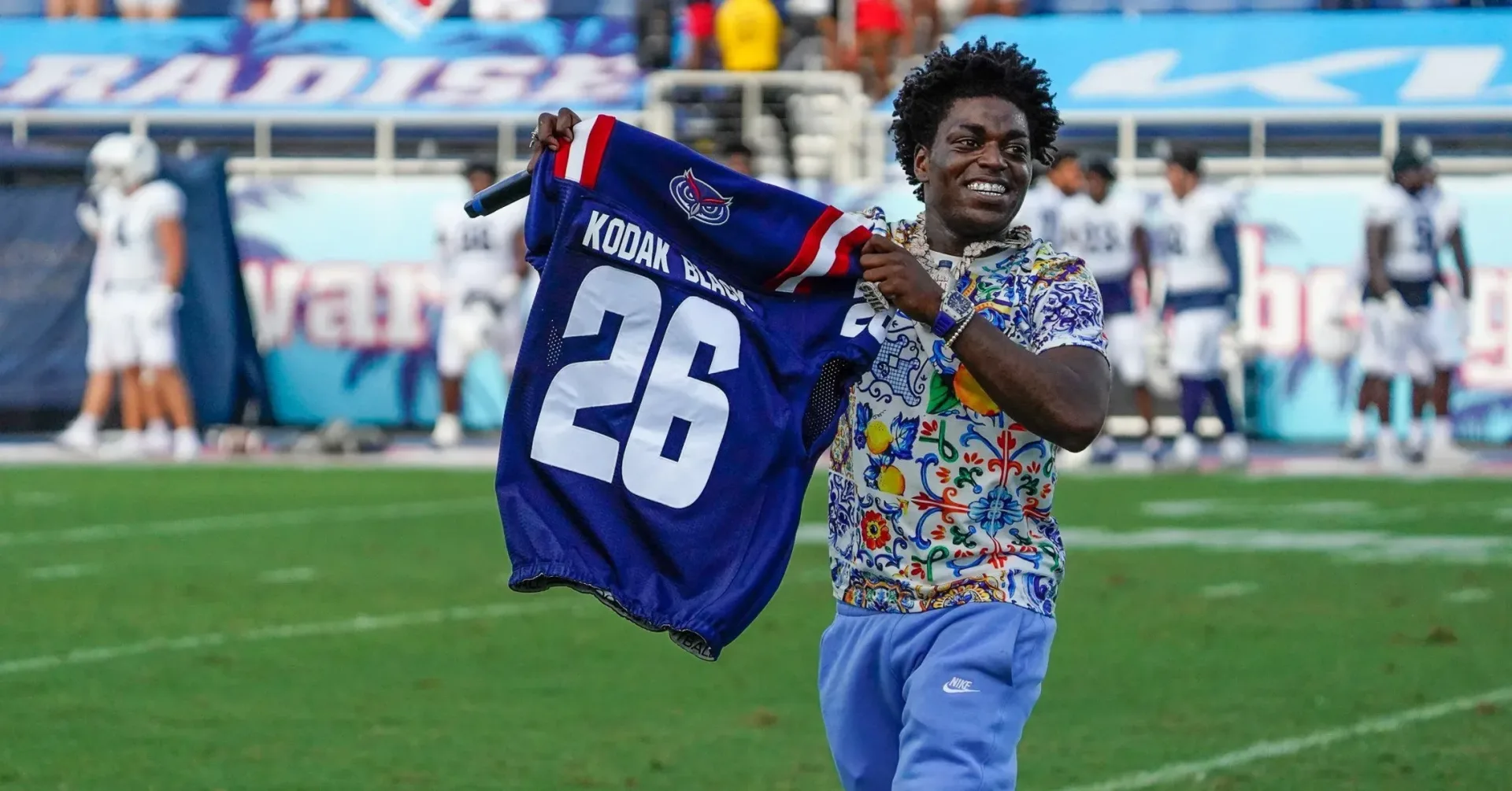
Kodak Black has raised the possibility of entering the livestreaming world, adding another major music name to a growing conversation around artists building audiences beyond songs, tours and conventional social posts.
In a video shared on social media, Kodak Black spoke about streaming and said Adrien Broner was among the people encouraging him to give it a try. He also pointed to recent discourse involving Kai Cenat as a reason to move quickly. The important caveat is that this is presently an idea, not a formal launch: there is no confirmed channel, platform, schedule or format.
That distinction matters. “I might stream” can mean anything from occasional chats to a full creator operation with regular broadcasts, production staff, moderation, clips and brand partnerships. For an artist with a recognizable public profile, the potential audience is obvious. Turning that attention into a durable livestream presence is the harder part.
Why streaming is an appealing lane for artists
Livestreaming gives public figures a direct line to an audience. A song release is a finished product; a live broadcast is an ongoing event where viewers can react in real time, ask questions and become part of the moment. That immediacy is a central reason the format has expanded well beyond competitive gaming.
For musicians, the draw is not necessarily replacing music. It is building another place where fans can spend time with the artist between releases. A stream could theoretically be conversation, music discussion, guests, reactions, gaming or other unscripted programming. None of those formats has been announced for Kodak Black, but they illustrate why the medium can work differently from a music video or a standard interview.
There is also a business case. Live platforms can create revenue opportunities tied to an ongoing audience rather than a single release cycle. The available information describes streaming as an alternative income stream for artists and notes that the model can allow creators to retain much of what they earn. It should not be treated as automatic or guaranteed income, however; a large audience and a sustainable broadcast business are not the same thing.
The report also points to Blueface as an example of a rapper streaming on Kick, with claims of earnings above $100,000 in a week. That figure is presented as an example of what has been reported around the space, not as a benchmark Kodak Black is assured to reach. Creator revenue can vary dramatically with audience size, broadcast frequency, platform arrangements and the kind of monetization involved.
Kick, Twitch and the question of fit
Two names sit at the center of this conversation: Kick and Twitch. They are competing livestreaming platforms, but they are often discussed as having different public identities and moderation expectations.
Related coverage includes Kodak Black Floats a Possible Move Into Streaming.
Twitch is associated with Amazon and is described as the more brand-friendly option. In practical terms, “brand-friendly” generally refers to an environment where advertisers, sponsors and partners may feel more comfortable associating their products with the platform and its programming. That perception can influence the sort of commercial opportunities creators pursue.
Kick, meanwhile, has become a notable destination for prominent personalities, including rappers. It has positioned itself as more permissive about certain creator conduct, while also carrying a reputation for drama and for hosting controversial figures. That looser public image may appeal to creators who want fewer perceived restrictions, but it can also bring trade-offs around reputation, moderation and the audience a channel attracts.
Neither platform has been named by Kodak Black as his intended destination. It would be premature to frame a Kick account, Twitch channel or platform deal as imminent. Still, the platform decision would be one of the most consequential parts of any actual streaming move.
What simulcasting means
Simulcasting means broadcasting the same live program to more than one service at the same time. The practice is common among streamers because it can place a creator in front of separate audiences without forcing viewers to migrate to one destination.
For an artist testing the format, simulcasting could offer a relatively straightforward way to see where an audience responds most strongly. The upside is reach: fans who already prefer one service can watch there. The complication is that a live chat split across multiple platforms can be harder to manage, and the community can feel less centralized.
The wider entertainment business is also increasingly comfortable with multi-platform live distribution. For instance, a major New Year’s Eve television event is set to add a Disney+ simulcast, illustrating how the idea extends beyond individual creators. A celebrity stream is a much smaller and more interactive production, but the strategic logic is similar: meet viewers where they already are.
From celebrity attention to a real channel
The analysis here is simple: Kodak Black would not be starting from zero. His existing name recognition could make a first broadcast a significant online event. Initial curiosity, though, is only the first stage of streaming.
Unlike a short social-media video, livestreaming asks audiences to make time for the creator repeatedly. It rewards consistency, recognizable programming and a reason for viewers to return when there is no surprise guest or headline moment. A musician can use celebrity as an entry point, but a lasting channel usually needs an identity of its own.
That identity does not have to be gaming-focused. The available information only says Kodak Black is interested in streaming; it does not define the programming. That uncertainty leaves several key questions open:
- Would broadcasts be occasional appearances or follow a regular schedule?
- Would the content focus on conversation, music, gaming, guests or a mix of formats?
- Would he select one platform or simulcast?
- How would chat moderation and community management be handled?
- Would the channel remain informal, or become part of a broader creator business?
Those questions are particularly relevant when a performer’s existing public profile is part of the attraction. Direct fan access can be valuable, but live broadcasting also compresses the time between a thought, a reaction and a public response. Creators have less opportunity to edit, reconsider or reframe a moment before it reaches viewers.
What this says about the creator economy
Kodak Black’s interest reflects a broader shift in how artists can approach their audiences. Streaming is no longer framed only as gameplay broadcasting. It is also a space for personalities, entertainers and musicians to turn attention into recurring live programming.
For gaming audiences, that evolution is familiar. The platforms that grew through game broadcasts now compete for creators whose appeal may be personality-led rather than game-led. That can broaden the audience and create unusual crossover moments, but it also makes platform culture, safety tools and moderation more important. A service is not just video infrastructure; it shapes the community a creator builds around a stream.
At this point, the most accurate reading is measured: Kodak Black has publicly entertained the idea, and people around him have encouraged it. The potential is clear because established artists bring built-in visibility. The specifics are not. Until he identifies a platform or begins broadcasting, this remains an early signal of interest rather than a completed pivot.