Abu Dhabi Public Health Centre is working with Ultrahuman to bring the company’s health algorithms into Sahatna, the nationwide health app used for managing aspects of personal healthcare. The notable part is not a requirement to buy another wearable: Sahatna’s implementation is described as device agnostic, so access to the new feature will not depend on owning an Ultrahuman smart ring.
The planned addition is Ultrahuman’s Ultra Age metric, which produces an estimate of a user’s biological age. Rather than simply repeating the number of years since a person was born, the metric combines information related to sleep, cardiovascular health and blood markers into one result. Sahatna already allows individuals to manage their health, speak to doctors and access health and genetics records; Ultra Age adds a single, consumer-facing interpretation layer to that broader health-app experience.
What biological age means in this context
Chronological age is straightforward: it is a calendar measure. Biological age is an attempt to summarize how a set of bodily signals compares with expectations associated with age. In this case, Ultrahuman’s system uses sleep, cardiovascular and blood-marker information to create its estimate.
That distinction matters because a biological-age result is not merely a new way to display a birthday. It is an algorithmic metric built from several categories of health data. The output may be easy to understand as one number, but it is necessarily a compressed view of the underlying information. A user seeing a result in Sahatna would be looking at a combined measure, not a complete explanation of every factor that shaped it.
For more context, explore Acer’s Basic Wireless Mouse Is Listed at $10 in Black, With 2.4GHz USB Connectivity and Adjustable DPI.
The practical appeal is obvious. Health data can be difficult to turn into an understandable pattern when it is split among records, wearable dashboards and separate measurements. A single age-based metric gives people a reference point for thinking about longer-term health and lifestyle. The trade-off is that users should retain the context behind the number: sleep signals, cardiovascular information and blood markers are different kinds of inputs, and a summary score does not make those distinctions disappear.
A wearable algorithm without a wearable lock-in
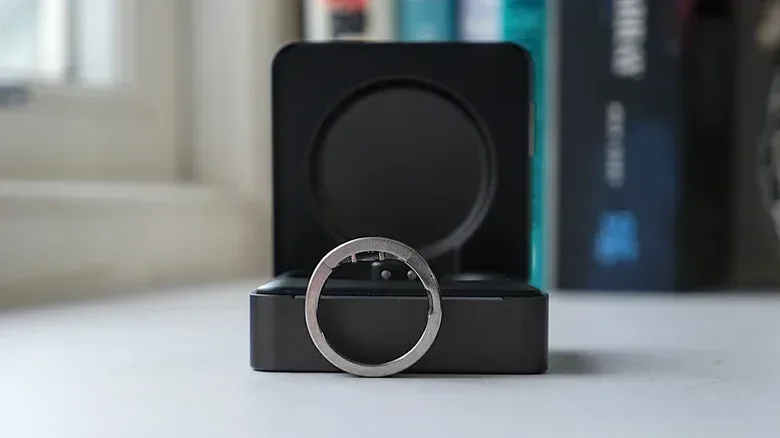
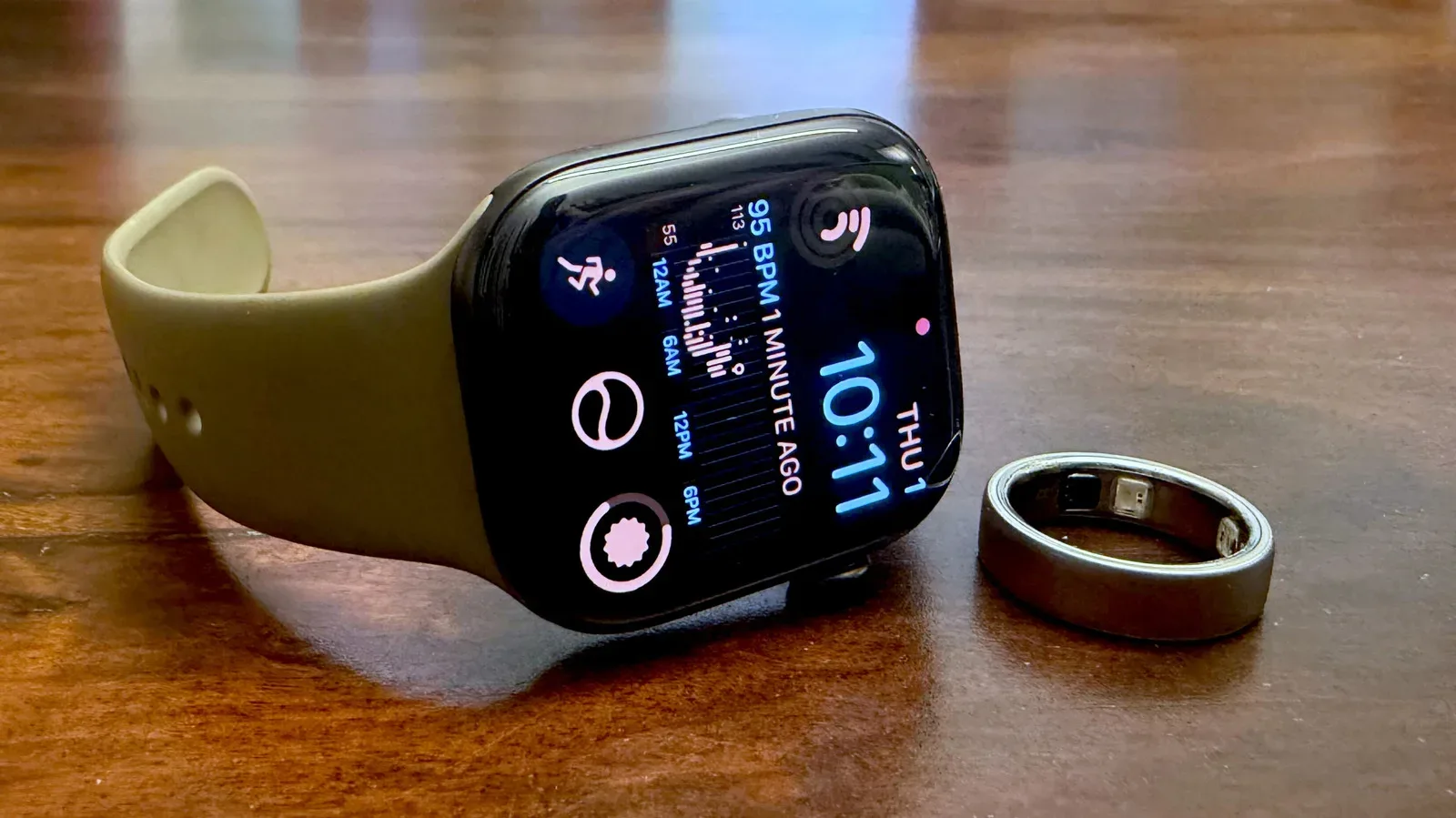
Ultrahuman is known for smart-ring technology, but the Sahatna arrangement does not make its ring a condition of participation. The device-agnostic approach is one of the most important details in the plan. It frames Ultra Age as an algorithm that can sit within a wider health platform, rather than as an exclusive perk for owners of one piece of hardware.
For users, that could reduce the friction commonly attached to health features built around consumer devices. Someone should not have to change from an existing tracker, purchase a particular ring or commit to a single device brand simply to view the metric in Sahatna. It also means the public-health app is positioned around the result and its potential use, rather than around hardware sales.
Device agnosticism does not mean every device necessarily gathers identical data or presents it in exactly the same form. The available details do not specify which devices, data sources or connection methods Sahatna will support, nor do they explain how different data types will be handled. Those implementation questions will matter because Ultra Age is based on multiple categories of information. What is clear is the intended principle: the feature is not limited to Ultrahuman customers.
Why the partnership is significant
Wearables have historically had a limited role in traditional clinical and regulatory settings. This integration points toward a changing relationship between consumer-generated signals and public-health tools. Rather than treating wearable information as separate from formal health systems, the planned model combines clinical and wearable data.
Abu Dhabi Public Health Centre says the goal is to help people better understand how lifestyle factors can affect long-term health. It also says the combined-data model can support earlier interventions, more targeted prevention strategies and more personalized recommendations.
Those aims sit at the center of preventive care. “Earlier intervention” means identifying a possible need for action before a health issue becomes more serious. “Targeted prevention” means guidance or programs can be directed more specifically than one-size-fits-all advice. “Personalized recommendations” refers to guidance informed by an individual’s available data rather than a broad population average.
Importantly, the supplied details describe objectives, not a complete operational blueprint. The partnership signals an effort to put a consumer-friendly health metric inside an official, nationwide healthcare app. It does not establish that the metric will independently diagnose conditions, replace clinicians or automatically trigger a particular action.
The unanswered question: who acts on the data?
The biggest unresolved point is what happens after Sahatna presents its biological-age information. There is not yet clarity on whether public-health officials could identify and directly contact people considered to need intervention, or whether the response will remain entirely with the individual user.
That uncertainty is consequential. A user-controlled model would emphasize personal awareness: the app provides a metric and related information, while the individual decides whether to adjust habits, seek advice or discuss the results with a doctor. A more proactive model, by contrast, could involve an institution using combined clinical and wearable data to identify people for outreach or tailored intervention.
Neither approach is confirmed by the available information. The distinction should not be treated as a minor product-setting detail, because it changes the relationship between the app, its users and the public-health system. It affects expectations around how a wellness-style metric may be used once it sits alongside clinical and genetics records in a nationwide application.
Why one score is useful—and why context still matters
A consolidated measure can make health information more approachable. Many people can quickly grasp the idea that a calculated biological age may differ from their calendar age. It can offer a prompt to look more closely at lifestyle patterns that influence sleep or cardiovascular measures, which is aligned with the stated aim of improving understanding of long-term health.
But simplicity is also the reason a metric needs careful interpretation. Ultra Age combines several inputs, and the result is only as meaningful as the information and model behind it. A person’s chronological age is a fixed factual reference. A biological-age estimate is a calculated assessment that reflects a particular algorithm and its chosen signals.
For Sahatna users, the useful question may therefore be less “Is this number a verdict?” and more “What information is this number designed to summarize?” The provided description answers that at a high level: sleep, cardiovascular and blood markers. It does not provide details about weighting, thresholds, measurement frequency or the precise recommendations users may receive. Those are sensible areas to watch as the integration takes shape.
A broader shift for health platforms
The collaboration illustrates how health platforms can evolve beyond storing records and enabling appointments. Sahatna already supports communication with doctors and access to health and genetics records. Adding Ultra Age would make it a place where users can also receive an algorithmic, longitudinal-style interpretation of health-related data.
That blend has potential advantages. A metric intended to clarify lifestyle and long-term health can be more useful when it exists near the services and records people already use to manage their care. It may also help bridge the gap between data that is generated through daily routines and information held in healthcare systems.
At the same time, the move makes transparency especially important. The more a health app combines clinical records, wearable signals and algorithmic outputs, the more users will need clarity about what the metric represents, what it does not represent and whether it leads to any action beyond personal feedback. The current information establishes the partnership’s preventive-health ambition, but leaves key operational details open.
For now, the clearest takeaway is that Sahatna is set to offer a biological-age estimate powered by Ultrahuman’s Ultra Age system without requiring an Ultrahuman ring. It is a meaningful example of wearable-derived health analysis moving into a public-health application—while the boundaries around outreach, intervention and the handling of the resulting insight remain to be defined.