Google is preparing two connected wearable updates later this month: an expansion of Health Guardian to newer Fitbit hardware and a broader upgrade to automatic activity tracking across Fitbit and Pixel Watch devices. The health-focused additions are planned for the Fitbit Air and Fitbit Edge under a Google Health Premium subscription, while the tracking changes are set for Fitbit Air, Fitbit Edge, and Pixel Watch 3, 4 and 5.
For players, gym regulars and anyone who wants their wearable to do more of the logging work, the activity update is arguably the immediately practical change. Google says it will expand the number of workout types that can be recognized automatically from 10 to more than 100, and that its testing found missed workouts fell by over half. The company also says accuracy is nearly doubled, though it has not detailed the exact testing methodology or supplied a device-by-device accuracy breakdown.
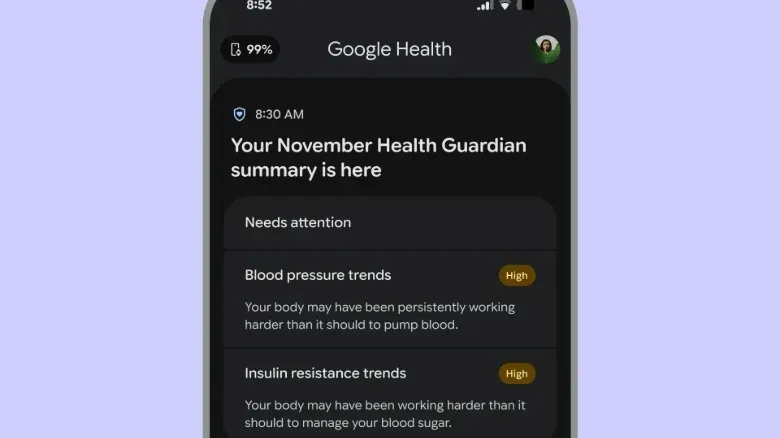
Health Guardian, meanwhile, is positioned less as a workout counter and more as an early-warning wellness layer. It will provide Fitbit Air and Fitbit Edge users with a monthly Health app summary of blood-pressure and insulin-resistance trends, plus recommendations from the in-app Health Coach and discussion prompts for concerns a user may wish to raise with a doctor.
What is changing for Fitbit and Pixel Watch owners
The planned rollout covers two distinct functions with different eligibility requirements:
- Health Guardian: Fitbit Air and Fitbit Edge users with Google Health Premium will gain access later this month. The feature first arrived for Pixel Watch users over the summer.
- Automatic activity tracking: Fitbit Air, Fitbit Edge and Pixel Watch 3, 4 and 5 are slated to receive the upgrade later this month.
That split matters. Someone with a compatible watch may receive improved workout detection without subscribing to Premium, based on the information available, while Health Guardian is specifically tied to the subscription for the two Fitbit models. The announcement does not specify a Health Guardian expansion to the listed Pixel Watch generations as part of this particular rollout; it says the service was introduced for Pixel Watch earlier in the year.
The practical promise behind the tracking update is simple: fewer workouts should need to be manually started or corrected afterward. Wearables have long used signals such as heart rate and motion to infer that a workout is happening. Google says its revised system will consider a wider set of inputs: movement, routines, manual edits and location alongside the usual physiological markers.
Why fast-moving workouts are the difficult test
Google specifically identifies tennis, high-intensity interval training, commonly shortened to HIIT, and other fast-moving activities as cases where its previous automatic recognition struggled. That is a useful distinction from merely counting steps. Rapid starts and stops, changes in intensity, arm-heavy motion and inconsistent patterns can make it harder for a wrist-worn device to decide whether a person is exercising, identify the activity, and determine when it began or ended.
HIIT is particularly varied by design. It can involve brief bursts of intense work followed by recovery, and its movement can look very different depending on whether the session uses bodyweight exercises, running, cycling or another format. Tennis similarly alternates between waiting, short sprints, repeated swings and recovery. A tracker relying too heavily on one signal could misclassify those patterns or fail to record them.
Google’s answer is to build a fuller behavioral picture. Routines likely means a system can account for recurring patterns rather than treating every moment in isolation. Manual edits matter because corrections supplied by the wearer can be meaningful context for future classification. Location can add environmental context to movement data. None of those inputs alone establishes the exact activity, but together they can potentially reduce blind spots that emerge when heart rate or motion data is ambiguous.
There is also an important privacy and preference angle. Location can make activity classification more useful, but it is more sensitive than a simple step count. People considering the update may want to review their Health app and device permissions, particularly if they prefer to limit which data types contribute to automatic tracking.
More recognized workouts does not remove the need to check a log
A rise from 10 to more than 100 recognized workout types is substantial on paper, especially for people whose usual exercise is not among a small list of common activities. But broader recognition and better automatic detection are not guarantees that every session will be categorized correctly. Google’s cited results describe its own tests, and individual outcomes may vary with the activity, the way a watch is worn, a user’s routine and the available data.
The sensible use case is convenience rather than blind trust. Check workout histories, use manual edits where needed, and consider manually starting an activity when having a clean, precise record matters. This is especially relevant for structured training plans, where an incorrect activity type or missed session could make a weekly summary less useful.
That balance between automated convenience and user verification is familiar across connected devices. As with other long-lived electronics, feature improvements depend not only on hardware but also on continued software support; our look at the limits that shape a Kindle’s useful life offers a broader example of why updates and platform access can matter alongside the physical product.
Health Guardian is meant to surface trends, not replace medical care
Health Guardian’s monthly report is built around trends in blood pressure and insulin resistance. A trend is the direction or pattern visible across readings over time, rather than a single data point. That approach can be helpful for spotting changes worth discussing, but it is not the same thing as a diagnosis.
Google describes the service as an early indication that something may need attention, comparing its role to a check-engine light for overall well-being. The analogy explains the intended role well: an alert can prompt a closer look, but it does not identify every underlying cause or substitute for a professional assessment.
For users, the useful practical step is to treat the monthly summary and Health Coach material as information for a conversation. The company says the app will offer insights to help a user speak with a doctor about concerns. That is a more appropriate framing than treating recommendations from a wellness app as a final medical answer, particularly when blood pressure or metabolic health is involved.
The Health app is becoming the center of Google’s wellness setup
These updates also reinforce a larger app transition. Google’s newer Health app replaced the Fitbit app a few months ago and now acts as a central portal for health, fitness and sleep information. It can connect with Peloton and MyFitnessPal, and it can synchronize with a user’s medical records.
The app’s role is set to expand further through a partnership with medtech company Abbott. Google says Abbott’s Lingo continuous glucose monitor will connect with the Health app and is expected to become available to US users soon. A continuous glucose monitor, or CGM, is a device that tracks glucose over time. Its prospective connection adds another category of health information to the same software hub, though it is separate from the Fitbit and Pixel Watch activity-tracking update.
Combining fitness logs, sleep data, app integrations, medical records and potential glucose-monitor data may make the Health app more convenient for people who already use several services. It also makes data organization and account settings more consequential. Users who connect multiple tools should understand what they are sharing, which integrations they actively need, and whether their records remain understandable when viewed together.
Metal Mesh band pricing and timing
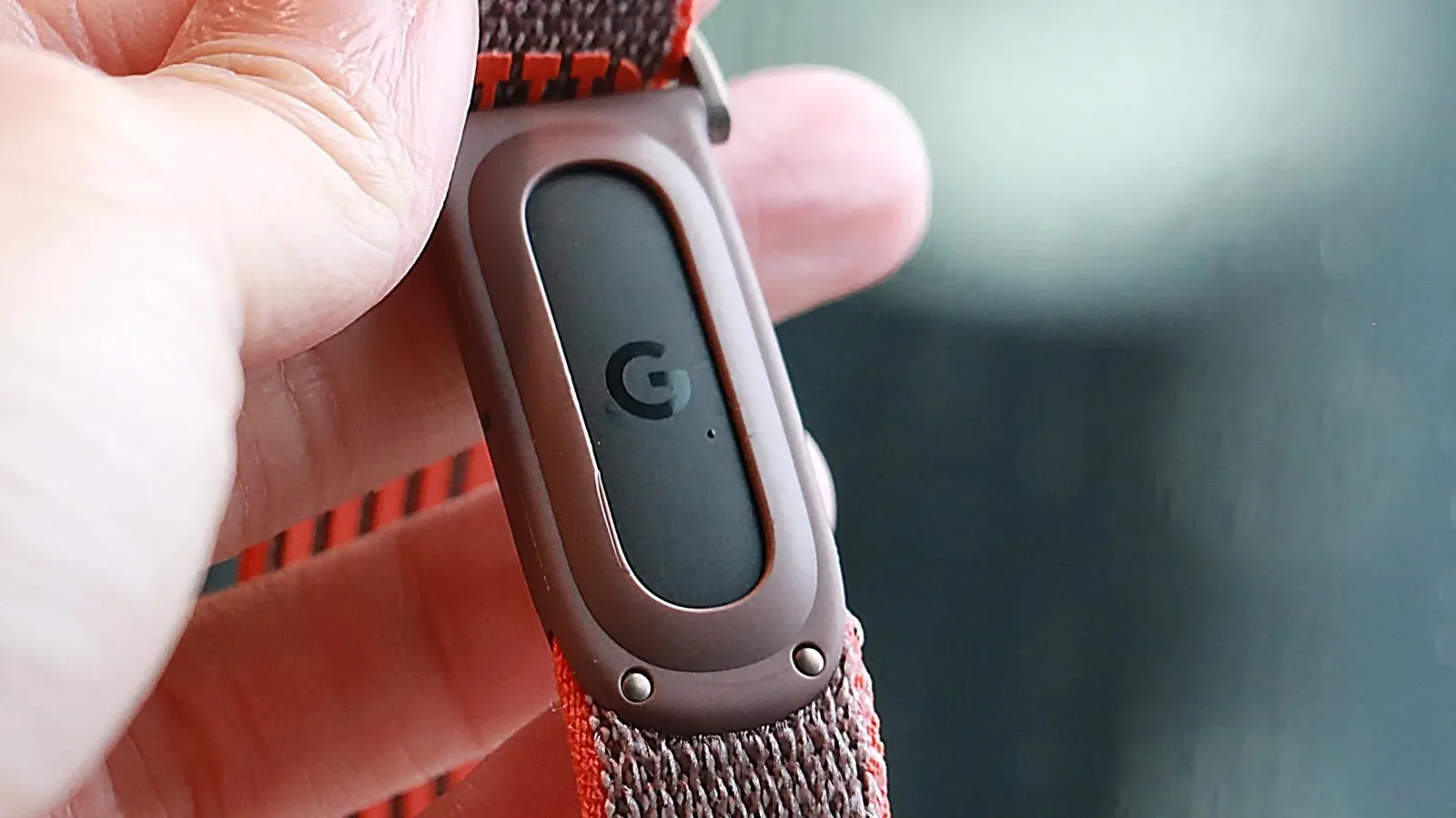
Alongside the software news, Google has introduced Metal Mesh, a flexible woven stainless-steel band for the Fitbit Air. It will be sold in Champagne Gold and Polished Silver for $70.
A Champagne Gold Metal Mesh band will also be offered as part of a $150 bundle with an Obsidian Fitbit Air. Google says that bundle will be available through Target and the Google Store. Pre-orders are due to begin next week, with the Metal Mesh band arriving on October 27.
The accessory does not alter the health or tracking feature set, but it gives Fitbit Air owners a more formal-looking alternative to a conventional workout band. Buyers should distinguish the band’s purchase details from the software rollout: the accessory has stated pricing and an arrival date, while the Health Guardian and automatic activity updates are described as arriving later this month.
What to watch for when the update arrives
- Compatibility: Confirm whether the device is a Fitbit Air, Fitbit Edge, Pixel Watch 3, Pixel Watch 4 or Pixel Watch 5 for the automatic tracking improvements.
- Subscription status: Health Guardian on Fitbit Air and Fitbit Edge requires Google Health Premium.
- Permissions: Review activity, location and Health app settings before relying on expanded automatic recognition.
- Workout history: Check the first several automatically detected sessions, particularly for tennis, HIIT or another fast-changing workout.
- Health discussions: Use Health Guardian’s monthly trends and suggested talking points as preparation for a clinician conversation, not as a substitute for it.
Google’s update is ambitious in two ways: it wants the wearable to identify far more of what users do without intervention, and it wants the accompanying app to turn accumulated measurements into more actionable wellness context. The value of both will come down to reliable recognition, clear user controls and appropriately cautious interpretation of health-related trends.