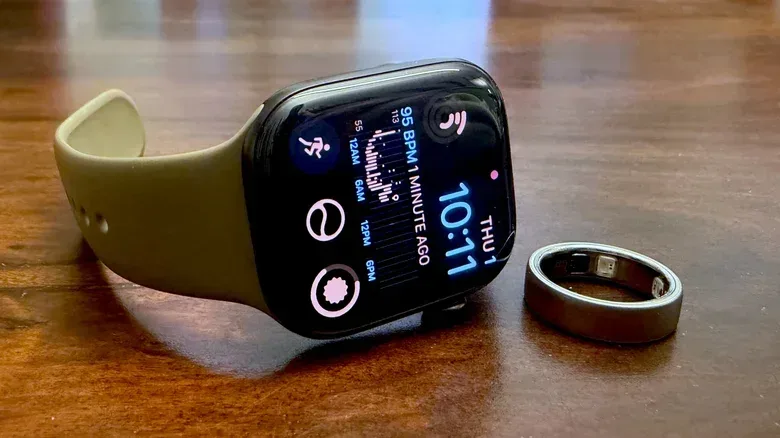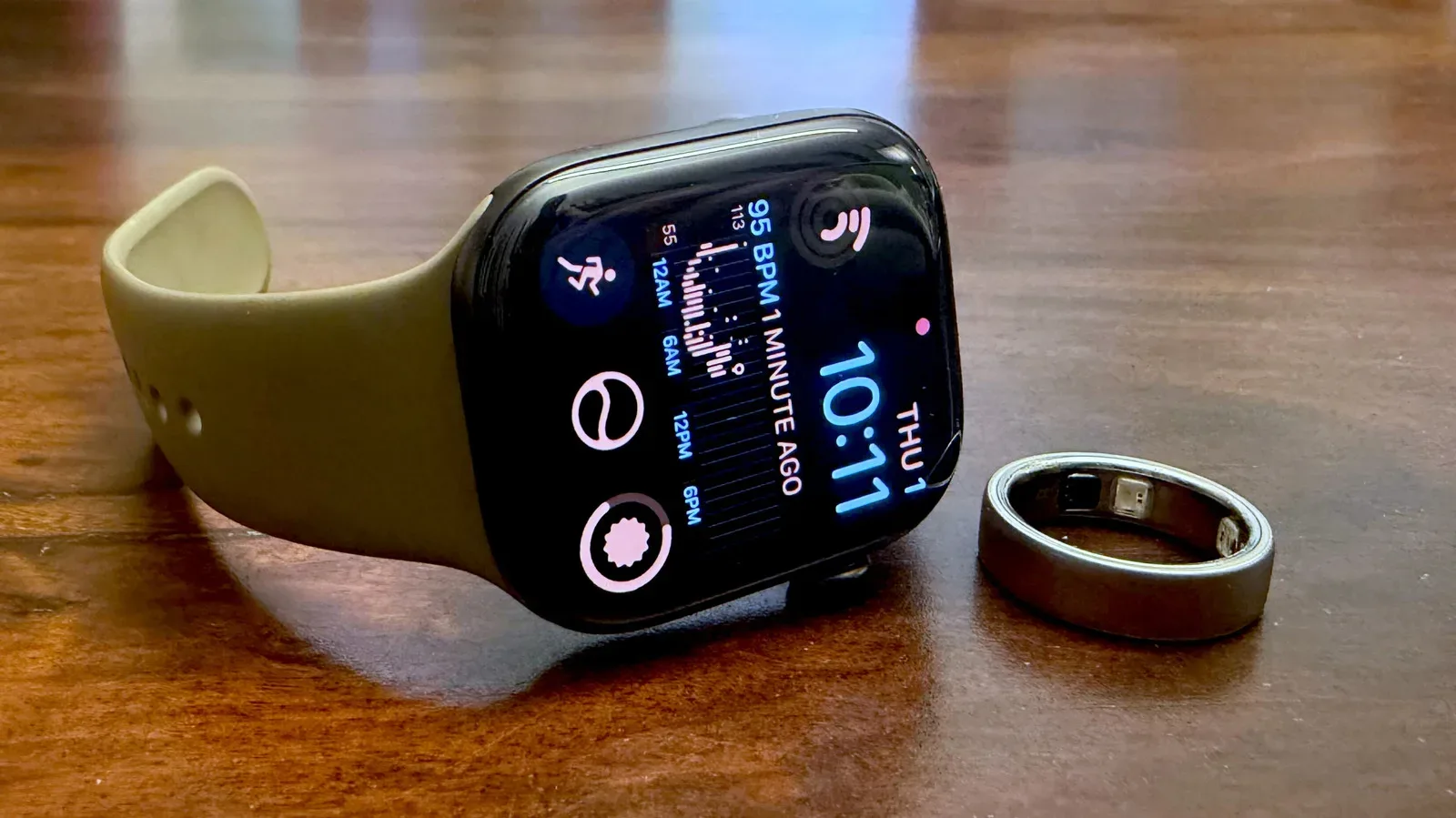
The Oura Ring 5 and Apple Watch Series 12 both promise a clearer picture of everyday health, but they approach that job from almost opposite directions. One is a small, screen-free ring designed to quietly collect information in the background. The other is a full smartwatch that puts workout figures, notifications, payments and navigation directly on the wrist.
That makes this less of a simple sensor-versus-sensor contest than it first appears. Both devices cover substantial common ground: sleep, steps, estimated calorie burn, heart rate and heart-rate variability, plus menstrual-cycle-related tracking. Both also offer a Readiness score, a summary intended to help a wearer decide whether today is the day to push harder or ease off. But people deciding between them should focus less on shared checkboxes and more on what happens after the data is collected.
For an iPhone owner who wants a capable device during exercise and throughout the day, the Apple Watch Series 12 has a strong case. For somebody who wants a less intrusive wearable, values multi-day battery life and does not mind checking a phone for results, the Oura Ring 5 is built around that quieter routine. Android ownership makes the divide much simpler: the Apple Watch Series 12 requires an iPhone 11 or later running iOS 27 or later, while Oura works with Android’s Health Connect.
What the two wearables have in common
At a starting point around $400, the Oura Ring 5 and Apple Watch Series 12 are close enough in cost that neither should be dismissed as the obviously cheaper route. Each tracks the basic numbers many people expect from a modern health wearable. Sleep and step information help establish day-to-day patterns; estimated calorie burn is intended to reflect activity; heart rate records beats per minute; and heart-rate variability looks at variation in the timing between beats.
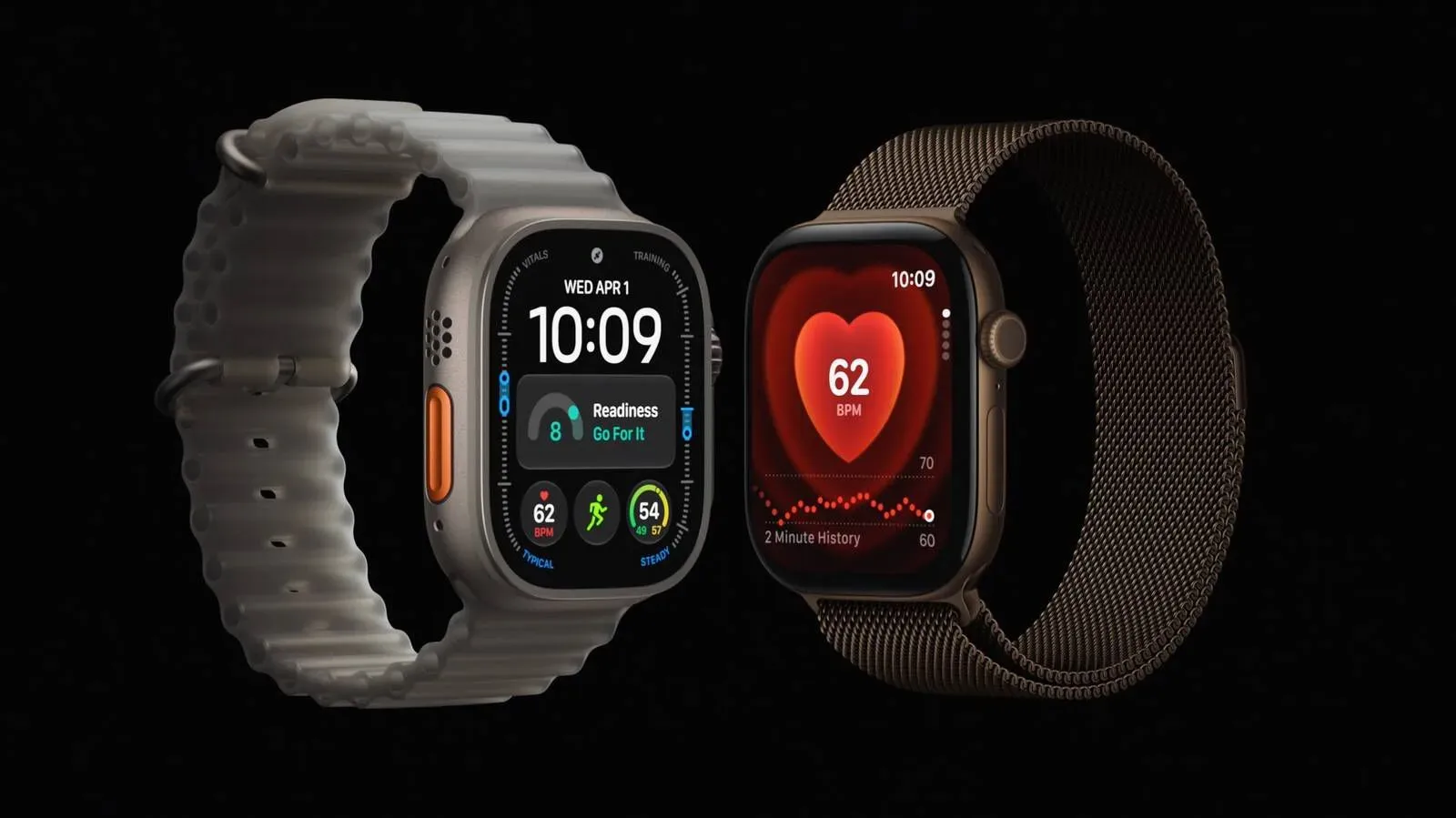
Readiness is the more interpretive feature in this comparison. Rather than presenting a single raw measurement, it brings multiple tracked factors together to offer guidance on whether the wearer might be prepared for a demanding session or better served by rest. It is a convenience layer over the collected data, not a magic answer to every training decision. The key practical question is whether the wearer will actually look at and use those insights. Oura’s entire design is oriented around reviewing them later on a phone; Apple’s watch design makes information available at the moment it may affect an activity.
Oura also presents women’s-health insights related to pregnancy and menopause in addition to menstrual-cycle tracking. That is a meaningful point for shoppers whose priorities extend beyond workout records, although it does not erase the larger usability differences between a ring and a smartwatch.
The screen is the biggest philosophical difference
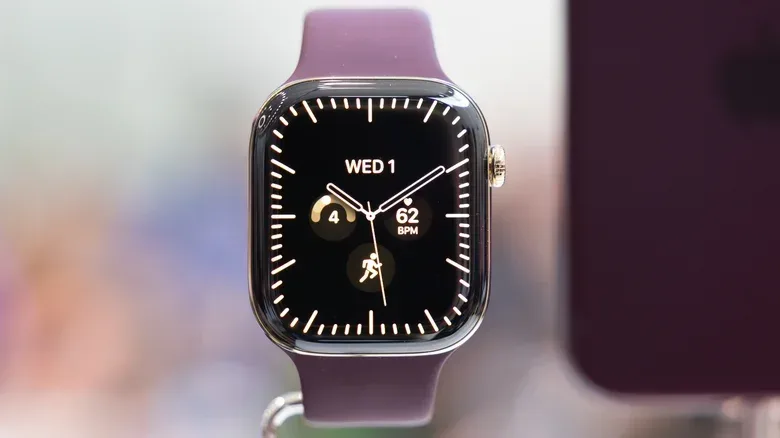
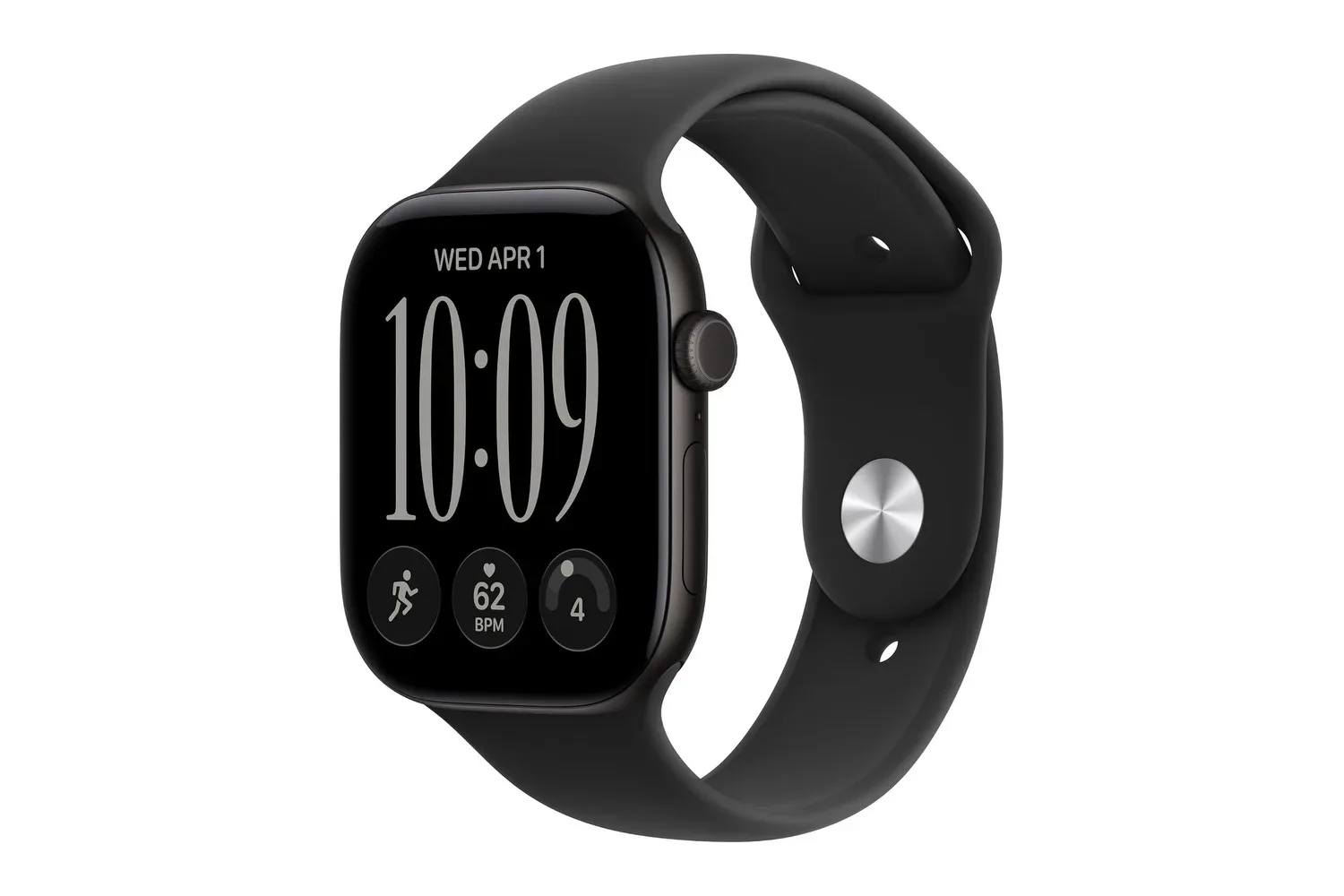
The Apple Watch Series 12 is available in 42mm and 46mm case sizes, with the larger model costing $50 more. Its touchscreen is not merely a place to glance at the clock. Alongside 64GB of storage and Apple’s S11 processor, it allows the device to handle functions from Apple Pay and notifications to off-road trail navigation without constantly reaching for the paired iPhone.
Cellular Series 12 variants, starting at $500, extend that independence for some online functions when Wi-Fi is unavailable. A buyer considering cellular should still judge whether that freedom matters to their normal routine, but it establishes the watch as a device intended to do things rather than only record things.
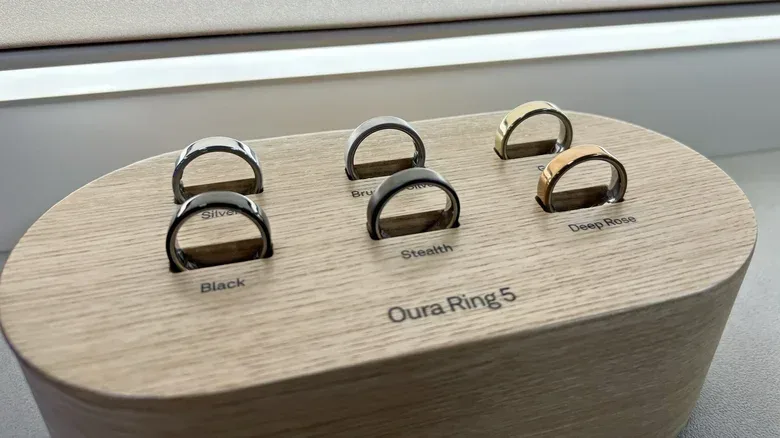
The Oura Ring 5 makes the opposite trade. There is no screen, so data and settings live on the phone. Its information cannot be reviewed on the ring itself, and there is no standalone web interface to lean on as that interface is being discontinued. For some people, that is the attraction: no buzzing rectangle competing for attention, no temptation to check messages during a walk, and no wrist display demanding a glance. For others, it turns an otherwise small action—checking a live exercise stat—into a phone-dependent task.
This is where “discreet” should be considered as seriously as “smart.” A wearable that fades into the background can be preferable for sleep and broad lifestyle tracking. Conversely, a wearable that remains visible and interactive can be much more useful when someone wants immediate feedback, directions or a payment tool. Neither philosophy is universally better. The right one is the one that matches what the buyer expects to do between checking health summaries.
Workout tracking: real-time feedback versus a record after the fact
The separation becomes especially clear during structured exercise. Oura mostly identifies activities automatically and saves them in its app. Automatic recognition is convenient when it works, but it may not always catch an activity accurately or at all. Starting an activity manually is more dependable, yet the useful live data still requires the phone.
The Apple Watch Series 12 often requires a workout to be started manually too, but that action brings live statistics to both the watch and the phone. Its advantage is not just placement of the information. It can capture workout details that the ring cannot, including running cadence and precise GPS location.
Cadence is the rate of steps while running. It is an example of a workout-specific metric whose value comes from seeing it in the context of the run rather than only reviewing a general activity record later. GPS location means a mapped location trail. Oura can associate GPS data obtained from the phone, but it does not provide the watch’s own precise location tracking.
That distinction points to a straightforward buying rule. People who train with an eye on numbers while they exercise, run routes where navigation could matter, or simply prefer to leave the phone in a pocket will get more immediate utility from the Series 12. The Apple Watch is the more active workout companion of the two.
Rings also carry a physical consideration for lifters. The knurling—the grippy textured surface—on barbells and dumbbells can scrape a smart ring’s finish. Anyone regularly gripping those implements should factor the wear risk into the decision rather than treating a ring as a frictionless gym accessory. That is not a minor aesthetic concern if the device will repeatedly contact metal equipment.
Battery life changes the quality of the health record
Oura’s clearest hardware advantage is endurance. The Ring 5 can potentially run for six to nine days. A standard, non-Ultra Apple Watch realistically needs daily charging, and a user trying to track sleep may need to charge it twice in a day.
Battery life is not only a convenience feature. It determines whether a person can wear the device through nights and ordinary days without creating routine holes in their data. A ring that can stay on for most of a week creates fewer charging decisions and fewer chances to miss sleep tracking. For buyers chiefly interested in long-running trends rather than minute-by-minute exercise information, that may outweigh the Series 12’s vastly broader feature set.
The Apple Watch asks for more planning in return for being more capable. A prospective buyer should picture their own charging behavior before assuming this is trivial. Someone already accustomed to charging a watch daily may find no problem at all. Someone who wants continuous sleep and health records with minimal maintenance may find the ring’s battery profile far more suitable.
The subscription is part of the Oura Ring 5’s actual cost
Price comparisons become incomplete if they stop at the hardware. Oura Ring 5 can be used without an Oura Membership, but the non-member experience leaves out more than supplementary coaching. Features unavailable without the membership include 24/7 heart-rate tracking, blood-oxygen information and third-party app integration such as Strava.
The membership costs $6 monthly or $70 annually. A monthly option offers flexibility, while the annual option is the lower stated cost across a year. Either way, it is a recurring obligation attached to getting the full health-tracking experience from the ring.
Apple provides comparable content without a mandatory subscription. That does not mean an Apple Watch cannot be used alongside paid services, but the watch’s central functionality is not held behind a required ongoing fee. For an iPhone shopper choosing strictly on value, that distinction is difficult to ignore: the Series 12 combines broad smartwatch functions, deeper workout capability and no equivalent membership requirement for its core health tools.
Software context may also matter to anyone already following Apple’s health-focused platform changes. The wider iPhone side of the equation continues to evolve, including the health redesign work appearing in iOS 27.2 beta 3. The important compatibility fact here, though, is uncomplicated: Series 12 buyers need the specified iPhone and iOS baseline, while Oura can synchronize with Apple Health or Android Health Connect.
Which wearable fits each kind of buyer?
- Choose Apple Watch Series 12 for iPhone-based workouts: It offers on-wrist, real-time statistics, precise GPS location tracking, running cadence and the ability to do far more without taking out a phone.
- Choose Apple Watch Series 12 for smartwatch utility: Notifications, Apple Pay, navigation, storage and cellular options make it a general-purpose companion rather than a dedicated passive tracker.
- Choose Oura Ring 5 for Android compatibility: Series 12 is not an Android option. Oura’s Health Connect support makes it the viable choice between these two for Android owners.
- Choose Oura Ring 5 for a low-attention routine: Its screenless form and potential six-to-nine-day battery life suit people who want health information gathered with as little device interaction as possible.
- Think carefully before choosing a ring for weight training: Regular contact with knurled bars and dumbbells can damage its shine.
- Budget for Oura Membership if selecting the Ring 5: The headline device price does not represent full access to the ring’s heart-rate, blood-oxygen and app-integration features.
The winner is therefore not determined by which device logs the longest list of shared wellness metrics. It is determined by the surrounding experience. Apple Watch Series 12 is the more capable all-purpose device and the more compelling fitness tool for compatible iPhone owners, particularly those who want feedback while moving. Oura Ring 5 is deliberately narrower: a health tracker that asks less of the wearer’s attention, runs much longer between charges and works with Android, but relies on a phone and membership to deliver its fullest picture.