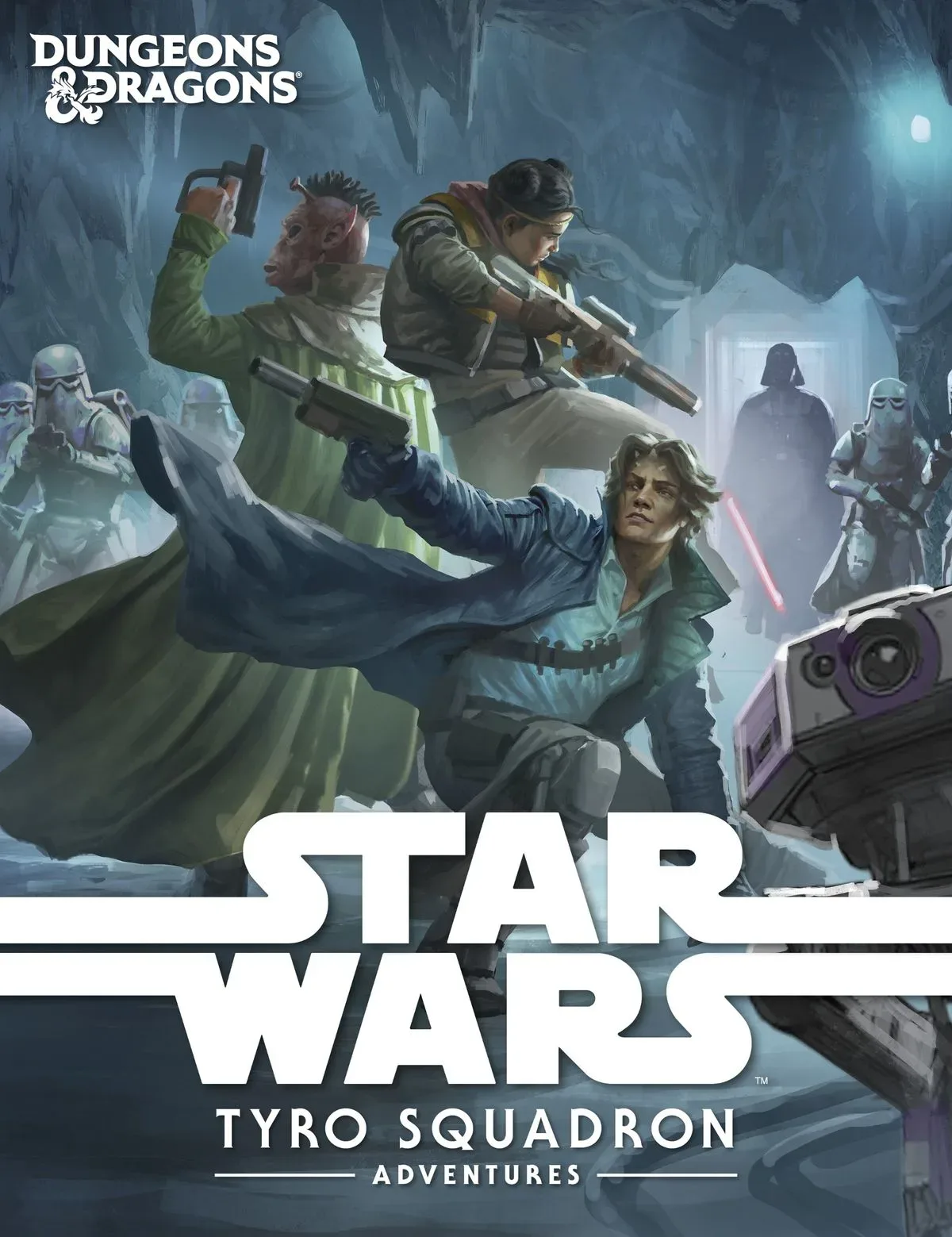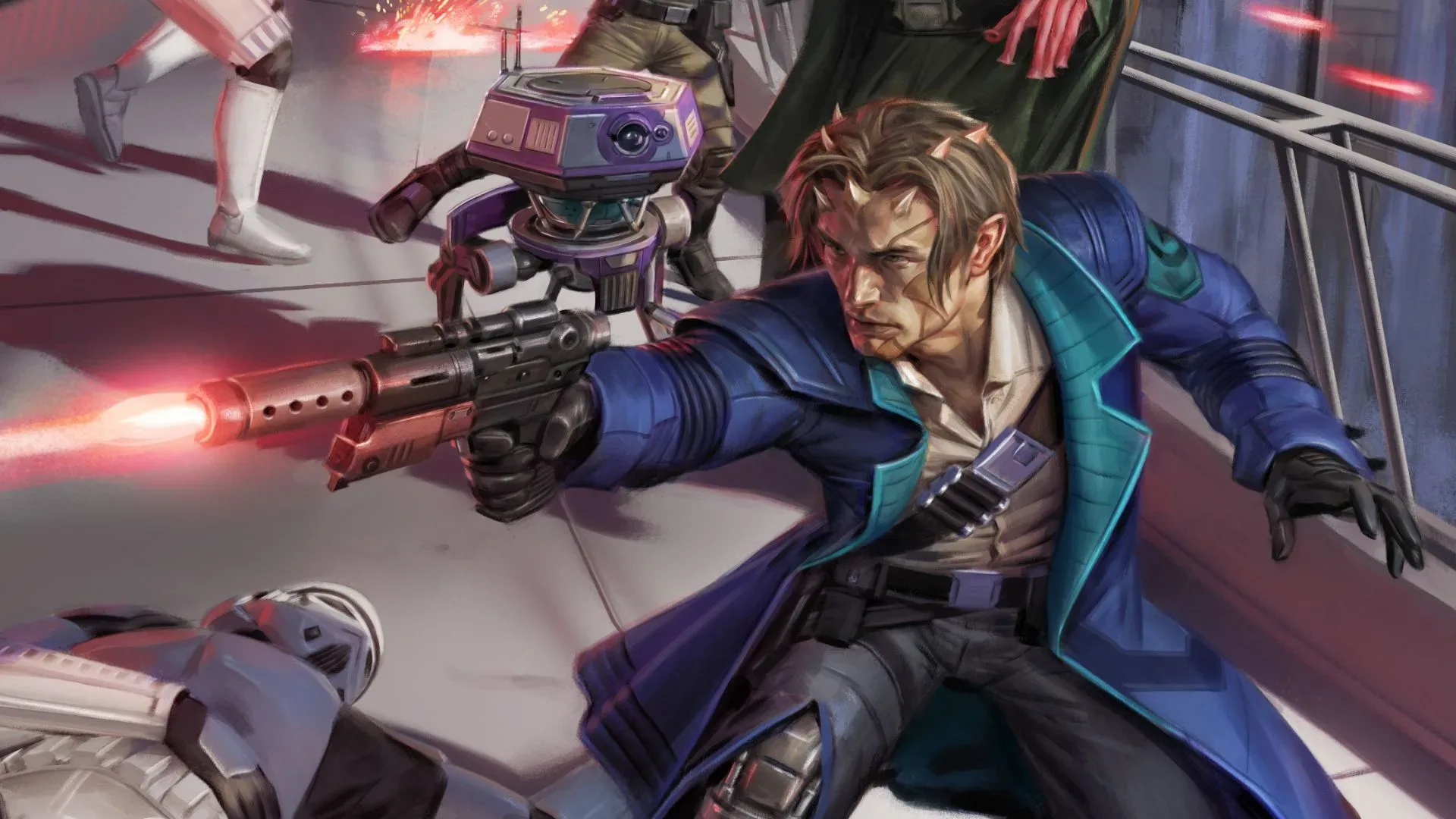
Wizards of the Coast has revealed Tyro Squadron: Adventures, a new D&D Star Wars release planned for 2027. The adventure material is due to arrive alongside a D&D Star Wars core book, which is intended to provide the rules needed to play. Specific mechanics, the full release schedule and the exact scope of that core book have not yet been detailed.
What has been established is the campaign premise: players will join a secret Rebel crew fighting the Empire during the Original Trilogy era. Luke Skywalker and Leia Organa are simultaneously pursuing their own conflicts elsewhere in the galaxy, leaving room for a table’s characters to undertake consequential operations without displacing the saga’s central heroes.
The pitch points toward daring missions, travel to new parts of the setting and player influence over the Rebellion’s story. It is a promising framing for a tabletop campaign because it gives a group a clear allegiance and common purpose without making every session depend on the biggest names in Star Wars canon showing up to solve the problem.
A campaign built for the people between the legends
The phrase “secret Rebel crew” matters. It suggests Tyro Squadron is likely to focus on operatives, pilots, infiltrators and other specialists whose work happens below the level of the famous galaxy-spanning victories. That does not make their missions small. A covert extraction, an intelligence theft, a prison break or a run through Imperial-controlled space can all have high stakes while remaining believable side stories during the Original Trilogy.
For more context, explore Japanese Indie Publishers Are Building Audiences Beyond the Digital Storefront.
That structure has a practical advantage for a roleplaying game. Players can make major choices about their own cell’s priorities, loyalties and risks without being asked to rewrite events already associated with Luke and Leia. In tabletop terms, this is a useful middle ground between a heavily scripted adaptation and a completely detached setting guide. The existing era supplies recognizable political pressure and visual language; the player characters supply the unpredictable outcomes.
It also helps establish an appropriate tone. A clandestine crew is not necessarily a unit of lightsaber-wielding champions. Its members may need to bluff their way through a checkpoint, secure a contact before the Empire reaches them, decide whether a mission is worth the civilian danger it creates, or escape after an operation has gone badly. Those are scenarios where the party’s planning and personality can matter as much as raw combat capability.
Analysis: the announcement’s emphasis on a hidden Rebel team makes a grounded, mission-based campaign seem more likely than a story built exclusively around mythic Force users. That is an interpretation of the setup, not confirmation of what character options will be included. Nothing announced so far rules out Force-sensitive characters, but neither does the available information define how they would work.
Related coverage includes D&D Star Wars' Tyro Squadron Promises Secret Rebel Missions Against the Empire.
“Fly daring missions” is the detail to watch
The most tantalizing part of the premise is its promise to let players fly daring missions. Starfighters, freighters, pursuit scenes and combat in orbit are central to the Star Wars fantasy, but translating them to a tabletop game requires more than saying a ship appears in the background. A group needs rules that make each person at the table feel involved, especially if only one character is physically piloting.
A dogfight is an aerial or space battle in which small, maneuverable craft engage one another at close range. At a tabletop, the rules question is not simply whether dogfights exist. It is whether speed, positioning, damage and danger can create meaningful choices without turning every round into a slow accounting exercise. The same issue applies to larger ships: a pilot, gunner, engineer, navigator and commander ideally need distinct ways to contribute.
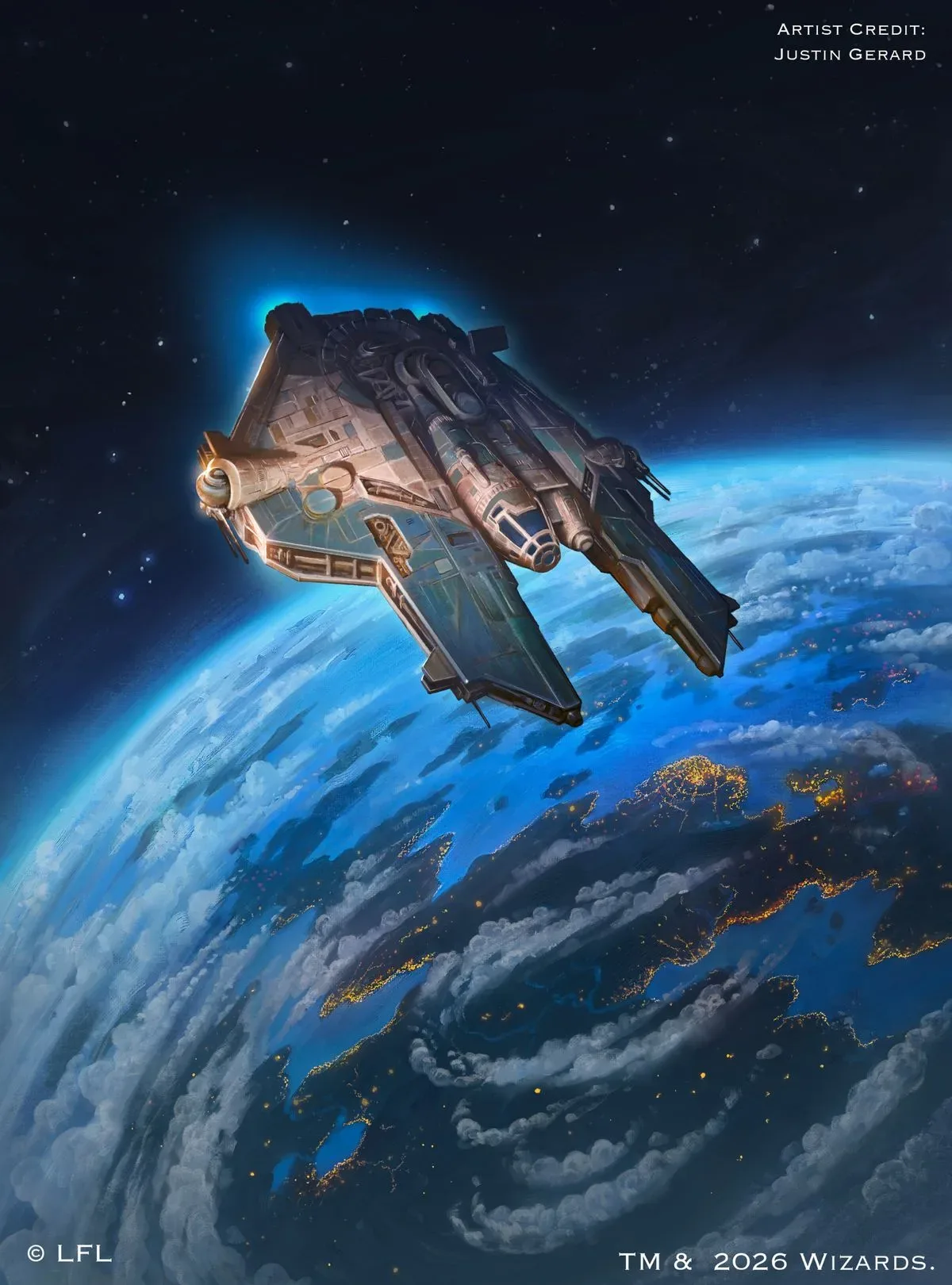
There is reason to keep an eye on this element. Artwork connected to the reveal includes a ship in orbit over a planet, and a starfighter encounter is planned for Star Wars Celebration in April 2027. Neither detail confirms the finished system’s exact form, but together they make spaceflight feel like more than a throwaway verb in the campaign description.
Wizards of the Coast has previously used ship-related rules in Spelljammer: Adventures in Space. That experience does not tell us that D&D Star Wars will use the same approach; Star Wars ships and its action language have different needs. Still, it shows the publisher has worked with vehicle-oriented adventure concepts before.
For prospective groups, the crucial future details will be straightforward:
- Whether a starship has its own statistics, upgrades and damage rules.
- How non-pilots participate during pursuit and combat scenes.
- Whether ship encounters are a recurring campaign pillar or occasional set pieces.
- How easy it is for a game master to shift between ground missions and operations in space.
A satisfying answer does not require a simulation of every switch and thruster. It requires procedures that turn a chase or fighter clash into a shared dramatic scene rather than a solo mini-game for whoever chose the pilot role.
Artwork hints at familiar places, not confirmed itineraries
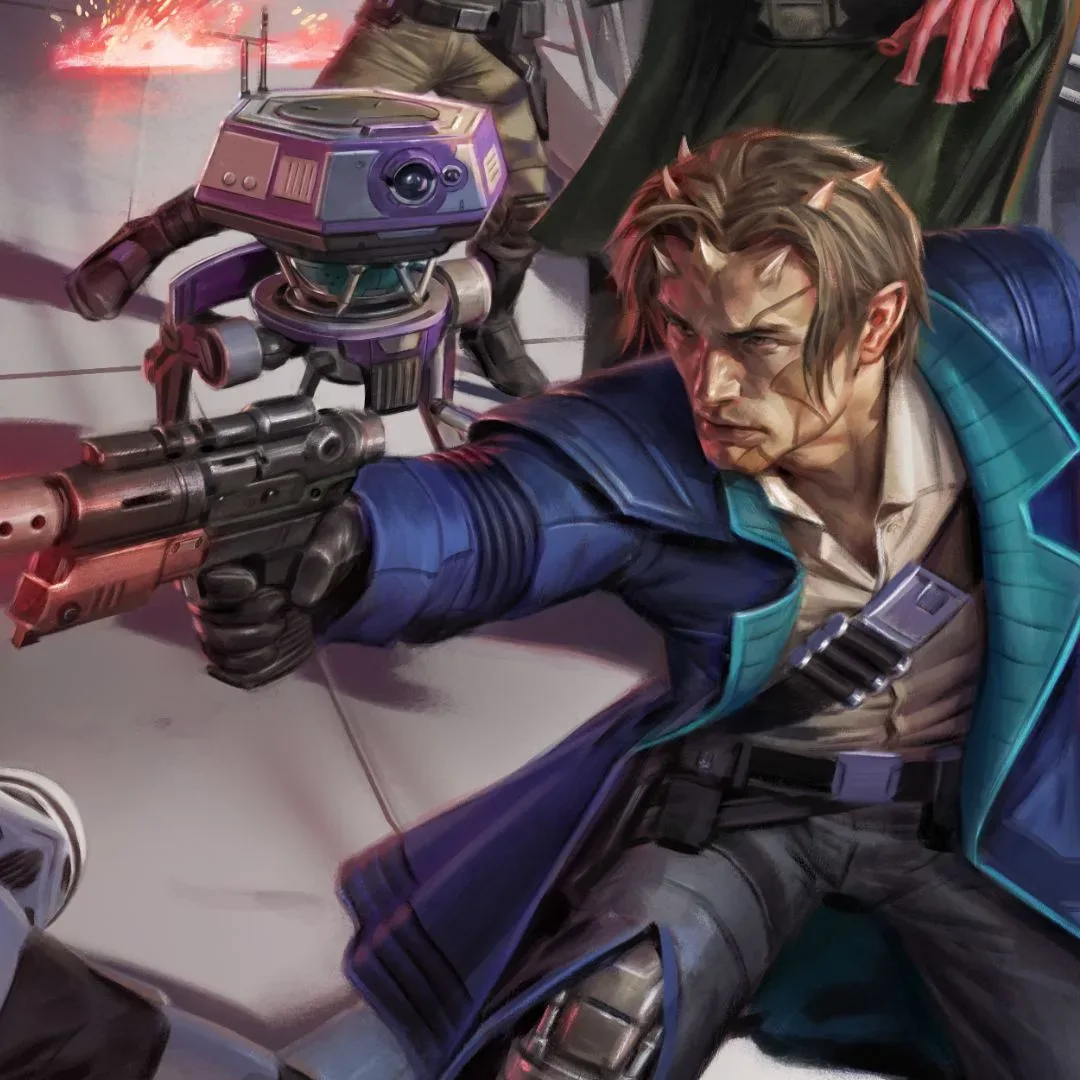
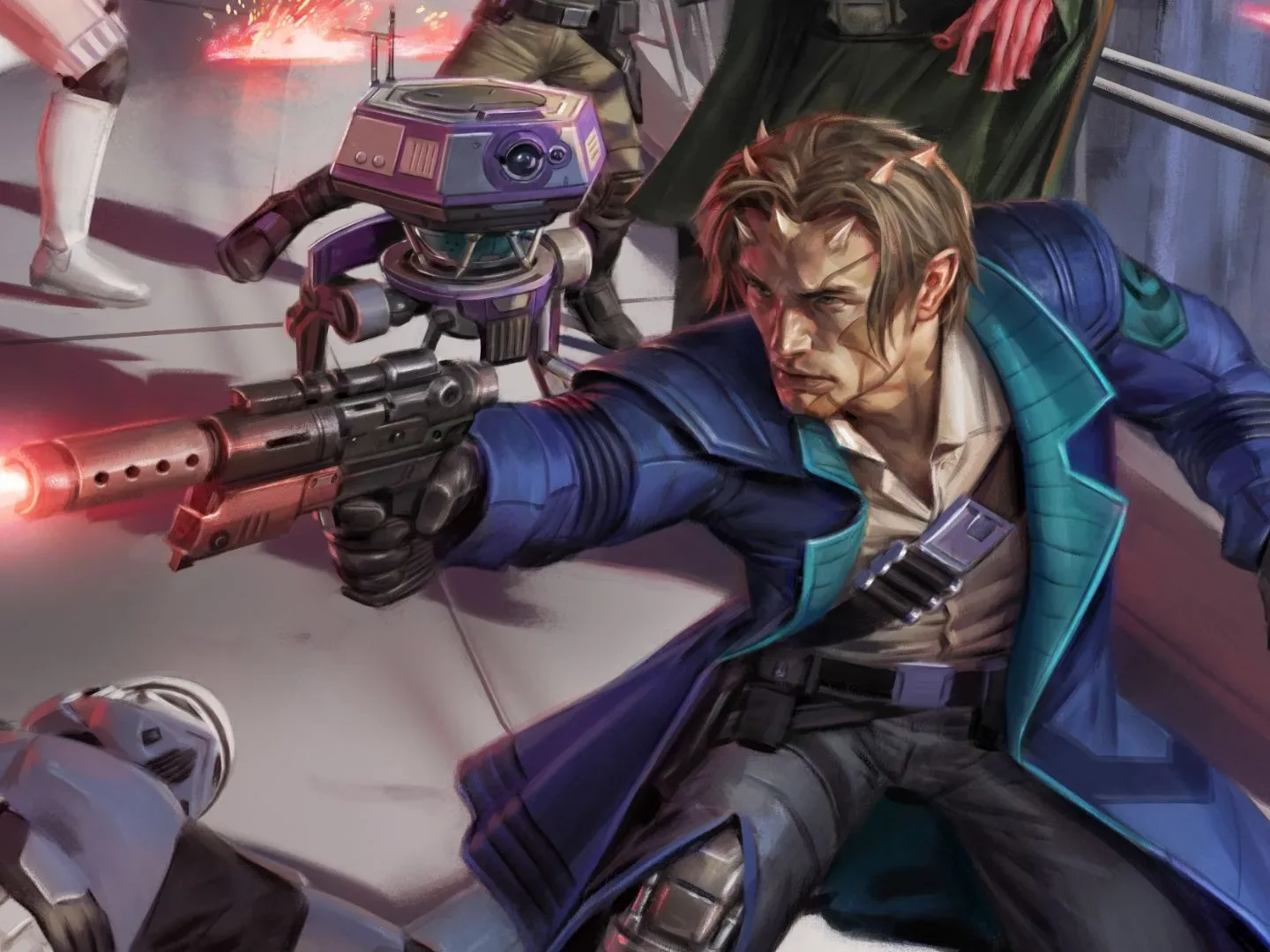
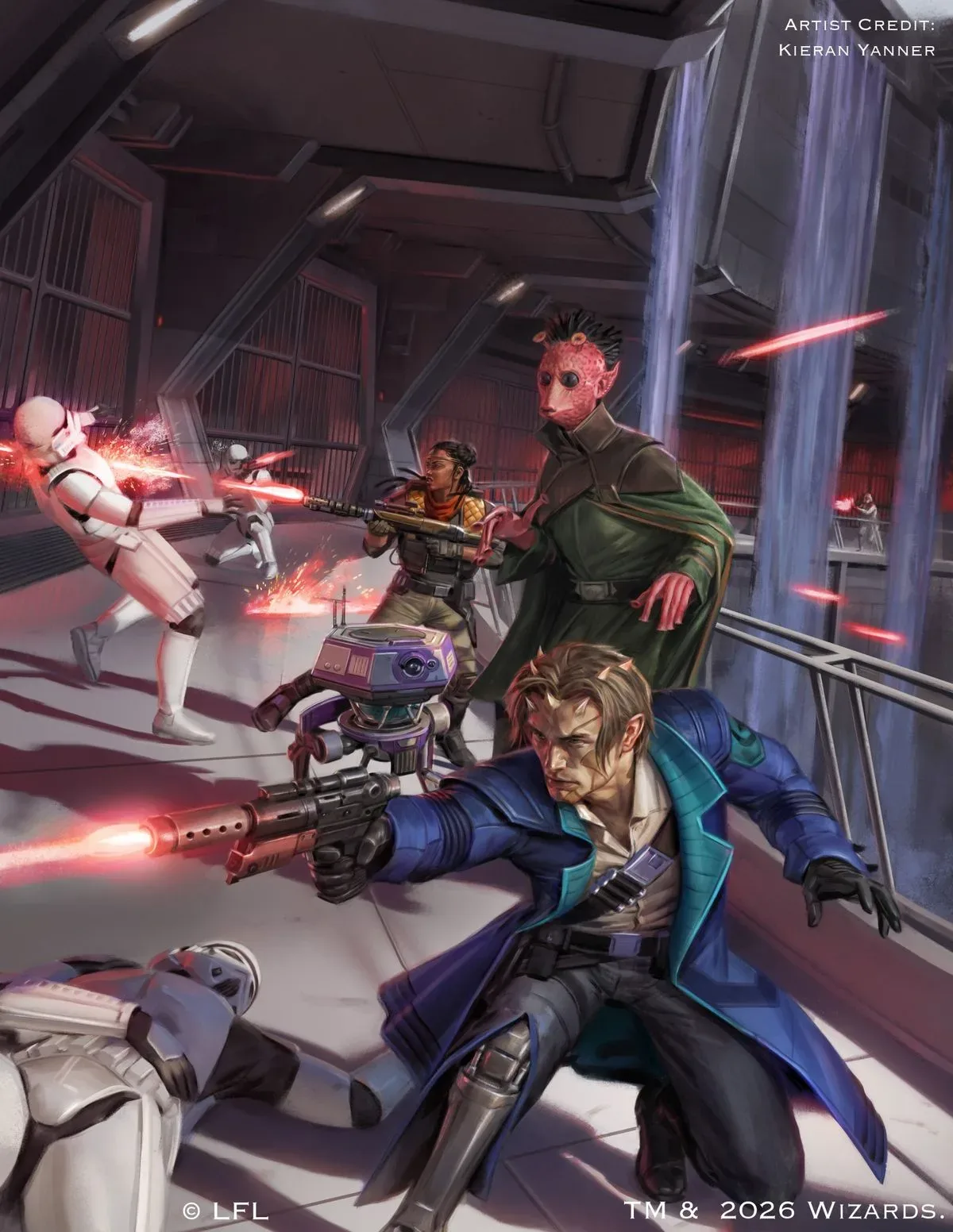
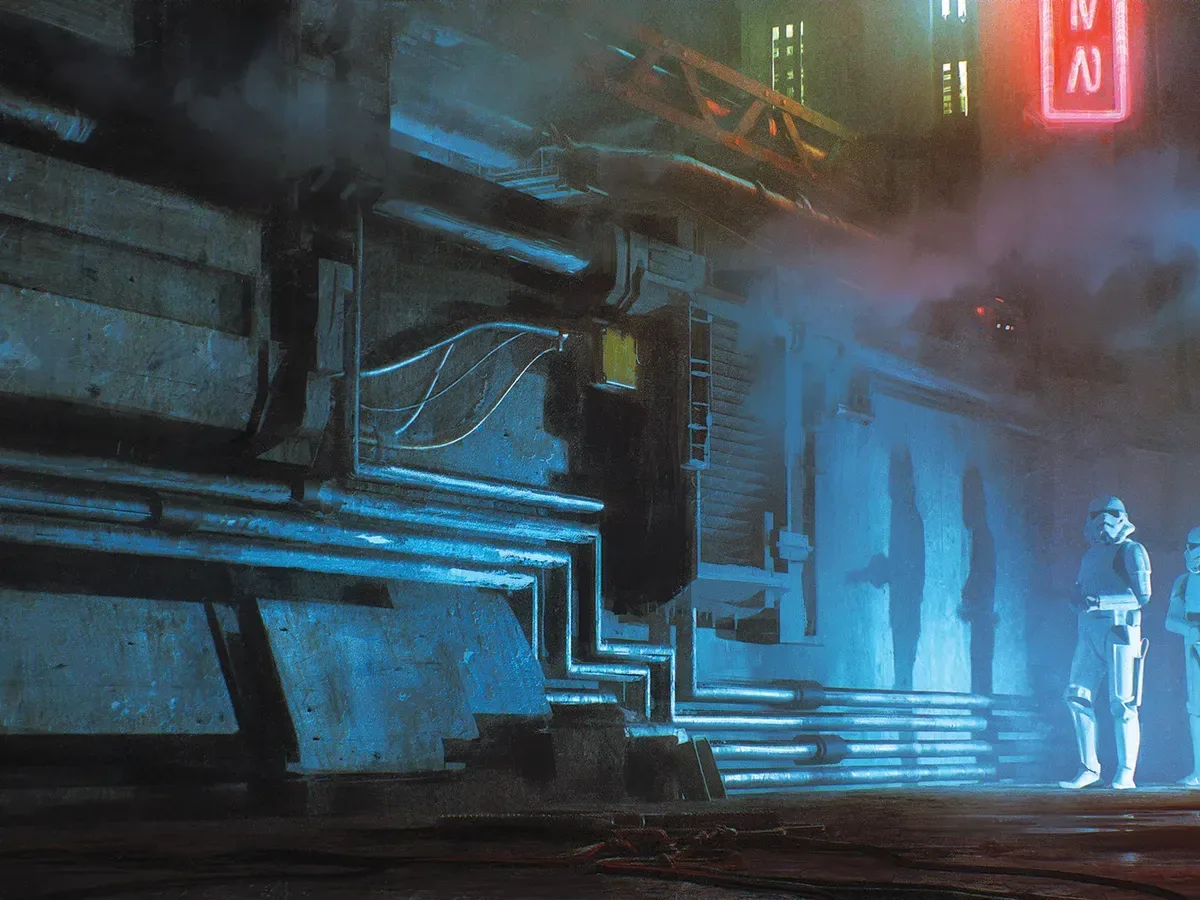
The reveal’s art offers possible clues about the kinds of locations the adventure may visit. One image appears to suggest a prison setting, while another points toward Coruscant. The cover has also prompted speculation about Hoth and the battle depicted in The Empire Strikes Back, with Darth Vader looming prominently in the composition.
Those visual hints are interesting, but they should be treated carefully. Cover art and preview images can communicate tone, antagonists or a broad setting range without functioning as a complete list of locations. At this stage, it is safer to say that the material appears interested in Imperial pressure, planetside action and the Original Trilogy’s recognizable conflict than to assume a fixed route from prison to Coruscant to Hoth.
The recurring characters in the displayed art are similarly open to interpretation. They could be example player characters designed to show the game’s archetypes, or they could be recurring non-player allies tied to Tyro Squadron. An example player character is a ready-made or illustrative hero supplied to help players understand a game’s options. A non-player character, often shortened to NPC, is controlled by the game master rather than a player. The announced material does not yet settle which role these figures have.
That uncertainty may be useful rather than frustrating. A core strength of roleplaying games is that a published campaign can offer a starting crew, mission contacts and adventure hooks while still allowing each table to decide who its heroes are. If the showcased cast is a set of examples, it could give groups a quick route into play. If it is a supporting cast, it could provide continuity across operations. Either option would suit a squadron-focused format.
The core-book challenge: making D&D feel like Star Wars
The accompanying core book may prove to be the more consequential release. The announcement says it will contain the rules needed to play, but it has not explained whether those rules will substantially alter Dungeons & Dragons’ usual classes, spells, equipment and encounter structure.
That is a substantial design task because Star Wars does not naturally map onto every standard fantasy assumption. D&D classes and subclasses generally define a character’s mechanical identity: what they can do reliably, how they develop and what role they play in a party. Star Wars needs equivalent identities that can serve smugglers, soldiers, scouts, diplomats, technicians, pilots, spies and possibly Force-sensitive characters without making any one concept feel like an awkward reskin.
Reskinning means changing the surface description of an existing game rule while retaining its underlying mechanics. It can be a quick way to adapt a game, but the approach can strain when the fiction and the mechanics point in different directions. Calling a conventional spell a blaster trick may work for a single effect; it becomes harder when an entire spell list carries assumptions tied to fantasy magic.
The Force presents another clear design question. If Force-sensitive characters are playable, the game will need a way to represent unusual perception, influence and combat potential while preserving room for non-Force characters to shine. If they are not a major option, the game’s focus could remain firmly on Rebel operatives whose tools are skill, nerve, allies and hardware. Both approaches can support a Star Wars campaign, but they produce very different expectations at the table.
There is no need to assume the answer yet. The available details support only the conclusion that the core book will need to do meaningful adaptation work if it is to deliver the announced premise cleanly. The future rule reveal should be judged less by how many familiar D&D labels it retains and more by whether its character choices, mission procedures and ship play reinforce the kind of Star Wars stories Tyro Squadron is promising.
What is confirmed for 2027
For now, the firm outline is relatively focused: Tyro Squadron: Adventures and a D&D Star Wars core book are planned for 2027; the adventures are set during the Original Trilogy; players will operate as part of a secret Rebel crew against the Empire; and the pitch includes daring flights, exploration and the opportunity to affect the Rebellion’s story.
There is not yet a specific release date, a complete rules breakdown, a confirmed player-character lineup or a definitive list of worlds and missions. That leaves plenty of unknowns, but the initial direction is clear. Rather than asking players to become the franchise’s already-established icons, Tyro Squadron appears poised to ask a more tabletop-friendly question: what would your Rebel crew risk when the Empire is watching every route out?
Shop the products
Check current price, model and availability at the retailer.