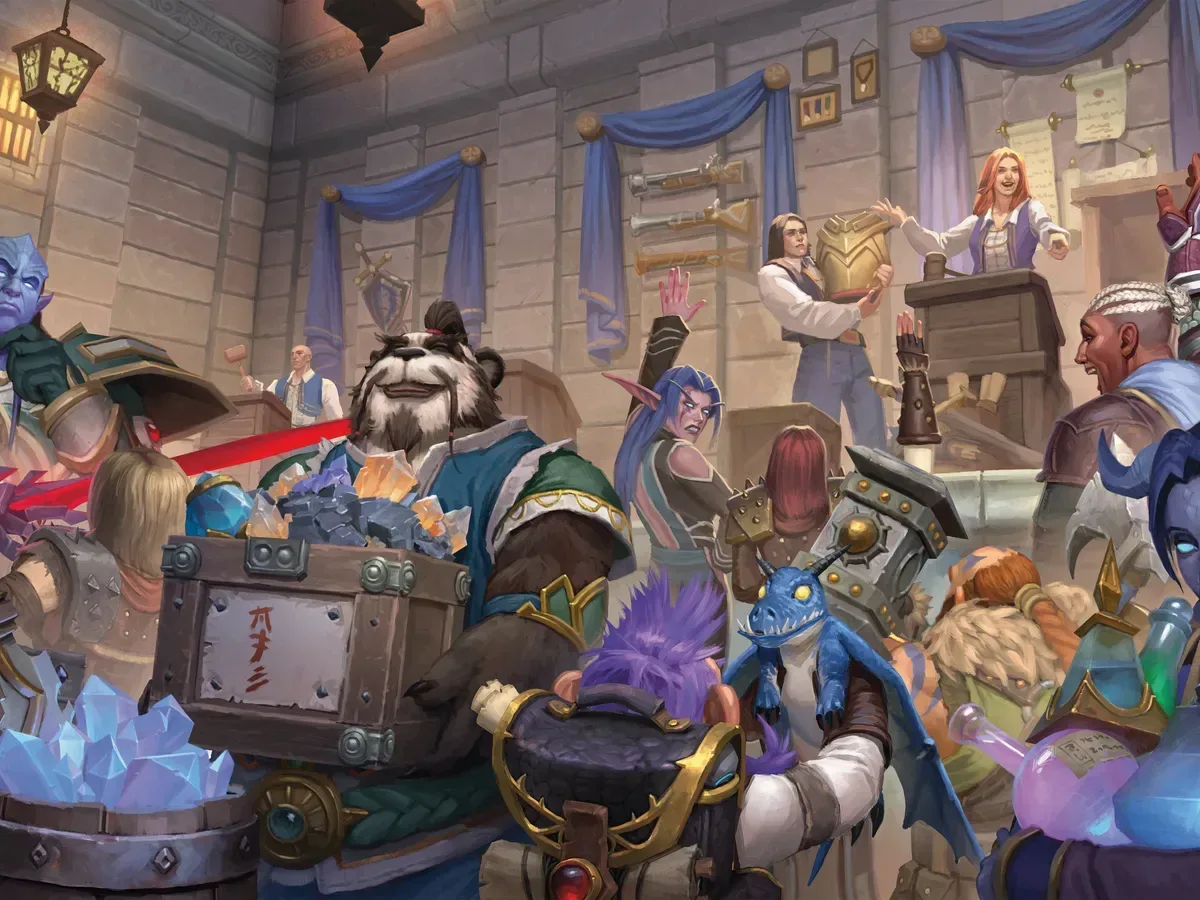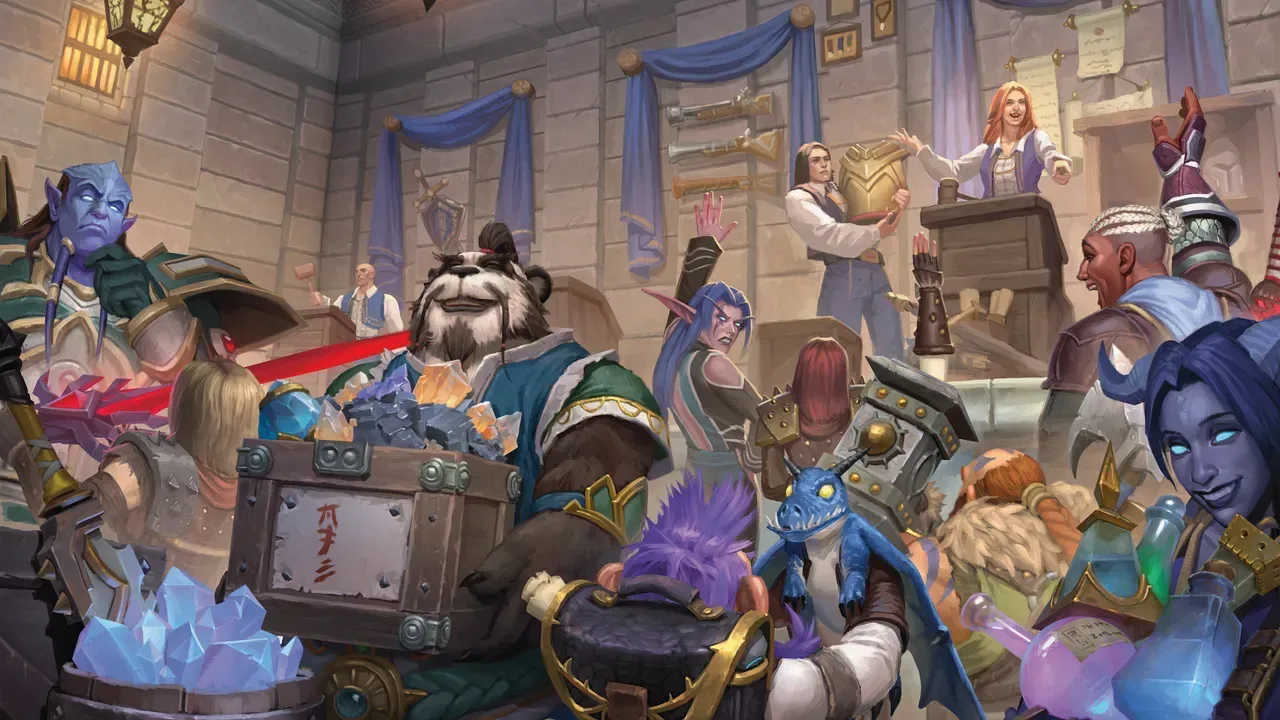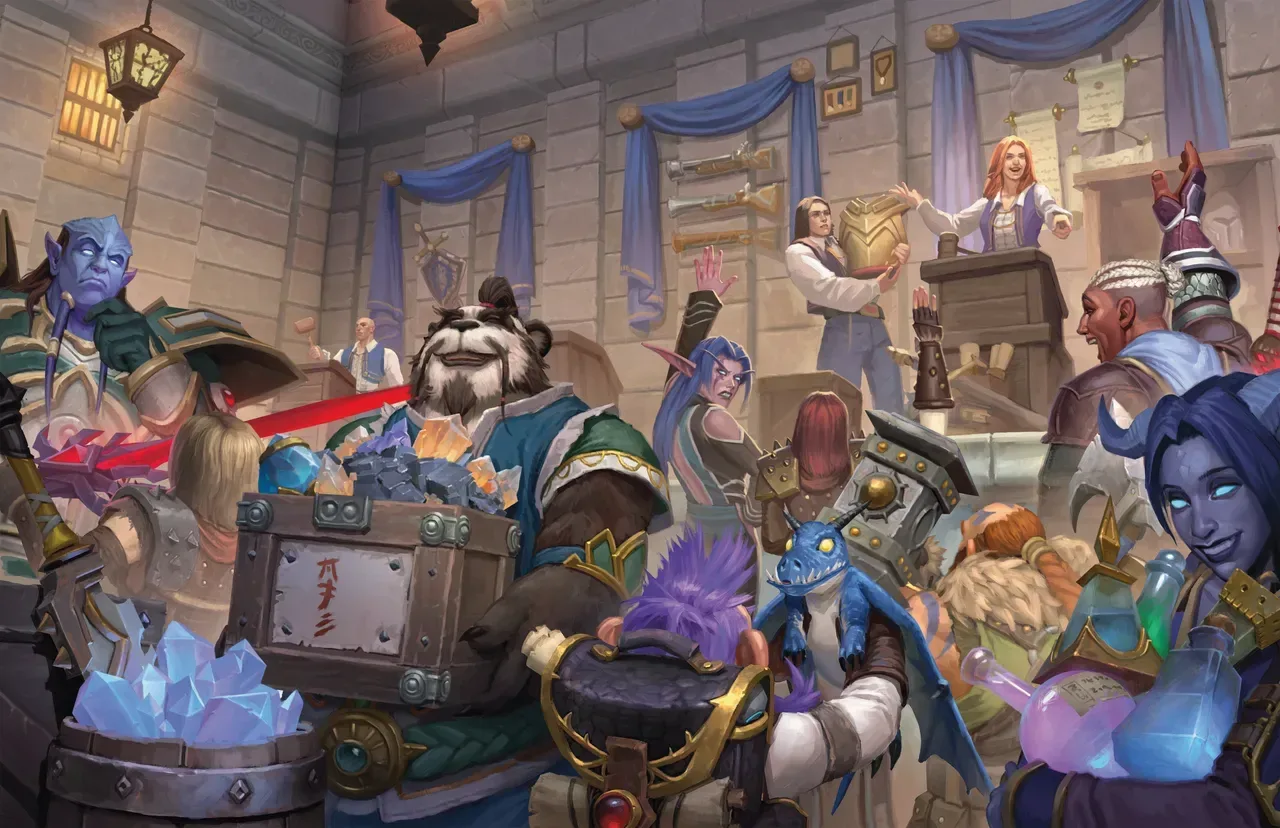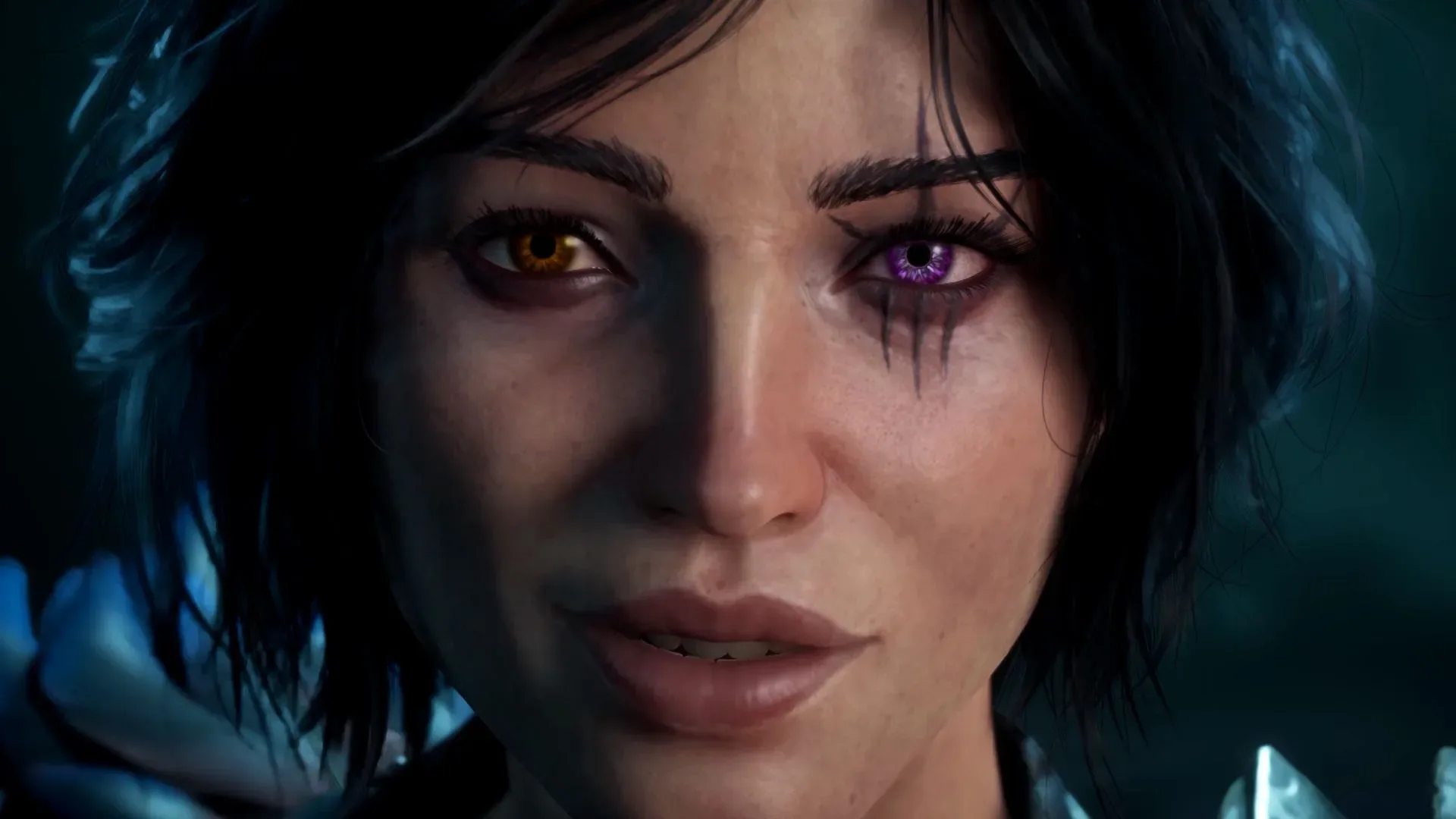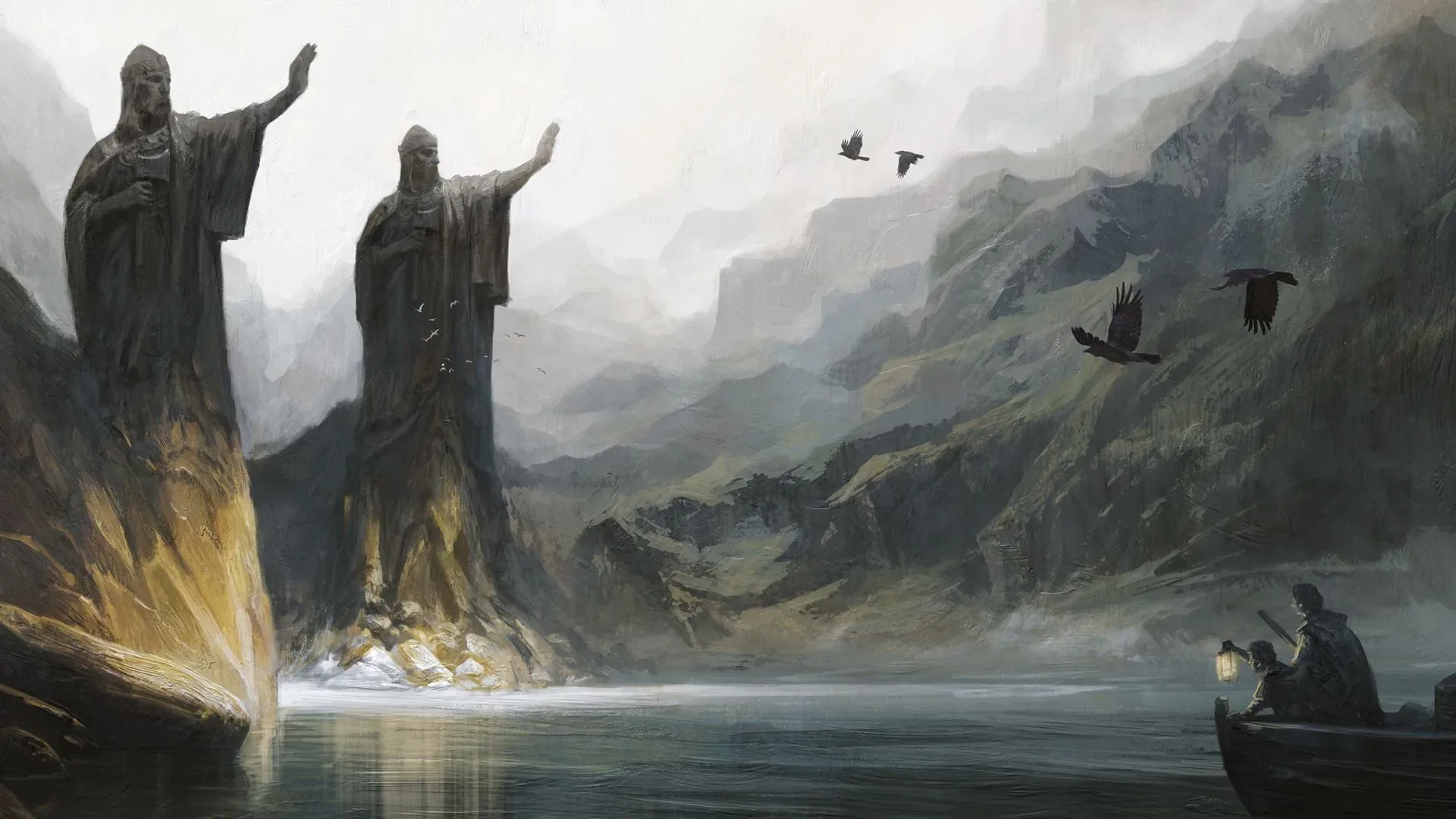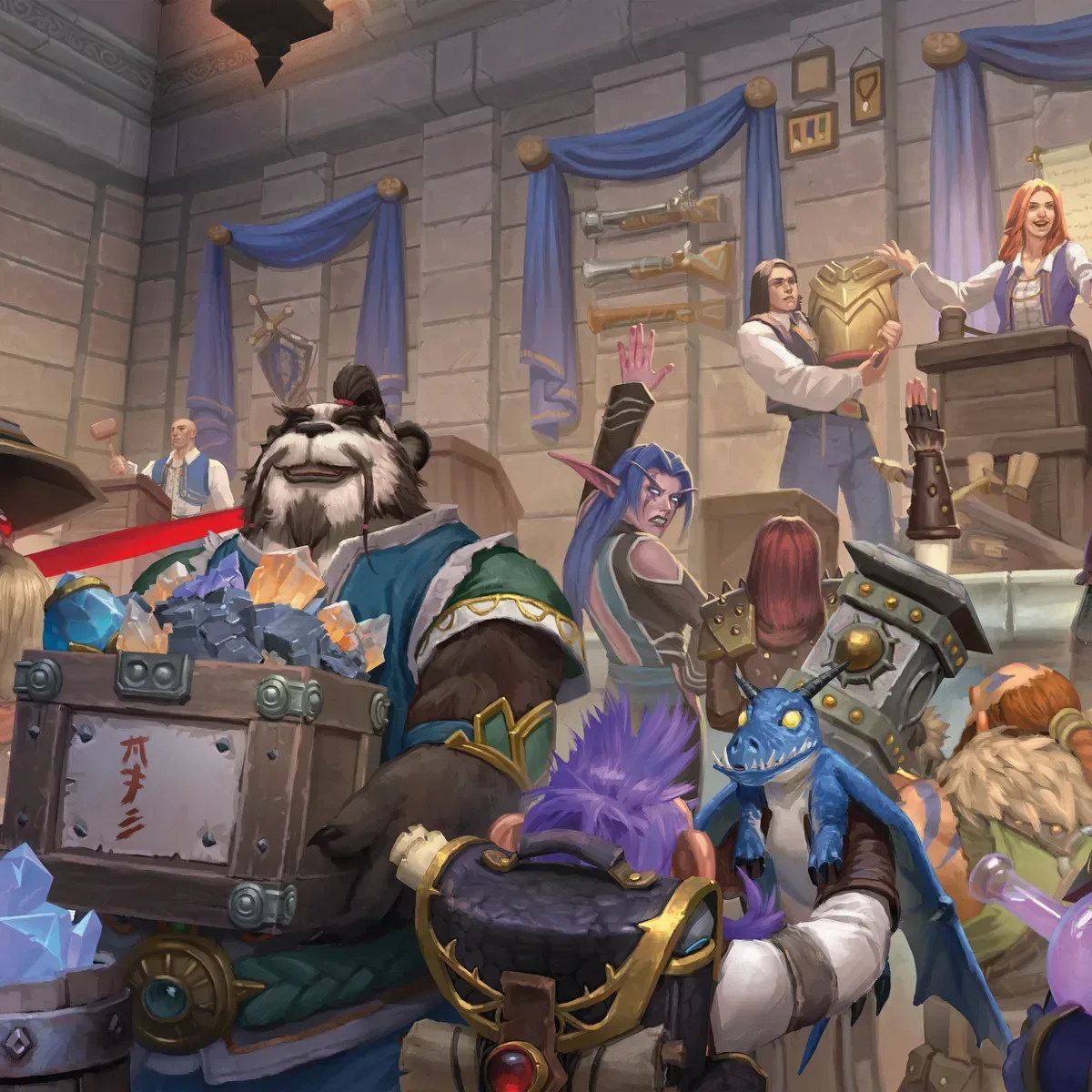
Dungeons & Dragons: World of Warcraft launches November 17, bringing Azeroth to the tabletop as a broad campaign setting rather than a single, fixed adventure. The release is positioned as Dungeons & Dragons’ first Universes Beyond expansion and aims to translate much more than familiar names and monsters: it includes a world guide, major Warcraft conflicts, dungeon material, a bestiary, crafting professions and faction Renown.
That scope matters. A crossover can easily become a short detour in which players visit a recognizable location, meet a couple of famous characters and return to the usual game. This material instead appears designed to let a Dungeon Master build an ongoing campaign in Azeroth with its own chronology, priorities and version of history. Players might begin in a low-level starting region, investigate a classic dungeon through stealth or diplomacy, rise through a faction’s favor, and eventually confront high-level threats.
The tabletop release will cover Azeroth through The War Within. It does not include Argus, the Shadowlands or Draenor, which means groups wanting to set an adventure in Outland or other off-world locations will need to supply their own material. That boundary is useful to know up front: this is a substantial Azeroth book, but not a comprehensive adaptation of every place ever visited in the MMO.
Azeroth is a setting, not a prescribed route
Zones are expected to have suggested level ranges, reflecting their role in World of Warcraft while leaving the Dungeon Master free to reorder or revise the progression. Durotar, the orc starting area, is framed as a natural fit for characters at levels 1 through 4. Older endgame territory such as Northrend is intended for more powerful parties.
Suggested levels are not hard locks. In tabletop D&D, a level range is primarily a signal of the danger, resources and encounter assumptions a region was built around. A group can visit somewhere “early,” but its Dungeon Master may need to adjust opponents, hazards or story framing. Conversely, a campaign can begin somewhere traditionally associated with later-game Warcraft if the table wants an experienced party and a more dramatic opening.
The campaign structure also makes room for Warcraft’s long and sometimes overlapping history. Dungeon Masters are encouraged to choose three large conflicts to define their version of Azeroth, drawing on examples including the Alliance-Horde struggle, the Burning Crusade invasion and the Scourge. Those choices are then meant to guide which monsters, locations and adventure hooks are emphasized.
This is a practical answer to a difficult adaptation issue. A persistent online game has years of major events, expansions and changing status quos. A tabletop group needs one playable starting point. Selecting three conflicts gives a campaign a focused identity without requiring the table to treat every era as equally urgent.
Chromie Time is the in-world tool intended to make out-of-order play possible. It can move characters between periods, allowing a group to run a story after a contemporary invasion and then travel back to a Classic-era conflict. The underlying benefit is creative flexibility: a party does not have to begin at Warcraft’s earliest point or follow its historical sequence exactly. It can even potentially alter events the video game presents as settled.
Related coverage includes Dungeons & Dragons: World of Warcraft Brings Azeroth to the Tabletop in November.
Dungeons become places to investigate
World of Warcraft dungeons and raids cannot simply be copied encounter for encounter. MMO groups can repeatedly run an instance with large parties and a tightly defined combat loop. A typical D&D group is smaller, has more room to improvise, and expects decisions beyond damage output. The tabletop approach therefore presents dungeons as non-linear environments.
That means the Deadmines’ pirates might be fought, avoided or bypassed through careful sneaking. Scarlet Monastery can support the kind of infiltration tale in which its leadership disappears before anyone understands how. The important shift is that familiar names are not merely boss arenas. They are adventure sites with inhabitants, objectives and consequences.
Dire Maul illustrates the approach particularly clearly. Its background involves an ancient night elf ruin, later occupied by satyrs and ogres after the Well of Eternity’s destruction and the corruption of its mages by fel magic. A party may still pursue Tendris Warpwood, echoing a recognizable in-game objective. But it can also respond to an ogre’s request to establish a new king. The location supports more than one story because the Dungeon Master can decide which power struggle matters most.
The dungeons revealed so far are:
- Deadmines
- Blackfathom Deeps
- Dire Maul
- Scarlet Monastery
- Azjol-Nerub
- Shadowfang Keep
- Onyxia’s Lair
The distinction between a dungeon and a raid is also being softened for the tabletop format. A D&D campaign is not expected to recruit a 20- or 40-player group. Instead, raid locations are effectively high-level dungeons with especially large stakes and demanding boss encounters. Onyxia’s Lair is the supplied example: rather than requiring MMO-scale participation, it becomes a concentrated path to an epic confrontation with Onyxia.
For Dungeon Masters, that should reduce a common concern around adapting raid mechanics. The goal is not to simulate a large online roster around a table. It is to preserve the feeling of an imposing set-piece encounter while keeping the encounter usable by a normal adventuring party.
Warcraft creatures are being built for D&D rules
Shared fantasy vocabulary does not mean Warcraft monsters should behave exactly like their D&D counterparts. The design makes a point of treating Azeroth’s creatures as their own lore-driven versions. Dragons are the clearest example: Warcraft’s color-coded dragonflights do not map neatly onto the color traditions of standard D&D dragons.
The Blue Dragonflight illustrates this difference. Azeroth’s blue dragons have a connection to cold, but they are also associated with Arcane magic. Their tabletop breath can therefore combine cold damage with an aura that interferes with spellcasters. It is a mechanical translation of Warcraft identity, not simply a familiar D&D dragon with a Warcraft label.
The bestiary ranges from CR 1 Murlocs to CR 25 Arthas. Challenge Rating, or CR, is D&D’s broad measure of a creature’s expected threat. It is a planning tool rather than an absolute promise of difficulty, since party composition, player choices, terrain and resources all affect an encounter. Still, the spread makes clear that the book is intended to serve both new characters and very high-level campaigns.
Arthas, Sylvanas Windrunner, Alleria, Anduin and Thrall are among the lore figures receiving statistics and histories. Several have appeared as raid opponents in Warcraft, and the tabletop designs adapt raid-style mechanics rather than attempting a literal reproduction. Jaina Proudmoore offers an example: a frozen target can be threatened by a follow-up Ice Lance with a large area effect, while fire damage provides one possible way to escape the frozen state.
That is a good example of the translation principle at work. In an MMO, avoiding or resolving a debuff can depend on a repeated, practiced sequence among many players. At the table, the same dramatic idea becomes an immediate tactical problem with room for inventive responses.
Professions make crafting part of the campaign loop
The expansion’s profession system adapts a major MMORPG progression loop for tabletop play. Gathering professions provide materials through tool proficiencies, while crafting professions convert those resources into useful gear and items. The full profession list is split between gathering and creation:
Gathering professions
- Archaeology
- Fishing
- Herbalism
- Mining
- Skinning
Crafting professions
- Alchemy
- Blacksmithing
- Cooking
- Enchanting
- Engineering
- Inscription
- Jewelcrafting
- Leatherworking
Crafting is intentionally more flexible than gathering an exact MMO-style shopping list for every recipe. Materials are generally measured by gold-piece value, often abbreviated as GP, rather than requiring a precisely named ingredient each time. A Dungeon Master can impose a specific requirement—such as a set quantity of Stranglekelp—but that extra detail is optional and requires the table to track it.
Each profession has a defined item list, and proficiency limits what a character can create. Notably, magical-item crafting is not restricted to spellcasters or characters proficient in Arcana. A character can make a magical item through exceptional work in a trade, letting a blacksmith, engineer or other specialist occupy a meaningful magical-crafting role.
For a campaign, the system could give travel and side objectives added purpose. Mining, fishing or herbalism need not become mandatory chores, but they can support a character’s craft and make a wilderness expedition relevant to the party’s resources. Tables that prefer a faster story can rely on the GP abstraction; tables that enjoy inventory detail can introduce rare, named components.
Magic fans interested in the wider Universes Beyond umbrella can also see how the brand has been used in a different tabletop format through Magic: The Gathering’s God Packs.
Renown replaces repetitive reputation grinding
Faction reputation is another MMO staple receiving a tabletop-focused redesign. Here it is called Renown, and it advances when characters actively help a faction pursue its goals—especially through tasks assigned by that faction. The idea is to connect standing to the campaign’s actual adventures rather than repeated monster kills or daily-task loops.
Most factions begin at 3 Renown. The listed thresholds are Honored at 10, Revered at 25 and Exalted at 50. Advancement speed is still ultimately controlled by the Dungeon Master, which is appropriate for a system tied to narrative decisions and the table’s desired pace.
Rewards can change how the world treats the party, from members of a faction becoming friendly to earning an audience at the highest standing. Exalted status with the Horde can permit the party to call on Sylvanas or Thrall for assistance on one adventure. That makes faction allegiance more than a number: it can unlock political access, allies and story leverage.
Players should also expect Renown choices to carry roleplaying weight. If a party continually serves one faction’s objectives, its priorities may shape which opportunities open and which relationships become strained. The details of rival-faction consequences have not been laid out here, but the system’s stated emphasis on helping faction goals gives Dungeon Masters a straightforward foundation for those choices.
Dungeons & Dragons: World of Warcraft is therefore best understood as a campaign toolkit with a recognizable Azeroth skin and a substantial rules translation underneath. It offers recommended paths without insisting on one, uses Chromie Time to loosen chronology, converts raids into party-scale climaxes, and gives professions and faction relationships an ongoing role. For Warcraft fans, the most intriguing promise is not simply revisiting famous places. It is getting to decide what happens when the party gets there.