Free League’s crowdfunding campaign for an updated The One Ring tabletop roleplaying game has made a very loud entrance into Middle-earth. The project set a $50,000 target and reached $500,000 in roughly an hour—10 times its initial goal. As the campaign continued, its total was approaching $800,000.
The figures are a clear early sign of interest in a substantial refresh for the Tolkien-inspired RPG. The campaign covers three planned books: updated core rules, the first dedicated bestiary for The One Ring, and a setting-and-adventure guide centred on Gondor and Rohan. The same overall trio is also planned for The Lord of the Rings Roleplaying, the game’s adaptation for Dungeons & Dragons.
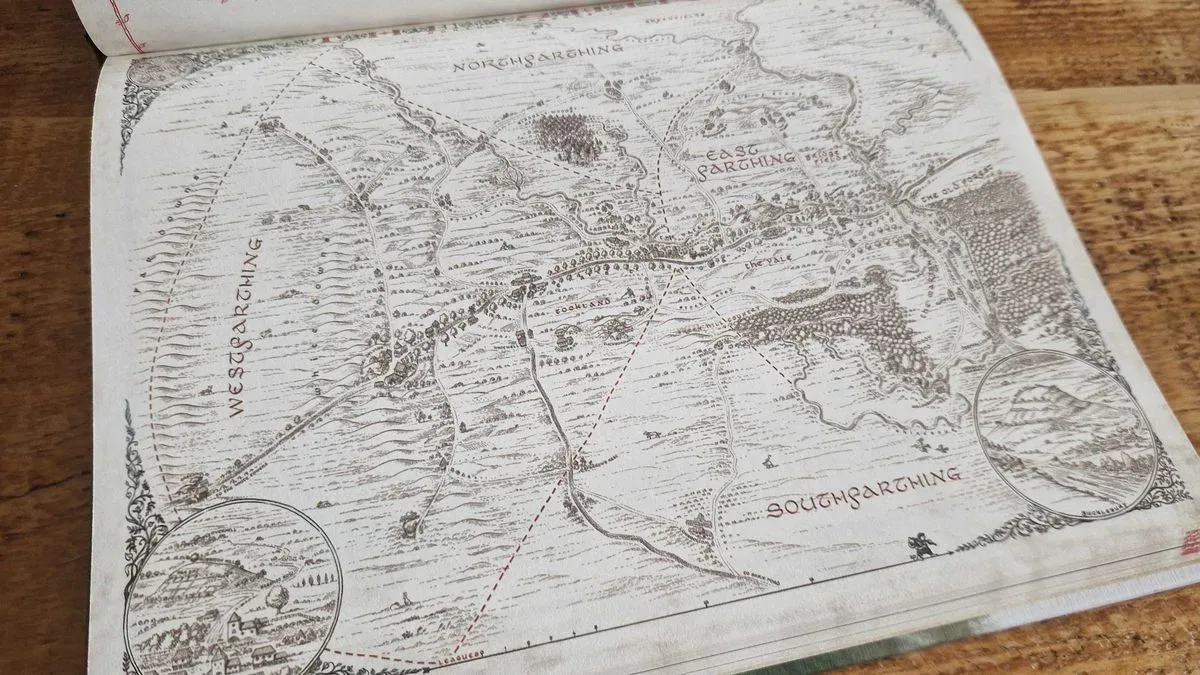
That distinction matters. This is not simply another adventure book or a cosmetic reprint. The project is framed as a beginner-friendly update that effectively functions as a new edition, while retaining compatibility with earlier One Ring books. For existing groups, that means material already covering places such as Moria and the Shire is expected to remain usable. For prospective groups, the revised rules and consolidated creature material could make the game a less daunting place to begin.
A rapid crowdfunding start, but not a release date
Crowdfunding totals are a measure of pledges, not a guarantee that a product is already completed, printed or in players’ hands. They can nevertheless show how much immediate demand a particular game line has. In this case, reaching ten times the target in around an hour—and later moving toward $800,000—suggests that the new books have struck a chord with people who already play the game, fans who want a Middle-earth tabletop campaign, or both.
The campaign is hosted through Backerkit. Most pledge levels include PDFs, although a delivery date for those digital editions has not been specified. Hardcover copies are estimated to ship in October 2027. That is an estimate rather than a confirmed retail release date, and prospective backers should keep the difference in mind: the available information sets out an anticipated fulfilment window, not a promise that the books will arrive on a fixed day.
It is also worth separating the scale of the funding result from the exact final scope of the books. The supplied details identify the three principal volumes and their contents, but do not establish what additional funding might change. The strongest reading of the campaign’s start is straightforward: there is unusually swift support for its stated rulebook, creature book and southern Middle-earth guide.
What the revised Core Rules are meant to change
The updated Core Rules are planned for both versions of the game. Their headline purpose is organisational as well as mechanical: rules are being reordered, clarified and refined to make them easier to learn and easier to find during play. That may sound modest, but reference speed is one of the most practical qualities of a tabletop RPG rulebook.
In a tabletop roleplaying game, players describe what their characters attempt while a game master presents situations, portrays the world and adjudicates outcomes with the rules. A rule system can be imaginative and still become cumbersome if a group regularly has to stop to hunt through multiple chapters for character options, combat procedures or the consequences of an action. Reorganisation and clearer language are therefore meaningful usability work, especially for a game positioned as welcoming to newcomers.
Related coverage includes The One Ring RPG Crowdfunding Campaign Surges Past Its Goal in an Hour.
The revision includes changes to combat and character creation. Character creation is the process of turning a player’s initial concept into a playable adventurer using the game’s rules; it defines the framework a player brings to the table before the first quest begins. Combat is the structured portion of play used when conflict breaks out. The campaign description does not detail every alteration, so it would be premature to assume a wholesale redesign. What is established is that both areas are receiving attention as part of the update.
A solo option, Strider Mode, is another notable inclusion. It had previously been available only digitally and is now planned as part of the physical core-rule offering. Solo play means one person can use the RPG without assembling the usual group of players and game master. The details provided do not explain its procedures, but its inclusion broadens the ways people can engage with the system: a player who cannot schedule a regular fellowship is not necessarily excluded from using the book.
For The One Ring, these adjustments sit within a game designed around the period between The Hobbit and The Lord of the Rings. That placement gives campaigns a defined part of Middle-earth to inhabit without requiring a table to recreate the central story of the novels. It also creates room for original journeys, local troubles and fellowships of player-created heroes.
The game’s first dedicated bestiary
The second book may be the most immediately useful expansion for game masters: a full bestiary, titled Creatures Strange and Foul for The One Ring. In the Dungeons & Dragons adaptation, it is titled Of Orcs and Evil Things.
A bestiary is a reference book of creatures and other beings that may appear in a campaign. In an RPG context, it normally helps a game master prepare encounters and understand how different threats or characters fit into play. Until now, The One Ring has not had a complete dedicated volume of this kind. Bringing those entries into one book could reduce the need to consult different supplements when planning adventures.
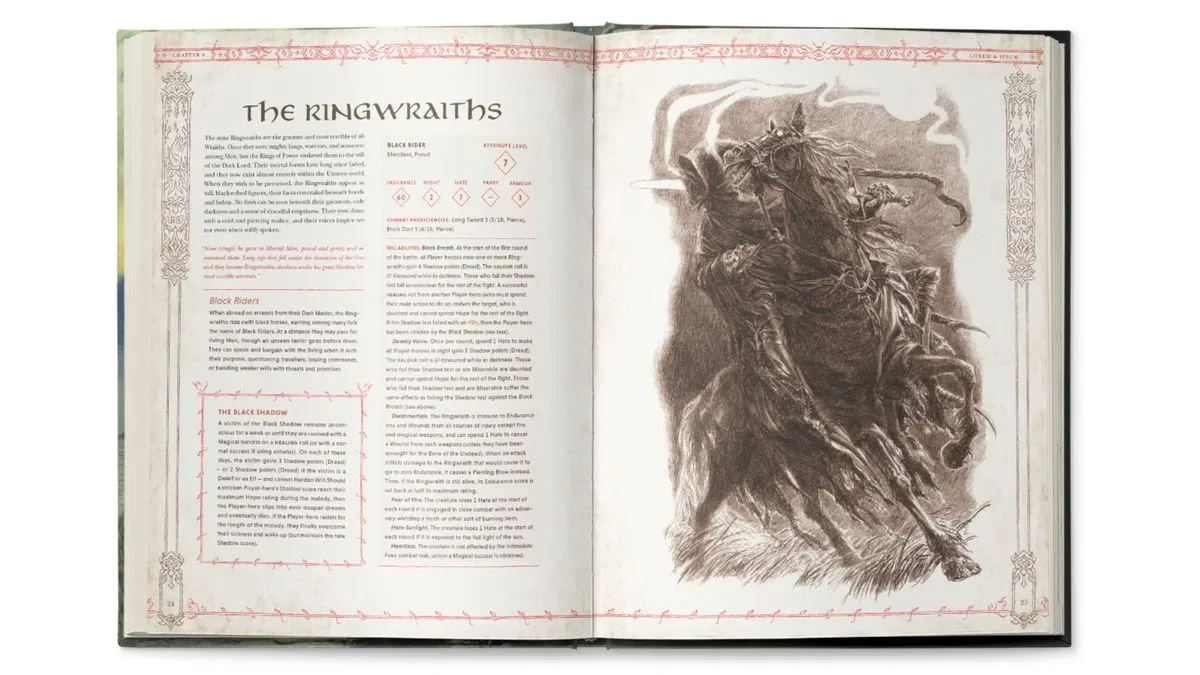
The announced lineup includes familiar adversaries such as orcs and trolls, along with rules for the Nine Ringwraiths, Oliphaunts and the Balrog. Importantly, the book is not presented as a catalogue of villains alone. Ents are also included. That is appropriate for a setting where a meeting with a powerful being need not automatically be a fight, and it should give game masters material for scenes that can be tense, strange or diplomatic rather than purely combative.
The phrase “rules for” is important here. In tabletop games, an iconic figure or creature needs game-facing material to become usable at a table, whether that means handling an encounter, presenting a danger or establishing its place in the adventure. The campaign does not provide the individual entries, statistics or encounter guidance, so the practical depth of each inclusion remains to be seen. But the range named so far runs from ordinary hostile forces to some of Middle-earth’s most imposing presences.
The bestiary also illustrates why the update is more than a revised table of contents. Existing players may value clearer core mechanics; game masters may be equally interested in having a foundational creature resource that the line had not previously collected in one dedicated book.
Gondor and Rohan move the campaign south
The third planned book is where the project opens new geographic territory. The One Ring will receive The White Tower and the Hall of Gold, while the Dungeons & Dragons version will receive Realms of the South. Both focus on Gondor and Rohan.
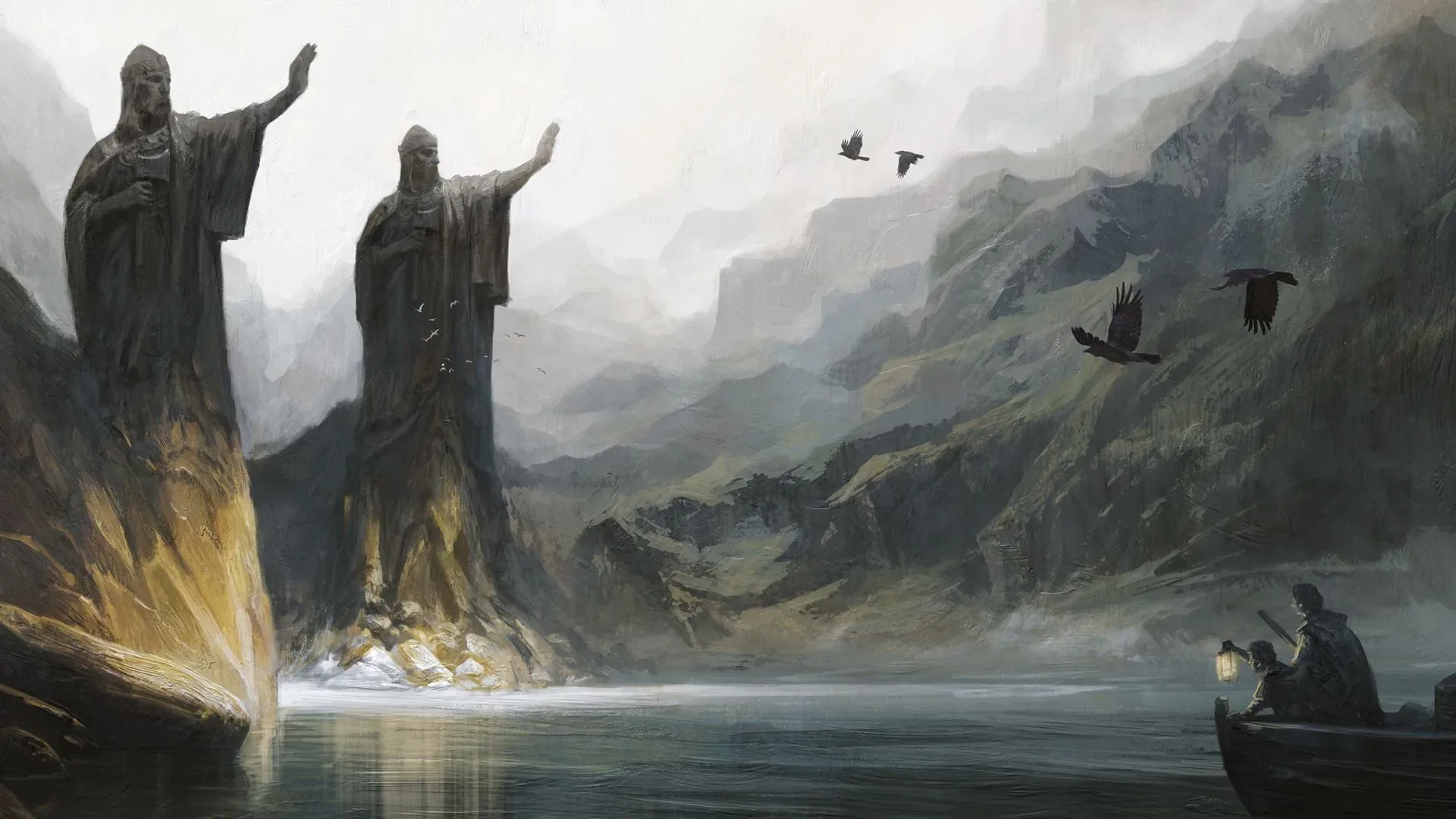
The RPG has largely concentrated on northern areas up to this point. Moving south gives tables a different part of the setting to explore, specifically the kingdoms of Men represented by Gondor and Rohan. The guide is described as offering detailed breakdowns of both lands and providing adventure hooks.
An adventure hook is an element intended to start or motivate a scenario: a problem to investigate, a journey to undertake, a request for aid or another prompt that gives a group a reason to act. Hooks are not necessarily complete adventures. Their value is that they leave room for a group and game master to shape events around their own characters while beginning from a usable premise.
For a Middle-earth roleplaying game, a regional guide can do more than add places on a map. It can shift the kinds of stories a group can build. The stated material provides a way to set quests in Gondor and Rohan, rather than only treating those locations as distant names. Since the guide includes both setting detail and prompts for play, it appears aimed at tables that want enough grounding to run their own tales rather than merely read background lore.
Two systems, one Middle-earth expansion
Free League is presenting parallel support for two related but distinct games. The One Ring is its own tabletop RPG system. The Lord of the Rings Roleplaying adapts the setting for Dungeons & Dragons, and receives the same broad categories of book with different titles. A group’s choice therefore comes down in part to which rules framework it wants at the table.
The shared three-book structure means neither audience is being asked to watch the other receive the complete update alone. Both are due revised core rules, a creature volume and a Gondor/Rohan resource. At the same time, buyers should pay close attention to which edition and title they are selecting, since the paired books are not labelled identically.
The appeal of a licensed RPG is not only recognising names from fiction. The campaign’s stated direction points toward themes associated with Middle-earth: fellowship, journeys, an encroaching shadow and a world containing more than a sequence of battles. The existing game has made fellowship and that advancing shadow central mechanics. Mechanics, in this context, are the formal rules that translate ideas into things the players and game master actually manage during a session. When a game makes fellowship mechanical, it is signalling that cooperation is not merely decorative flavour; it is part of how play is structured.
That is a useful ambition for an adaptation of this particular setting. A ruleset can include swords, dangerous creatures and distant lands without automatically producing a Middle-earth feeling. The project’s promised rule refinements, bestiary and regional expansion are all concrete materials; the larger question is how those materials help groups tell stories with the tone they want. The campaign’s swift funding suggests many backers believe this line is worth expanding on those terms.
Licensed-fiction audiences can be highly attentive to how adaptations interpret tone and character, a tendency also apparent in broader genre discussions such as the debate over Palpatine’s intentions in Return of the Jedi. For a tabletop RPG, though, the key test will be practical: whether the revised books make it easier for a group to gather, learn the system, prepare an adventure and create its own fellowship’s journey.
What existing and new players can take from the campaign
- Existing One Ring groups: Earlier books are expected to remain compatible, so the new material is positioned as an expansion and revision rather than an instruction to discard a current library.
- New groups: The updated core rules promise clearer organisation, refined learning and reference, revised character creation and combat, plus the physical inclusion of Strider Mode.
- Game masters: The dedicated bestiary is intended to gather a broad selection of creatures and beings, while the Gondor/Rohan guide offers regional information and adventure hooks.
- Dungeons & Dragons players: The parallel The Lord of the Rings Roleplaying books offer equivalent broad material under different names.
- Backers: Hardcover delivery is estimated for October 2027. PDFs are included with most Backerkit tiers, but no delivery date has been given for them.
For now, the most concrete news is the campaign’s exceptional first-hour result and the scope of the three books. The rules update, creature compendium and southern-realms guide each address a different tabletop need: learning and running the system, preparing the world’s inhabitants, and finding places and premises for new adventures. If the final books deliver on that combination, they could give both versions of the game a notably broader foundation for journeys through Middle-earth.